

Laundry Maid Ironing c1785
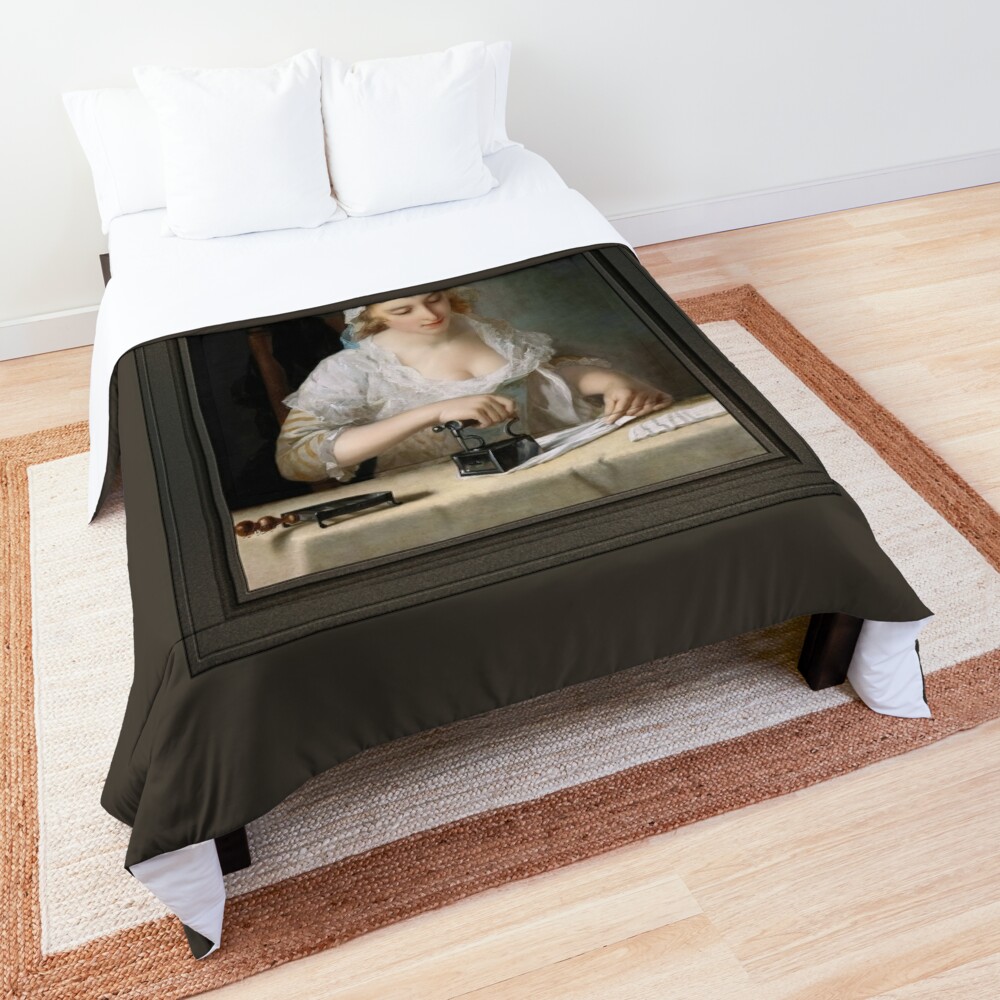
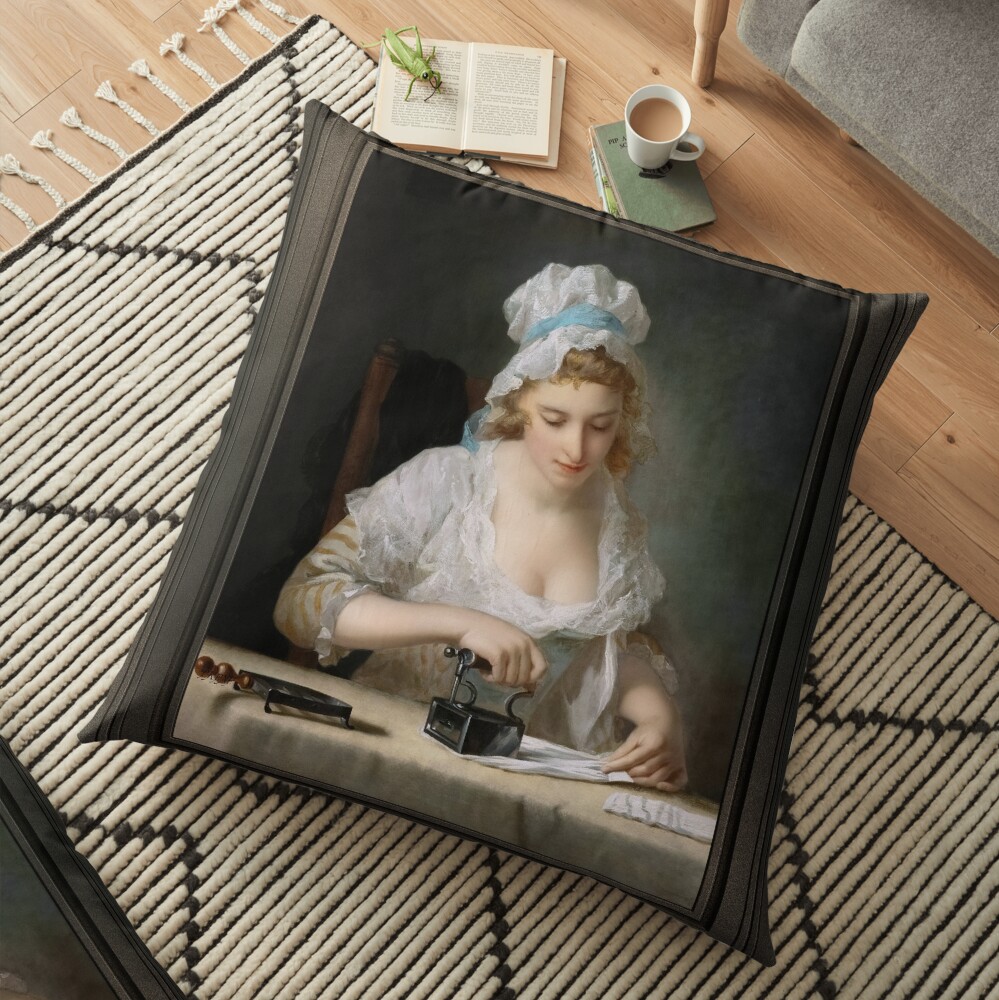
I målningen med titeln Laundry Maid Ironing c1785, British painter Henry Robert Morland (1716-1797) captures a serene and intimate moment in a domestic setting. The painting portrays a young woman, dressed in the simple yet functional attire of a maid, ironing a piece of linen. This piece embodies the themes of daily domestic labor, gender roles, and the quiet dignity found in everyday chores. The artist’s ability to infuse life into the scene through delicate use of light and shadow reveals both his technical mastery and his keen understanding of human behavior.
Innehållsförteckning
Subject and Main Character
The central figure in the painting is a young woman, likely a domestic servant, who is carefully ironing a sheet or piece of cloth. She is portrayed with attention to detail, capturing her natural beauty and the softness of her facial features. Her gaze is directed downward, focused on her task with an expression of quiet concentration. The woman’s delicate features are framed by the lace cap she wears, and the slight blush on her cheeks adds warmth to her otherwise pale complexion. Hennes hållning, while humble, conveys a sense of dignity in her task.
The maid’s attire is modest and functional, suggesting that she is part of the working class. Her white dress, made of light fabric, is complemented by a blue sash tied at her waist, creating a subtle contrast with the warm tones in the background. The choice of a light dress and the blue sash also emphasizes her youth and innocence, while the lace cap atop her head further conveys the domestic and labor-intensive nature of her role.
Inställningen och atmosfären
The setting of the painting is intimate and domestic, likely in a private home or estate where the maid performs her duties. The background is dark and somewhat indistinct, suggesting that the focus is entirely on the maid and her task. This subtle use of dark tones creates an atmospheric mood, emphasizing the quiet, solitary nature of the maid’s work. The contrast between the dark background and the soft light falling on the maid’s face and hands further directs the viewer’s attention to the central subject.
På bordet framför hembiträdet, en bit linne läggs ut, nystrukna. Den lilla, ömtåliga detaljer i tyget förmedlar en känsla av struktur, med tygets veck och veck som kontrasterar mot järnets jämnhet. Enkelheten i inställningen bidrar till tystnaden, lugn atmosfär på scenen. Det finns inga extravaganta rekvisita eller distraherande element; i stället, fokus ligger på hembiträdet och den ödmjuka uppgift hon utför.
The Ironing Process and the Object of the Iron
Det centrala föremålet i scenen är strykjärnet som hembiträdet använder för att pressa tyget. Järnet är ett litet, metallinstrument typiskt för 1700-talet, med en enkel men funktionell design. Den sitter på bordet, det lilla handtaget hålls försiktigt av pigans hand när hon jämnar till tyget. The artist has captured the reflective surface of the iron with such precision that it seems to gleam subtly in the light, adding depth and realism to the painting. The object itself is a symbol of domestic labor and the meticulous care that goes into household tasks.
The process of ironing is depicted with great attention to detail. The maid’s movements, though gentle and controlled, suggest a sense of practiced skill. Placeringen av hennes kropp, with one hand on the iron and the other steadying the linen, reveals the ease with which she performs her task, as though it has become second nature. This portrayal of labor, though physically demanding, also conveys a sense of order and method, elevating the mundane chore into an act of quiet reverence.
Stil, Teknik, och humör
Morland’s style in this piece is characterized by soft, almost glowing light, which creates a mood of tranquility and reflection. The use of light and shadow in the painting is masterful, with the light falling gently across the maid’s face and hands, highlighting her movements and expressions. This effect gives the work a certain intimacy, as if the viewer is a silent observer in the room, watching the maid as she goes about her daily routine.
The brushwork in the painting is delicate and detailed, lending the scene a lifelike quality. Morland’s technique allows for subtle variations in texture, from the smoothness of the maid’s skin to the delicate fabric of her dress and the rougher texture of the iron. The artist’s careful rendering of these textures conveys a sense of realism, while also adding a certain warmth to the piece. The mood of the artwork is calm and serene, reflecting the timeless nature of daily life and the simplicity of the task at hand.
Slutsats
Laundry Maid Ironing c1785 by Henry Robert Morland is a beautifully crafted portrayal of domestic life in the 18th century. Genom sin noggranna uppmärksamhet på detaljer, the artist elevates a simple, everyday task into a moment of grace and quiet dignity. Den unga kvinnan, with her modest attire and focused demeanor, embodies the virtues of patience and diligence. The painting’s soft lighting, realistic textures, and intimate setting create a sense of tranquility, bjuda in betraktaren att reflektera över skönheten som finns i livets vanliga stunder. Detta arbete är fortfarande ett bevis på Morlands skicklighet att fånga den mänskliga upplevelsen med ömhet och autenticitet.
Detta är en remastrad digital konst-gamla mästare-reproduktion av en offentlig egendomsbild som är tillgänglig som en canvastavla online.
Konstnärsbio
Info nedan från Wikipedia.org
Henry Robert Morland var en engelsk porträttmålare, mest ihågkommen för ett porträtt av kung George III, och för att vara far till djurmålaren George Morland.
Hans far var genremålaren George Henry Morland, och Henry Robert följde också en konstkarriär, bli en målare av porträtt och inhemska ämnen, i både olja och krita.
Han ställde ut några 118 arbetar från 1760 till 1791 på Konstnärsällskapet, det fria samhället, och Kungliga Akademien. Morland graverad också i mezzotint, restaurerade målningar, och sålde artister, inklusive kritor som han gjort själv.
Morland var under en tid mycket framgångsrik och målade till och med ett porträtt av George III, kungen sitter personligen.[2] Även om han blev ganska rik ett tag, han förlorade det mesta av sina pengar, och var ofta i konkurs under senare år.