

Le Réveil: A Glimpse of Intimate Awakening by Pierre Charles Lévèsque
Pierre Charles Lévèsque’s “Le Réveil,"creado alrededor 1765, is a captivating engraving that offers a fleeting glimpse into a private moment. este trabajo, characteristic of the Rococo period’s fascination with intimate scenes and playful sensuality, showcases Lévèsque’s skill as an engraver in capturing both form and atmosphere through meticulous line work. The image isn’t a painting but rather a print created from a drawing or etching, demonstrating the artistry involved in translating a design into a reproducible medium.
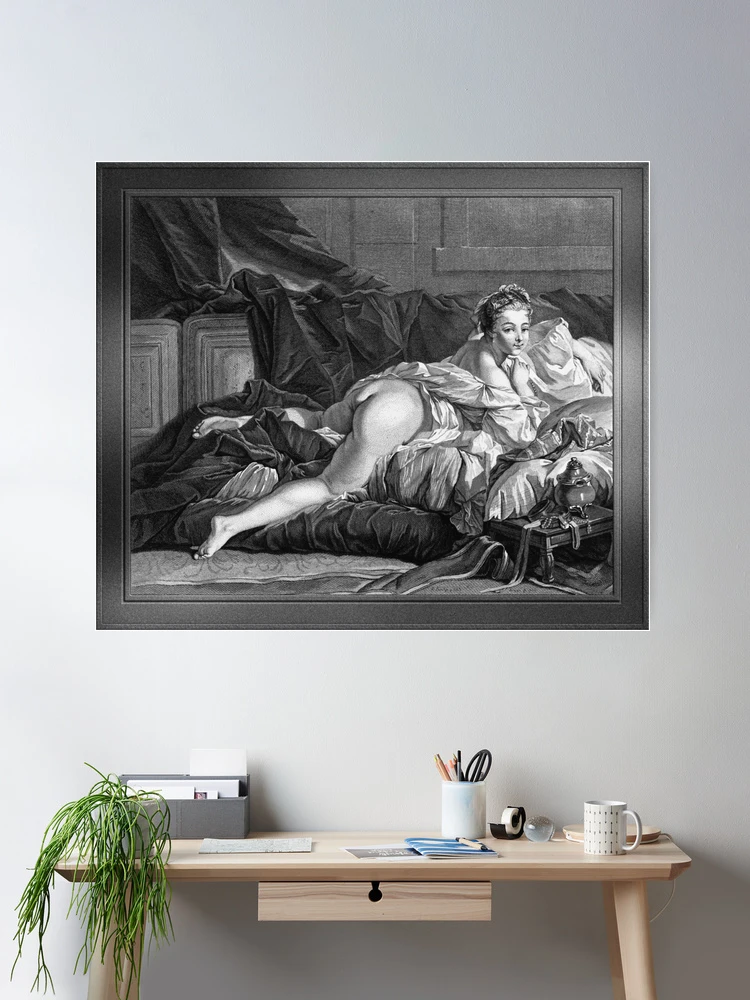
Tabla de contenido
Elementos compositivos & Técnica
The composition is dominated by the figure of a young woman emerging from sleep within a lavishly appointed bedchamber. Lévèsque masterfully utilizes light and shadow to define her form and create depth within the scene. The engraving technique itself is evident in the dense network of lines that build up tonal variations, simulating the effects of shading and highlighting. The artist’s hand is visible in the delicate cross-hatching and stippling used to render textures – from the soft folds of the bedclothes to the smooth skin of the figure. The overall effect is one of remarkable realism despite the monochromatic nature of the print.
El sujeto: A Moment of Awakening
El foco central de “Le Réveil” is undoubtedly the woman, depicted in a state of partial undress as she stirs from slumber. Her pose is relaxed and natural; one arm rests upon her head while the other hand gently pulls back the bedclothes revealing her leg. Su mirada está dirigida ligeramente lejos del espectador, suggesting a moment of private contemplation or perhaps a nascent awareness of being observed. The expression on her face isn’t overtly emotional but rather conveys a sense of quietude and gentle curiosity. This understated portrayal contributes to the work’s overall air of intimacy and discretion.
Configuración & Interior Details
The setting is an opulent bedroom, indicative of a comfortable lifestyle. Rich fabrics drape from the bed, creating a luxurious backdrop for the scene. A small table sits beside the bed, upon which rests a carafe and possibly other personal items. The details within the room are rendered with precision, adding to the sense of realism and providing context for the woman’s situation. The architectural elements – the window frame visible in the background and the paneling on the wall – suggest an interior designed for comfort and elegance.
Rococo Aesthetics & Influencias
“Le Réveil” firmly belongs within the aesthetic conventions of the Rococo period (roughly 1730-1770). This style emphasized grace, lightness, and a playful approach to subject matter. The scene’s focus on an intimate domestic moment aligns with the Rococo’s preference for depicting scenes of leisure and private life rather than grand historical or mythological narratives. The engraving likely draws inspiration from contemporary paintings by artists like François Boucher and Jean-Honoré Fragonard, who similarly explored themes of love, belleza, and sensuality within a refined and elegant framework.
Pierre Charles Lévèsque: Grabador & Artisan
Pierre Charles Lévèsque (1736 - 1812) was a French engraver known for his skill in reproducing works by leading artists of the time. While he wasn’t primarily an original artist himself, his engravings played a crucial role in disseminating images and artistic styles to a wider audience. Lévèsque’s work demonstrates a mastery of technical execution and a keen eye for detail, allowing him to faithfully capture the nuances of the originals he reproduced. “Le Réveil” stands as a testament to his abilities and provides valuable insight into the artistic tastes and cultural values of 18th-century France.
Significado & Legado
“Le Réveil” is more than just an engraving; it’s a window into the social customs, aesthetic preferences, and artistic practices of the Rococo era. It exemplifies the period’s fascination with intimate moments and its celebration of beauty and pleasure. As a well-executed example of Lévèsque’s work, “Le Réveil” contributes to our understanding of the role of engraving in 18th-century art and culture, demonstrating how prints served as both artistic works in their own right and important vehicles for disseminating images across Europe. The print’s enduring appeal lies in its ability to evoke a sense of quiet intimacy and timeless beauty.
Acerca de la obra de arte
Le Reveil es un grabado realizado por Pierre Charles Levesque que probablemente se basa en una de las tres pinturas creadas por el pintor francés de estilo rococó François Boucher., quien fue un pintor muy popular del siglo XVIII conocido por sus idílicas y voluptuosas pinturas sobre temas clásicos, alegorías decorativas, y escena pastoral; estas son la morena Odalisca c1745, Odalisca c1749, o Retrato de Marie-Louis O’Murphy (Desnudo en un sofá) c1752.
Es un retrato desnudo de una señorita acostada en una cama exuberante acolchada con muchas almohadas y sábanas., con una mesita de noche pequeña en la que se colocan varios artículos, incluyendo un jarrón, un joyero abierto con cintas y perlas de hilo que están dentro y alrededor del joyero.
Esta es una reproducción de viejos maestros de arte digital retocada de una imagen de dominio público.