

Swimmers – Famkes út de Boarne (The Bathers – The Daughters of the Spring)
“Swimmers – Famkes út de Boarne,” skildere yn 1855 troch de Frânske keunstner Henri Lehmann (1814-1882), is an exquisite example of 19th-century Romanticism. The painting is filled with sumptuous detail and evokes a sense of sensuality, graasje, en natuerlike skientme. Through a delicate interplay of light and shadow, Lehmann captures the purity of nature and the feminine form, weaving a narrative around mythological and symbolic themes. This remarkable artwork showcases the idealized female body within a lush natural landscape, a reflection of the Romantic movement’s celebration of nature’s beauty and the human connection to the divine.
Ynhâldsopjefte
It haadûnderwerp: The Daughters of the Spring
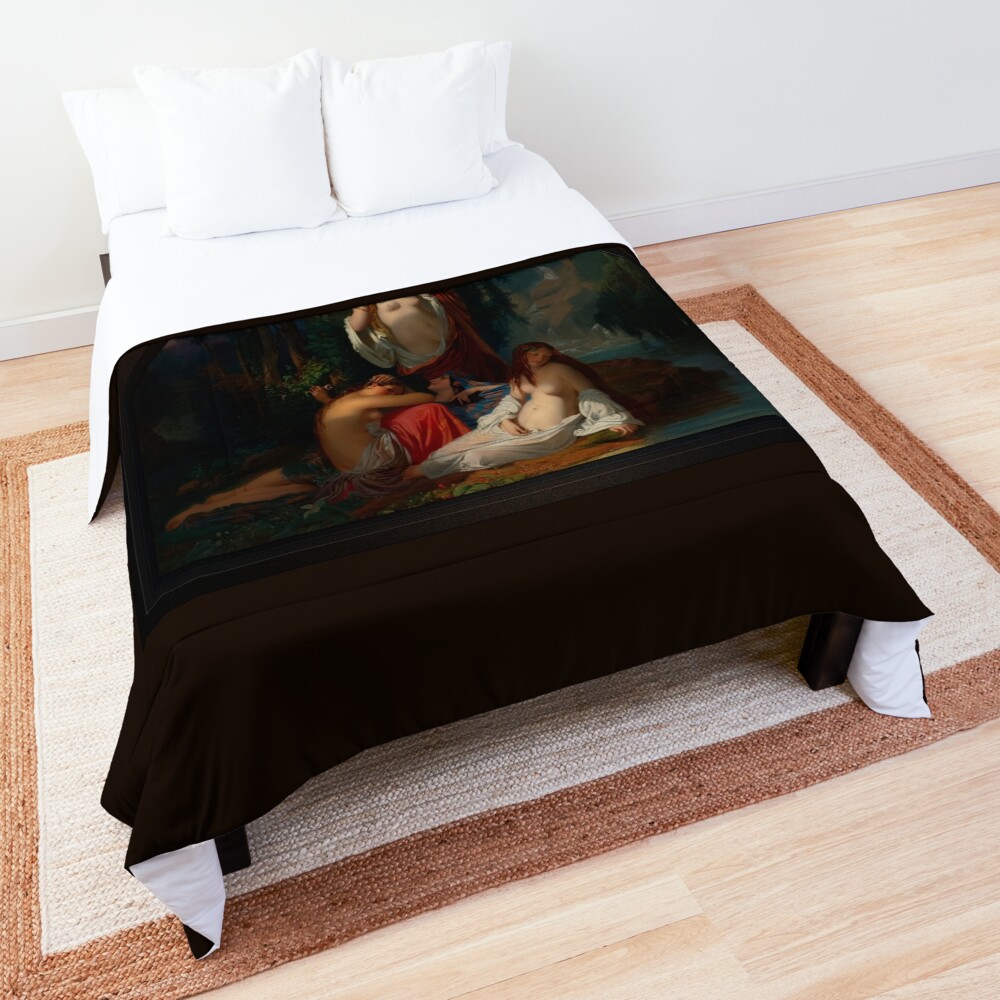
The central theme of the painting revolves around the mythological concept of the “daughters of the spring,” as described in the title. These women are depicted as ethereal bathers, seemingly immortal, as they engage with the waters of a spring, which symbolically represents both purification and renewal. Op de foargrûn, three women are positioned in a relaxed, almost meditative state, their bodies partially submerged in the water of a flowing river. Their poses are languid yet graceful, embodying a sense of serenity and beauty that transcends the mundane.
Each figure is portrayed with remarkable anatomical accuracy, as Lehmann carefully outlines the curves and contours of the human form. De sifers’ naturalism is enhanced by their delicate positioning and interaction with their surroundings, which imbue them with a sense of tranquility. One figure reclines with her arm resting on her companion, whose form is partially obscured by the gentle ripples of the spring water. This intimate connection between the women suggests an almost sacred bond, as though they are in communion with nature itself.
De tredde figuer, positioned at the far right of the composition, gazes into the distance with a serene expression. She wears a crown of flowers, an emblematic symbol of femininity and nature’s bounty, linking her to the Earth’s fertility. De sêfte, flowing drapery around her figure further highlights her divine nature, while the natural surroundings, in their richness and lushness, evoke a sense of fertility and vitality.
Terrein: A Dreamlike Landscape of Lush Vegetation
The landscape surrounding the bathers plays a crucial role in setting the mood and theme of the artwork. The background features a dense, idyllic forest, where vibrant greenery blends with the soft glow of sunlight filtering through the trees. The stream around the bathers winds its way through the rocky terrain, its crystal-clear water flowing with a serene, yet forceful, moasje. Lehmann expertly employs the use of light and shadow to highlight the reflective quality of the water, enhancing the mystique of the scene.
The surrounding foliage seems almost alive, with each leaf and vine meticulously rendered to convey both the richness and the exuberance of nature. De beammen, though not overbearing, create a sense of shelter and enclosure, inviting the viewer to focus on the scene at the center while remaining immersed in nature’s embrace. It wetter, reflective and glimmering, creates a mirror-like surface that enhances the illusion of an otherworldly, untouched paradise.
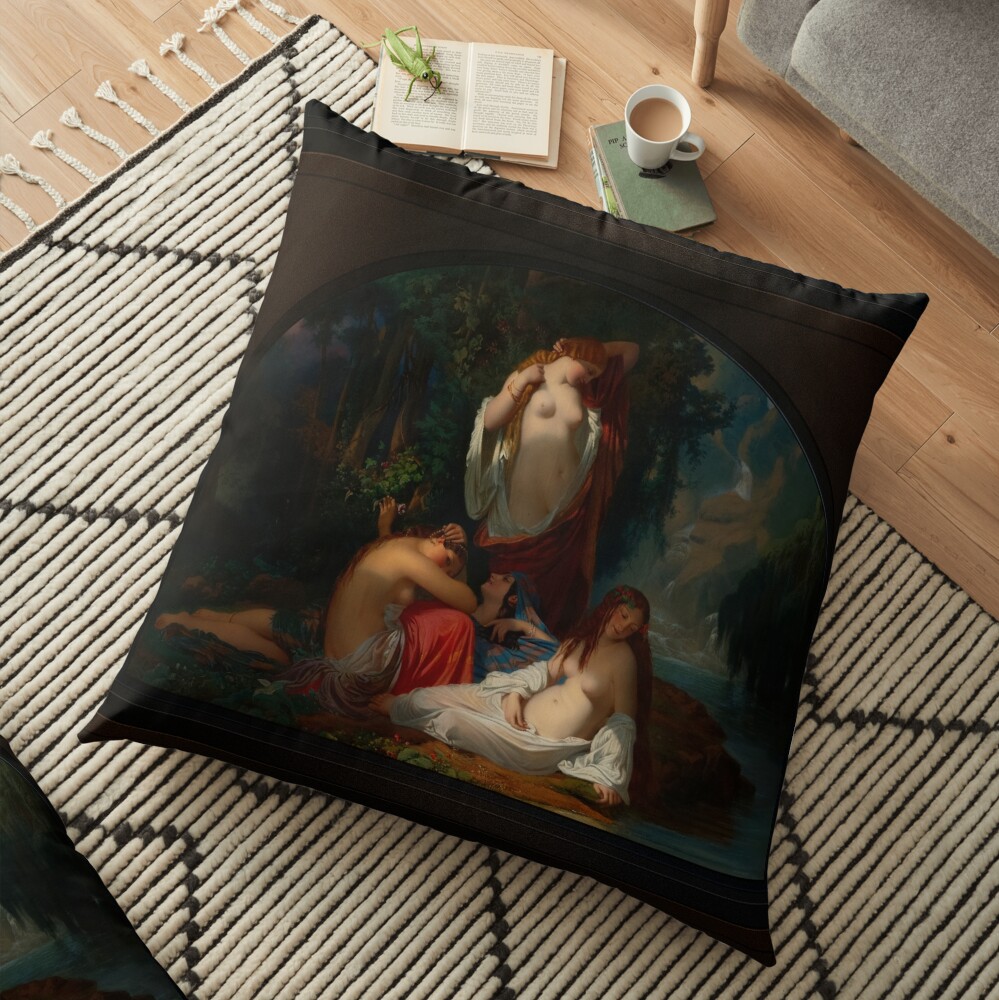
Yn 'e fierte, the natural elements merge to create a harmonious backdrop of craggy rocks and cascading waterfalls, their mist rising into the atmosphere, contributing to the scene’s dreamlike quality. This mystical environment draws on Romantic ideals, where nature is not only a setting but also a living, breathing force that is inseparable from the human experience.
Materialen en techniken: Rich Color Palette and Fine Detail
Henri Lehmann’s mastery of oil paint is evident in the meticulous brushwork and rich color palette he uses in “Les Baigneuses.” The skin tones of the figures are rendered with delicate layers of paint, highlighting the softness and warmth of the human body. The figures’ flesh is bathed in a warm, almost golden light, emphasizing their purity and connection to the natural world. The colors range from rich reds and earthy browns to serene blues and soft greens, all of which help to convey the harmony between the bathers and the lush environment.
The artist’s attention to detail is apparent in the fine rendering of the water, where Lehmann captures the subtle ripples and reflections with great precision. The surface of the water is not only a symbolic element of purity and rejuvenation but also an integral part of the composition that enhances the sense of depth and movement within the painting.
De sêfte, flowing fabrics of the bathers’ clothing further emphasize the delicate balance between nature and human form. Lehmann’s use of light to illuminate these figures is particularly striking, with natural light falling gently on their bodies, illuminating their contours while maintaining a soft, atmospheric quality. This interplay between light and shadow creates a palpable sense of space and dimension within the painting, inviting the viewer to linger over each exquisite detail.
Tema en stimming: Sensuality, Purity, and Renewal
“Swimmers – Famkes út de Boarne” carries strong themes of sensuality, suverens, and renewal. The bathers, with their flawless bodies and serene expressions, embody the timeless beauty of the female form, idealized yet deeply connected to nature. The scene evokes the Romantic belief in the restorative powers of nature, where the bathers are not only cleansing themselves physically but are also in the process of spiritual and emotional renewal.
The mood of the painting is one of tranquility and harmony, where the viewer is invited to pause and contemplate the connection between the human form and the natural world. De sêfte, glowing light and the lush, verdant surroundings create an atmosphere of peace and serenity, invoking feelings of calm and awe. Tagelyk, there is an underlying sense of mystery, as the bathers seem to exist outside of time and place, existing in a perfect, harmonious moment.
Lehmann’s choice to depict the bathers in this mythological context speaks to broader themes of transformation and rejuvenation. The figures seem to be caught in a moment of contemplation or introspection, perhaps awaiting a return to the purity and vitality they embody. This speaks to the Romantic notion of nature as a refuge from the turmoil of modern life, offering not only beauty but also the promise of renewal and transcendence.
Swimmers – Les Filles De La Source is a remastered digital art old masters reproduction of a public domain image that is available as an art print online.
Dizze digitale keunst skepping, lykas mei al it keunstwurk dat te finen is op 'e Xzendor7-webside is online te keap yn in ferskaat oan materiaalformaten, ynklusyf canvasprints, acryl prints, metalen prints, hout prints, framed prints, posters, en as rôlde canvasprints yn in ferskaat oan grutte fan 12 inches oan 72 inch ôfhinklik fan de grutte fan it eigentlike keunstwurk en de print-on-demand winkel wêrfan jo kieze om de keunst te keapjen.
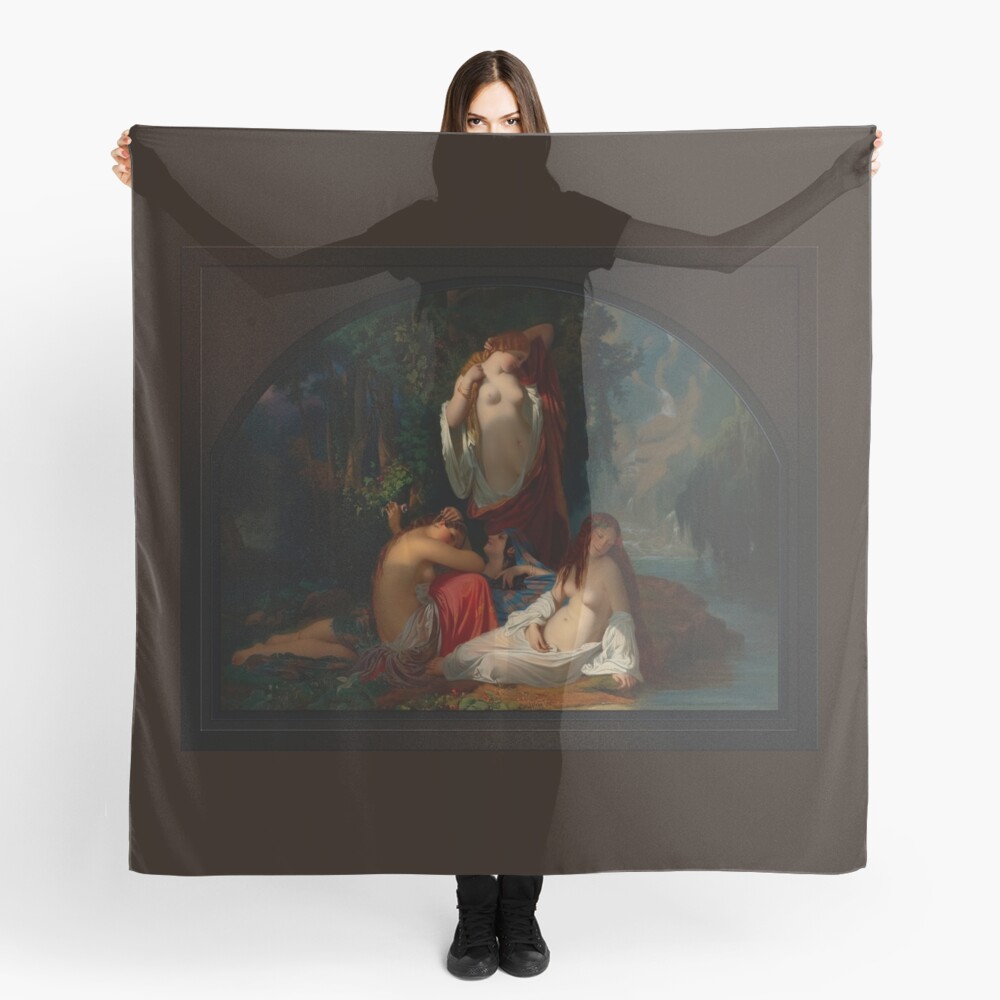
It keunstwurk is ek te krijen op in breed oanbod fan klean foar manlju en froulju, mokken, totes, sjaals, notebooks en tydskriften en in protte home decor produkten.
Artist Bio
Ynformaasje hjirûnder ôflaat fan Wikipedia.org
Henri was born Heinrich Salem Lehmann in Germany on April 14, 1814 and was first tutored by his father Leo Lehmann (1782 – 1859) dy't ek skilder wie, then later by other painters in Hamburg.
Doe't hy wie 17 years of age he decided to move to Paris, France to study under the French Painter Jean-Auguste-Dominique Ingres (1780 – 1867) a Neoclassic and Orientalist artist; and became one of his most successful students and a close associate.
Henri first exhibited his artwork at the Salon in 1835, and was able to garner a second place medal, and from that point on would regularly exhibit his artwork; winning first prize medals in 1840, 1848 en 1855.
Yn 1842 Henri permanently settled in Paris and obtained commissions for creating large public works, which included the Church ofSte-Clothilde, the Palais de Justice, the Palais du Luxembourg and the Hôtel de Ville, as well as many others.
Fjouwer jier letter yn 1846 he received the Légion d’honneur and the following year would become a French citizen; and in the same year opened his art studio.
Fourteen years later he was appointed to the position of instructor at the famous École des Beaux-Arts and by 1875 was appointed to the position of Professor.
Henri would also go on to paint portraits of well known figures of the time, including Italian Princess Cristina Trivulzio Belgiojoso (1808 – 1871), French Writer Marie-Henri Beyle (Stendhal 1783 – 1842), Polish Composer and Virtuoso Pianist Frédéric François Chopin (1810 – 1849), Hungarian Composer Franz Liszt (1811 – 1886), French Philosopher Victor Cousin (1792 – 1867), French Composer Charles Gounod (1818 – 1893) en in protte oaren.