

Snàmhadairean – Clann-nighean bhon Stòr (Na Bathers – Nighean an Earraich)
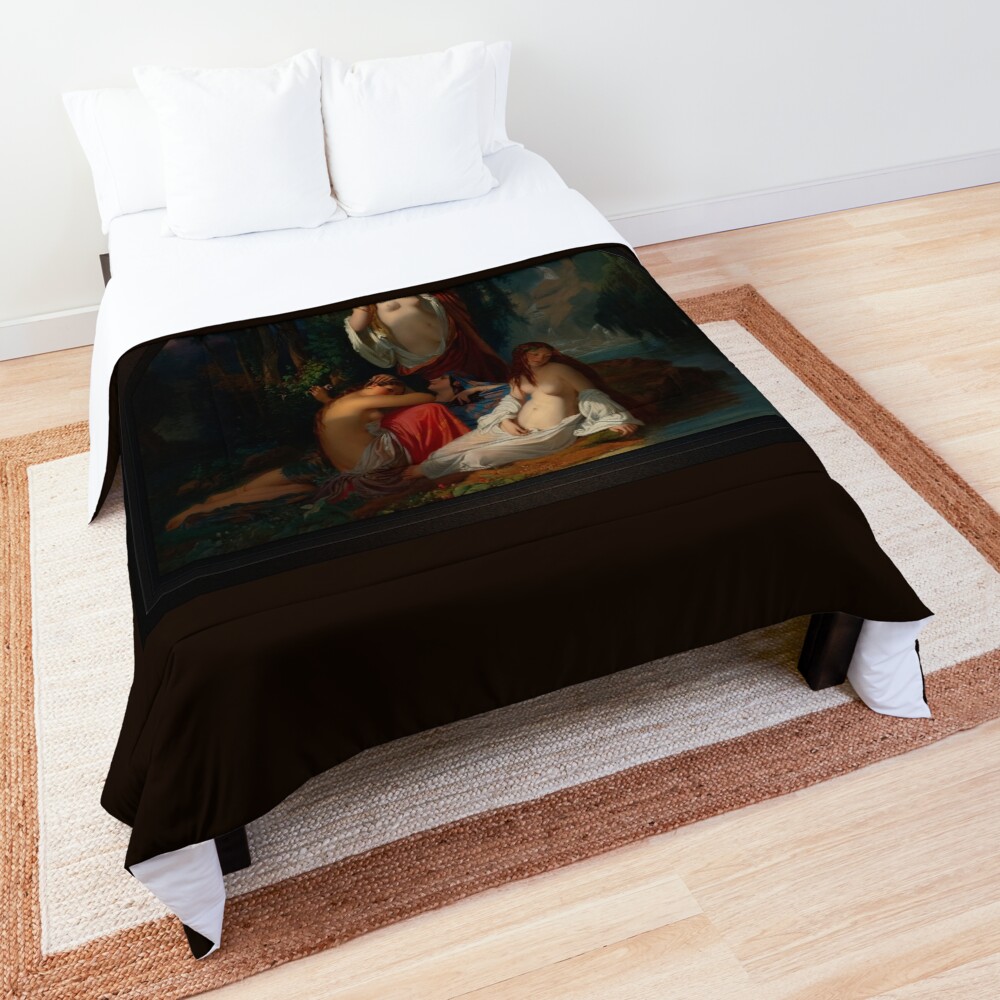
“Snàmhadairean – Clann-nighean bhon Stòr,” mar thoradh air stèidheachadh an Salon des Refusés le riaghaltas na Frainge 1855 leis an neach-ealain Frangach Henri Lehmann (1814-1882), na dheagh eisimpleir de Romanticism na 19mh linn. Tha an dealbh air a lìonadh le mion-fhiosrachadh inntinneach agus a 'toirt a-mach mothachadh air mothachadh, gràs, agus bòidhchead nàdarra. Tro eadar-chluich fìnealta de sholas is sgàil, Bidh Lehmann a’ glacadh purrachd nàdur agus an cruth boireann, a’ fighe aithris mu chuspairean beul-aithris agus samhlachail. Tha an obair-ealain iongantach seo a’ taisbeanadh a’ chorp boireann air leth freagarrach ann an cruth-tìre nàdarrach torach, mar fhaileas air a’ ghluasad romansach a’ comharrachadh bòidhchead nàdair agus an ceangal daonna ris an diadhachd.
Clàr-innse
Am Prìomh Chuspair: Nighean an Earraich
Tha prìomh chuspair an deilbh ag atharrachadh timcheall air bun-bheachd miotasach an “nigheanan an earraich,” mar a tha air a mhìneachadh san tiotal. Tha na boireannaich sin air an sealltainn mar luchd-snàmh ethereal, a rèir coltais neo-bhàsmhor, fhad 's a tha iad a' dol an sàs ann an uisgeachan tobair, a tha gu samhlachail a’ riochdachadh an dà chuid purrachadh agus ùrachadh. Ri aghaidh na deilbh, tha triùir bhoireannach air an suidheachadh ann an socair, staid meòrachail cha mhòr, chaidh an cuirp gu ìre fon uisge ann an uisge abhainn a tha a’ sruthadh. Tha na puist aca lag ach gràsmhor, a’ toirt a-steach faireachdainn de shàmhchair agus de bhòidhchead a tha a’ dol thairis air an fhìor shaoghal.
Tha gach figear air a riochdachadh le mionaideachd anatomical iongantach, mar a tha Lehmann a’ toirt cunntas mionaideach air cromagan agus cumaidhean cruth an duine. Na figearan’ tha nàdarachas air a neartachadh leis an t-suidheachadh fìnealta aca agus an eadar-obrachadh leis na tha timcheall orra, a tha toirt orra mothachadh air suaimhneas. One figure reclines with her arm resting on her companion, whose form is partially obscured by the gentle ripples of the spring water. This intimate connection between the women suggests an almost sacred bond, as though they are in communion with nature itself.
The third figure, positioned at the far right of the composition, gazes into the distance with a serene expression. She wears a crown of flowers, an emblematic symbol of femininity and nature’s bounty, linking her to the Earth’s fertility. Am bog, flowing drapery around her figure further highlights her divine nature, while the natural surroundings, in their richness and lushness, evoke a sense of fertility and vitality.
Talamh: Cruth-tìre bruadar de fhàsmhorachd lus
The landscape surrounding the bathers plays a crucial role in setting the mood and theme of the artwork. The background features a dense, idyllic forest, where vibrant greenery blends with the soft glow of sunlight filtering through the trees. The stream around the bathers winds its way through the rocky terrain, its crystal-clear water flowing with a serene, yet forceful, gluasad. Lehmann expertly employs the use of light and shadow to highlight the reflective quality of the water, enhancing the mystique of the scene.
The surrounding foliage seems almost alive, with each leaf and vine meticulously rendered to convey both the richness and the exuberance of nature. Na craobhan, though not overbearing, create a sense of shelter and enclosure, inviting the viewer to focus on the scene at the center while remaining immersed in nature’s embrace. An t-uisge, reflective and glimmering, creates a mirror-like surface that enhances the illusion of an otherworldly, untouched paradise.
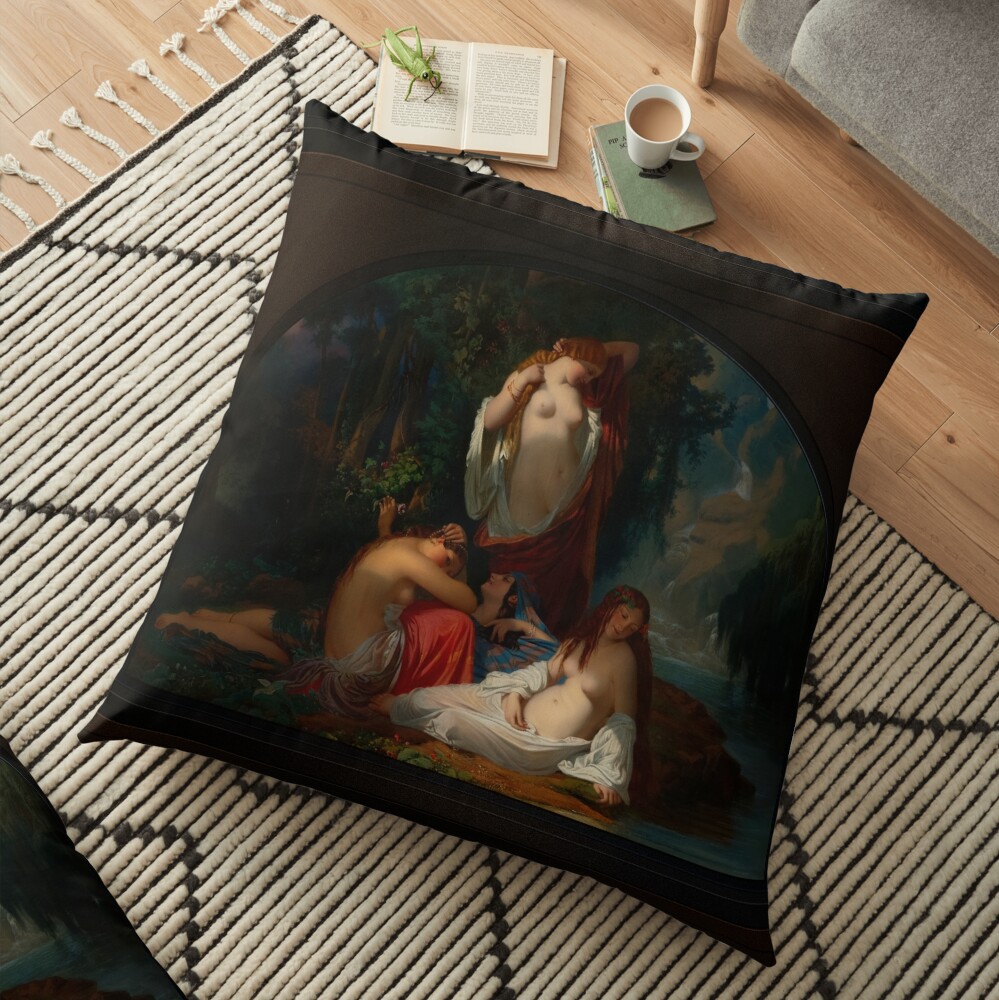
Air astar, the natural elements merge to create a harmonious backdrop of craggy rocks and cascading waterfalls, their mist rising into the atmosphere, contributing to the scene’s dreamlike quality. This mystical environment draws on Romantic ideals, where nature is not only a setting but also a living, breathing force that is inseparable from the human experience.
Stuthan agus dhòighean: Palette dath beairteach agus mion-fhiosrachadh
Henri Lehmann’s mastery of oil paint is evident in the meticulous brushwork and rich color palette he uses in “Les Baigneuses.” The skin tones of the figures are rendered with delicate layers of paint, highlighting the softness and warmth of the human body. The figures’ flesh is bathed in a warm, almost golden light, emphasizing their purity and connection to the natural world. The colors range from rich reds and earthy browns to serene blues and soft greens, all of which help to convey the harmony between the bathers and the lush environment.
The artist’s attention to detail is apparent in the fine rendering of the water, where Lehmann captures the subtle ripples and reflections with great precision. The surface of the water is not only a symbolic element of purity and rejuvenation but also an integral part of the composition that enhances the sense of depth and movement within the painting.
Am bog, flowing fabrics of the bathers’ clothing further emphasize the delicate balance between nature and human form. Lehmann’s use of light to illuminate these figures is particularly striking, with natural light falling gently on their bodies, illuminating their contours while maintaining a soft, atmospheric quality. This interplay between light and shadow creates a palpable sense of space and dimension within the painting, inviting the viewer to linger over each exquisite detail.
Cuspair agus mood: Mothachadh, Purity, agus Ath-nuadhachadh
“Snàmhadairean – Clann-nighean bhon Stòr” carries strong themes of sensuality, purrachd, agus ùrachadh. The bathers, with their flawless bodies and serene expressions, embody the timeless beauty of the female form, idealized yet deeply connected to nature. The scene evokes the Romantic belief in the restorative powers of nature, where the bathers are not only cleansing themselves physically but are also in the process of spiritual and emotional renewal.
The mood of the painting is one of tranquility and harmony, where the viewer is invited to pause and contemplate the connection between the human form and the natural world. Am bog, glowing light and the lush, verdant surroundings create an atmosphere of peace and serenity, invoking feelings of calm and awe. Aig an aon àm, there is an underlying sense of mystery, as the bathers seem to exist outside of time and place, existing in a perfect, harmonious moment.
Lehmann’s choice to depict the bathers in this mythological context speaks to broader themes of transformation and rejuvenation. The figures seem to be caught in a moment of contemplation or introspection, 's dòcha a' feitheamh ri tilleadh chun a' ghlanachd agus an spionnadh a tha iad a' gabhail a-steach. Tha seo a’ bruidhinn ris a’ bheachd romansach mu nàdar mar thearmann bho bhuaireadh beatha an latha an-diugh, a’ tabhann chan e a-mhàin bòidhchead ach cuideachd gealladh ath-nuadhachaidh agus tar-ghnèitheachd.
Snàmhadairean – Tha Les Filles De La Source na ath-riochdachadh seann mhaighstirean ealain dhidseatach de ìomhaigh àrainn poblach a tha ri fhaighinn mar clò-ealain air-loidhne.
An cruthachadh ealain didseatach seo, mar a tha leis a h-uile obair-ealain a gheibhear air làrach-lìn Xzendor7 ri fhaighinn airson a cheannach air-loidhne ann an grunn chruthan stuth a’ gabhail a-steach clò-bhualaidhean canabhas, dealbhan acrylic, clò-bhualaidhean meatailt, clò-bhualaidhean fiodha, lèileagan frèam, postairean, agus mar chlò-bhualadh canabhas air a roiligeadh ann an grunn mheudan bho 12 òirlich gu 72 òirlich a rèir meud an fhìor obair-ealain agus a’ bhùth clò-bhualaidh air iarrtas a thaghas tu airson an ealain a cheannach.
Tha an obair-ealain cuideachd ri fhaighinn air raon farsaing de dh’ aodach fireannaich is boireannaich, mugaichean, toitean, sgarfaichean, leabhraichean notaichean agus irisean agus mòran stuthan sgeadachaidh dachaigh.
Neach-ealain Bio
Fiosrachadh gu h-ìosal a thàinig bho Wikipedia.org
Rugadh Henri Heinrich Salem Lehmann sa Ghearmailt sa Ghiblean 14, 1814 agus chaidh a theagasg an toiseach le athair Leo Lehmann (1782 – 1859) a bha cuideachd na pheantair, an uairsin le peantairean eile ann an Hamburg.
Nuair a bha e 17 bliadhna a dh'aois chuir e roimhe gluasad gu Paris, An Fhraing gu bhith ag ionnsachadh fon Pheantair Frangach Jean-Auguste-Dominique Ingres (1780 – 1867) neach-ealain Neoclassic agus Orientalist; agus thàinig e gu bhith mar aon de na h-oileanaich a bu shoirbheachail aige agus na neach-dàimh dlùth.
Thaisbean Henri an obair ealain aige an toiseach aig an Salon ann an 1835, agus bha e comasach air bonn an dàrna àite a chruinneachadh, agus bhon àm sin a-mach bhiodh e gu cunbhalach a’ taisbeanadh an obair ealain aige; a’ buannachadh a’ chiad bhuinn ann an 1840, 1848 agus 1855.
Ann an 1842 Shuidhich Henri gu maireannach ann am Paris agus fhuair e coimiseanan airson obraichean poblach mòra a chruthachadh, anns an robh Eaglais Ste-Clothilde, am Palais a' Cheartais, am Palais du Lucsamburg agus an Hôtel de Ville, cho math ri mòran eile.
Ceithir bliadhna an dèidh sin ann an 1846 fhuair e an Légion d’honneur agus an ath bhliadhna bhiodh e na shaoranach Frangach; agus anns an aon bhliadhna dh'fhosgail e stiùidio ealain.
Ceithir bliadhna deug às deidh sin chaidh a chur an dreuchd mar neach-teagaisg aig an École des Beaux-Arts ainmeil agus le 1875 air a shuidheachadh gu dreuchd an Ollaimh.
Bhiodh Henri cuideachd a’ peantadh dhealbhan de dhaoine ainmeil aig an àm, nam measg a’ Bhana-phrionnsa Eadailteach Cristina Trivulzio Belgiojoso (1808 – 1871), Sgrìobhadair Frangach Marie-Henri Beyle (Stendhal 1783 – 1842), Sgrìobhaiche-ciùil Pòlach agus neach-piàna sàr-mhath Frédéric François Chopin (1810 – 1849), Sgrìobhaiche-ciùil às an Ungair Franz Liszt (1811 – 1886), Feallsanachd Frangach Victor Cousin (1792 – 1867), Sgrìobhaiche-ciùil Frangach Teàrlach Gounod (1818 – 1893) agus mòran eile.