

Lily Fairy c1888
Luis Ricardo Falero, syntynyt vuonna 1851 ja kuolee sisään 1896, oli espanjalainen taidemaalari, ja hänen taideteoksensa nimeltä Lily Fairy, luotu vuonna 1888, on osoitus hänen asiantuntemuksestaan eteeristen aiheiden esittämisessä. Tunnettu romanttisesta ja myyttisestä lähestymistavastaan, Falero kuvasi usein naisia erilaisissa fantasia- ja allegorisissa ympäristöissä. Tässä nimenomaisessa työssä, Lily Fairy, hän vangitsee myyttisen olennon kauneuden, keiju, joka ruumiillistaa sekä eteerisen että maanpäällisen, hänen muotonsa sulautuu saumattomasti häntä ympäröivään luonnolliseen ympäristöön. Teos yhdistää myyttisen maailman unenomaisen laadun taiteilijan tyylille tyypilliseen huolelliseen huomioimiseen luonnollisiin yksityiskohtiin.
Sisällysluettelo
Pääaihe: Liljakeiju
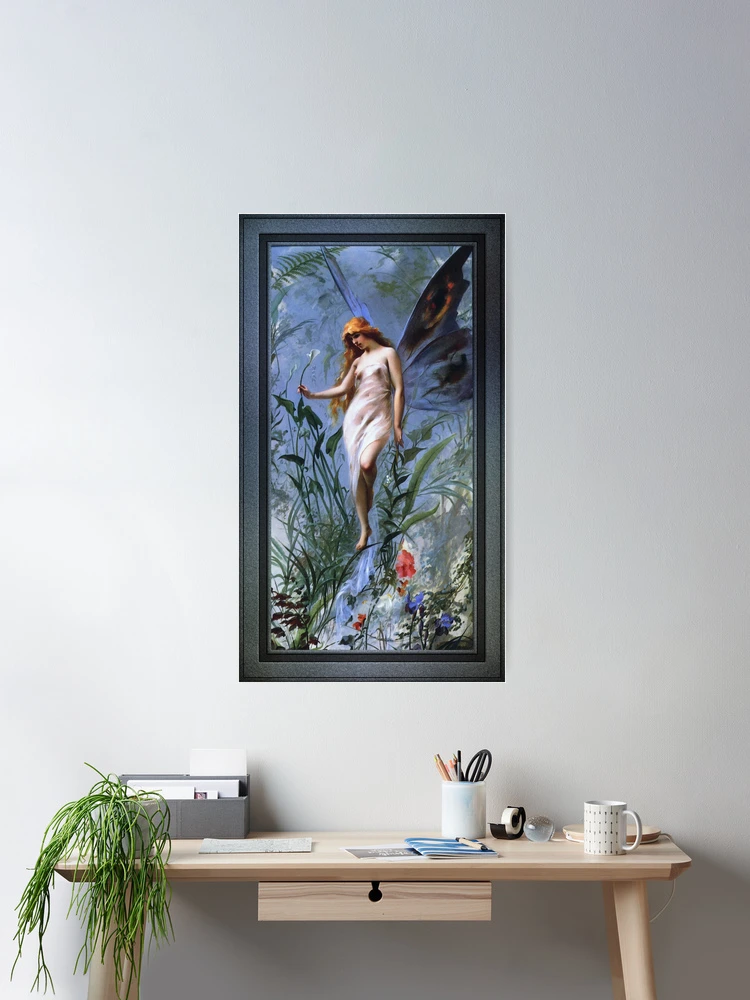
Keskeinen hahmo Lily Fairy is a delicate, ethereal fairy standing amidst a lush forested backdrop. Hänen pitkä, golden hair flows freely, a visual extension of her otherworldly essence. This character, draped in a translucent, lentävä mekko, carries a subtle air of vulnerability and grace. The gown itself is a delicate white, nearly blending into the light surroundings of the forest, reflecting the diaphanous nature of the fairy. Falero’s skillful use of light and shade accentuates her lithe form, almost making her appear to float, caught between the realms of fantasy and reality.
The fairy’s wings, which rise gently behind her, are painted with a mix of bright and muted hues, shimmering in a way that suggests the fragility of her presence. These wings are depicted with a certain detail, muistuttaa perhosen herkkää rakennetta, kutsuu katsojan sekä ihailemaan heidän kauneuttaan että ihmettelemään heidän herkkää voimaa. Taiteilijan siipien käsittely viittaa yliluonnolliseen yhteyteen luontoon, ikään kuin keiju itse olisi ympäröivän kasviston ja kukkien ruumiillistuma. Hänen asentonsa, toinen käsi hieman koholla ja pitelee liljakukkaa, antaa hänelle suloisen seesteisyyden ilmaa, yhdistää hänen imagonsa entisestään luonnon puhtauteen ja suloisuuteen.
Maasto: A Lush Garden of Life
Ympäristö sisään Lily Fairy on elävä esitys luonnosta, joka on täynnä elämää. Keijua ympäröi erilaisia kasveja, kukat, ja vihreät lehdet, jotka näyttävät kukoistavan sopusoinnussa hänen kanssaan. Maisema on vehreää, pehmeät lakaistavat saniaisten lehdet ja paksut, aaltoilevat ruohonkorvat, värikkäiden kukintojen välissä. Nämä kukat, enimmäkseen punaisen sävyissä, violetti, ja valkoinen, edistää unenomaista tunnelmaa, niiden kirkkaat terälehdet korostavat lehtien hiljaisempia vihreitä. Faleron huolellinen sivellintyö herättää nämä luonnon elementit henkiin, jokainen lehti ja kukka on renderoitu selkeästi ja tarkasti, mikä osoittaa hänen kykynsä vangita ympäröivän maailman orgaanista kauneutta.
Tausta on pehmeä ja epäselvä, luo syvyyden tunteen ja tunteen, että keiju seisoo tunnetun ja tuntemattoman rajalla, tutun kasviston ja mystisen maailman välillä, jossa hän asuu. Tätä rajaa leimaa hienovaraisesti häntä ympäröivien kasvien lievä vääristymä, ehdottaa, että he, liian, ovat osa lumottua valtakuntaa, jota keiju miehittää.
Tyyli ja teema
Faleron tyyliin Lily Fairy reflects a combination of Romanticism and Symbolism, genres that often explore the intersection between the natural world and the supernatural. This fairy, like many of the mythological subjects depicted by Falero, is shown as a creature of beauty and grace, yet her fragile form and connection to nature hint at an ephemeral existence. Taiteilijan tekniikka, a combination of fine brushwork and gentle transitions of color, evokes a sense of movement and breath within the stillness of the painting. His use of soft, blended light against darker shadows enhances the mystical atmosphere, creating a soft halo around the fairy’s figure.
The theme of the artwork is one of harmony between the magical and the natural, illustrating a world where the two are intimately connected. The fairy seems to emerge from the very earth itself, her form perfectly integrated with the flora that surrounds her. This suggests that Falero was interested not only in the beauty of women but also in exploring their symbolic relationship with nature. Keiju, in this light, is more than a mythical being; she represents a harmonious integration between humanity and the environment, an idealized version of purity and beauty.
Mieliala ja ilmapiiri
Mieliala Lily Fairy is serene and tranquil, with an underlying sense of delicate mysticism. The soft color palette dominated by pastel tones and gentle greens, evokes a feeling of peacefulness, as though the viewer has been transported into a quiet, enchanted glade. The fairy herself embodies an air of calm, her gaze downward, almost wistful, as though lost in a reverie. The surrounding flora further enhances this quiet mood, its lush, abundant growth suggesting a peaceful, undisturbed natural world where everything is in balance.
kuitenkin, beneath the peaceful serenity, there is also a subtle sense of fleetingness. The fairy’s translucent dress, the soft light surrounding her, and the ephemeral nature of her wings all contribute to a feeling that this moment is precious and will not last forever. This transient quality is a hallmark of Falero’s approach, capturing a snapshot of a world that exists only in the viewer’s imagination.
Johtopäätös
Luis Ricardo Falero’s Lily Fairy is a captivating example of his ability to merge realism with fantasy, creating a magical, ethereal world that is both grounded in nature and transcendent of it. The delicate fairy, surrounded by a lush, vibrant garden, becomes a symbol of the harmony between the supernatural and the natural world. Through his meticulous attention to detail and his ethereal handling of light and color, Falero invites the viewer to step into a world of tranquility and beauty, where the boundaries between the real and the fantastical blur into a singular, harmonious vision.
Lily Fairy on retusoitu digitaalisen taiteen vanhojen mestarien kopio julkisesta kuvasta.
Artist Bio Derived Wikipedia.org
Falero syntyi Granadassa ja aloitti uransa Espanjan laivastossa, mutta luopui vanhempiensa pettymyksestä; kun hän päätti matkustaa Pariisiin, jossa hän opiskeli taidetta, kemia ja konetekniikka.
Aikana on kemian ja konetekniikan opintoja; hän piti suoritettavia kokeita liian vaarallisina, näin hän saa keskittymään huomionsa yksinomaan maalaamiseen.
Tämän seurauksena hänestä tuli ranskalaisen muotokuvamaalarin ja orientalistin Gabriel-Joseph-Marie-Augustin Ferrierin opiskelija (1847 – 1914). Pariisin jälkeen, hän muutti Lontooseen, missä hän jatkoi opintojaan, ja lopulta asettui.
Falero oli erityisen kiinnostunut tähtitieteestä ja sisällytti taivaalliset tähtikuviot moniin teoksiinsa, kuten “Komeetin avioliitto” ja “Twin Stars”. Hänen kiinnostuksensa ja tietämyksensä tähtitieteestä sai hänet myös kuvaamaan Camille Flammarionin teoksia.
Sisään 1896, hänen kuolemansa vuosi, Maud Harvey haastoi Faleron isyyden vuoksi. Puvussa väitettiin, että Falero vietti Harveyn hänen ollessaan 17, ensin palveli hänen sisäkkäinsä, ja sitten hänen mallinsa. Kun hän huomasi, että hän oli raskaana, hän erotti hänet.
Hän voitti tapauksen ja sai viisi shillinkiä viikossa heidän lapsensa tueksi. Falero kuoli University College -sairaalassa, Lontoo, iässä 45