

Portrait of Maria Mancini; Duchess of Bouillon
Portrait of Maria Mancini; Duchess of Bouillon (1639 – 1715) by Flemish Painter Jacob Ferdinand Voet (1639 – 1700); considered to be one of the most fashionable portrait painters of the late Baroque period.
This is a beautiful and enchanting portrait of Maria Mancini; Duchess of Bouillon dressed in white silk dress with pink silk accents on the ends of the sleeves and around the chest, held in place by pined blue-black gemstones; she is also wearing a diamond headdress to the right and back of her head.
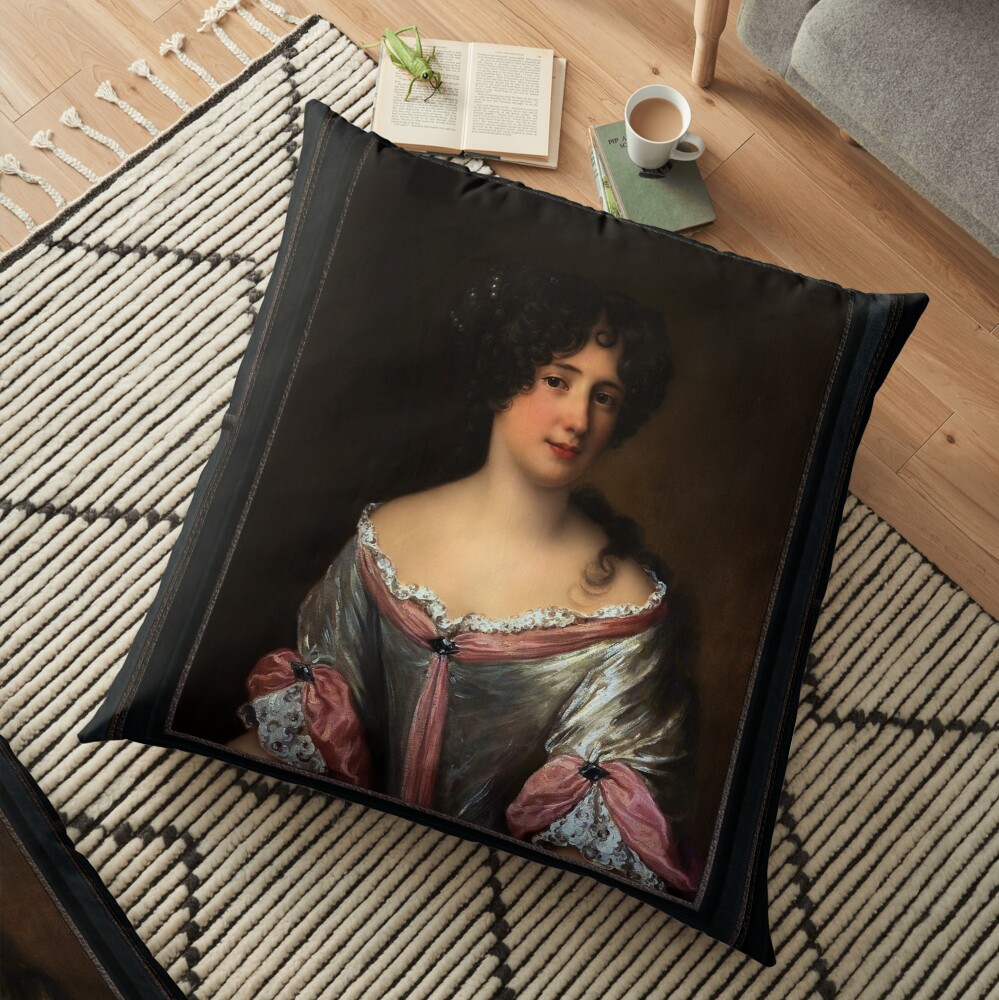
Esta é uma reprodução retocada de arte digital de antigos mestres de uma imagem de domínio público que está disponível como impressão em tela enrolada.
Below Information Courtesy Wikipédia.org
Poucos detalhes sobre a infância de Voet, treinamento e carreira foram preservados. Voet nasceu em Antuérpia, filho do pintor Elias Voet. Ele foi um dos quinze filhos; seu irmão mais velho, Carlo, mudou-se para Amsterdã e se casou em 1661 filha dos ricos Joan Coymans e Sophia Trip. Jacob deixou sua terra natal, Antuérpia, e viajou para Roma, onde residiu. 1663 para 1680.
Voet tornou-se membro dos Bentvueghels, uma associação de artistas principalmente holandeses e flamengos ativos em Roma. Voet drew a picture in charcoal of all the members of the Bentvueghels on the white-washed wall of an inn in Rome that was a popular meeting place of this group. The picture was treasured enough to be spared whenever the walls were repainted.
In Rome Voet’s skills as a portrait painter were much in demand at the Papal court and by the Roman aristocracy, including the prominent Colonna and Odescalchi families. He was patronised by Christina, Queen of Sweden, who was then resident in Rome. He painted her portrait as well as that of her friend, Cardinal Azzolino. Englishmen and other Europeans visiting Rome on their Grand Tour also commissioned portraits from Voet.
Em 1671 – 1672 Voet received a commission from Cardinal Chigi to paint portraits of young woman who were prominent in Roman society. He created a first series of 37 portraits of the most enchanting women of Rome (‘Galleria delle Belle’) between 1672 e 1678 for Cardinal Chigi’s dining room in his palace in Ariccia (in the Alban hills outside Rome). He later copied and even enlarged the series for other Roman and Italian noble families. This started a rage for portraits of young women in Rome and abroad.