

Marie-Gabrielle Capet
Marie-Gabrielle Capet (Hunan-bortread c1783) gan y Peintiwr Ffrengig Marie-Gabrielle Capet (1761 – 1818), a beintiodd yn yr Arddull Neo-Glasurol
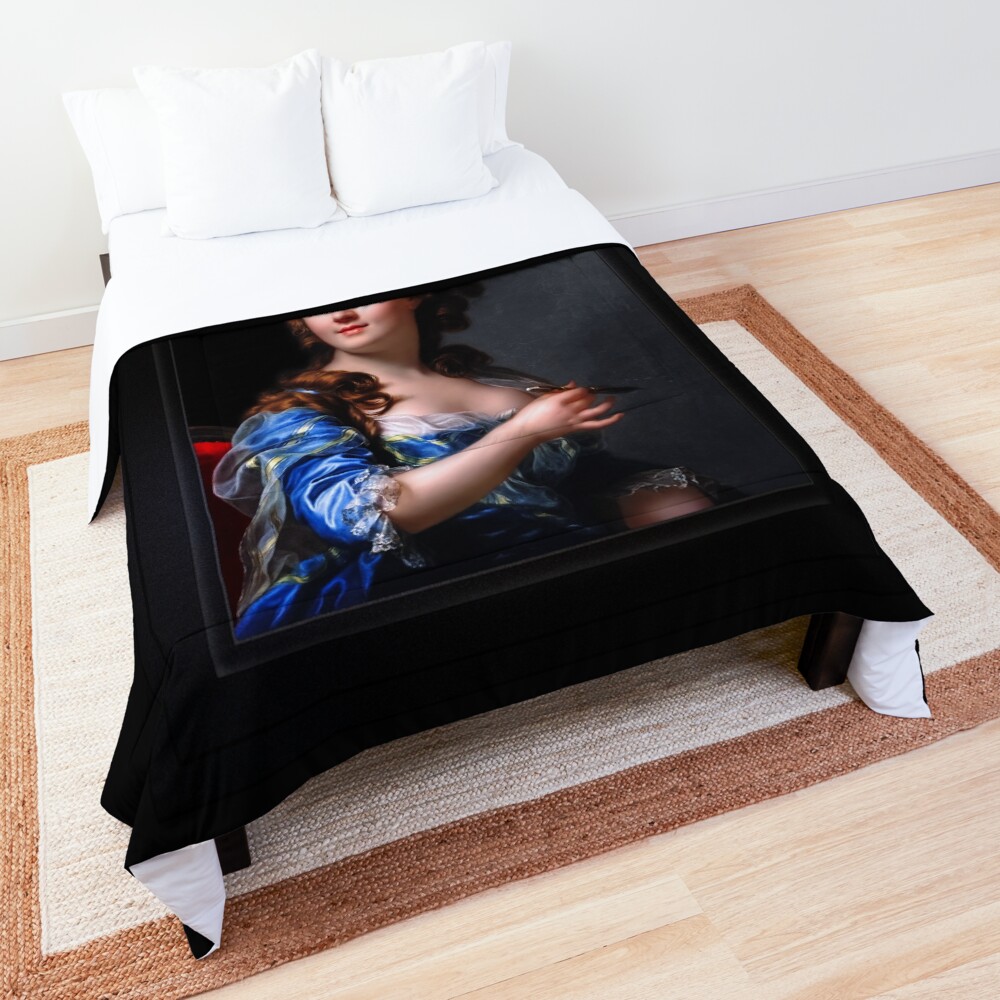
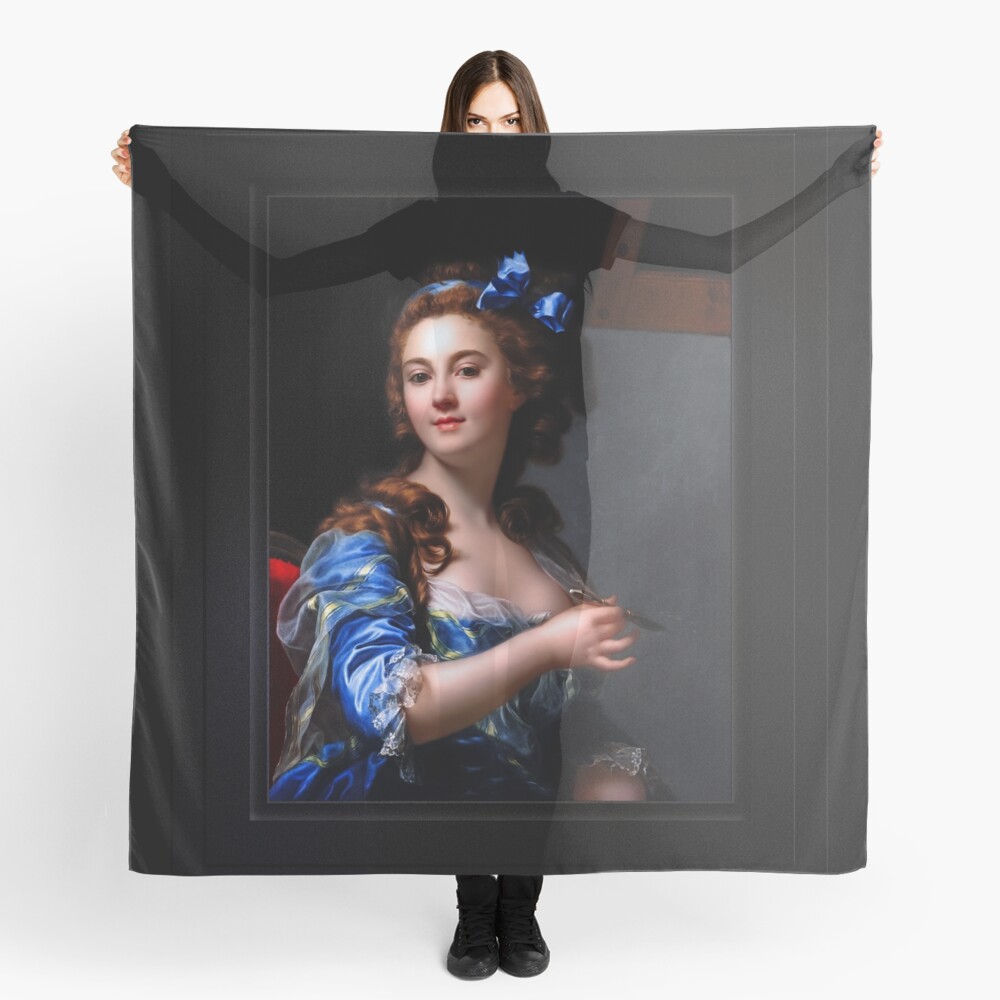
Mae hwn yn hardd a chain portread o ddynes; mae'r hunanbortread hwn gan Marie-Gabrielle Capet yn ei hudo yn ei holl ogoniant ieuenctid.
Mae hi'n eistedd ar gadair gyda phadin coch o flaen îsl peintio gyda golau yn ei goleuo o ochr chwith y paentiad, tra'n dal daliwr sialc metel yn ei llaw dde sydd â rhwbiwr wedi'i ffitio i mewn i slot ar ei ben ôl; gydag amlinelliad ysgafn o ffigwr y mae hi wedi'i dynnu ar y cynfas a osodwyd ar yr îsl.
Mae hi'n gwisgo rhuban glas llydan o amgylch ei gwallt, sydd wedi ei glymu mewn bwa, ychydig i ffwrdd i'w ochr chwith, with her long curly hair flowing on her shoulders.
She is dressed in a matching blue dress that has sheer silk shawl like garment weaved into that has gold stripe patters throughout the shoulders, upper sleeves and front of the dress; as well as silk ruffles at the cuffs of the short sleeves.
Mae hwn yn atgynhyrchiad celf ddigidol wedi'i atgynhyrchu o ddelwedd parth cyhoeddus sydd ar gael i'w brynu ar-lein fel a print cynfas wedi'i rolio.
Gwybodaeth Islaw sy'n Deillio o Wikipedia.org
Marie-Gabrielle came from a modest background and in her youth attended a public drawing school located in her town. Yn 1781, twenty-year-old Capet moved to Paris to become the student of Adélaïde Labille-Guiard (1749–1803), a Neoclassical artist who was admitted to the Royal Academy of Art in 1783.
In 18th Century France, the Royal Academy of Art was responsible for training artists and exhibiting artworks at the Salon that glorified heroic values promoted by the Bourbon monarchy. Until the French Revolution, the Royal Academy of Art in Paris was the central institution for official artistic practice, and limited its number of female students to four at a time.
Capet showed her early work at the Exposition de la jeunesse, and later exhibited at the Salon when it was opened to all artists after the French Revolution. Her body of work included miniature paintings, oil paintings, and pastels, which were praised for their virtuoso draftsmanship and use of colour.
Many of her pastel paintings were portraits, though by 1808 she was regarded as a history painter in her own right; and counted among other customers several members of the royal family, and other members of Paris society, such as the lawyer Pierre-Nicolas Berryer and the playwright Joseph Chénier.
Capet and Labille-Guiard not only enjoyed a professional relationship, but were also close family friends. Capet would move in with her teacher at the Louvre until Labille-Guiard’s death. Even after Adélaïde Labille-Guiard married the painter François Vincent in 1799, Capet continued to live in their home. After Adélaïde Labille-Guiard’s death, Capet lived with her husband until his death in 1816. Upon his death, Capet purchased Labille-Guiard and Vincent’s estate.
Among Marie-Gabrielle Capet best known works are those of Mesdames Adelaide and Victoire, Madame Vincent surrounded by her pupils, Mlle. Mars, and Jean-Antoine Houdon.