

Marie-Gabrielle Capet
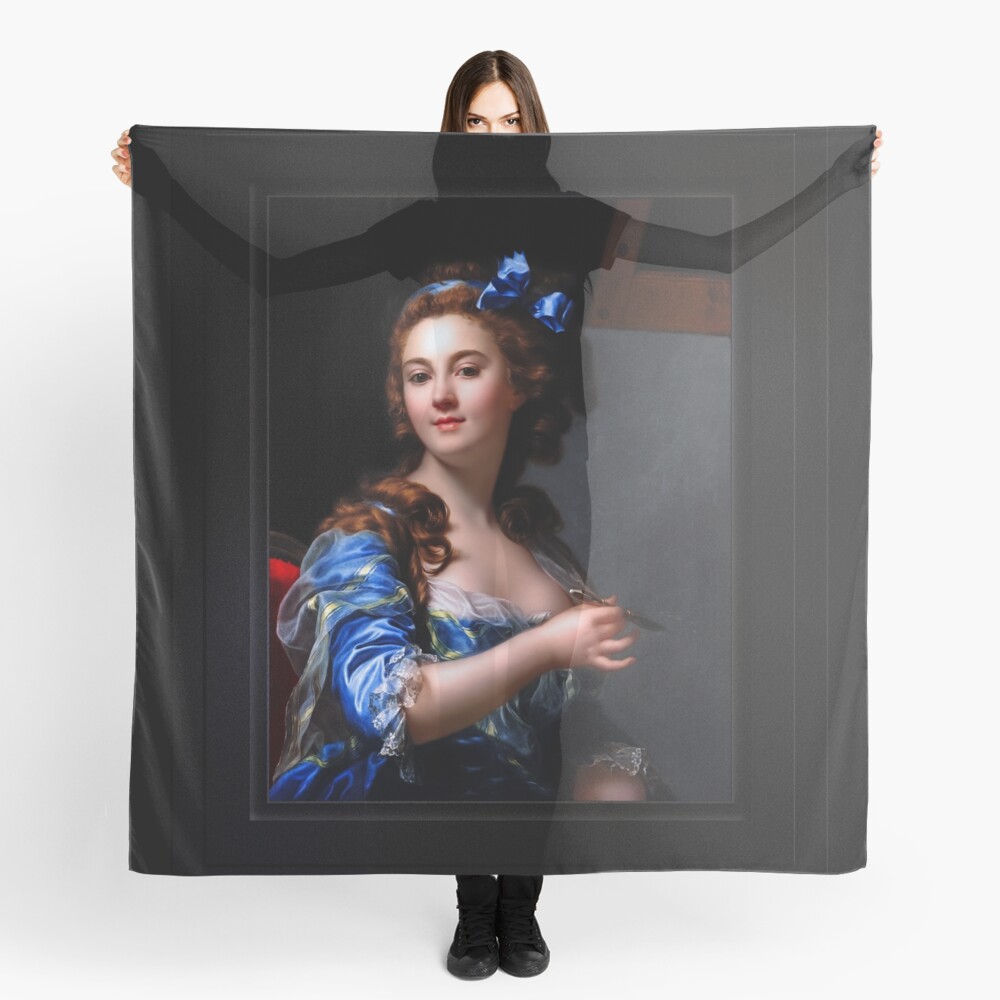
Marie-Gabrielle Capet (Autoerretratua c1783) Marie-Gabrielle Capet margolari frantziarrarena (1761 – 1818), Estilo Neoklasikoan margotu zuena
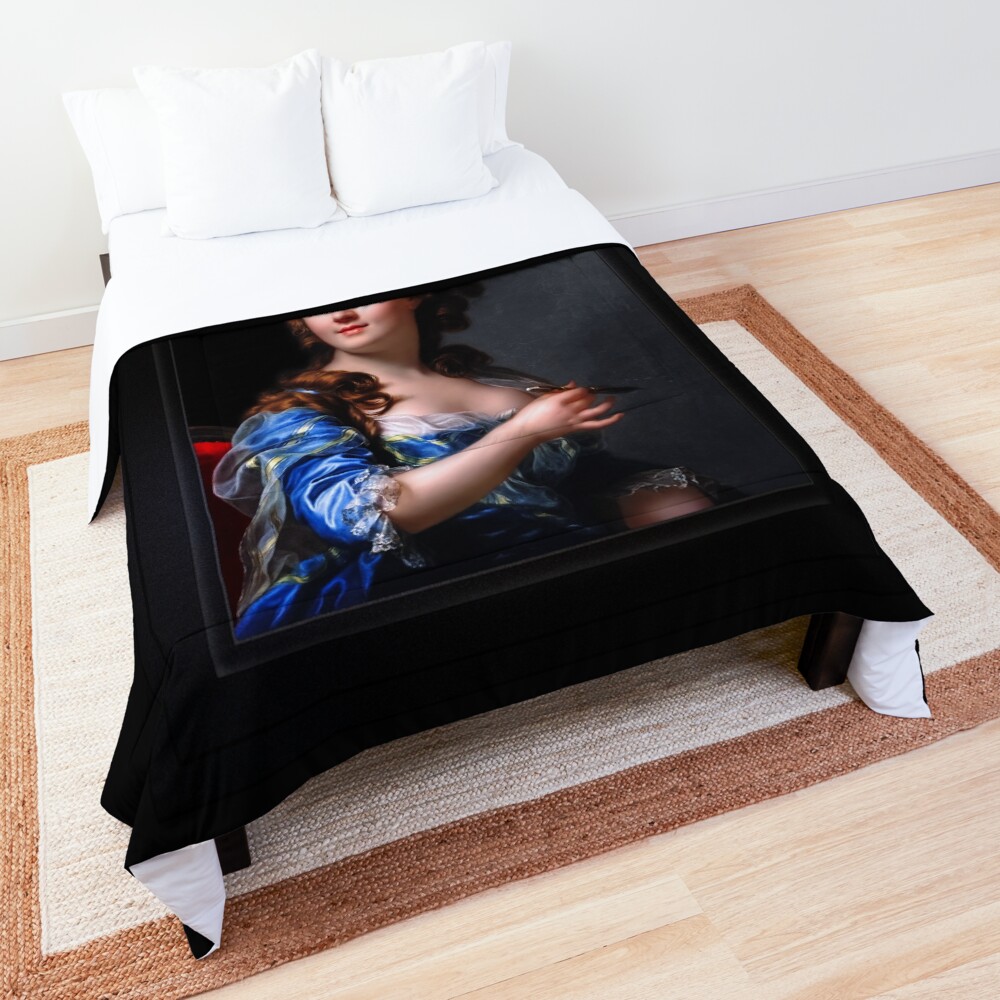
Hau eder eta dotorea da andre baten erretratua; Marie-Gabrielle Capet-en autoerretratu honek gaztetako aintza osoan harrapatzen du.
Betegarri gorria duen aulki batean eserita dago margolanaren ezkerraldeko aldea argitzen duen argia duten margolan kabalete baten aurrean., eskuineko eskuan metalezko klarion euskarria duela, atzeko muturreko zirrikitu batean borragoma bat daukana; kabaletean jarritako mihisean marraztu duen figura baten eskema arinarekin.
Ilearen inguruan zinta urdin zabal bat darama, that is tied into a bow, just off to her left side, with her long curly hair flowing on her shoulders.
She is dressed in a matching blue dress that has sheer silk shawl like garment weaved into that has gold stripe patters throughout the shoulders, upper sleeves and front of the dress; as well as silk ruffles at the cuffs of the short sleeves.
Hau sarean eros daitekeen domeinu publikoko irudi baten arte digitalaren erreprodukzioa da ijetzitako mihise inprimatua.
Informazioa Behean Deribatua Wikipedia.org
Marie-Gabrielle came from a modest background and in her youth attended a public drawing school located in her town. In 1781, twenty-year-old Capet moved to Paris to become the student of Adélaïde Labille-Guiard (1749–1803), a Neoclassical artist who was admitted to the Royal Academy of Art in 1783.
In 18th Century France, the Royal Academy of Art was responsible for training artists and exhibiting artworks at the Salon that glorified heroic values promoted by the Bourbon monarchy. Until the French Revolution, the Royal Academy of Art in Paris was the central institution for official artistic practice, and limited its number of female students to four at a time.
Capet showed her early work at the Exposition de la jeunesse, and later exhibited at the Salon when it was opened to all artists after the French Revolution. Her body of work included miniature paintings, oil paintings, eta pastelak, which were praised for their virtuoso draftsmanship and use of colour.
Many of her pastel paintings were portraits, though by 1808 she was regarded as a history painter in her own right; eta beste bezero batzuen artean errege familiako hainbat kide zenbatu zituen, eta Parisko gizarteko beste kide batzuk, hala nola, Pierre-Nicolas Berryer abokatua eta Joseph Chénier antzerkigilea.
Capet eta Labille-Guiard-ek ez zuten harreman profesional bat bakarrik izan, baina familiako lagun minak ere izan ziren. Capet bere irakaslearekin Louvren bizitzera joango zen Labille-Guiard hil arte. Adélaïde Labille-Guiard François Vincent margolariarekin ezkondu ondoren ere 1799, Capetek euren etxean bizitzen jarraitu zuen. Adelaide Labille-Guiard hil ondoren, Capet bere senarrarekin bizi izan zen hil zen arte 1816. Haren heriotzan, Capetek Labille-Guiard eta Vincenten ondasunak erosi zituen.
Marie-Gabrielle Capet lanen artean ezagunenak Mesdames Adelaide eta Victoirerenak dira, Madame Vincent bere ikasleez inguratuta, andereñoa. Marte, eta Jean-Antoine Houdon.