

Marie-Gabrielle Capet
Marie-Gabrielle Capet (Fèin-dhealbh c1783) leis a’ pheantair Frangach Marie-Gabrielle Capet (1761 – 1818), a pheant san Stoidhle Neo-Chlassic
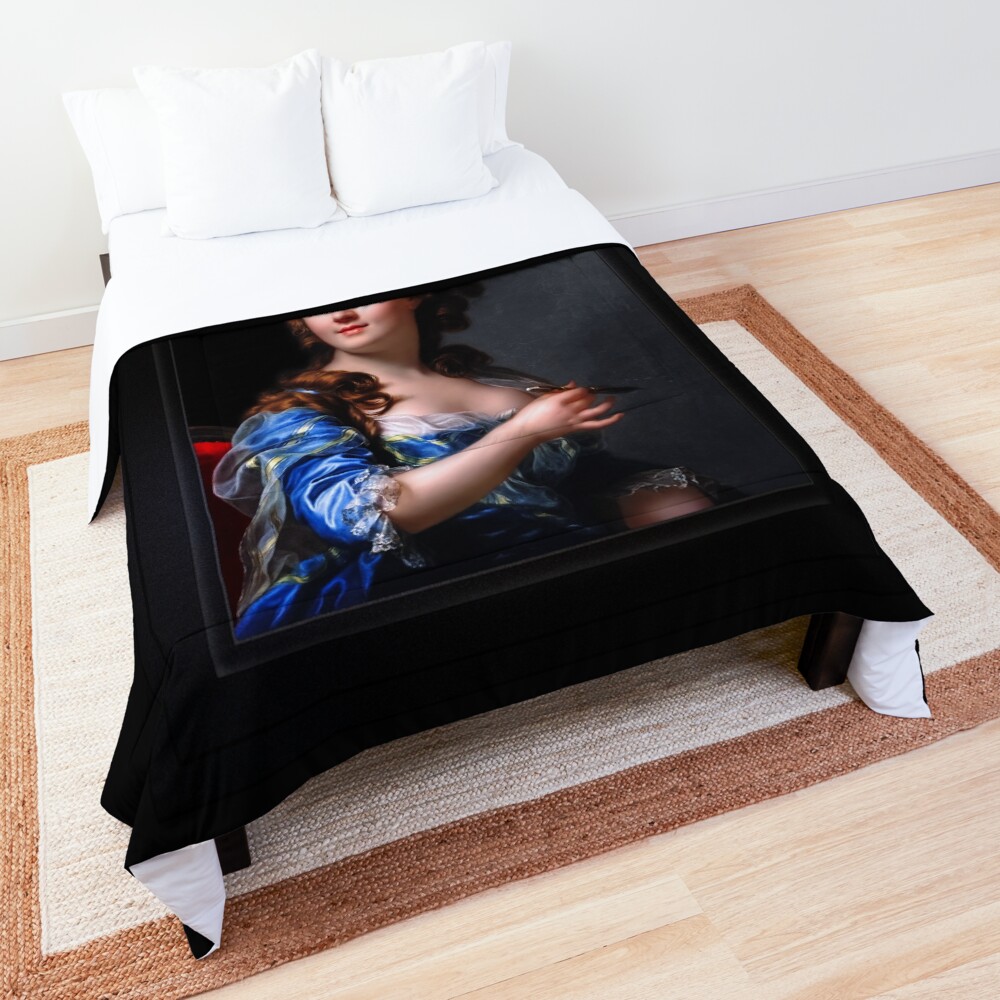
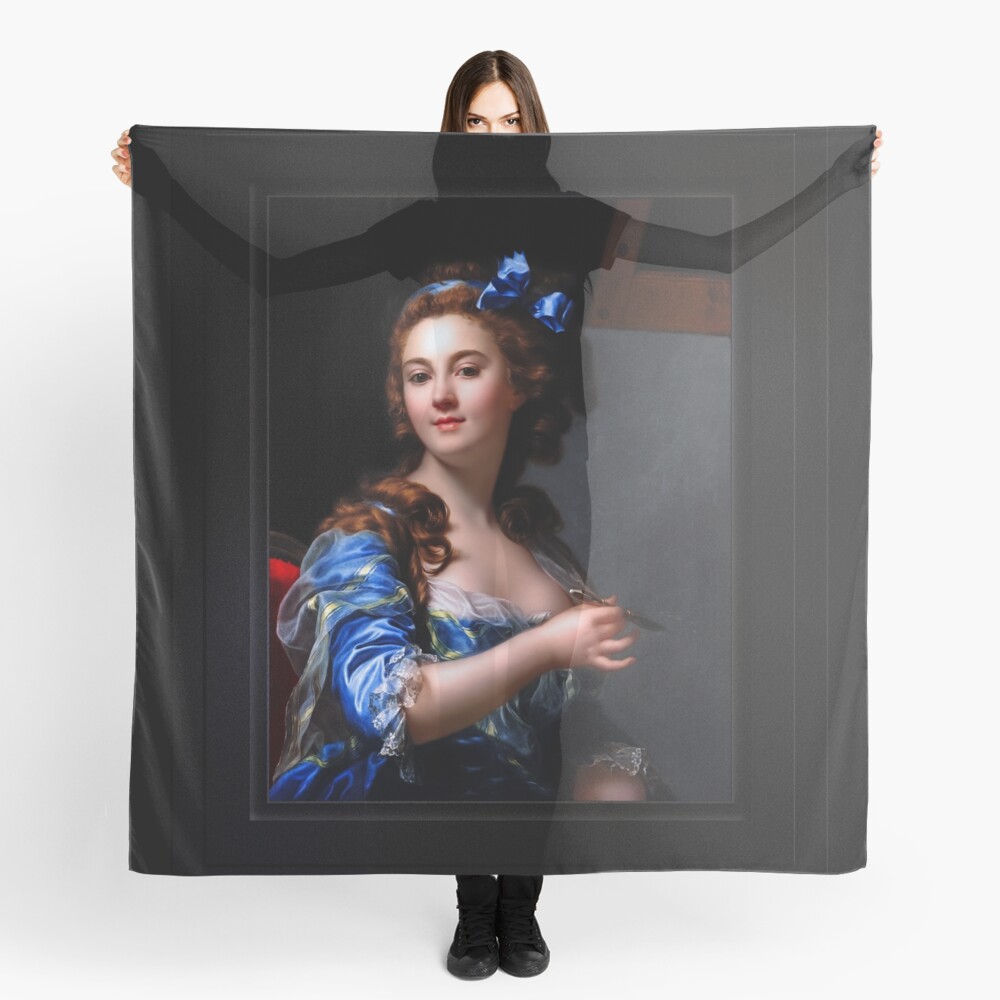
Tha seo àlainn agus eireachdail dealbh de bhoireannach; tha an dealbh seo le Marie-Gabrielle Capet ga glacadh ann an glòir a h-òige gu lèir.
Tha i na suidhe air cathair le pleadhag dearg air beulaibh easels peantaidh le solas a’ soilleireachadh a cruth air taobh clì an deilbh, fhad ‘s a tha i a’ cumail inneal cailc meatailt na làimh dheis aig a bheil inneal-brisidh air a chuir a-steach do shliotan air a cheann chùil; le dealbh aotrom de fhigear a tha i air a tharraing air a’ chanabhas air a chuir air an easel.
Tha rioban farsaing gorm oirre timcheall a falt, a tha ceangailte ann am bogha, direach air a taobh chli, with her long curly hair flowing on her shoulders.
She is dressed in a matching blue dress that has sheer silk shawl like garment weaved into that has gold stripe patters throughout the shoulders, upper sleeves and front of the dress; as well as silk ruffles at the cuffs of the short sleeves.
Is e seo ath-riochdachadh ealain didseatach retouched de dh ’ìomhaigh poblach a tha ri cheannach air-loidhne mar a clò-bhualadh canabhas rollaichte.
Fiosrachadh gu h-ìosal a thàinig bho Wikipedia.org
Marie-Gabrielle came from a modest background and in her youth attended a public drawing school located in her town. Ann an 1781, twenty-year-old Capet moved to Paris to become the student of Adélaïde Labille-Guiard (1749–1803), a Neoclassical artist who was admitted to the Royal Academy of Art in 1783.
In 18th Century France, the Royal Academy of Art was responsible for training artists and exhibiting artworks at the Salon that glorified heroic values promoted by the Bourbon monarchy. Until the French Revolution, the Royal Academy of Art in Paris was the central institution for official artistic practice, and limited its number of female students to four at a time.
Capet showed her early work at the Exposition de la jeunesse, and later exhibited at the Salon when it was opened to all artists after the French Revolution. Her body of work included miniature paintings, oil paintings, agus pastailean, which were praised for their virtuoso draftsmanship and use of colour.
Many of her pastel paintings were portraits, though by 1808 bha i air a meas mar pheantair eachdraidh leatha fhèin; agus chunnt am measg luchd-ceannach eile grunn bhuill den teaghlach rìoghail, agus buill eile de chomann Paris, leithid an neach-lagha Pierre-Nicolas Berryer agus an sgrìobhadair dràma Joseph Chénier.
Chan e a-mhàin gu robh dàimh proifeasanta aig Capet agus Labille-Guiard, ach bha iad cuideachd nan caraidean teaghlaich dlùth. Ghluais Capet a-steach còmhla ris an tidsear aice aig an Louvre gus an do chaochail Labille-Guiard. Eadhon às deidh dha Adélaïde Labille-Guiard am peantair François Vincent a phòsadh ann an 1799, Lean Capet a’ fuireach san dachaigh aca. Às deidh bàs Adelaide Labille-Guiard, Bha Capet a’ fuireach còmhla ris an duine aice gus an do chaochail e ann 1816. Nuair a chaochail e, Cheannaich Capet oighreachd Labille-Guiard agus Vincent.
Among Marie-Gabrielle Capet best known works are those of Mesdames Adelaide and Victoire, Madame Vincent surrounded by her pupils, Mlle. Mars, and Jean-Antoine Houdon.