

Maria Magdalena
Maria Magdalena c1660+70 margolari italiarrarena Carlo Dolci (1616 – 1686) Barroko garaikoa, bere arte erlijioso oso zehatzengatik ezaguna.
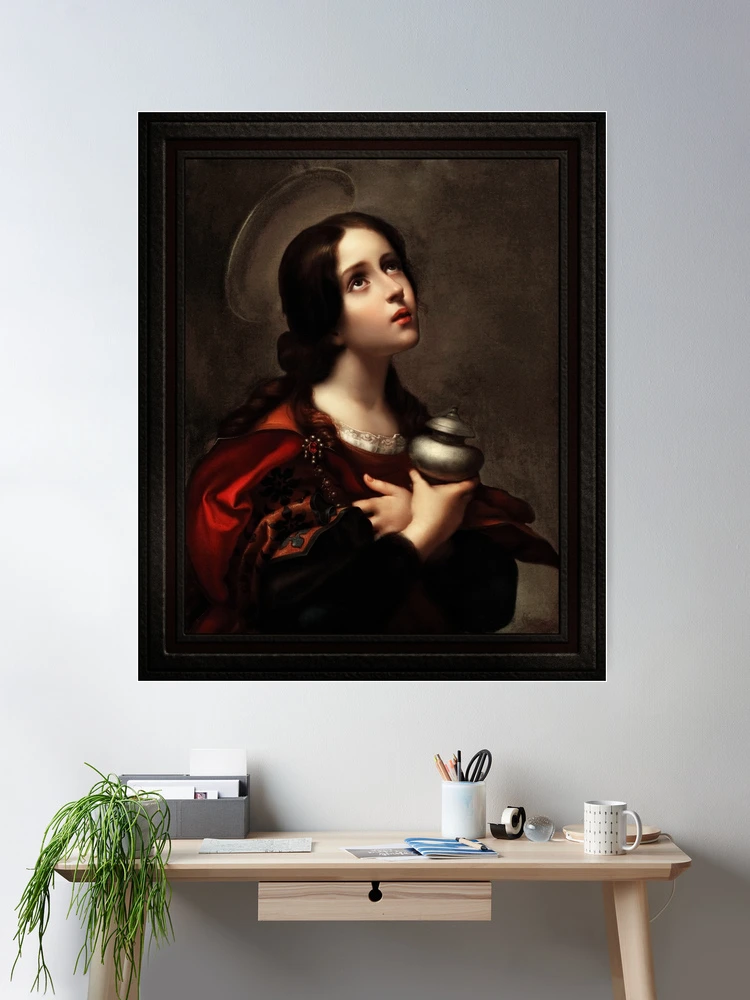
Argi gutxiko erretratuak argi-ilun efektu dramatikoa ematen du, urrezko haloa nabarmentzen duten zeruko argi izpi zizelkatuek kontrastean duten itzal sakonekin; Maria Magdalenaren buruaren inguruan, gorantz begira dagoena, gogoeta gogotsu baten adierazpenarekin.
Bere azala tonu beroa eta ezaugarri delikatuak harrizko horma soilaren atzealdean nabarmentzen dira, transmititu eszenaren jainkozko grazia berarekin ardatz gisa.
Mary luxuzko belusezko kapa bat darama, mahuka puztuekin, kaparen lepotik irteten ikusten den parpailadun barruko jantzi zuri korapilatsu baten gainean.
She has a ruby jeweled brooch that is fastened at her right shoulder, which rest on the brown leather portion of the cloak accented by black leather floral motifs, as it glints in the directed light above her.
Her chestnut tresses are styled in a gentle cascading flow that rest on her shoulders and down her back; while framing her face and delicate brown eyes as she speaks with the GOD Almighty.
Bere eskuineko eskuan, she gently holds a simple plain silver urn, with a smooth domed cap that, that would have traditionally been used to store sacred herbs; adding an air of enigmatic symbolism to the portrayal of this momentous event.
The work’s historic and masterful origins from the Renaissance era of art and classical antiquity, exudes a solemn, romantic aura befitting the artistic styles and fashions of that transformative period; and conveys the majesty of a moment in history, that is still felt to the present time of the modern world.
Informazioa Behean Deribatua Wikipedia.org
Carlo was born in Florence; the grandson of a painter on his mothers side of the family who at a very early age apprenticed with Italian Baroque Jacopo Vignali (1592 – 1664).
Unlike many other painters Carlo was not a prolific painter; many times taking weeks working on just one part of the human body.
This made him unsuited for large scale fresco, and so he mainly painted small scale and half body length portraits; although he did paint some full length portraits as well.
Dolci kristau sutsua zenez bere lanaren zati handi bat erlijio izaera du, bere sinesmen eta fede sendoa erakutsiz. Agnese Dolci alaba bat ere izan zuen (1635 – 1686), bere lanen kopiak egiten lagundu zuen artista bikaina zena.
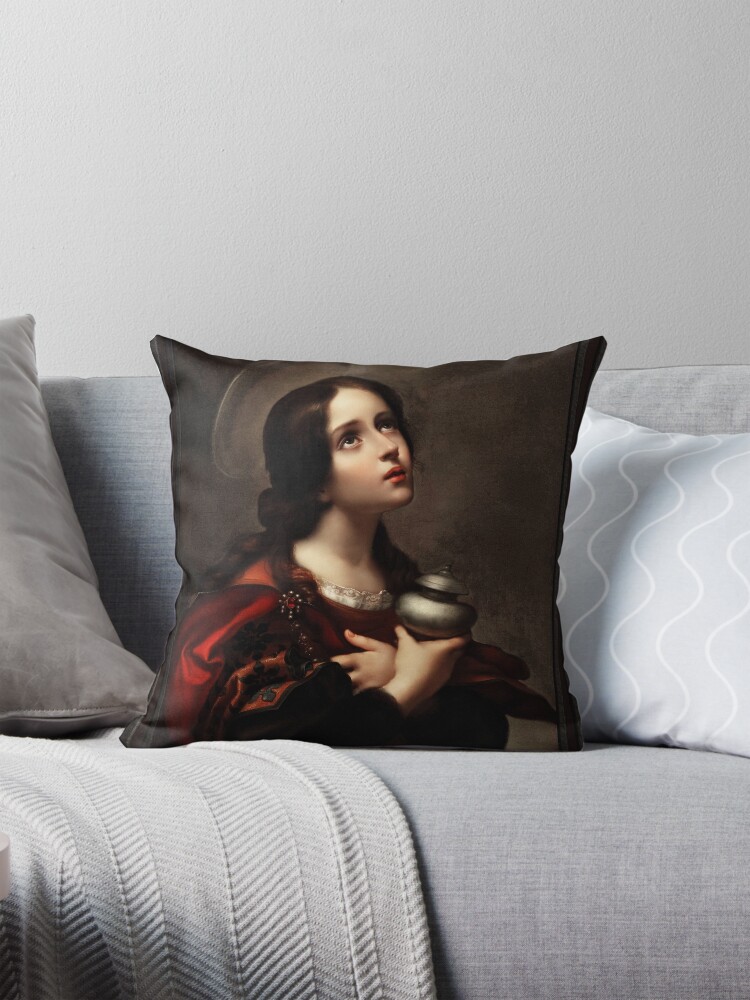
Arte digitalaren sorkuntza hau, Xzendor7 webgunean aurki daitezkeen artelan guztiak bezala sarean erosteko eskuragarri dago hainbat material formatutan, mihise inprimatuak barne., estanpatu akrilikoak, metal estanpatuak, egur estanpatuak, marko estanpatuak, kartelak, eta gisa ijetzitako mihise inprimatuak hainbat tamainatan 12 zentimetroetara 72 hazbeteko artelanaren eta artea erosteko aukeratzen duzun eskaeraren arabera inprimatzeko dendaren tamainaren arabera.
Artelana gizonezkoen eta emakumezkoen arropa sorta zabal batean ere eskuragarri dago, katiluak, totes, zapiak, koadernoak eta aldizkariak eta etxeko dekorazio produktu ugari.