

Meditació sobre la història d'Itàlia
Meditació sobre la història d'Itàlia: Un examen detallat
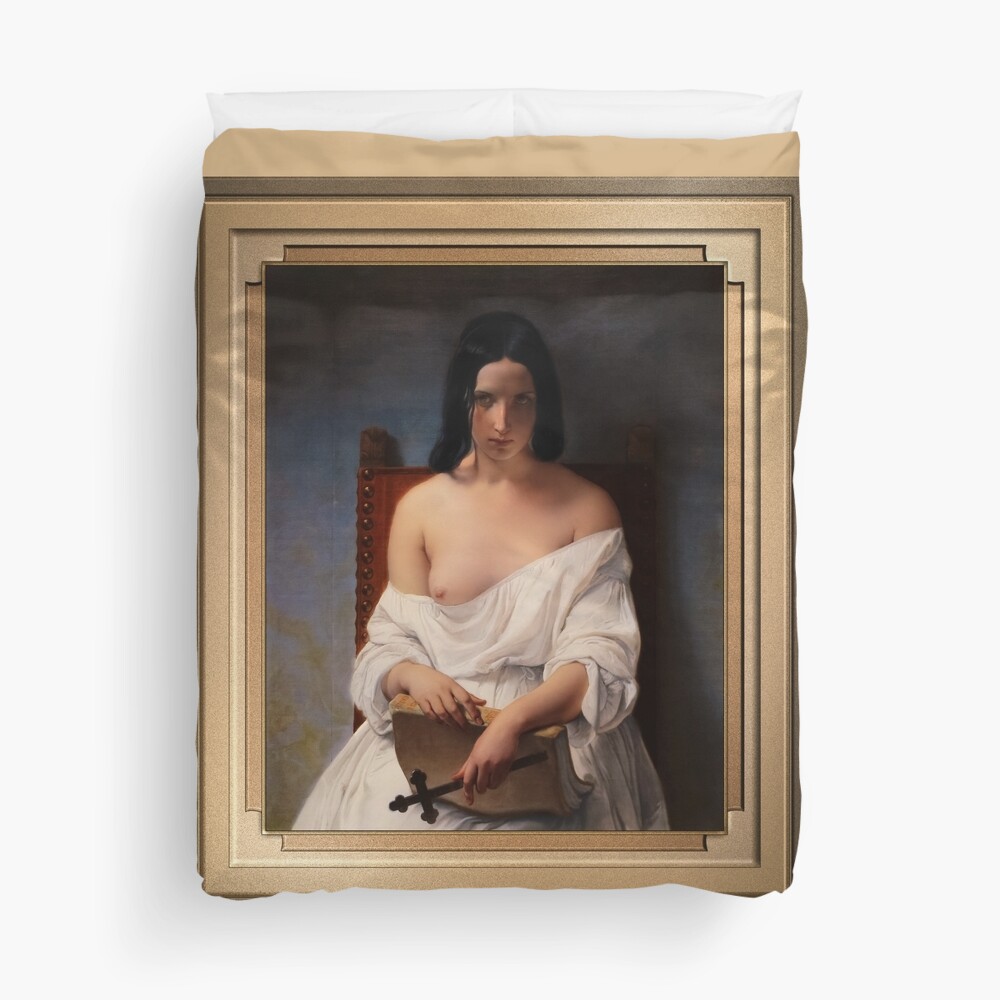
Francesco Hayez’s “Meditation on the History of Italy,”Pintat al voltant 1851, is a compelling work within the Romantic tradition, deeply rooted in Italian nationalism and historical allegory. La pintura, currently housed at the Pinacoteca di Brera in Milan, transcends a simple portrait to become a complex visual narrative reflecting the yearning for a unified and independent Italy during a period of political fragmentation and foreign domination. Hayez was a leading figure in the Risorgimento, the 19th-century movement that led to Italian unification, and his art frequently served as a vehicle for expressing patriotic sentiments.
Taula de continguts
Estructura compositiva & Configuració
The composition is dominated by a single female figure seated upon an ornate chair against a backdrop of muted blues and grays. The chair itself appears aged and slightly dilapidated, hinting at the decline of past glories. The background fades into obscurity, suggesting a timeless setting rather than a specific historical location. This ambiguity allows for broader interpretation, encompassing Italy’s long and turbulent history. The figure is centrally positioned, drawing immediate attention to her contemplative state. The overall effect is one of quiet introspection within a space that feels both intimate and monumental.
The Figure: Identity & Vestuari
The woman depicted possesses striking features – dark hair cascading down her shoulders, pale skin, i intens, melancholic eyes. Her gaze is directed downwards, suggesting deep thought or sorrow. She is draped in a simple white gown, partially slipped from one shoulder, revealing the upper portion of her chest. The fabric appears soft and flowing, adding to the sense of vulnerability and grace. The lack of elaborate ornamentation on her attire contrasts with the ornate chair, further emphasizing her individual presence and internal focus. Her bare feet rest upon the floor, grounding her in a tangible reality despite the allegorical nature of the scene.
The Book & Cross: Symbolic Elements
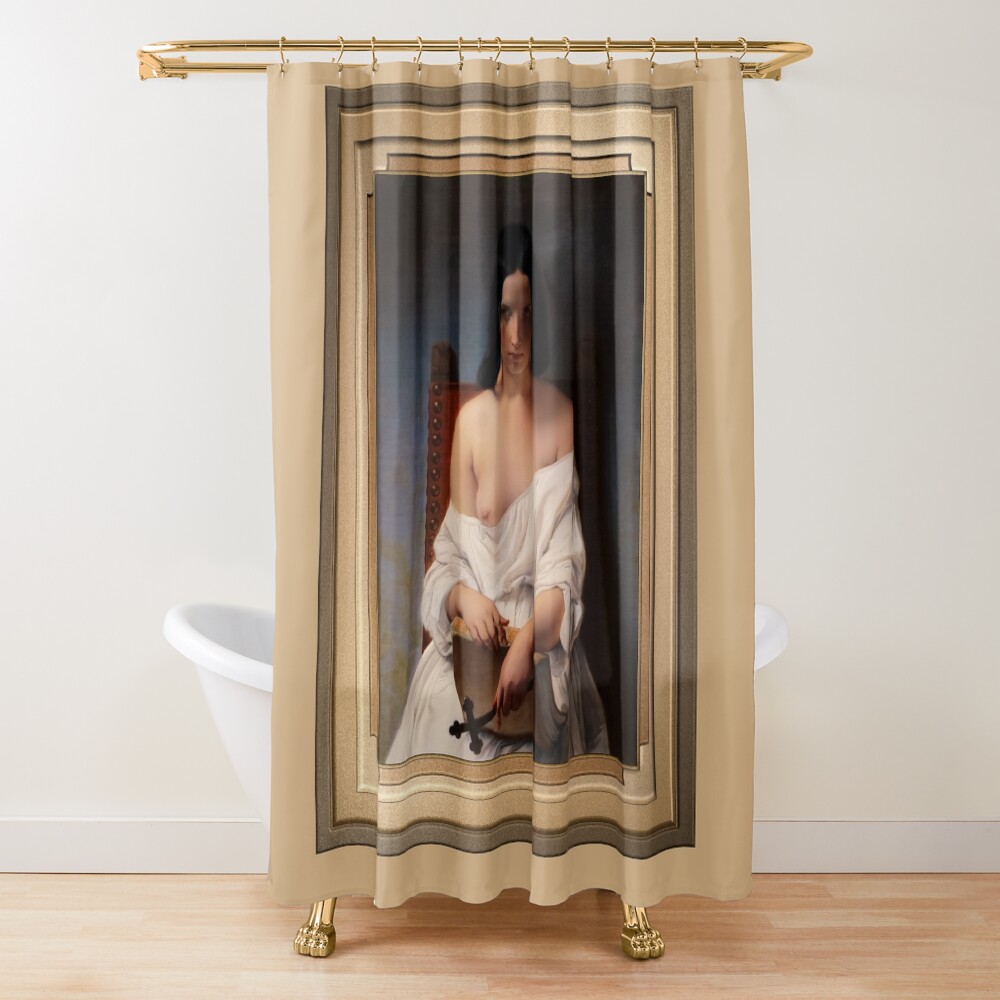
Held within her hands is an open book, its pages filled with text that remains largely illegible to the viewer. This book clearly represents Italian history and literature – the accumulated knowledge and cultural heritage of the nation. Lying across the book’s cover is a large, dark cross. The presence of the cross introduces a layer of religious significance, referencing Italy’s strong Catholic tradition and potentially alluding to the role of faith in shaping national identity. malgrat això, its placement atop the historical record suggests a complex relationship between religion and Italian history – perhaps a commentary on how faith has both supported and sometimes hindered the nation’s progress.
Il·luminació & Paleta de colors
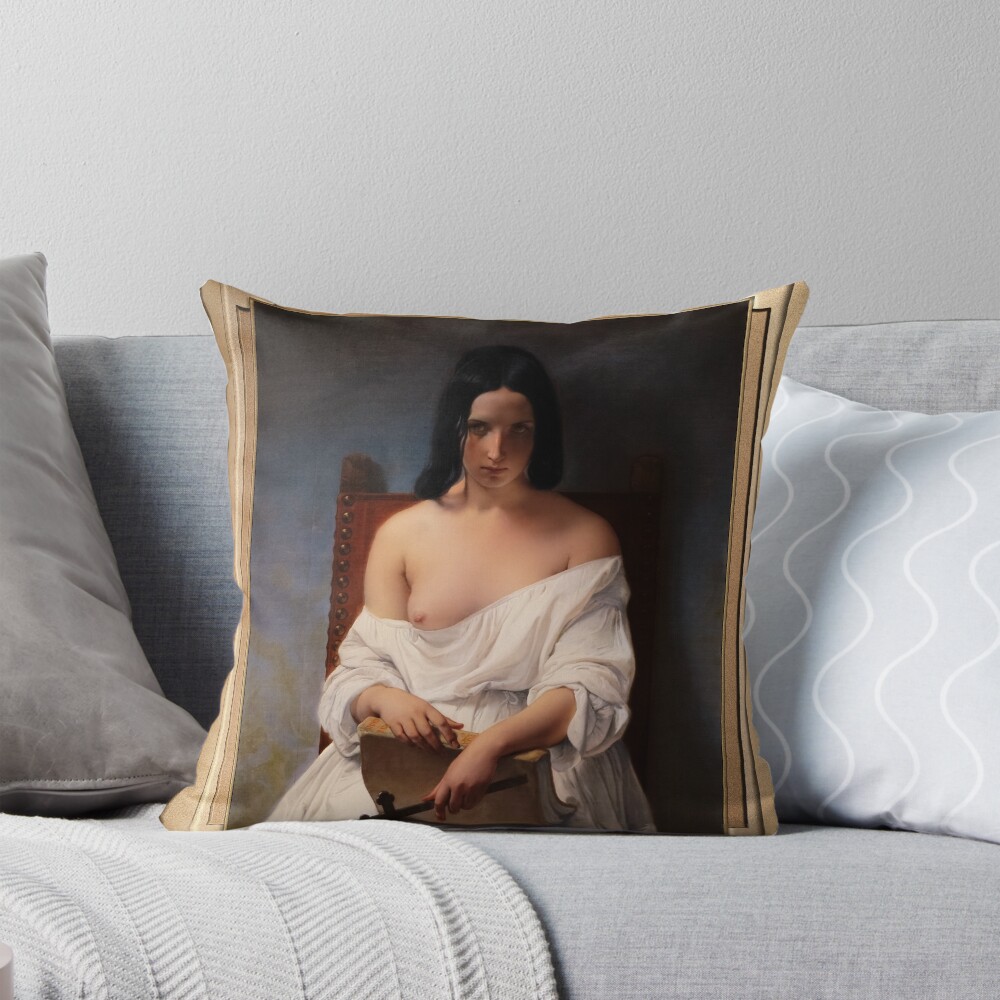
La il·luminació a “Meditació sobre la història d'Itàlia” is carefully orchestrated to enhance the painting’s emotional impact. Un suau, diffused light illuminates the woman from above, highlighting her face and upper body while leaving much of the background shrouded in shadow. This creates a sense of mystery and emphasizes the figure’s isolation within her thoughts. The color palette is restrained, dominated by muted tones of white, gray, blau, and brown. These colors contribute to the painting’s somber mood and reinforce the themes of reflection and melancholy. The limited use of vibrant hues draws attention to specific details, such as the dark cross and the woman’s eyes.
Estil Artístic & Influències
Hayez’s style is characteristic of Italian Romanticism, emphasizing emotion, individualisme, and a fascination with history and mythology. The painting exhibits meticulous detail in rendering the figure’s features and clothing, demonstrating Hayez’s technical skill as an artist. There are echoes of Neoclassical influences in the composition’s balance and clarity, but the overall tone is decidedly Romantic, prioritizing emotional expression over strict adherence to classical ideals. The work shares affinities with other allegorical paintings of the period, particularly those exploring themes of national identity and historical memory.
Context històric & Interpretació
Painted during a time when Italy was divided into numerous states under foreign rule or dominated by regional powers, “Meditació sobre la història d'Itàlia” served as a powerful symbol of hope for unification. The woman’s contemplative pose and sorrowful expression can be interpreted as representing the Italian people reflecting upon their past struggles and yearning for a brighter future. The book symbolizes the nation’s rich cultural heritage, while the cross suggests the enduring influence of religion in Italian life. Hayez deliberately avoided explicitly depicting specific historical events or figures, allowing viewers to project their own interpretations onto the painting and connect with its broader themes of national identity and aspiration.
Biografia de l'artista derivada de Wikipedia.org
Francesco Hayez era d'una família relativament pobra de Venècia. El seu pare, Giovanni, era d'origen francès mentre la seva mare, Chiara Torcella, era de Murano. Francesco era el petit de cinc fills.
Va ser criat per la germana de la seva mare, que s'havia casat amb Giovanni Binasco, un armador acomodat i col·leccionista d'art. Hayez va mostrar una predisposició per dibuixar des de la infància. El seu oncle, havent notat el seu talent precoç, el va fer aprenent d'un restaurador d'art a Venècia. Més tard, Hayez esdevindrà alumne del pintor Francesco Maggiotto amb qui va continuar els seus estudis durant tres anys..
Va ser admès al curs de pintura de la Nova Acadèmia de Belles Arts de Venècia 1806, on va estudiar amb Teodoro Matteini. En 1809 va guanyar un concurs de l'Acadèmia de Venècia per a una residència d'un any a l'Accademia di San Luca de Roma.
Va romandre a Roma fins a 1814, després es va traslladar a Nàpols, on va rebre l'encàrrec de Joachim Murat de pintar una obra important que representés Ulisses a la cort d'Alcino.. A mitjan dècada de 1830 va assistir al Saló Maffei de Milà, a càrrec de Clara Maffei. El marit de Maffei més tard encarregaria a Hayez un retrat de la seva dona. En 1850 Hayez va ser nomenat director de l'Acadèmia Brera.
Al llarg d’una llarga carrera, Hayez va demostrar ser particularment prolífic. La seva producció va incloure pintures històriques dissenyades per atreure la sensibilitat patriòtica dels seus patrons, així com obres que reflecteixen el desig d’acompanyar un estil neoclàssic als grans temes., ja sigui de literatura bíblica o clàssica.
També va pintar escenes de presentacions teatrals. Consistentment absent de la seva obra, malgrat això, són retaules – possiblement a causa de les invasions napoleòniques que van desconsacrar moltes esglésies i convents al nord d’Itàlia. L'historiador de l'art Corrado Ricci va descriure Hayez com un classicista que després va evolucionar cap a un estil de tumult emocional. Francesco Hayez, El Petó (1859)
Els seus retrats tenen la intensitat d'Ingres i del moviment natzarè. Sovint assegut, Els súbdits de Hayez solen vestir-se d'austeritat, roba en blanc i negre, amb poc o cap equipament. Mentre que Hayez feia retrats per a la noblesa, també va explorar altres temes com els companys artistes i músics. Al final de la seva carrera, se sap que va treballar amb fotografies.
Un dels temes preferits de Hayez era l’dalisca semi vestit que evocava temes orientals, un tema preferit dels pintors romàntics.[3] Les representacions d’harems i les seves dones permetien als artistes la possibilitat de pintar escenes que d’altra manera no eren acceptables a la societat. Fins i tot la Maria Magdalena de Hayez té més sensualitat que fervor religiós.
La pintura de Hayez El petó va ser considerada una de les seves millors obres pels seus contemporanis, i és possiblement el seu esforç més conegut. L’anònim, el gest de la parella no afectat no requereix coneixement del mite ni de la literatura per interpretar, i apel·la a una mirada moderna.
Una avaluació científica de la carrera de Hayez s’ha complicat pel seu proclivisme per no signar ni datar les seves obres. Sovint les dates de les seves pintures indiquen quan es va adquirir o vendre l'obra, no el moment de la seva creació. A més, sovint pintava les mateixes composicions diverses vegades amb variacions mínimes, si n’hi havia cap.
Entre els seus alumnes de l'Acadèmia Brera hi havia Carlo Belgioioso, Amanzio Cattaneo, Alessandro Focosi, Giovanni Battista Lamperti, Ovelles Livo, Angelo Pietrasanta, Antonio Silo, Carlo Antonio Tavella, Ismaele Teglio Milla i Francesco Valaperta.
Hayez va morir a Milà, edat 91. El seu estudi a l'Acadèmia Brera està marcat amb un plat.
Es tracta d'una reproducció retocada d'art digital antic d'una imatge de domini públic que es pot comprar en línia com a impressió de tela enrotllada.