

Meditation on the History of Italy
Meditation on the History of Italy: A Detailed Examination
Francesco Hayez’s “Meditation on the History of Italy,"dipinta intornu 1851, is a compelling work within the Romantic tradition, deeply rooted in Italian nationalism and historical allegory. U pittura, currently housed at the Pinacoteca di Brera in Milan, transcends a simple portrait to become a complex visual narrative reflecting the yearning for a unified and independent Italy during a period of political fragmentation and foreign domination. Hayez was a leading figure in the Risorgimento, the 19th-century movement that led to Italian unification, and his art frequently served as a vehicle for expressing patriotic sentiments.
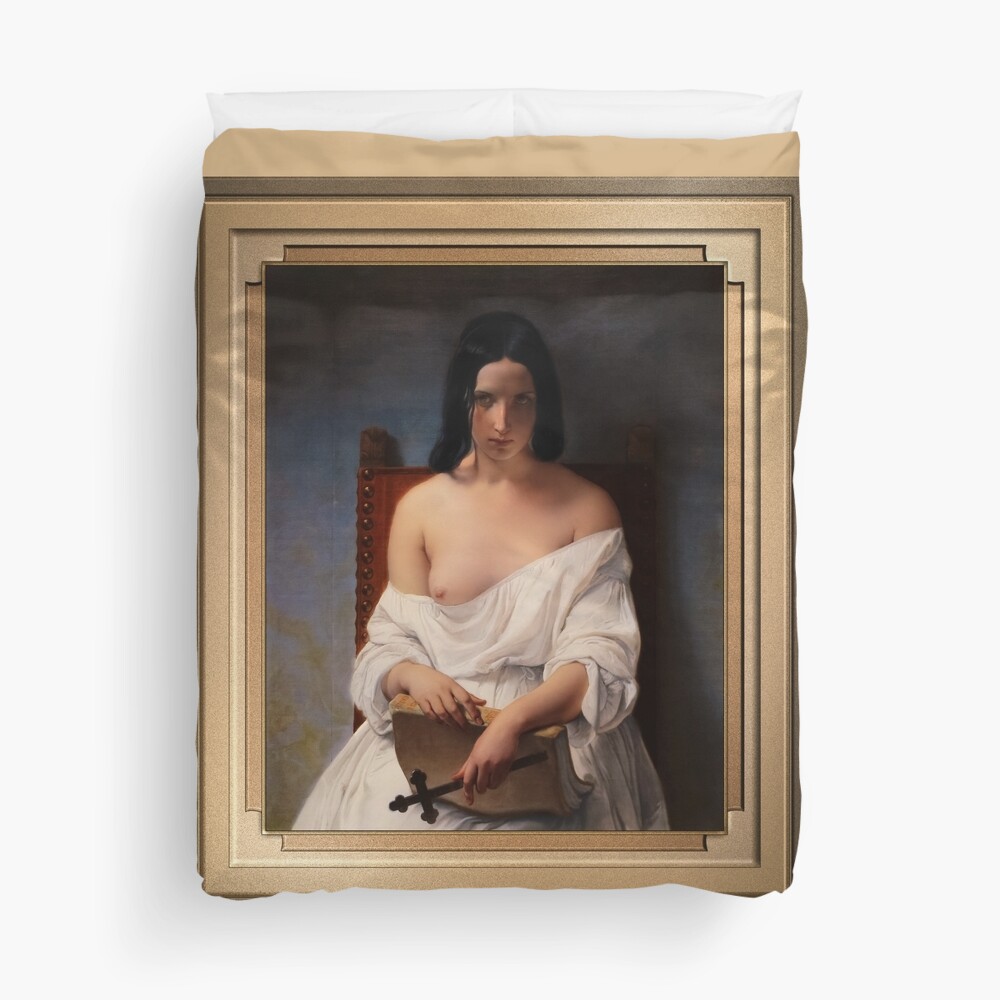
Table of Contents
Struttura di cumpusizioni & Setting
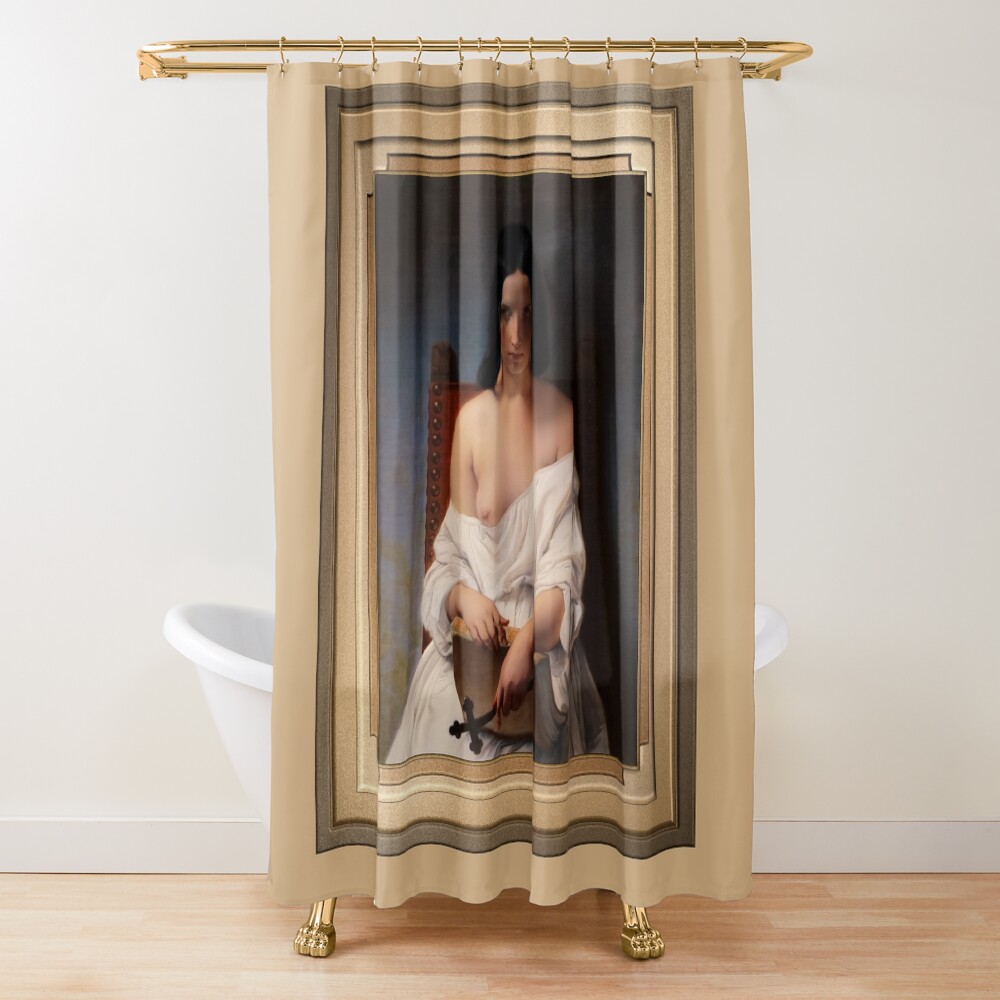
The composition is dominated by a single female figure seated upon an ornate chair against a backdrop of muted blues and grays. The chair itself appears aged and slightly dilapidated, hinting at the decline of past glories. The background fades into obscurity, suggesting a timeless setting rather than a specific historical location. This ambiguity allows for broader interpretation, encompassing Italy’s long and turbulent history. The figure is centrally positioned, drawing immediate attention to her contemplative state. The overall effect is one of quiet introspection within a space that feels both intimate and monumental.
A figura: Identity & Vistitu
The woman depicted possesses striking features – dark hair cascading down her shoulders, pale skin, è intensu, melancholic eyes. Her gaze is directed downwards, suggesting deep thought or sorrow. She is draped in a simple white gown, partially slipped from one shoulder, revealing the upper portion of her chest. The fabric appears soft and flowing, adding to the sense of vulnerability and grace. The lack of elaborate ornamentation on her attire contrasts with the ornate chair, further emphasizing her individual presence and internal focus. Her bare feet rest upon the floor, grounding her in a tangible reality despite the allegorical nature of the scene.
The Book & Cross: Symbolic Elements
Held within her hands is an open book, its pages filled with text that remains largely illegible to the viewer. This book clearly represents Italian history and literature – the accumulated knowledge and cultural heritage of the nation. Lying across the book’s cover is a large, dark cross. The presence of the cross introduces a layer of religious significance, referencing Italy’s strong Catholic tradition and potentially alluding to the role of faith in shaping national identity. Tuttavia, its placement atop the historical record suggests a complex relationship between religion and Italian history – perhaps a commentary on how faith has both supported and sometimes hindered the nation’s progress.
illuminazione & Paleta di culori
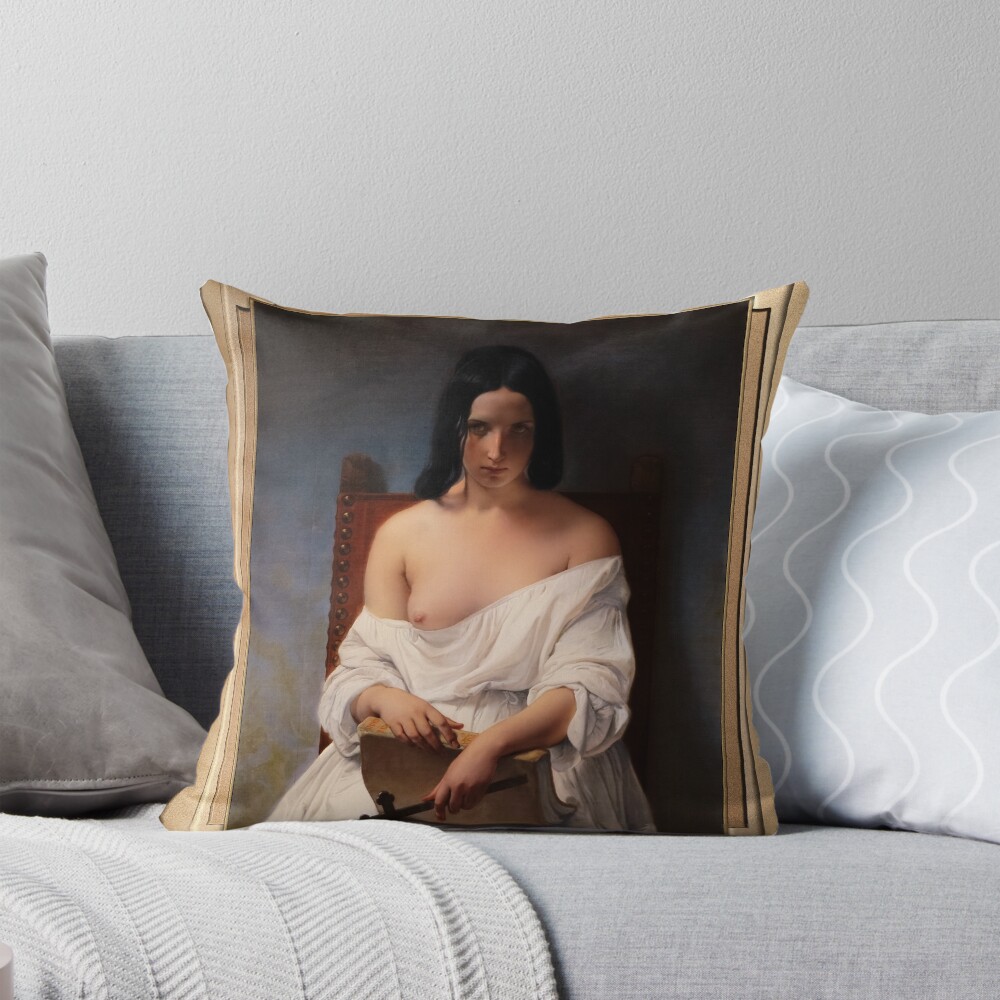
The lighting in “Meditation on the History of Italy” is carefully orchestrated to enhance the painting’s emotional impact. Un molle, diffused light illuminates the woman from above, highlighting her face and upper body while leaving much of the background shrouded in shadow. This creates a sense of mystery and emphasizes the figure’s isolation within her thoughts. The color palette is restrained, dominated by muted tones of white, gray, turchinu, and brown. These colors contribute to the painting’s somber mood and reinforce the themes of reflection and melancholy. The limited use of vibrant hues draws attention to specific details, such as the dark cross and the woman’s eyes.
Stile artisticu & Influenze
Hayez’s style is characteristic of Italian Romanticism, emphasizing emotion, individualism, and a fascination with history and mythology. The painting exhibits meticulous detail in rendering the figure’s features and clothing, demonstrating Hayez’s technical skill as an artist. There are echoes of Neoclassical influences in the composition’s balance and clarity, but the overall tone is decidedly Romantic, prioritizing emotional expression over strict adherence to classical ideals. The work shares affinities with other allegorical paintings of the period, particularly those exploring themes of national identity and historical memory.
Cuntestu Storicu & Interpretazione
Painted during a time when Italy was divided into numerous states under foreign rule or dominated by regional powers, “Meditation on the History of Italy” served as a powerful symbol of hope for unification. The woman’s contemplative pose and sorrowful expression can be interpreted as representing the Italian people reflecting upon their past struggles and yearning for a brighter future. The book symbolizes the nation’s rich cultural heritage, while the cross suggests the enduring influence of religion in Italian life. Hayez deliberately avoided explicitly depicting specific historical events or figures, allowing viewers to project their own interpretations onto the painting and connect with its broader themes of national identity and aspiration.
Biografia di l'artista derivata da Wikipedia.org
Francesco Hayez era di una famiglia relativamente povera di Venezia. U so babbu, Giovanni, era di origine francese mentre a so mamma, Chiara Torcella, era di Muranu. Francescu era u più chjucu di cinque figlioli.
Hè statu criatu da a surella di a so mamma, qui avait épousé Giovanni Binasco, un armatore benestante è un cullezzione d'arte. Hayez hà mostratu una predisposizione per u disegnu da a zitiddina. U so ziu, avendu nutatu u so talentu precoce, L'apprentice à un restauratore d'arte in Venezia. Hayez devint plus tard l'élève du peintre Francesco Maggiotto avec lequel il poursuivit ses études pendant trois ans..
Hè ammissu à u cursu di pittura di a Nova Accademia di Belle Arti di Venezia in 1806, induve hà studiatu cù Teodoru Matteini. In 1809 il a gagné un concours de l'Académie de Venise pour une résidence d'un an à l'Accademia di San Luca à Rome.
Firmò in Roma finu à 1814, puis s'installe à Naples où il fut chargé par Joachim Murat de peindre une œuvre majeure représentant Ulisse à la cour d'Alcinous.. À a mità di l'anni 1830 hà assistitu à u Salone Maffei in Milanu, ospitata da Clara Maffei. U maritu di Maffei hà cumandatu dopu à Hayez un ritrattu di a so moglia. In 1850 Hayez hè statu numinatu direttore di l'Accademia di Brera.
In u cursu di una longa carriera, Hayez hà pruvatu à esse particularmente prolificu. A so pruduzzione includeva pitture storichi pensate per appellu à a sensibilità patriottica di i so patroni, è ancu opere chì riflettenu u desideriu di accumpagnà un stile neoclassicu à grandi temi., sia da letteratura biblica sia classica.
Hà pittatu ancu scene da presentazioni teatrali. Évidemment absent de son œuvre, però, sò retabuli – forsi per via di l'invasioni napuleoniche chì deconsacrà parechje chjese è cunventi in l'Italia di u Nordu. U storicu di l'arte Corrado Ricci hà descrittu Hayez cum'è un classicista chì poi evoluzione in un stile di tumultu emotivo. Francesco Hayez, U baciu (1859)
I so ritratti anu l'intensità di Ingres è di u muvimentu Nazarenu. Spessu à pusà, I sughjetti di Hayez sò spessu vestiti in austeru, vestiti bianchi è neri, cù pocu o micca accoutrements. Mentre Hayez facia ritratti per a nubiltà, hà ancu esploratu altri sugetti cum'è altri artisti è musicisti. Tardi in a so carriera, hè cunnisciutu per avè travagliatu cù e fotografie.
Unu di i temi prediletti di Hayez era l'Odalisca semi-vestita evocativa di temi orientali - un tema predilettu di i pittori romantichi.[3] E raffigurazioni di harem è di e so donne permettenu à l'artisti a capacità di pitture scene altrimenti micca accettabili in a sucità.. Ancu Maria Maddalena di Hayez hà più sensualità cà fervore religiosu.
A pittura di Hayez U Baciu hè stata cunsiderata trà u so megliu travagliu da i so cuntimpuranii, è hè forsi u so sforzu più cunnisciutu. L'anonimatu, u gestu micca affettatu di a coppia ùn hà micca bisognu di cunniscenza di u mitu o di a literatura per interpretà, è appellu à un sguardu mudernu.
Una valutazione scientifica di a carriera di Hayez hè stata cumplicata da a so propensione per ùn firmà o datate e so opere.. Spessu e date in i so pittura indicanu quandu l'opera hè stata acquistata o venduta, micca u tempu di a so creazione. In più, hà spessu pittatu e listessi cumpusizioni parechje volte cù variazioni minima s'ellu ci hè.
Parmi ses élèves de l'Académie de Brera figuraient Carlo Belgioioso, Amanzio Cattaneo, Alessandru Focosi, Giovanni Battista Lamperti, Livo Pecora, Angelu Pietrasanta, Antonio Shiloh, Carlo Antonio Tavella, Ismaele Teglio Milla et Francesco Valaperta.
Hayez hè mortu in Milanu, età 91. U so studiu à l'Academia di Brera hè marcatu cù un piattu.
Questa hè una ripruduzzione di l'antichi maestri d'arte digitale retouched di una maghjina di duminiu publicu chì hè dispunibule per compra in linea cum'è a stampa su tela arrotolata.