

Meditation on the History of Italy
Meditation on the History of Italy: A Detailed Examination
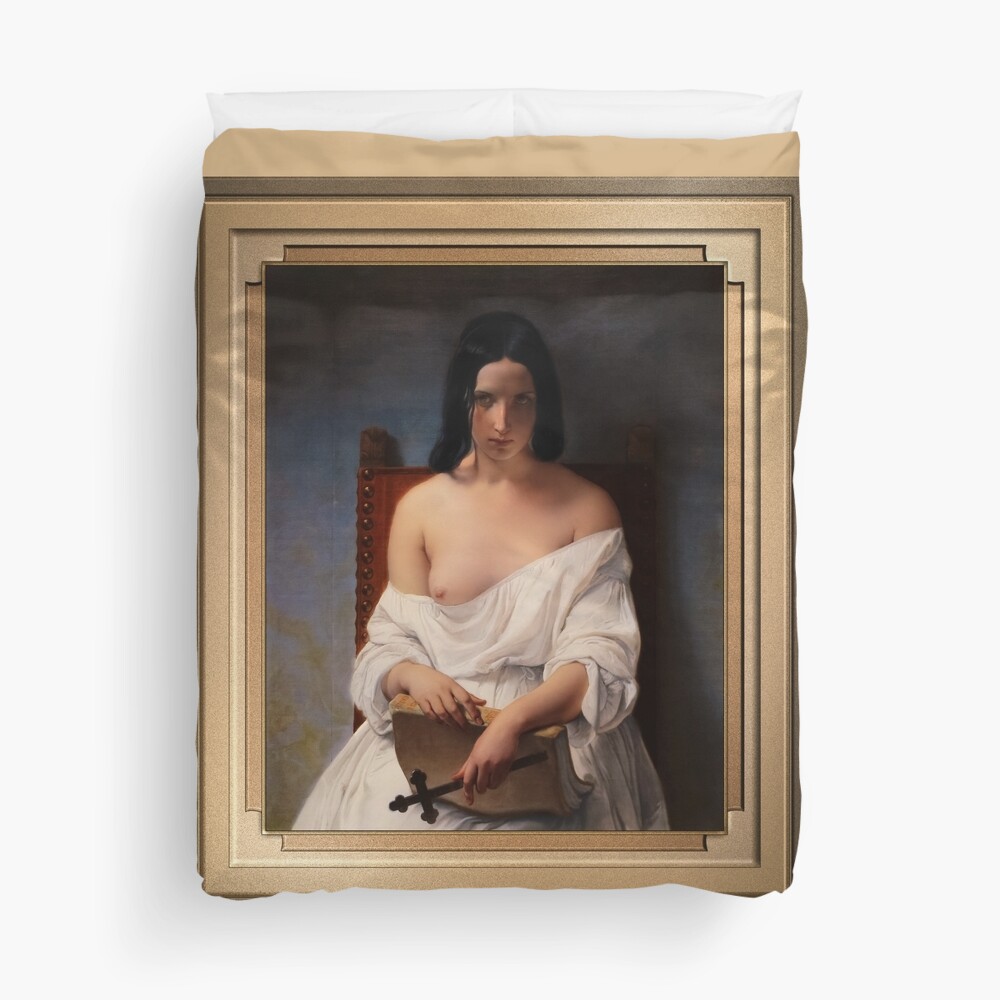
Francesco Hayez’s “Meditation on the History of Italy,“ maloval kolem 1851, is a compelling work within the Romantic tradition, deeply rooted in Italian nationalism and historical allegory. Malování, currently housed at the Pinacoteca di Brera in Milan, transcends a simple portrait to become a complex visual narrative reflecting the yearning for a unified and independent Italy during a period of political fragmentation and foreign domination. Hayez was a leading figure in the Risorgimento, the 19th-century movement that led to Italian unification, and his art frequently served as a vehicle for expressing patriotic sentiments.
Obsah
Složení struktury & Setting
The composition is dominated by a single female figure seated upon an ornate chair against a backdrop of muted blues and grays. The chair itself appears aged and slightly dilapidated, hinting at the decline of past glories. The background fades into obscurity, suggesting a timeless setting rather than a specific historical location. This ambiguity allows for broader interpretation, encompassing Italy’s long and turbulent history. The figure is centrally positioned, drawing immediate attention to her contemplative state. The overall effect is one of quiet introspection within a space that feels both intimate and monumental.
The Figure: Identity & Oděv
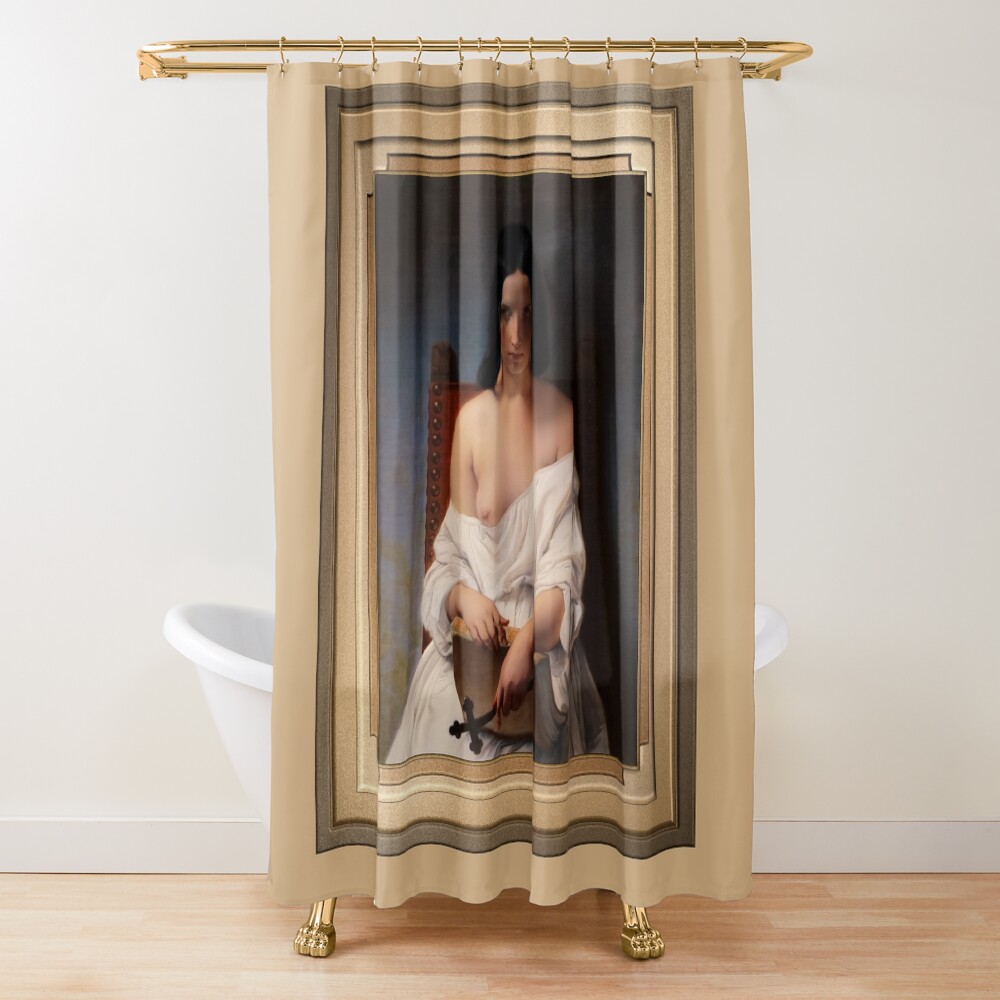
The woman depicted possesses striking features – dark hair cascading down her shoulders, pale skin, and intense, melancholic eyes. Her gaze is directed downwards, suggesting deep thought or sorrow. She is draped in a simple white gown, partially slipped from one shoulder, revealing the upper portion of her chest. The fabric appears soft and flowing, adding to the sense of vulnerability and grace. The lack of elaborate ornamentation on her attire contrasts with the ornate chair, further emphasizing her individual presence and internal focus. Her bare feet rest upon the floor, grounding her in a tangible reality despite the allegorical nature of the scene.
The Book & Cross: Symbolic Elements
Held within her hands is an open book, its pages filled with text that remains largely illegible to the viewer. This book clearly represents Italian history and literature – the accumulated knowledge and cultural heritage of the nation. Lying across the book’s cover is a large, dark cross. The presence of the cross introduces a layer of religious significance, referencing Italy’s strong Catholic tradition and potentially alluding to the role of faith in shaping national identity. nicméně, its placement atop the historical record suggests a complex relationship between religion and Italian history – perhaps a commentary on how faith has both supported and sometimes hindered the nation’s progress.
Osvětlení & Paleta barev
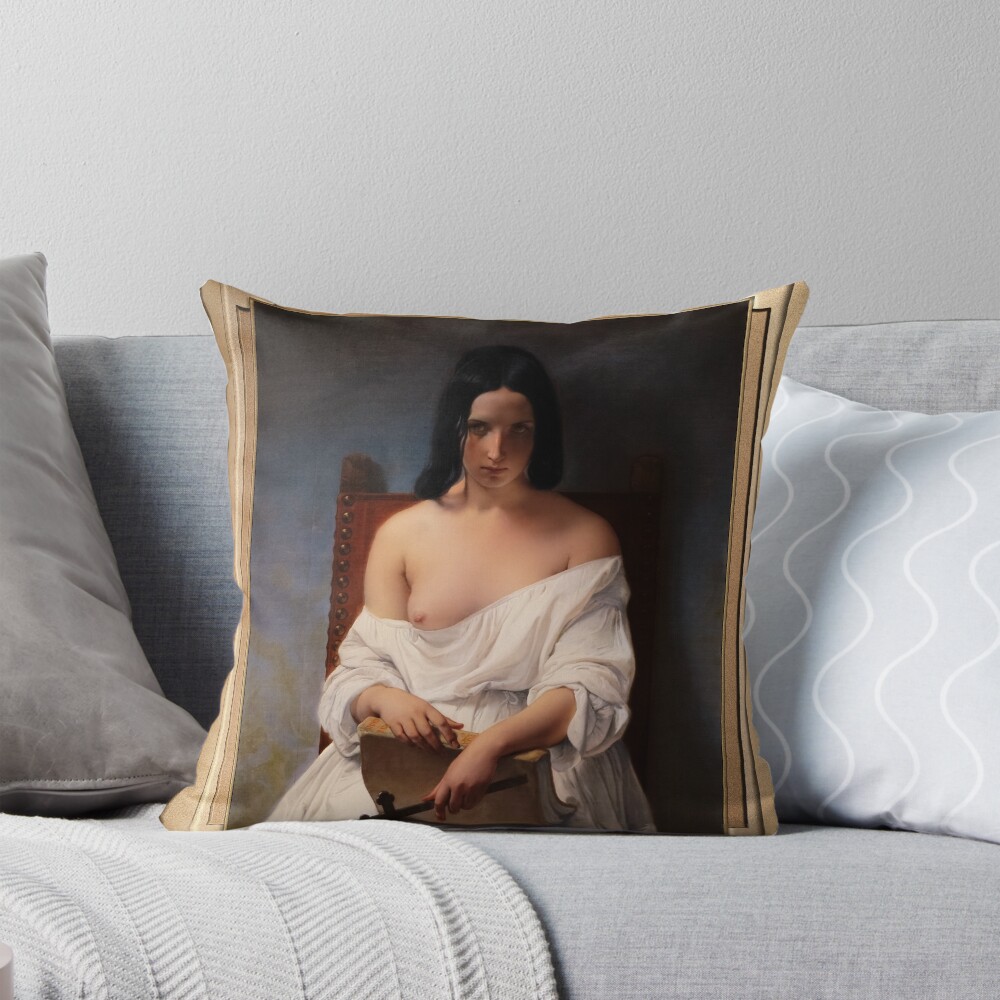
The lighting in “Meditation on the History of Italy” is carefully orchestrated to enhance the painting’s emotional impact. Měkký, diffused light illuminates the woman from above, highlighting her face and upper body while leaving much of the background shrouded in shadow. This creates a sense of mystery and emphasizes the figure’s isolation within her thoughts. The color palette is restrained, dominated by muted tones of white, gray, modrý, and brown. These colors contribute to the painting’s somber mood and reinforce the themes of reflection and melancholy. The limited use of vibrant hues draws attention to specific details, such as the dark cross and the woman’s eyes.
Umělecký styl & Influences
Hayez’s style is characteristic of Italian Romanticism, emphasizing emotion, individualismus, and a fascination with history and mythology. The painting exhibits meticulous detail in rendering the figure’s features and clothing, demonstrating Hayez’s technical skill as an artist. There are echoes of Neoclassical influences in the composition’s balance and clarity, but the overall tone is decidedly Romantic, prioritizing emotional expression over strict adherence to classical ideals. The work shares affinities with other allegorical paintings of the period, particularly those exploring themes of national identity and historical memory.
Historical Context & Výklad
Painted during a time when Italy was divided into numerous states under foreign rule or dominated by regional powers, “Meditation on the History of Italy” served as a powerful symbol of hope for unification. The woman’s contemplative pose and sorrowful expression can be interpreted as representing the Italian people reflecting upon their past struggles and yearning for a brighter future. The book symbolizes the nation’s rich cultural heritage, while the cross suggests the enduring influence of religion in Italian life. Hayez deliberately avoided explicitly depicting specific historical events or figures, allowing viewers to project their own interpretations onto the painting and connect with its broader themes of national identity and aspiration.
Umělec bio Wikipedia.org
Francesco Hayez pocházel z relativně chudé rodiny z Benátek. Jeho otec, Giovanni, byl francouzského původu, zatímco jeho matka, Chiara Torcella, byl z Murana. Francesco byl nejmladší z pěti synů.
Byl vychován sestrou jeho matky, který se oženil s Giovanni Binascem, dobře situovaný rejdař a sběratel umění. Hayez projevoval predispozici ke kreslení již od dětství. Jeho strýc, když si všiml jeho předčasného talentu, vyučil ho restaurátorem umění v Benátkách. Hayez se později stal žákem malíře Francesca Maggiotto, u kterého pokračoval ve studiu po dobu tří let..
V r byl přijat do malířského kurzu Nové akademie výtvarných umění v Benátkách 1806, kde studoval u Teodora Matteiniho. v 1809 vyhrál soutěž Benátské akademie na roční pobyt na Accademia di San Luca v Římě.
V Římě zůstal až do r 1814, poté se přestěhoval do Neapole, kde byl pověřen Joachimem Muratem, aby namaloval velké dílo zobrazující Odyssea na dvoře Alcinousa.. V polovině 30. let 19. století navštěvoval Maffei Salon v Miláně, pořádá Clara Maffei. Maffeiův manžel později objednal Hayezovi portrét jeho manželky. v 1850 Hayez byl jmenován ředitelem Akademie Brera.
V průběhu dlouhé kariéry, Hayez se ukázal jako obzvláště plodný. Jeho tvorba zahrnovala historické obrazy navržené tak, aby apelovaly na vlastenecké cítění jeho patronů, stejně jako díla odrážející touhu doprovázet neoklasicistní styl k velkým tématům., buď z biblické nebo klasické literatury.
Maloval také výjevy z divadelních představení. Nápadně chybí v jeho tvorbě, nicméně, jsou oltářní obrazy – možná kvůli napoleonským invazím, které odsvětily mnoho kostelů a klášterů v severní Itálii. Historik umění Corrado Ricci popsal Hayeze jako klasicistu, který se poté vyvinul ve styl emocionálního zmatku. Francesco Hayez, Polibek (1859)
Jeho portréty mají intenzitu Ingrese a nazarénského hnutí. Často sedí, Hayezovi subjekty jsou často oblečeny stroze, černé a bílé oblečení, s malým až žádným vybavením. Zatímco Hayez dělal portréty pro šlechtu, prozkoumal také další témata, jako jsou umělci a hudebníci. Pozdě v kariéře, je známo, že pracoval s fotografiemi.
Jedním z Hayezových oblíbených témat byla polooblečená Odaliska evokující orientální témata – oblíbené téma romantických malířů.[3] Zobrazení harémů a jejich žen umožnilo umělcům malovat scény, které by jinak nebyly ve společnosti přijatelné. I Hayezova Marie Magdalena má více smyslnosti než náboženského zápalu.
Hayezův obraz Polibek byl jeho současníky považován za jeho nejlepší dílo, a je možná jeho nejznámějším úsilím. Anonym, neovlivněné gesto páru nevyžaduje k výkladu znalost mýtu nebo literatury, a oslovuje moderní pohled.
Vědecké hodnocení Hayezovy kariéry bylo zkomplikováno jeho sklonem nepodepisovat svá díla a nedatovat je. Data na jeho obrazech často naznačují, kdy bylo dílo získáno nebo prodáno, ne doba jeho vzniku. Navíc, často maloval stejné kompozice několikrát s minimálními variacemi, pokud vůbec nějaké.
Mezi jeho žáky z Brera Academy patřili Carlo Belgioioso, Amanzio Cattaneo, Alessandro Focosi, Giovanni Battista Lamperti, Livo Pecora, Angelo Pietrasanta, Antonio Silo, Carlo Antonio Tavella, Ismaele Teglio Milla a Francesco Valaperta.
Hayez zemřel v Miláně, stáří 91. Jeho ateliér na Akademii Brera je označen štítkem.
Toto je retušovaná reprodukce starých mistrů digitálního umění obrázku ve veřejné doméně, kterou lze zakoupit online jako a rolovaný tisk na plátno.