

Meditation on the History of Italy
Meditation on the History of Italy: Yksityiskohtainen tarkastus
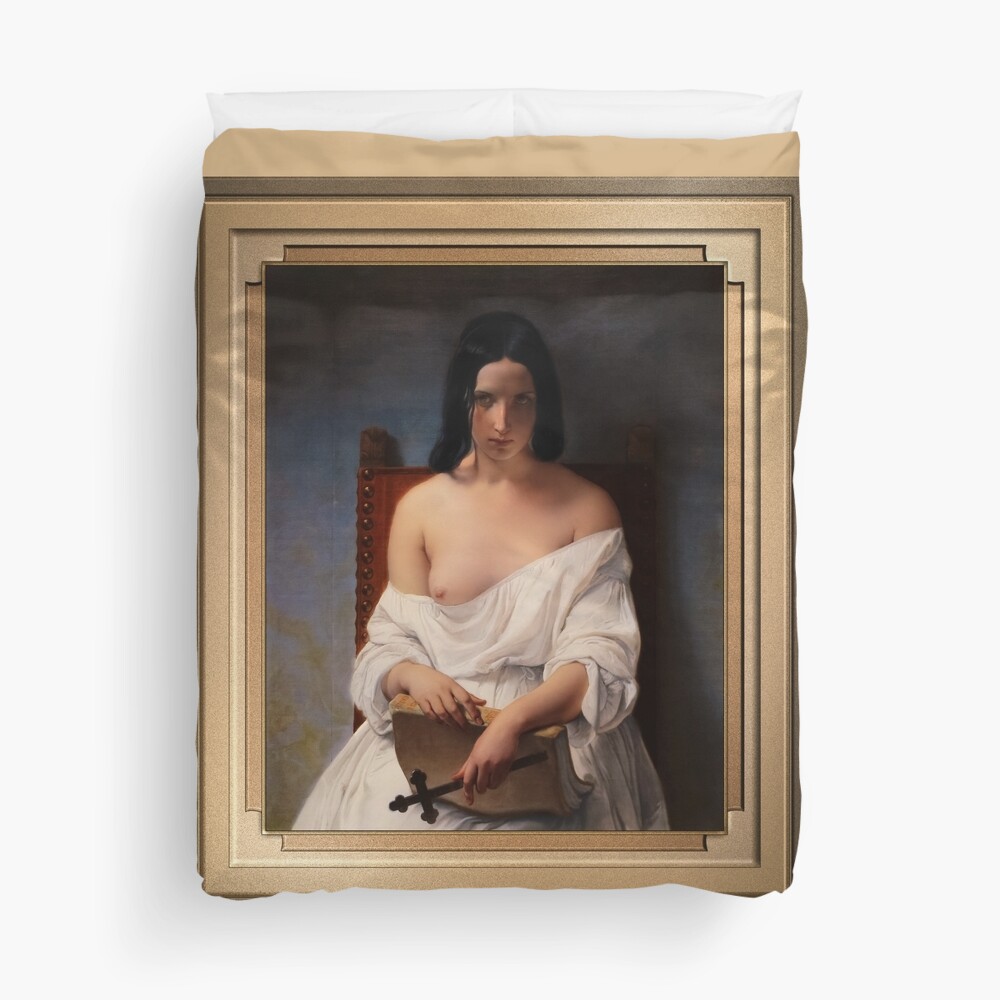
Francesco Hayez’s “Meditation on the History of Italy,”Maalattu ympäri 1851, is a compelling work within the Romantic tradition, deeply rooted in Italian nationalism and historical allegory. Maalaus, currently housed at the Pinacoteca di Brera in Milan, transcends a simple portrait to become a complex visual narrative reflecting the yearning for a unified and independent Italy during a period of political fragmentation and foreign domination. Hayez was a leading figure in the Risorgimento, the 19th-century movement that led to Italian unification, and his art frequently served as a vehicle for expressing patriotic sentiments.
Sisällysluettelo
Koostumusrakenne & Asetus
The composition is dominated by a single female figure seated upon an ornate chair against a backdrop of muted blues and grays. The chair itself appears aged and slightly dilapidated, hinting at the decline of past glories. The background fades into obscurity, suggesting a timeless setting rather than a specific historical location. This ambiguity allows for broader interpretation, encompassing Italy’s long and turbulent history. The figure is centrally positioned, drawing immediate attention to her contemplative state. The overall effect is one of quiet introspection within a space that feels both intimate and monumental.
Luku: Identity & Pukea
The woman depicted possesses striking features – dark hair cascading down her shoulders, pale skin, and intense, melancholic eyes. Her gaze is directed downwards, suggesting deep thought or sorrow. She is draped in a simple white gown, partially slipped from one shoulder, revealing the upper portion of her chest. The fabric appears soft and flowing, adding to the sense of vulnerability and grace. The lack of elaborate ornamentation on her attire contrasts with the ornate chair, further emphasizing her individual presence and internal focus. Her bare feet rest upon the floor, grounding her in a tangible reality despite the allegorical nature of the scene.
The Book & Cross: Symboliset elementit
Held within her hands is an open book, its pages filled with text that remains largely illegible to the viewer. This book clearly represents Italian history and literature – the accumulated knowledge and cultural heritage of the nation. Lying across the book’s cover is a large, dark cross. The presence of the cross introduces a layer of religious significance, referencing Italy’s strong Catholic tradition and potentially alluding to the role of faith in shaping national identity. kuitenkin, its placement atop the historical record suggests a complex relationship between religion and Italian history – perhaps a commentary on how faith has both supported and sometimes hindered the nation’s progress.
Valaistus & Värivalikoima
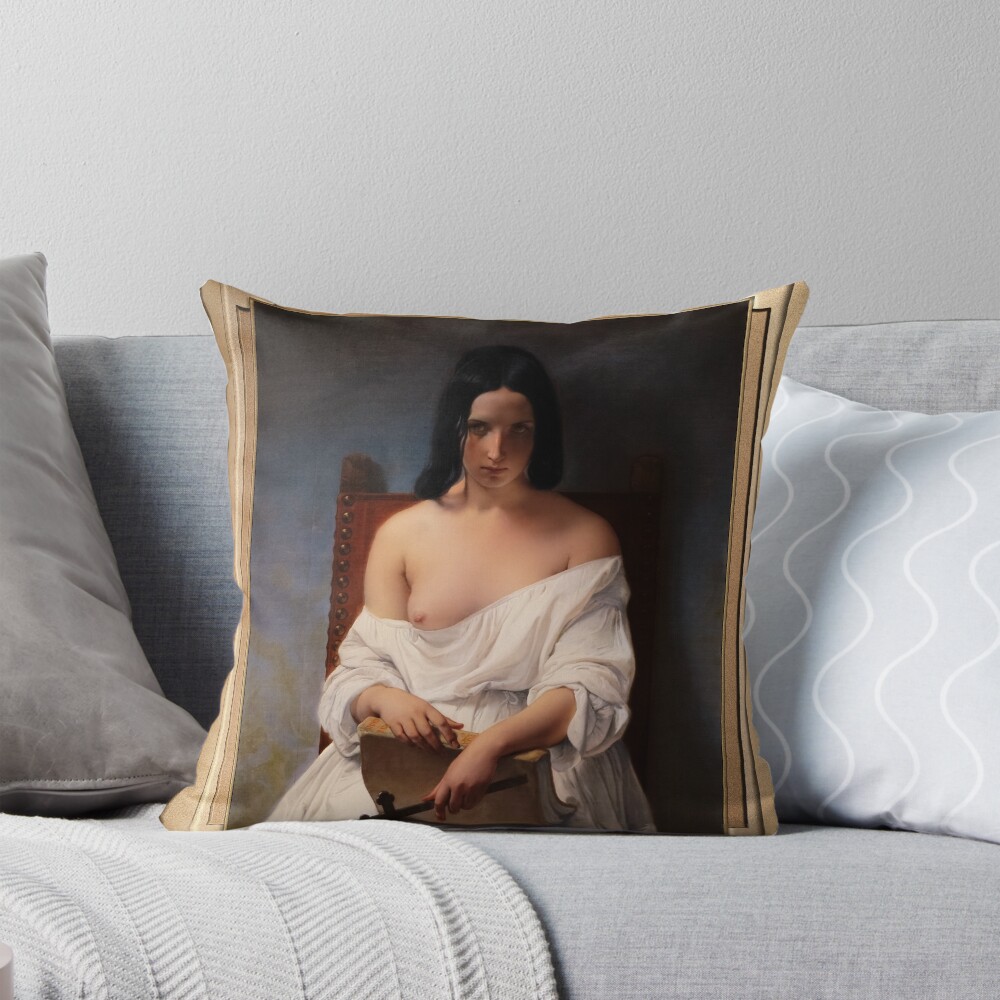
Valaistus sisään “Meditation on the History of Italy” is carefully orchestrated to enhance the painting’s emotional impact. Pehmeä, diffused light illuminates the woman from above, highlighting her face and upper body while leaving much of the background shrouded in shadow. This creates a sense of mystery and emphasizes the figure’s isolation within her thoughts. The color palette is restrained, dominated by muted tones of white, harmaa, sininen, ja ruskea. These colors contribute to the painting’s somber mood and reinforce the themes of reflection and melancholy. The limited use of vibrant hues draws attention to specific details, such as the dark cross and the woman’s eyes.
Taiteellinen tyyli & Vaikutteet
Hayez’s style is characteristic of Italian Romanticism, emphasizing emotion, individualismi, and a fascination with history and mythology. The painting exhibits meticulous detail in rendering the figure’s features and clothing, demonstrating Hayez’s technical skill as an artist. There are echoes of Neoclassical influences in the composition’s balance and clarity, but the overall tone is decidedly Romantic, prioritizing emotional expression over strict adherence to classical ideals. The work shares affinities with other allegorical paintings of the period, particularly those exploring themes of national identity and historical memory.
Historical Context & Tulkinta
Painted during a time when Italy was divided into numerous states under foreign rule or dominated by regional powers, “Meditation on the History of Italy” served as a powerful symbol of hope for unification. The woman’s contemplative pose and sorrowful expression can be interpreted as representing the Italian people reflecting upon their past struggles and yearning for a brighter future. The book symbolizes the nation’s rich cultural heritage, while the cross suggests the enduring influence of religion in Italian life. Hayez deliberately avoided explicitly depicting specific historical events or figures, allowing viewers to project their own interpretations onto the painting and connect with its broader themes of national identity and aspiration.
Taiteilija Bio on johdettu Wikipedia.org
Francesco Hayez oli kotoisin suhteellisen köyhästä venetsialaisesta perheestä. Hänen isänsä, Giovanni, oli ranskalaista alkuperää hänen äitinsä aikana, Chiara Torcella, oli kotoisin Muranosta. Francesco oli nuorin viidestä pojasta.
Hänet kasvatti äitinsä sisar, joka oli naimisissa Giovanni Binascon kanssa, varakas laivanvarustaja ja taiteenkeräilijä. Hayez osoitti taipumusta piirtämiseen lapsuudesta asti. Hänen setänsä, huomattuaan hänen ennenaikaisen lahjakkuutensa, opiskeli hänet taiteen restauraattoriksi Venetsiaan. Hayezista tuli myöhemmin taidemaalari Francesco Maggiotto, jonka kanssa hän jatkoi opintojaan kolme vuotta..

Hänet hyväksyttiin Venetsian New Academy of Fine Arts -akatemian maalauskurssille vuonna 1806, jossa hän opiskeli Teodoro Matteinin johdolla. Sisään 1809 hän voitti Venetsian akatemian kilpailun vuoden residenssiksi Accademia di San Lucassa Roomassa.
Hän pysyi Roomassa kunnes 1814, muutti sitten Napoliin, missä Joachim Murat tilasi hänet maalaamaan suuren teoksen, joka kuvaa Ulyssesia Alcinousin hovissa. 1830-luvun puolivälissä hän osallistui Milanon Maffei-salonkiin, majoittaja on Clara Maffei. Maffei aviomies tilasi myöhemmin Hayezille muotokuvan vaimostaan. Sisään 1850 Hayez nimitettiin Brera Academyn johtajaksi.
Pitkän uran aikana, Hayez osoittautui erityisen tuotteliaaksi. Hänen tuotantonsa sisälsi historiallisia maalauksia, jotka oli suunniteltu vetoamaan hänen suojelijoidensa isänmaalliseen herkkyyteen, sekä teoksia, jotka heijastelevat halua täydentää uusklassista tyyliä suuriin teemoihin., joko raamatullisesta tai klassisesta kirjallisuudesta.
Hän maalasi myös kohtauksia teatteriesityksistä. Ilmeisesti poissa hänen tuotannostaan, kuitenkin, ovat alttaritauluja – johtui mahdollisesti Napoleonin hyökkäyksestä, joka pyhitti monia kirkkoja ja luostareita Pohjois-Italiassa. Taidehistorioitsija Corrado Ricci kuvaili Hayezia klassistina, joka kehittyi sitten tunnemyrskyn tyyliksi.. Francesco Hayez, Suudelma (1859)
Hänen muotokuvissaan on Ingresin ja Nazarene-liikkeen intensiteetti. Usein istuvat, Hayezin kohteet pukeutuvat usein ankarasti, mustavalkoisia vaatteita, vähän tai ei ollenkaan varusteita. Vaikka Hayez teki muotokuvia aatelistolle, hän tutki myös muita aiheita, kuten muita taiteilijoita ja muusikoita. Myöhäinen uransa, hänen tiedetään käyttäneen valokuvia.
Yksi Hayezin suosikkiteemoista oli itämaisia teemoja tuova puolipukuinen Odalisque – romanttisten maalareiden suosikkiaihe.[3] Haaremien ja heidän naistensa kuvaukset antoivat taiteilijoille mahdollisuuden maalata kohtauksia, joita yhteiskunnassa ei muuten olisi hyväksytty. Jopa Hayezin Maria Magdaleenassa on enemmän aistillisuutta kuin uskonnollista intoa.
Hayezin maalaus Suudelma oli hänen aikalaistensa mielestä yksi hänen parhaista teoksistaan, ja se on ehkä hänen tunnetuin yritys. Anonyymi, parin ele ei vaikuta tulkintaan ilman myytin tai kirjallisuuden tuntemusta, ja vetoaa moderniin katseeseen.
Tieteellistä arviointia Hayezin urasta on vaikeuttanut hänen taipumuksensa olla allekirjoittamatta tai seurustelemaan teoksiaan. Usein maalausten päivämäärät osoittavat, milloin teos on hankittu tai myyty, ei sen luomisen aika. Lisäksi, hän maalasi usein samat sävellykset useita kertoja minimaalisilla vaihteluilla, jos ollenkaan.
Hänen oppilaitaan Brera Academysta olivat Carlo Belgioioso, Amanzio Cattaneo, Alessandro Focosi, Giovanni Battista Lamperti, Livo Pecora, Angelo Pietrasanta, Antonio Silo, Carlo Antonio Tavella, Ismaele Teglio Milla ja Francesco Valaperta.
Hayez kuoli Milanossa, ikä 91. Hänen studionsa Brera Academyssa on merkitty lautasella.
Tämä on retusoitu digitaalisen taiteen vanhojen mestareiden kopio julkisessa käytössä olevasta kuvasta, joka on ostettavissa verkossa rullattu kangasprintti.