

Melancholy
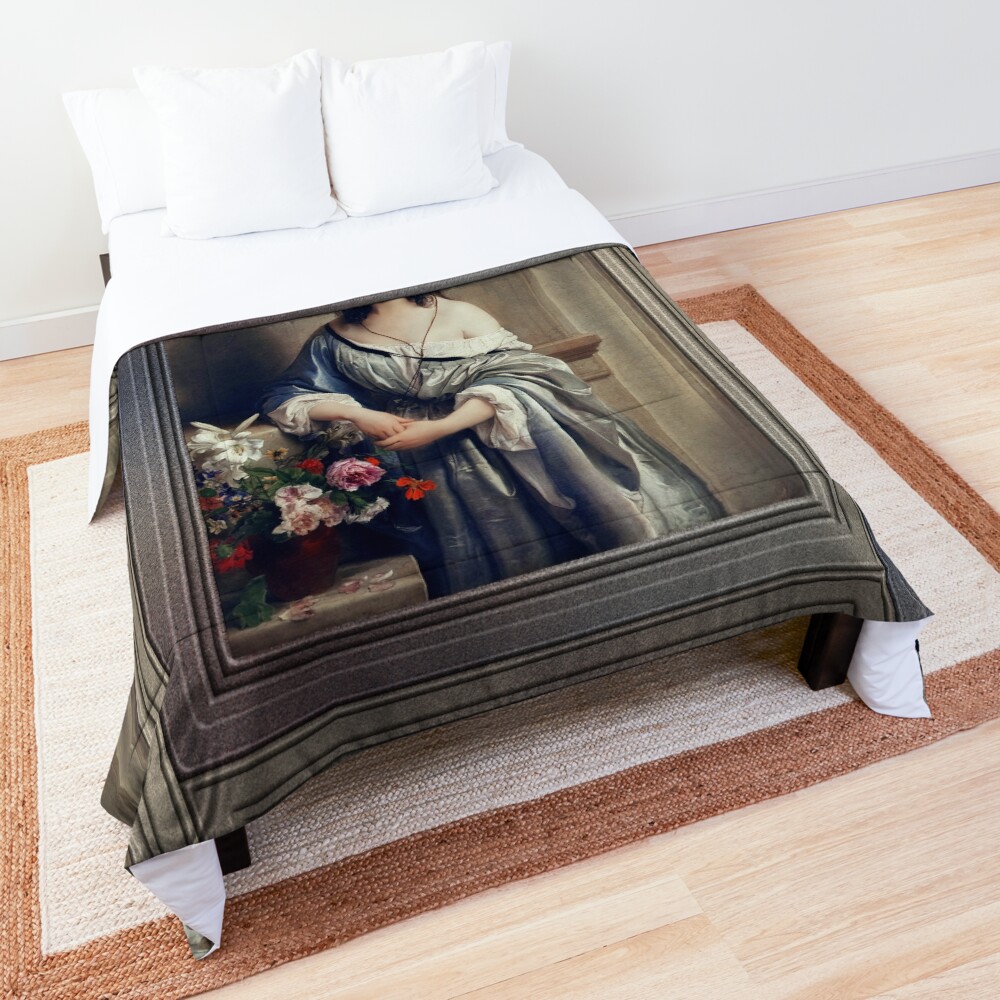
Melancholy c1841-42 by Italian Painter Francesco Hayez (1791 – 1882); who was viewed as the leading painter of the Romanticism Period in the mid 19th Century in Milan Italy. Oso ezaguna zen bere margo historiko handiengatik, alegoria politikoak eta aparteko erretratu finak.
Francesco Hayez, a prominent Italian painter of the Romantic period, captured the emotive power of human expression and drama in his renowned work “Melancholy”. This poignant portrait, inguruan sortua 1841-42, epitomizes the Romantic ideals of intense emotional depth, sinbolismo aberatsa, and the exploration of human inner turmoil. The painting features a young woman in a reflective pose, her body angled slightly away from the viewer, yet her gaze directly engages with the observer. Her expression is one of deep contemplation and melancholy, a theme that resonates throughout much of Hayez’s oeuvre.

The primary subject of the artwork is a woman dressed in a luxurious yet simple gown of muted silvery-blue fabric. Her attire is both modest and elegant, indicative of her high social standing but also suggesting a restrained, subdued personality.
The material of her gown is rendered with Hayez’s signature meticulous brushwork, which gives the fabric a soft, almost translucent quality. It reflects light in such a way that one can almost feel its weight and texture. The delicacy of the gown contrasts with the weight of her expression, reinforcing the thematic tension of the painting.
Gaiaren ilea, iluna eta distiratsua, falls in loose waves around her shoulders, aurpegia markatuz. Her posture is demure yet sorrowful, her hand gently resting on a vase of flowers placed on a table to her side. The inclusion of flowers—likely meant to symbolize transience and the fragility of life—adds a layer of complexity to the emotional narrative.
The flowers themselves are rendered with meticulous detail, a hallmark of Hayez’s technical prowess. They appear lifelike, as if they could be plucked from the canvas at any moment. This detailed rendering contrasts sharply with the somber tone of the subject, creating a sense of fragility in both the floral elements and the human form.
Behind the subject, the setting is an interior space, subtly lit to evoke a sense of isolation and introspection. The light seems to enter from an unseen source, casting soft shadows that envelop the subject, isolamendu-sentsazioa are gehiago areagotuz. Atzeko planoaren kolore isilduak, lur tonu leunak eta gris tonuak barne hartzen dituztenak, nabarmendu emakumearen figura, konposizioaren ardatz bihurtuz.
Gelaren ezaugarri arkitektonikoak, bereziki espazioa markatzen duten zutabe klasikoak, iradoki ezazu betiko kalitatea. Eragin klasiko honek iraganaren eta denboraren joan-etorriaren zentzua ere eragiten du, malenkonia gaiarekin bat egiten duena.
ren aldartea “Melancholy” barneko tristura da. Emakumearen adierazpena ez da ageriko atsekabea edo etsipena, isiltasuna baizik, kontenplazio-pena. Bere begirada, urrun arren, pentsamenduetan galdutako gogoa iradokitzen du, agian galera pertsonalari buruz hausnartuz, bete gabeko desioak, edo irrika existentzial bat. Hayezek bere gaien egoera psikologikoetan oso interesatuta zegoen, and this painting showcases his ability to capture the complexity of emotion through subtle facial expressions and body language.
While the subject’s melancholy could be interpreted in various ways, it is important to consider the broader cultural and historical context of the painting. Created during the early 1840s, the work was produced at a time of political and social unrest in Italy.
The Romantic movement, with its emphasis on emotion, indoskokularitza, and rebellion against societal norms, had a profound impact on the intellectual climate of the time. Hayezena “Melancholy” could be seen as a reflection of the inner turmoil experienced by many individuals living through the tensions of political upheaval, as well as the personal, emotional struggles that often accompanied such periods of uncertainty.
The symbolism within the painting also speaks to broader themes of romanticism. The wistful nature of the subject, combined with the classical elements of the room and the natural motifs of the flowers, suggests an idealization of the past and an awareness of life’s fleeting nature. The woman’s contemplative pose and the stillness of the surrounding environment suggest an acceptance of these fleeting moments, evoking a sense of resignation that is characteristic of many Romantic works.
Hayez’s use of light and shadow in this painting further enhances the emotional tone. The light that falls gently across the woman’s face and gown creates a sense of intimacy, almost as if we are intruding on a private moment. Hala ere, the shadows that play across her figure suggest something darker—perhaps an unspoken sadness or the weight of an unvoiced emotion. This interplay of light and shadow is a powerful tool in conveying the internal conflict of the subject, highlighting the emotional depth and complexity that Hayez was able to achieve in this piece.
Estilo aldetik, “Melancholy” is quintessentially Romantic in its focus on emotion and individual experience. Hayez’s technical mastery is evident in his handling of texture and light, and his ability to convey psychological depth through subtle details is what makes this painting a standout example of Romantic portraiture. The realism with which he renders his subject, coupled with the idealization of the woman’s form, artistaren ideal erromantikoa islatzen du teknikaren eta adierazpen emozionalaren maisu gisa.
Azken batean, “Melancholy” sakontasun emozional eta psikologikoko maisulana da. Emakume gaztearen figuraren bitartez, Hayezek introspekzioaren gaiak aztertzen ditu, galera, eta giza emozioaren konplexutasuna. Argiaren erabilera maisutsua, kolorea, eta konposizioak betiko erretratu bat sortzen du, ikusleengan oihartzuna izaten jarraitzen duena, enpatia eta kontenplazio sentimenduak sorraraziz. Margolanak erretratu erromantikoaren irudikapen ikonikoenetako bat izaten jarraitzen du eta Francesco Hayezek bere subjektuen egoera emozional sakonak harrapatzeko duen gaitasuna adierazten du..
Beheko informazioa Wikipedia.org
Francesco Hayez Veneziako familia nahiko pobre batekoa zen. Bere aita, Giovanni, frantses jatorrikoa zen bere ama berriz, Clare Torcella, Muranokoa zen. Francesco bost semeetatik gazteena zen.
Amaren arrebak hazi zuen, Giovanni Binascorekin ezkondu zena, armadore eta arte bildumagile aberatsa. Hayezek txikitatik erakutsi zuen marrazteko joera. Bere osaba, bere talentu goiztiarra nabaritu zuelarik, Veneziako arte zaharberritzaile batean ikasi zuen. Geroago Hayez Francesco Maggiotto margolariaren ikasle izanen zen eta harekin hiru urtez jarraitu zituen bere ikasketak..
urtean Veneziako Arte Ederren Akademia Berriko pintura-ikastaroan onartu zuten 1806, bertan ikasi zuen Teodoro Matteiniren eskutik. In 1809 Veneziako Akademiaren lehiaketa bat irabazi zuen Erromako Accademia di San Luca-n urtebeteko egonaldia egiteko.
Erroman egon zen arte 1814, ondoren, Napolira joan zen eta bertan Joakim Muratek enkargatu zion Ulises irudikatzen zuen lan handi bat margotzeko Alzinooren gortean.. 1830eko hamarkadaren erdialdean Milango Maffei Salonean parte hartu zuen, Clara Maffeiren eskutik. Maffeiren senarrak bere emaztearen erretratua eskatuko zion gero Hayezi. In 1850 Hayez Brera Akademiako zuzendari izendatu zuten.
Ibilbide luze batean zehar, Hayez bereziki emankorra izan zen. Bere produkzioan, bere mezenasen sentsibilitate abertzalera erakartzeko diseinatutako margolan historikoak eta estilo neoklasikoa gai handietara eramateko nahia islatzen zuten lanak., literatura biblikotik edo klasikotik.
Antzerki-aurkezpenetako eszenak ere margotu zituen. Nabarmen gabea bere obran, hala ere, erretaulak dira – beharbada Italiako iparraldeko eliza eta komentu asko deskonsakratu zituzten napoleonen inbasioengatik. Corrado Ricci arte historialariak Hayez klasizista gisa deskribatu zuen, eta, ondoren, nahasketa emozionalaren estilo batean garatu zen. Francesco Hayez, Musua (1859)
Bere erretratuek Ingresen eta Nazareno mugimenduaren intentsitatea dute. Askotan eserita, Hayezen gaiak soilez jantzi ohi dira, arropa zuri-beltza, ekipamendu gutxirekin. Hayezek nobleziarentzat erretratuak egiten zituen bitartean, beste gai batzuk ere aztertu zituen, besteak beste, artistak eta musikariak. Bere ibilbidean berandu, ezaguna da argazkiak erabiliz lan egin zuela.
Hayezen gai gogokoenetako bat ekialdeko gaiak iradokitzen zituen erdi jantzitako odaliska zen, margolari erromantikoen gai gogokoena.[3] Haremen eta haien emakumeen irudikapenei esker, artistek gizartean onargarriak ez ziren eszenak margotzeko gaitasuna izan zuten.. Hayez-en Maria Magdalenak ere sutsu erlijiosoa baino sentsualtasun handiagoa du.
Hayez-en The Kiss koadroa bere lanik onenetakotzat hartu zuten bere garaikideek, eta ziurrenik bere ahaleginik ezagunena da. Anonimoa, Bikotearen eraginik gabeko keinuak ez du mitoaren edo literaturaren ezagutzarik behar interpretatzeko, eta begirada modernora jotzen du.
Hayezen ibilbidearen balorazio zientifikoa zaildu egin da bere lanak ez sinatzeko edo datatzeko joeragatik.. Askotan bere margolanetako datek adierazten dute obra noiz erosi edo saldu zen, ez bere sorrerako garaia. Gainera, askotan konposizio berdinak margotu zituen hainbat aldiz aldakuntza minimoekin.
Brerako Akademiako ikasleen artean Carlo Belgioioso zegoen, Amanzio Cattaneo, Alessandro Focosi, Giovanni Battista Lamperti, Livo Ardia, Angelo Pietrasanta, Antonio Shiloh, Carlo Antonio Tavella, Ismaele Teglio Milla eta Francesco Valaperta.
Hayez Milanen hil zen, adina 91. Brera Akademian duen estudioa plaka batekin markatuta dago.
Arte digitalaren sorkuntza hau, Xzendor7 webgunean aurki daitezkeen artelan guztiak bezala sarean erosteko eskuragarri dago hainbat material formatutan, mihise inprimatuak barne., estanpatu akrilikoak, metal estanpatuak, egur estanpatuak, marko estanpatuak, kartelak, eta gisa ijetzitako mihise inprimatuak hainbat tamainatan 12 zentimetroetara 72 hazbeteko artelanaren eta artea erosteko aukeratzen duzun eskaeraren arabera inprimatzeko dendaren tamainaren arabera.