

Melancholy
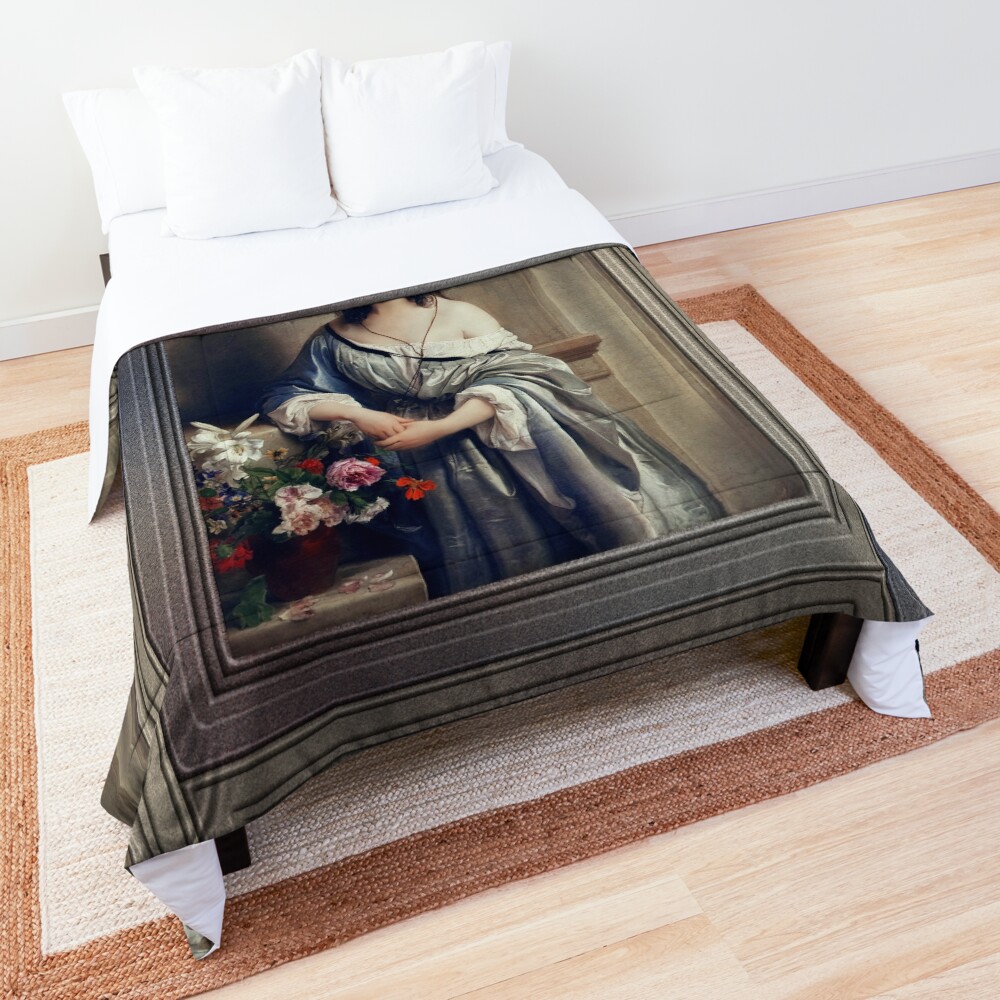
Melancholy c1841-42 by Italian Painter Francesco Hayez (1791 – 1882); a bha air fhaicinn mar phrìomh pheantair na h-ùine Romanticism ann am meadhan an 19mh linn ann am Milan, an Eadailt. Bha e ainmeil airson na dealbhan mòra eachdraidheil aige, allegories poilitigeach agus dealbhan fìor mhath.
Francesco Hayez, a prominent Italian painter of the Romantic period, captured the emotive power of human expression and drama in his renowned work “Melancholy”. This poignant portrait, air a chruthachadh timcheall 1841-42, epitomizes the Romantic ideals of intense emotional depth, samhlaidheachd beairteach, and the exploration of human inner turmoil. The painting features a young woman in a reflective pose, her body angled slightly away from the viewer, yet her gaze directly engages with the observer. Her expression is one of deep contemplation and melancholy, a theme that resonates throughout much of Hayez’s oeuvre.

The primary subject of the artwork is a woman dressed in a luxurious yet simple gown of muted silvery-blue fabric. Her attire is both modest and elegant, indicative of her high social standing but also suggesting a restrained, subdued personality.
The material of her gown is rendered with Hayez’s signature meticulous brushwork, which gives the fabric a soft, càileachd cha mhòr tar-shoilleir. It reflects light in such a way that one can almost feel its weight and texture. The delicacy of the gown contrasts with the weight of her expression, reinforcing the thematic tension of the painting.
The subject’s hair, dorcha agus gleansach, falls in loose waves around her shoulders, a 'toirt a h-aodann. Her posture is demure yet sorrowful, her hand gently resting on a vase of flowers placed on a table to her side. The inclusion of flowers—likely meant to symbolize transience and the fragility of life—adds a layer of complexity to the emotional narrative.
The flowers themselves are rendered with meticulous detail, a hallmark of Hayez’s technical prowess. They appear lifelike, as if they could be plucked from the canvas at any moment. This detailed rendering contrasts sharply with the somber tone of the subject, creating a sense of fragility in both the floral elements and the human form.
Air cùlaibh a' chuspair, the setting is an interior space, subtly lit to evoke a sense of isolation and introspection. The light seems to enter from an unseen source, casting soft shadows that envelop the subject, further intensifying the feeling of seclusion. The muted colors of the background, which include soft earth tones and shades of gray, highlight the figure of the woman, making her the focal point of the composition.
The architectural features of the room, particularly the classical columns that frame the space, suggest a timeless quality. This classical influence also evokes a sense of the past and the passage of time, which ties in with the theme of melancholy.
Faireachdainn de “Melancholy” is one of introspective sadness. The woman’s expression is not one of overt grief or despair but rather a quiet, contemplative sorrow. A h-gòrach aice, though distant, suggests a mind lost in thought—perhaps reflecting on personal loss, unfulfilled desires, or an existential longing. Hayez was deeply interested in the psychological states of his subjects, and this painting showcases his ability to capture the complexity of emotion through subtle facial expressions and body language.
While the subject’s melancholy could be interpreted in various ways, it is important to consider the broader cultural and historical context of the painting. Created during the early 1840s, the work was produced at a time of political and social unrest in Italy.
An gluasad romansach, le cuideam air faireachdainn, aonranachd, and rebellion against societal norms, had a profound impact on the intellectual climate of the time. Hayez aig “Melancholy” could be seen as a reflection of the inner turmoil experienced by many individuals living through the tensions of political upheaval, as well as the personal, emotional struggles that often accompanied such periods of uncertainty.
The symbolism within the painting also speaks to broader themes of romanticism. The wistful nature of the subject, combined with the classical elements of the room and the natural motifs of the flowers, suggests an idealization of the past and an awareness of life’s fleeting nature. The woman’s contemplative pose and the stillness of the surrounding environment suggest an acceptance of these fleeting moments, evoking a sense of resignation that is characteristic of many Romantic works.
Hayez’s use of light and shadow in this painting further enhances the emotional tone. The light that falls gently across the woman’s face and gown creates a sense of intimacy, almost as if we are intruding on a private moment. Gidheadh, the shadows that play across her figure suggest something darker—perhaps an unspoken sadness or the weight of an unvoiced emotion. This interplay of light and shadow is a powerful tool in conveying the internal conflict of the subject, highlighting the emotional depth and complexity that Hayez was able to achieve in this piece.
A thaobh stoidhle, “Melancholy” is quintessentially Romantic in its focus on emotion and individual experience. Hayez’s technical mastery is evident in his handling of texture and light, and his ability to convey psychological depth through subtle details is what makes this painting a standout example of Romantic portraiture. The realism with which he renders his subject, coupled with the idealization of the woman’s form, reflects the Romantic ideal of the artist as a master of both technique and emotional expression.
Aig a 'cheann thall, “Melancholy” is a masterpiece of emotional and psychological depth. Through the figure of the young woman, Hayez explores themes of introspection, call, and the complexity of human emotion. His masterful use of light, dath, and composition creates a timeless portrait that continues to resonate with viewers, evoking feelings of empathy and contemplation. The painting remains one of the most iconic representations of Romantic portraiture and exemplifies Francesco Hayez’s ability to capture the profound emotional states of his subjects.
Fiosrachadh gu h-ìosal bho Wikipedia.org
Bha Francesco Hayez bho theaghlach caran bochd à Venice. Athair, Giovanni, bha e bho thùs Frangach fhad ‘s a bha a mhàthair, Chiara Torcella, bha e à Murano. B ’e Francesco am fear ab’ òige de chòignear mhac.
Chaidh a thogail le piuthar a mhàthar, a bha air Giovanni Binasco a phòsadh, neach-seilbh shoithichean agus neach-cruinneachaidh ealain. Sheall Hayez predisposition airson tarraing bho òige. Bràthair athar, air mothachadh dha tàlant ro-innseach, chaidh e na phreantas ri ath-nuadhachadh ealain ann am Venice. Bhiodh Hayez a-rithist na sgoilear aig a ’pheantair Francesco Maggiotto leis an do lean e air le fhoghlam airson trì bliadhna.
Chaidh a leigeil a-steach gu cùrsa peantaidh Acadamaidh Ùr nan Ealan Fine ann am Venice ann an 1806, far an do rinn e sgrùdadh fo Teodoro Matteini. Ann an 1809 bhuannaich e farpais bho Acadamaidh Venice airson bliadhna air mhuinntireas aig an Accademia di San Luca san Ròimh.
Dh'fhuirich e anns an Ròimh gus 1814, ghluais e an uairsin gu Napoli far an deach a bharantachadh le Joachim Murat gus obair mhòr a pheantadh a ’sealltainn Ulysses aig cùirt Alcinous. Ann am meadhan na 1830an chaidh e gu Salon Maffei ann am Milan, air aoigheachd le Clara Maffei. Bhiodh an duine aig Maffei an uairsin a ’coimiseanadh dealbh de a bhean dha Hayez. Ann an 1850 Chaidh Hayez ainmeachadh mar stiùiriche Acadamaidh Brera.
Thar cùrsa-beatha fada, Bha Hayez air leth torrach. Bha an toradh aige a’ toirt a-steach dealbhan eachdraidheil air an dealbhadh gus a bhith tarraingeach do mhothachadh gràdhach a luchd-taic a bharrachd air obraichean a’ nochdadh a’ mhiann a bhith an cois stoidhle Neoclassic gu cuspairean mòra., an dara cuid bho litreachas a’ Bhìobaill neo clasaigeach.
Pheant e seallaidhean bho thaisbeanaidhean theatar cuideachd. Gu follaiseach neo-làthaireach bhon oeuvre aige, ge-tà, nan altarach – 's dòcha mar thoradh air na h-ionnsaighean Napoleon a dhì-thìodhlaiceadh mòran eaglaisean agus taighean-cràbhaidh ann an ceann a tuath na h-Eadailt. Thug an neach-eachdraidh ealain Corrado Ricci cunntas air Hayez mar chlasaigiche a thàinig gu bhith an uairsin ann an stoidhle buaireadh tòcail. Francesco Hayez, A ’Phòg (1859)
Tha na dealbhan aige cho dian sa tha Ingres agus an gluasad Nazarene. Gu tric a ’suidhe, Bidh cuspairean Hayez gu tric air an sgeadachadh ann an aodach cruaidh, aodach dubh is geal, le glè bheag gun accoutrements. Fhad ‘s a rinn Hayez dealbhan dha na h-uaislean, rannsaich e cuideachd cuspairean eile mar luchd-ealain agus luchd-ciùil. Anmoch na dhreuchd, tha fios gun do dh ’obraich e a’ cleachdadh dhealbhan.
B ’e aon de na cuspairean a b’ fheàrr le Hayez leth-aodach Odalisque cuimhneachail air cuspairean oirthireach - cuspair a b ’fheàrr le peantairean romansach.[3] Thug dealbhan de gheàrran agus na boireannaich aca cothrom do luchd-ealain seallaidhean a pheantadh nach gabhadh iad taobh a-staigh a ’chomainn-shòisealta. Tha eadhon barrachd mothachaidh aig eadhon Hayez’s Mary Magdalene na spionnadh creideimh.
Bha dealbh Hayez The Kiss air a mheas am measg na h-obrach as fheàrr leis na co-aoisean aige, agus is dòcha gur e an oidhirp as ainmeil aige. An gun urra, chan fheum gluasad-bodhaig gun bhuaidh a’ chàraid eòlas air uirsgeulan no litreachas airson a mhìneachadh, agus tarraingeach do shealladh ùr-nodha.
Tha measadh saidheansail air cùrsa-beatha Hayez air a dhèanamh iom-fhillte leis cho duilich ‘s a tha e airson gun a bhith a’ soidhnigeadh no a ’dol leis na h-obraichean aige. Gu math tric tha cinn-latha anns na dealbhan aige a 'sealltainn cuin a chaidh an obair fhaighinn no a reic, chan e àm a chruthachaidh. A bharrachd air sin, bhiodh e tric a’ peantadh na h-aon sgrìobhaidhean grunn thursan le glè bheag de dh’ atharrachaidhean, ma tha idir idir.
Am measg nan sgoilearan aige bho Acadamaidh Brera bha Carlo Belgioioso, Amanzio Cattaneo, Alessandro Focosi, Giovanni Battista Lamperti, Caoraich Livo, Angelo Pietrasanta, Antonio Silo, Carlo Antonio Tavella, Ismaele Teglio Milla agus Francesco Valaperta.
Bhàsaich Hayez ann am Milan, aois 91. Tha an stiùidio aige aig Acadamaidh Brera air a chomharrachadh le truinnsear.
An cruthachadh ealain didseatach seo, mar a tha leis a h-uile obair-ealain a gheibhear air làrach-lìn Xzendor7 ri fhaighinn airson a cheannach air-loidhne ann an grunn chruthan stuth a’ gabhail a-steach clò-bhualaidhean canabhas, dealbhan acrylic, clò-bhualaidhean meatailt, clò-bhualaidhean fiodha, lèileagan frèam, postairean, agus mar clò-bhualaidhean canabhas rollaichte ann an caochladh mheudan bho 12 òirlich gu 72 òirlich a rèir meud an fhìor obair-ealain agus a’ bhùth clò-bhualaidh air iarrtas a thaghas tu airson an ealain a cheannach.