

Melancholy
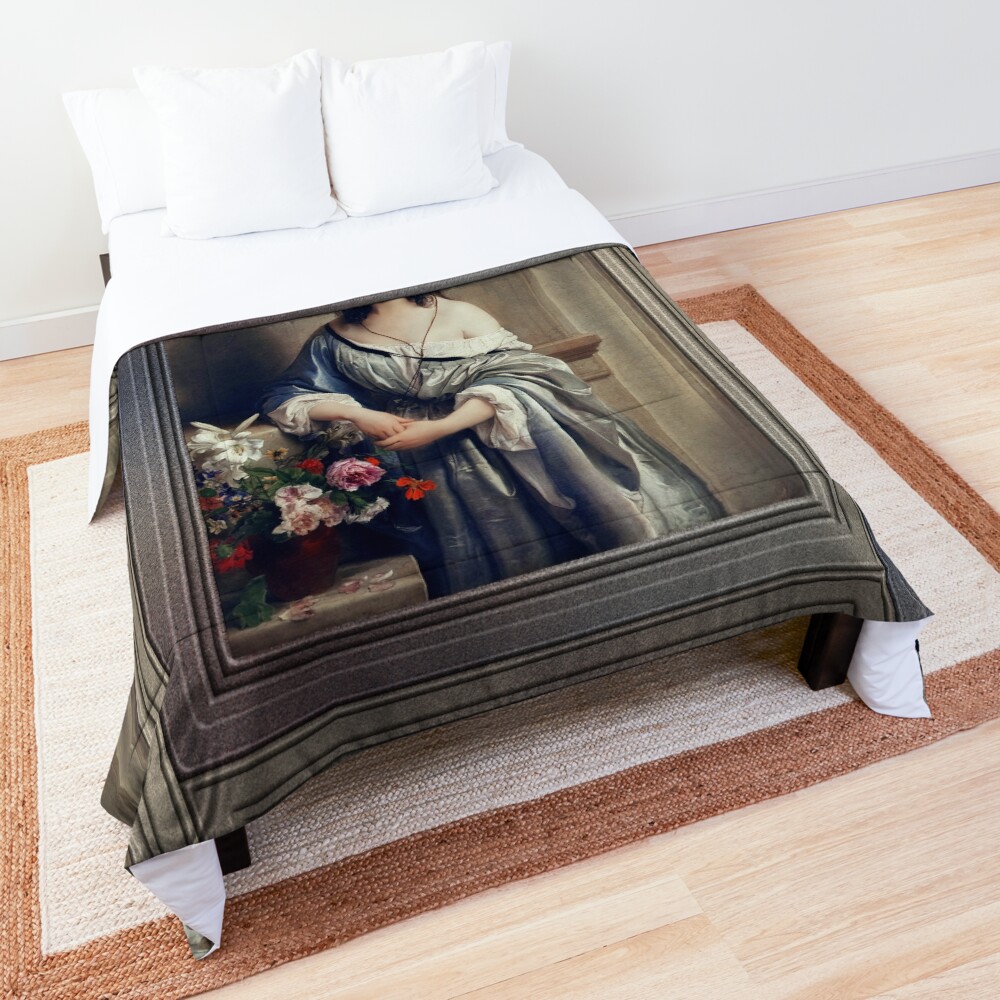
Melancholy c1841-42 by Italian Painter Francesco Hayez (1791 – 1882); イタリアのミラノで19世紀半ばのロマン主義時代の主要な画家とみなされていた. 彼は彼の壮大な歴史画でよく知られていました, 政治的な寓話と並外れた素晴らしい肖像画.
フランチェスコ・アイズ, a prominent Italian painter of the Romantic period, captured the emotive power of human expression and drama in his renowned work “Melancholy”. This poignant portrait, 周りに作成されます 1841-42, epitomizes the Romantic ideals of intense emotional depth, 豊かな象徴主義, and the exploration of human inner turmoil. The painting features a young woman in a reflective pose, her body angled slightly away from the viewer, yet her gaze directly engages with the observer. Her expression is one of deep contemplation and melancholy, a theme that resonates throughout much of Hayez’s oeuvre.

The primary subject of the artwork is a woman dressed in a luxurious yet simple gown of muted silvery-blue fabric. Her attire is both modest and elegant, indicative of her high social standing but also suggesting a restrained, subdued personality.
The material of her gown is rendered with Hayez’s signature meticulous brushwork, which gives the fabric a soft, ほぼ半透明の品質. It reflects light in such a way that one can almost feel its weight and texture. The delicacy of the gown contrasts with the weight of her expression, reinforcing the thematic tension of the painting.
被写体の髪の毛, dark and glossy, falls in loose waves around her shoulders, 彼女の顔をフレーミングします. Her posture is demure yet sorrowful, her hand gently resting on a vase of flowers placed on a table to her side. The inclusion of flowers—likely meant to symbolize transience and the fragility of life—adds a layer of complexity to the emotional narrative.
The flowers themselves are rendered with meticulous detail, a hallmark of Hayez’s technical prowess. They appear lifelike, as if they could be plucked from the canvas at any moment. This detailed rendering contrasts sharply with the somber tone of the subject, creating a sense of fragility in both the floral elements and the human form.
主題の背後に, the setting is an interior space, subtly lit to evoke a sense of isolation and introspection. The light seems to enter from an unseen source, casting soft shadows that envelop the subject, further intensifying the feeling of seclusion. The muted colors of the background, which include soft earth tones and shades of gray, highlight the figure of the woman, 彼女を構図の中心にする.
The architectural features of the room, particularly the classical columns that frame the space, suggest a timeless quality. This classical influence also evokes a sense of the past and the passage of time, which ties in with the theme of melancholy.
の気分 “Melancholy” is one of introspective sadness. The woman’s expression is not one of overt grief or despair but rather a quiet, contemplative sorrow. 彼女の視線, though distant, suggests a mind lost in thought—perhaps reflecting on personal loss, unfulfilled desires, or an existential longing. Hayez was deeply interested in the psychological states of his subjects, and this painting showcases his ability to capture the complexity of emotion through subtle facial expressions and body language.
While the subject’s melancholy could be interpreted in various ways, it is important to consider the broader cultural and historical context of the painting. Created during the early 1840s, the work was produced at a time of political and social unrest in Italy.
ロマンチックな動き, 感情に重点を置いて, 個人主義, and rebellion against societal norms, had a profound impact on the intellectual climate of the time. ヘイズの “Melancholy” could be seen as a reflection of the inner turmoil experienced by many individuals living through the tensions of political upheaval, as well as the personal, emotional struggles that often accompanied such periods of uncertainty.
The symbolism within the painting also speaks to broader themes of romanticism. The wistful nature of the subject, combined with the classical elements of the room and the natural motifs of the flowers, suggests an idealization of the past and an awareness of life’s fleeting nature. The woman’s contemplative pose and the stillness of the surrounding environment suggest an acceptance of these fleeting moments, evoking a sense of resignation that is characteristic of many Romantic works.
Hayez’s use of light and shadow in this painting further enhances the emotional tone. The light that falls gently across the woman’s face and gown creates a sense of intimacy, almost as if we are intruding on a private moment. まだ, the shadows that play across her figure suggest something darker—perhaps an unspoken sadness or the weight of an unvoiced emotion. This interplay of light and shadow is a powerful tool in conveying the internal conflict of the subject, highlighting the emotional depth and complexity that Hayez was able to achieve in this piece.
スタイル的には, “Melancholy” is quintessentially Romantic in its focus on emotion and individual experience. Hayez’s technical mastery is evident in his handling of texture and light, and his ability to convey psychological depth through subtle details is what makes this painting a standout example of Romantic portraiture. The realism with which he renders his subject, coupled with the idealization of the woman’s form, reflects the Romantic ideal of the artist as a master of both technique and emotional expression.
最終的に, “Melancholy” is a masterpiece of emotional and psychological depth. Through the figure of the young woman, Hayez explores themes of introspection, 損失, and the complexity of human emotion. His masterful use of light, 色, and composition creates a timeless portrait that continues to resonate with viewers, evoking feelings of empathy and contemplation. The painting remains one of the most iconic representations of Romantic portraiture and exemplifies Francesco Hayez’s ability to capture the profound emotional states of his subjects.
以下の情報から Wikipedia.org
フランチェスコ・アイエズはヴェネツィアの比較的貧しい家族の出身でした. 彼の父, ジョバンニ, 彼の母親がフランス出身だった, キアラトルチェッロ, ムラーノ出身. フランチェスコは5人の息子の末っ子でした.
彼は母親の妹に育てられました, ジョバンニビナスコと結婚した人, 裕福な船主とアートコレクター. アイズは子供の頃から絵を描く素因を示しました. 彼の叔父, 彼の早熟な才能に気づいた, ヴェネツィアの芸術修復家に彼を弟子入りさせた. ハイズは後に画家フランチェスコ・マジオットの弟子となり、3年間研究を続けました。.
彼はヴェネツィアの新美術アカデミーの絵画コースに入学しました 1806, 彼はテオドロ・マッティーニに師事しました. に 1809 彼はローマのアカデミアディサンルカで1年間の滞在のためにヴェネツィアアカデミーからの競争に勝ちました.
彼はローマにとどまりました 1814, その後、ナポリに移り、ジョアシャンミュラから、アルシナスの宮廷でユリシーズを描いた主要な作品を描くよう依頼されました。. 1830年代半ば、彼はミラノのマフェイサロンに出席しました。, クララ・マッフェイ主催. マフェイの夫は後にハイエズに妻の肖像画を依頼しました. に 1850 ハイズはブレラアカデミーのディレクターに任命されました.
長いキャリアの中で, ハイズは特に多作であることが証明されました. 彼の作品には、彼の常連客の愛国的な感性をアピールするように設計された歴史的な絵画や、新古典主義のスタイルを壮大なテーマに添えたいという願望を反映した作品が含まれていました, 聖書または古典文学のいずれかから.
彼はまた、演劇のプレゼンテーションのシーンを描いた. 彼の作品に目立って欠席, しかしながら, 祭壇画です – イタリア北部の多くの教会や修道院を非難したナポレオンの侵略が原因である可能性があります. 美術史家のコラード・リッチは、ハイエズを古典主義者と表現し、その後、感情的な騒動のスタイルに進化しました。. フランチェスコ・アイズ, キス (1859)
彼の肖像画は、イングレスとナザレ派の動きの強さを持っています. しばしば座っている, ハイズの主題はしばしば厳粛な服を着ています, 黒と白の服, 装身具がほとんどないかまったくない. ハイズが貴族のために肖像画を作っている間, 彼はまた、仲間のアーティストやミュージシャンのような他の主題を探求しました. 彼のキャリアの後半, 彼は写真を使って働いたことで知られています.
アイズのお気に入りのテーマの1つは、ロマン派の画家のお気に入りのトピックである、東洋のテーマを想起させる半服のオダリスクでした。[3] ハーレムとその女性の描写により、芸術家は社会では受け入れられないシーンを描くことができました。. アイズのマグダラのマリアでさえ、宗教的な熱意よりも官能的です.
アイズの絵画「キス」は、同時代の人々から彼の最高の作品の1つと見なされていました。, そしておそらく彼の最も有名な努力です. 匿名, カップルの影響を受けていないジェスチャーは、解釈するために神話や文学の知識を必要としません, 現代の視線にアピールします.
ハイズの経歴の科学的評価は、彼の作品に署名したり、日付を記入したりしない傾向があるため、複雑になっています。. 多くの場合、彼の絵画の日付は、作品がいつ取得または販売されたかを示しています, その作成の時ではありません. さらに, 彼はしばしば同じ構図を数回描いたが、バリエーションがあったとしても最小限に抑えた。.
ブレラ美術学院の生徒の中には、CarloBelgioiosoがいました。, アマンツィオ・カタネオ, アレッサンドロ・フォコシ, ジョバンニバティスタランペルティ, リボ羊, アンジェロピエトラサンタ, アントニオ・サイロ, カルロアントニオタベラ, IsmaeleTeglioMillaとFrancescoValaperta.
ハイズはミラノで亡くなりました, 年 91. ブレラ美術学院の彼のスタジオにはプレートが付いています.
このデジタルアート作品は、, Xzendor7 Web サイトにあるすべてのアートワークと同様に、キャンバス プリントを含むさまざまな素材形式でオンラインで購入できます。, アクリルプリント, メタルプリント, 木版, 額入りプリント, ポスター, そしてとして ロール状のキャンバスプリント さまざまなサイズから 12 インチから 72 インチは、実際のアートワークのサイズと、アートを購入するために選択したオンデマンド プリント ショップによって異なります。.