

Melancholie
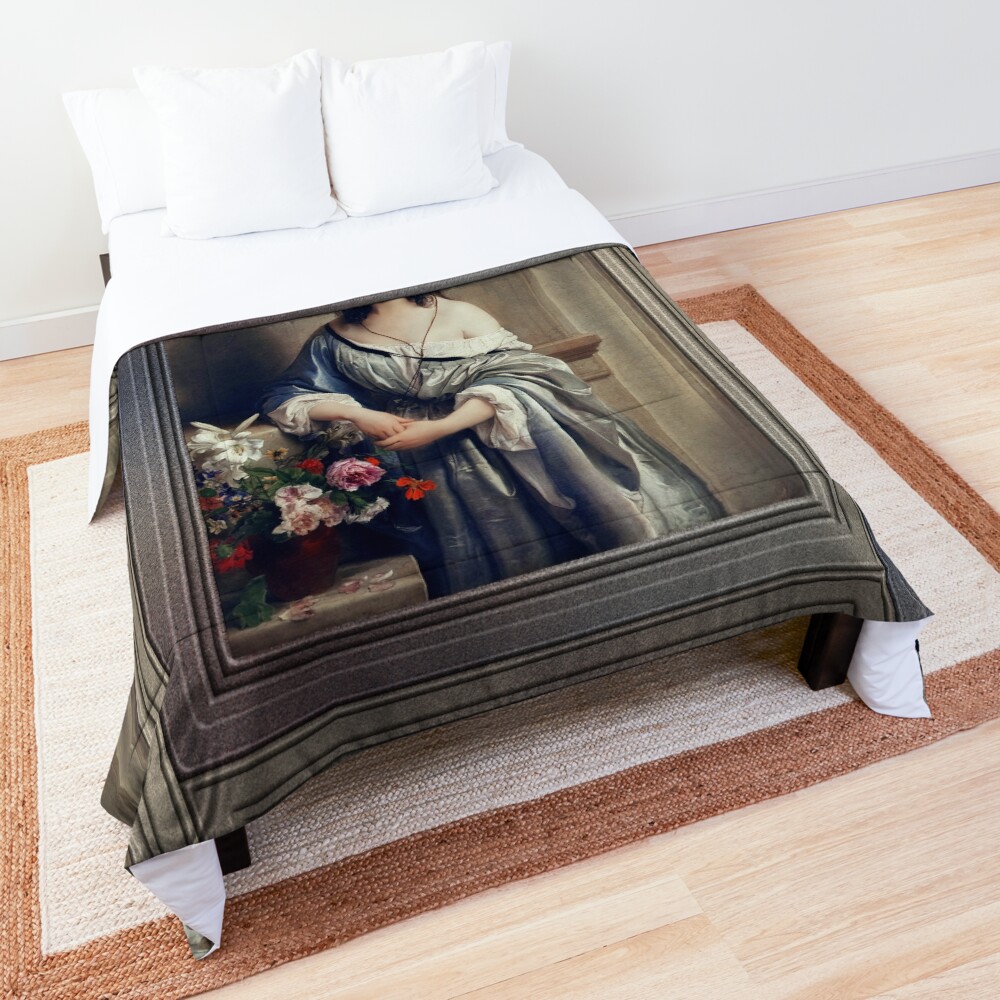
Melancholie c1841-42 vum italienesche Moler Francesco Hayez (1791 – 1882); deen als de féierende Moler vun der Romantik Period an der Mëtt vum 19. Joerhonnert zu Mailand Italien ugesi gouf. Hie war bekannt fir seng grouss historesch Biller, politesch Allegorien an aussergewéinlech flott Portraite.
Francesco Hayez, e prominent italienesche Moler aus der romantescher Period, huet déi emotional Kraaft vum mënschlechen Ausdrock an Drama a sengem renomméierte Wierk ageholl “Melancholie”. Dëse grellem Portrait, erstallt ronderëm 1841-42, epitomizes de romanteschen Idealer vun intensiv emotionalen Déift, räich Symbolismus, an d'Exploratioun vum mënschlechen banneschten Onrou. D'Bild weist eng jonk Fra an enger reflektéierter Pose, hire Kierper Wénkel liicht ewech vum Zuschauer, trotzdem engagéiert hire Bléck direkt mam Beobachter. Hiren Ausdrock ass ee vun déif Iwwerleeung a Melancholie, en Thema dat duerch vill vum Hayez sengem Oeuvre resonéiert.

D'Haaptthema vum Konschtwierk ass eng Fra gekleet an engem luxuriéisen awer einfachen Kleed aus gedempte sëlwerbloen Stoffer. Hir Kleedung ass bescheiden an elegant, indikativ vun hirem héije soziale Stand, awer och suggeréiert eng behalen, gedämpft Perséinlechkeet.
The material of her gown is rendered with Hayez’s signature meticulous brushwork, which gives the fabric a soft, bal duerchsichteg Qualitéit. It reflects light in such a way that one can almost feel its weight and texture. The delicacy of the gown contrasts with the weight of her expression, reinforcing the thematic tension of the painting.
The subject’s hair, donkel a glänzend, falls in loose waves around her shoulders, fuscheleg hiert Gesiicht. Her posture is demure yet sorrowful, her hand gently resting on a vase of flowers placed on a table to her side. The inclusion of flowers—likely meant to symbolize transience and the fragility of life—adds a layer of complexity to the emotional narrative.
The flowers themselves are rendered with meticulous detail, a hallmark of Hayez’s technical prowess. They appear lifelike, as if they could be plucked from the canvas at any moment. This detailed rendering contrasts sharply with the somber tone of the subject, creating a sense of fragility in both the floral elements and the human form.
Hannert dem Thema, the setting is an interior space, subtly lit to evoke a sense of isolation and introspection. The light seems to enter from an unseen source, casting soft shadows that envelop the subject, further intensifying the feeling of seclusion. The muted colors of the background, which include soft earth tones and shades of gray, highlight the figure of the woman, mécht hir de Brennpunkt vun der Kompositioun.
The architectural features of the room, particularly the classical columns that frame the space, suggest a timeless quality. This classical influence also evokes a sense of the past and the passage of time, which ties in with the theme of melancholy.
D'Stëmmung vum “Melancholie” is one of introspective sadness. The woman’s expression is not one of overt grief or despair but rather a quiet, contemplative sorrow. Hirem Bléck, obwuel wäit ewech, suggests a mind lost in thought—perhaps reflecting on personal loss, unfulfilled desires, or an existential longing. Hayez was deeply interested in the psychological states of his subjects, and this painting showcases his ability to capture the complexity of emotion through subtle facial expressions and body language.
While the subject’s melancholy could be interpreted in various ways, it is important to consider the broader cultural and historical context of the painting. Created during the early 1840s, the work was produced at a time of political and social unrest in Italy.
Déi romantesch Bewegung, mat sengem Akzent op Emotiounen, Individualismus, and rebellion against societal norms, had a profound impact on the intellectual climate of the time. Hayez's “Melancholie” could be seen as a reflection of the inner turmoil experienced by many individuals living through the tensions of political upheaval, as well as the personal, emotional struggles that often accompanied such periods of uncertainty.
The symbolism within the painting also speaks to broader themes of romanticism. The wistful nature of the subject, combined with the classical elements of the room and the natural motifs of the flowers, suggests an idealization of the past and an awareness of life’s fleeting nature. The woman’s contemplative pose and the stillness of the surrounding environment suggest an acceptance of these fleeting moments, evoking a sense of resignation that is characteristic of many Romantic works.
Hayez’s use of light and shadow in this painting further enhances the emotional tone. The light that falls gently across the woman’s face and gown creates a sense of intimacy, almost as if we are intruding on a private moment. Trotzdem, the shadows that play across her figure suggest something darker—perhaps an unspoken sadness or the weight of an unvoiced emotion. This interplay of light and shadow is a powerful tool in conveying the internal conflict of the subject, highlighting the emotional depth and complexity that Hayez was able to achieve in this piece.
A punkto Stil, “Melancholie” ass quintessentiell romantesch a sengem Fokus op Emotiounen an individuell Erfahrung. Dem Hayez seng technesch Meeschterschaft ass evident a sengem Ëmgang mat Textur a Liicht, a seng Fäegkeet fir psychologesch Déift duerch subtile Detailer ze vermëttelen ass dat wat dëst Bild e Standout Beispill vu romantescher Portrait mécht. De Realismus mat deem hie säi Sujet duerstellt, gekoppelt mat der Idealiséierung vun der Fra hir Form, reflektéiert de romanteschen Ideal vum Kënschtler als Meeschter vu béid Technik an emotionaler Ausdrock.
Schlussendlech, “Melancholie” ass e Meeschterstéck vun emotionaler a psychologescher Déift. Duerch d'Figur vun der jonker Fra, Hayez entdeckt Themen vun der Introspektioun, Verloscht, an d'Komplexitéit vu mënschlechen Emotiounen. Seng Meeschtesch Notzung vum Liicht, Faarf, a Kompositioun schaaft en zäitlosen Portrait dee weider mat Zuschauer resonéiert, evoking feelings of empathy and contemplation. The painting remains one of the most iconic representations of Romantic portraiture and exemplifies Francesco Hayez’s ability to capture the profound emotional states of his subjects.
Info Ënnen Vun Wikipedia.org
De Francesco Hayez war aus enger relativ aarmer Famill aus Venedeg. Säi Papp, Giovanni, war vu franséischer Hierkonft wärend seng Mamm, Chiara Torcella, war vu Murano. De Francesco war de jéngste vu fënnef Jongen.
Hie gouf vu senger Mamm senger Schwëster opgewuess, deen de Giovanni Binasco bestuet hat, e guttgeheescht Schëffer a Konschtsammler. Hayez huet zënter Kandheet eng Prädisposition fir Zeechnen gewisen. Säi Monni, no sengem precocious Talent gemierkt, hien zu Venedeg zu engem Konschtrestaurateur geléiert. Hayez gouf spéider e Schüler vum Moler Francesco Maggiotto mat deem hie seng Studien fir dräi Joer weidergeet.
Hie gouf op de Molereicours vun der New Academy of Fine Arts zu Venedeg zouginn 1806, wou hien ënner dem Teodoro Matteini studéiert huet. An 1809 hien huet e Concours vun der Akademie vu Venedeg fir ee Joer Residenz an der Accademia di San Luca zu Roum gewonnen.
Hie blouf zu Roum bis 1814, ass dunn op Neapel geplënnert, wou hie vum Joachim Murat den Optrag krut fir e grousst Wierk ze molen, dat den Ulysses um Geriicht vun Alcinous duerstellt.. An der Mëtt vun den 1830er Jore war hien de Maffei Salon zu Mailand, gehost vum Clara Maffei. Dem Maffei säi Mann hätt spéider Hayez e Porträt vu senger Fra opgestallt. An 1850 Hayez gouf zum Direkter vun der Brera Academy ernannt.
Am Laf vun enger laanger Carrière, Den Hayez huet sech als besonnesch produktiv bewisen. Säin Output enthält historesch Biller entwéckelt fir d'patriotesch Sensibilitéit vu senge Patréiner ze beruffen, souwéi Wierker, déi de Wonsch reflektéieren en neoklassesche Stil op grouss Themen ze begleeden, entweder aus biblescher oder klassescher Literatur.
Hien huet och Szenen aus Theaterpresentatiounen gemoolt. Opfälleg fehlt vu sengem Oeuvre, awer, sinn Altarstécker – méiglecherweis wéinst den Napoleoneschen Invasiounen, déi vill Kierchen a Klouschter an Norditalien entweidert hunn. Konschthistoriker Corrado Ricci beschreift den Hayez als Klassiker, deen sech dunn zu engem Stil vun emotionaler Tumult entwéckelt huet. Francesco Hayez, De Kuss (1859)
Seng Portraite hunn d'Intensitéit vun Ingres an der Nazarener Bewegung. Oft sëtzt, Hayez d'Sujete sinn oft an streng verkleed, schwaarz a wäiss Kleeder, mat wéineg bis guer keng Ausrüstung. Wärend den Hayez Portraite fir den Adel gemaach huet, hien huet och aner Theme wéi Kënschtlerkollegen a Museker exploréiert. Spéit a senger Carrière, et ass bekannt datt hien mat Fotoen geschafft huet.
Ee vun Hayez d'Lieblingsthemen war semi-gekleet Odalisque evocative vun orientaleschen Themen - e Léifsten Thema vun romanteschen Moler.[3] D'Biller vun Harem an hir Fraen erlaabt Kënschtler d'Fähegkeet Szenen ze molen soss net akzeptabel bannent der Gesellschaft. Och dem Hayez seng Maria Magdalena huet méi Sensualitéit wéi reliéis Gär.
Dem Hayez seng Molerei The Kiss gouf vu senge Zäitgenossen als ee vun de beschte Wierker ugesinn, an ass méiglecherweis säi bekanntste Effort. Déi anonym, Onbeaflosst Geste vun der Koppel erfuerdert kee Wëssen iwwer Mythos oder Literatur fir ze interpretéieren, an rifft op e modernen Bléck.
Eng wëssenschaftlech Bewäertung vum Hayez senger Carrière gouf komplizéiert duerch seng Proclivity fir seng Wierker net z'ënnerschreiwen oder ze daten. Dacks Datumen a senge Biller weisen wéini d'Aarbecht kaaft oder verkaaft gouf, net d'Zäit vu senger Schafung. Ausserdeem, hien huet dacks déi selwecht Kompositioune e puer Mol mat minimale Variatiounen gemoolt, wann iwwerhaapt.
Zu senge Schüler vun der Brera Akademie waren de Carlo Belgioioso, Amanzio Cattaneo, Alessandro Focosi, Giovanni Battista Lamperti, Liewen Pecora, Angelo Pietrasanta, Antonio Silo, Carlo Antonio Tavella, Ismaele Teglio Milla an Francesco Valaperta.
Hayez ass zu Mailand gestuerwen, Alter 91. Säin Atelier an der Brera Akademie gëtt mat engem Plack markéiert.
Dës digital Konscht Kreatioun, wéi mat all de Konschtwierker, déi op der Xzendor7 Websäit fonnt kënne ginn, ass online a verschiddene Materialformater ze kafen, dorënner Canvas Prints, acryl Prints, Metallofdréck, Holzdrécker, cadréiert Printen, Plakater, an as gewalzt Leinwand Drécken an enger Rei vu Gréissten aus 12 Zoll zu 72 Zoll ofhängeg vun der Gréisst vum aktuellen Konschtwierk an dem Print-on-Demande Buttek vun deem Dir gewielt hutt d'Konscht ze kafen.