

Memories of Olive
Memories of Olive: A Glimpse into 1920s Glamour by Alberto Vargas
Ìomhaigh neach-àite Alberto Vargas’ “Memories of Olive,” air a chruthachadh timcheall 1920, is a captivating example of the artist’s signature style – a blend of classical beauty ideals with the burgeoning pin-up aesthetic that defined much of the early twentieth century. The painting offers a window into an era of evolving social norms and artistic expression, showcasing a woman in a moment of quiet contemplation and sensual allure. Vargas, born in Peru but largely based in the United States, was renowned for his elegant depictions of women, often working for publications like Esquire agus Vogue, where he helped shape the visual language of glamour during the interwar period.
Clàr-innse
An cuspair: Olive’s Poised Presence
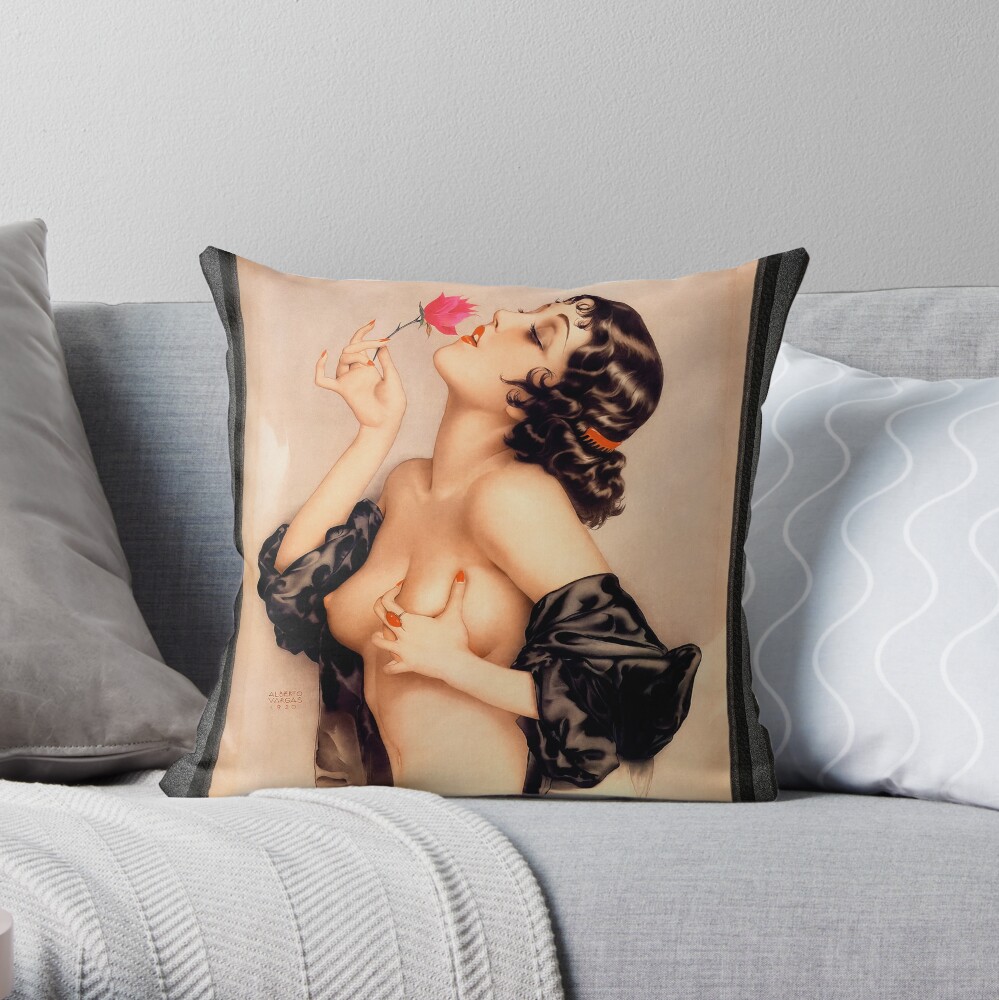
Am prìomh fhigear, identified as “Olive,” is presented in a reclining pose that evokes classical sculpture while simultaneously embracing a more modern sensibility. Her body is gracefully curved, emphasizing the contours of her form with a delicate balance between realism and idealization. She isn’t posed aggressively or provocatively; An àite sin, she exudes an air of quiet confidence and introspection.
Olive’s face is framed by dark, wavy hair meticulously styled in the fashionable bob cut of the 1920s, secured with a decorative band. Tha a sùilean fo bhròn, fòcas gu dlùth air aon ròs pinc air a chumail gu socair eadar a corragan. Tha an gluasad seo a’ nochdadh mionaid de mheòrachadh prìobhaideach, 's dòcha a' cuimhneachadh air cuimhneachain measail no dìreach a 'cur luach air bòidhchead an fhlùr fhèin.
Co-dhèanamh agus Dath Palette: A Study in Warmth and Light
Bidh Vargas gu mòr a’ cleachdadh solas agus faileas gus doimhneachd agus meud a chruthachadh taobh a-staigh an dealbh sgrìobhadh. Tha an dealbh air a nighe ann am bog, solais blàth a tha a’ soilleireachadh tònaichean craiceann Olive agus a’ cruthachadh glaodh socair timcheall a cruth. Tha an soillseachadh sgaoilte seo a’ cur ris a’ mhothachadh iomlan air dlùth-chàirdeas agus suaimhneas. Tha am paileas dath air a chuingealachadh san aon dòigh, air a riaghladh le tònaichean talmhainn sàmhach - uachdaran, tanaichean, agus donn - a tha a’ toirt cùl-raon seòlta don fhigear. Tha pinc beòthail an ròs mar phrìomh àite fòcas, drawing the viewer’s eye and adding a touch of vibrancy to the otherwise understated scene. The dark fabric draped across her shoulders provides a visual counterpoint, grounding the composition and enhancing the sense of volume.
Buaidh ealain: Classical Roots and Modern Sensibilities
Vargas’ artistic background is evident in “Memories of Olive.” The reclining pose directly references classical depictions of goddesses like Venus, demonstrating an appreciation for traditional beauty standards. Ach, Vargas departs from strict academic conventions by incorporating elements of Art Deco design and the emerging pin-up style. This fusion results in a unique aesthetic that is both timeless and distinctly modern. The emphasis on naturalism in Olive’s features and the relaxed posture contribute to a sense of accessibility and relatability, moving away from the more distant and idealized portrayals often found in earlier classical art.
Sgilean Teicnigeach: Mion-fhiosrachadh agus mionaideachd
The painting showcases Vargas’ exceptional technical skill as an artist. The rendering of Olive’s skin is particularly noteworthy, with subtle gradations of tone that capture the softness and luminosity of flesh. Each strand of hair appears meticulously rendered, contributing to the overall sense of realism. The details in the fabric – the folds, sgàile, and textures – are equally impressive. Vargas’ ability to create such a convincing illusion of three-dimensionality through paint alone is a testament to his mastery of technique.
Contextual Significance: Meòrachadh air Linn
“Memories of Olive” emerged during a period of significant social and cultural change in the United States. The 1920s, gu tric air ainmeachadh mar an “Roaring Twenties,” were characterized by economic prosperity, technological advancements, and shifting attitudes towards gender roles. Vargas’ paintings reflected this evolving landscape, portraying women with a newfound sense of independence and self-assurance. While still adhering to traditional notions of beauty, his depictions moved away from Victorian ideals of demureness and restraint, embracing a more modern and sensual aesthetic that resonated with the spirit of the age. “Memories of Olive” stands as a poignant reminder of this transformative era in American art and culture.
Neach-ealain Bios bho Wikipedia.org
Rugadh e ann an Arequipa, Peru, bha e na mhac leis an dealbhadair ainmeil Peruach Max T.. Vargas.[1] Ghluais Alberto Vargas dha na Stàitean Aonaichte a-steach 1916 às deidh dha sgrùdadh a dhèanamh air ealain san Roinn Eòrpa, Zurich, agus Geneva ron Chiad Chogadh. Fhad ‘s a bha e san Roinn Eòrpa thàinig e air an iris Frangach La Vie Parisienne, le còmhdach le Raphael Kirchner, a thuirt e a thug buaidh mhòr air an obair aige.
Bha a dhreuchd tràth ann an New York a ’toirt a-steach obair mar neach-ealain airson na Ziegfeld Follies agus airson mòran stiùidio Hollywood. Chroch Ziegfeld an dealbh aige de Olive Thomas aig an taigh-cluiche, agus bhathas den bheachd gur i aon de na caileagan Vargas as tràithe. Vargas’ bha am pìos film as ainmeil airson postair an 1933 film The Sin of Nora Moran, a tha a ’sealltainn Zita Johann a tha cha mhòr lomnochd ann an suidheachadh dòrainn. Tha am postair air ainmeachadh gu tric mar aon de na postairean film as motha a chaidh a dhèanamh a-riamh.
Bha e ainmeil fad is farsaing anns na 1940an mar neach-cruthachaidh ìomhaighean ainmeil àm an Dàrna Cogaidh airson an iris Esquire ris an canar “Nigheanan Vargas.” Eadar 1940 agus 1946 Vargas air a thoirt a-mach 180 dealbhan airson an iris.[1] Chaidh ealain sròin mòran de phlèanaichean Ameireagaidh agus an Dàrna Cogadh a bhrosnachadh agus atharrachadh bho na h-iomairtean prìne Esquire sin, a bharrachd air an fheadhainn aig Seòras Petty, agus luchd-ealain eile.
This remastered vintage art pin up girl reproduction, mar a tha leis a h-uile obair-ealain a gheibhear air làrach-lìn Xzendor7 ri fhaighinn airson a cheannach air-loidhne ann an grunn chruthan stuth a’ gabhail a-steach clò-bhualaidhean canabhas, dealbhan acrylic, clò-bhualaidhean meatailt, clò-bhualaidhean fiodha, lèileagan frèam, postairean, agus mar clò-bhualaidhean canabhas rollaichte ann an caochladh mheudan bho 12 òirlich gu 72 òirlich a rèir meud an fhìor obair-ealain agus a’ bhùth clò-bhualaidh air iarrtas a thaghas tu airson an ealain a cheannach.
Is e seo ath-riochdachadh seann mhaighstirean ealain didseatach ath-riochdachadh de ìomhaigh raon poblach.