

Memories of Olive
Memories of Olive: A Glimpse into 1920s Glamour by Alberto Vargas
Tijdelijke afbeelding voor Alberto Vargas’ “Memories of Olive,” created around 1920, is a captivating example of the artist’s signature style – a blend of classical beauty ideals with the burgeoning pin-up aesthetic that defined much of the early twentieth century. The painting offers a window into an era of evolving social norms and artistic expression, showcasing a woman in a moment of quiet contemplation and sensual allure. Vargas, born in Peru but largely based in the United States, was renowned for his elegant depictions of women, often working for publications like Esquire en Vogue, where he helped shape the visual language of glamour during the interwar period.
Inhoudsopgave
Het onderwerp: Olive’s Poised Presence
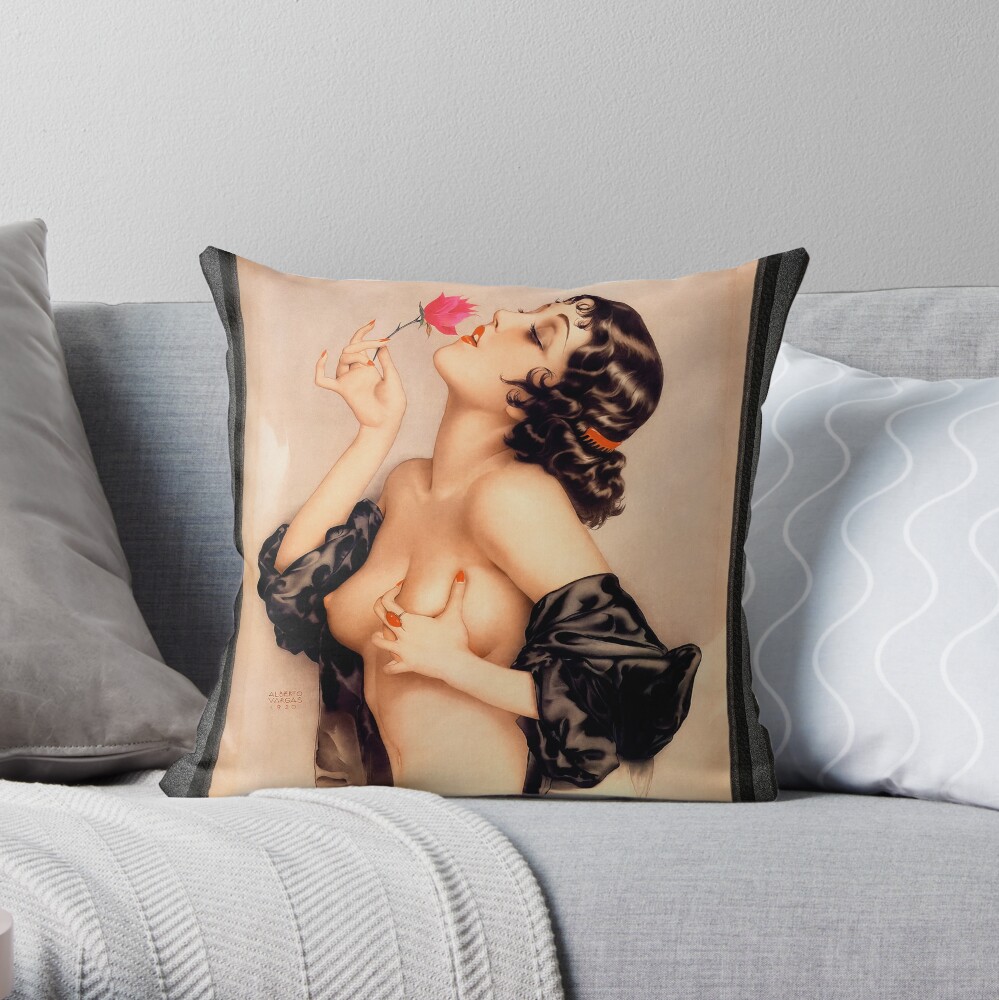
De centrale figuur, identified as “Olive,” is presented in a reclining pose that evokes classical sculpture while simultaneously embracing a more modern sensibility. Her body is gracefully curved, emphasizing the contours of her form with a delicate balance between realism and idealization. She isn’t posed aggressively or provocatively; liever, she exudes an air of quiet confidence and introspection.
Olive’s face is framed by dark, wavy hair meticulously styled in the fashionable bob cut of the 1920s, secured with a decorative band. Her eyes are downcast, focused intently on a single pink rose held delicately between her fingers. This gesture suggests a moment of private reflection, perhaps recalling cherished memories or simply appreciating the beauty of the flower itself.
Composition and Color Palette: A Study in Warmth and Light
Vargas masterfully utilizes light and shadow to create depth and dimension within the portret samenstelling. The painting is bathed in soft, warm lighting that highlights Olive’s skin tones and creates a gentle glow around her form. This diffused illumination contributes to the overall sense of intimacy and tranquility. The color palette is similarly restrained, dominated by muted earth tones – creams, tans, and browns – which provide a subtle backdrop for the figure. The vibrant pink of the rose serves as a striking focal point, drawing the viewer’s eye and adding a touch of vibrancy to the otherwise understated scene. The dark fabric draped across her shoulders provides a visual counterpoint, grounding the composition and enhancing the sense of volume.
Artistieke invloeden: Classical Roots and Modern Sensibilities
Vargas’ artistic background is evident in “Memories of Olive.” The reclining pose directly references classical depictions of goddesses like Venus, demonstrating an appreciation for traditional beauty standards. Echter, Vargas departs from strict academic conventions by incorporating elements of Art Deco design and the emerging pin-up style. This fusion results in a unique aesthetic that is both timeless and distinctly modern. The emphasis on naturalism in Olive’s features and the relaxed posture contribute to a sense of accessibility and relatability, moving away from the more distant and idealized portrayals often found in earlier classical art.
Technical Skill: Precision and Detail
The painting showcases Vargas’ exceptional technical skill as an artist. The rendering of Olive’s skin is particularly noteworthy, with subtle gradations of tone that capture the softness and luminosity of flesh. Each strand of hair appears meticulously rendered, contributing to the overall sense of realism. The details in the fabric – the folds, schaduwen, and textures – are equally impressive. Vargas’ ability to create such a convincing illusion of three-dimensionality through paint alone is a testament to his mastery of technique.
Contextual Significance: A Reflection of an Era
“Memories of Olive” emerged during a period of significant social and cultural change in the United States. The 1920s, often referred to as the “Roaring Twenties,” were characterized by economic prosperity, technological advancements, and shifting attitudes towards gender roles. Vargas’ paintings reflected this evolving landscape, portraying women with a newfound sense of independence and self-assurance. While still adhering to traditional notions of beauty, his depictions moved away from Victorian ideals of demureness and restraint, embracing a more modern and sensual aesthetic that resonated with the spirit of the age. “Memories of Olive” stands as a poignant reminder of this transformative era in American art and culture.
Kunstenaar bio van Wikipedia.org
Geboren in Arequipa, Peru, hij was de zoon van de bekende Peruaanse fotograaf Max T. Vargas.[1] Alberto Vargas verhuisde in 2004 naar de Verenigde Staten 1916 na een studie kunst in Europa, Zürich, en Genève voorafgaand aan de Eerste Wereldoorlog. Terwijl hij in Europa was, stuitte hij op het Franse tijdschrift La Vie Parisienne, met een omslag van Raphael Kirchner, waarvan hij zei dat het een grote invloed had op zijn werk.
Zijn vroege carrière in New York omvatte werk als kunstenaar voor de Ziegfeld Follies en voor veel Hollywood-studio's. Ziegfeld hing zijn schilderij van Olive Thomas in het theater, en ze werd gezien als een van de eerste Vargas Girls. Vargas’ meest bekende stuk filmwerk was voor de poster van de 1933 film De zonde van Nora Moran, die een bijna naakte Zita Johann toont in een wanhoopshouding. De poster wordt vaak genoemd als een van de beste filmposters ooit gemaakt.
Hij werd in de jaren veertig algemeen bekend als de maker van iconische pin-ups uit de Tweede Wereldoorlog voor het tijdschrift Esquire, bekend als “Vargas-meisjes.” Tussen 1940 en 1946 Vargas geproduceerd 180 schilderijen voor het tijdschrift.[1] De neuskunst van veel Amerikaanse en geallieerde vliegtuigen uit de Tweede Wereldoorlog is geïnspireerd en aangepast van deze Esquire-pin-ups, evenals die van George Petty, en andere artiesten.
This remastered vintage art pin up girl reproduction, zoals bij alle kunstwerken die op de Xzendor7-website te vinden zijn, is deze online te koop in verschillende materiaalformaten, waaronder canvasafdrukken, acryl afdrukken, metalen prints, hout prints, ingelijste afdrukken, affiches, en als opgerolde canvasafdrukken in diverse maten vanaf 12 inch tot 72 inch, afhankelijk van de grootte van het daadwerkelijke kunstwerk en de print on demand-winkel waar je de kunst wilt kopen.
Dit is een retoucheerde digitale reproductie van kunst oude meesters van een openbaar domeinafbeelding.