

Miss Jannewaris Varga Girl 1944
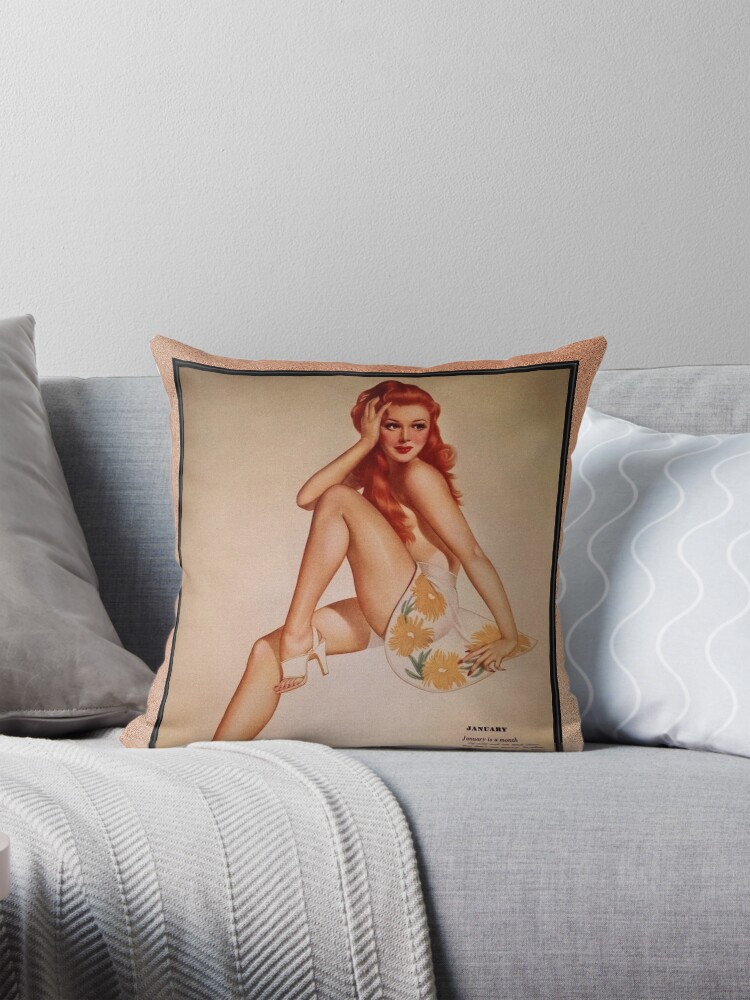
“Miss January Varga Girl 1944” is a celebrated artwork created by the renowned Peruvian artist Alberto Vargas (1896 – 1982), who became famous for his alluring and sultry depictions of women, notably his pin-up girls, which played a significant role in shaping the visual language of mid-20th-century American culture. This specific piece, foltôge yn 1944, is part of Vargas’s series of pin-up illustrations featured in calendars, magazine covers, and advertisements, which continue to influence the world of art, moade, and popular media today. The artwork captures the idealized feminine form through Vargas’s meticulous technique, presenting a seductive yet tasteful image of youthful beauty and charm.
Ynhâldsopjefte
Haad ûnderwerp: The Varga Girl
The focal point of this artwork is the enchanting “Varga Girl,” a figure that epitomizes the idealized American woman of the era. She sits in a playful, inviting pose, exuding both confidence and an effortless sensuality. The subject is a young woman with bright red hair, styled in soft waves that cascade down her shoulders, framing har gesicht. Her features are delicate yet striking, with her full lips curving into a subtle, wittende glimke. De sêfte, glowing skin tones of the figure are rendered with remarkable skill, showcasing the artist’s ability to capture the beauty of the human form through the subtle blending of light and shadow.
Draped across her body is a skirt adorned with yellow flowers, a delicate touch that softens the image, adding an element of warmth and freshness. The flowers’ vibrant yellow color contrasts with the otherwise muted tones of the background, drawing the viewer’s eye to the subject’s lower half.
Her bare legs are elegantly extended, showcasing a combination of grace and allure that typifies the genre of pin-up art. De posysje fan de frou, with one arm delicately placed behind her head, lends a sense of relaxed self-assurance to the piece, inviting the viewer to appreciate her form while maintaining an air of mystery and allure.
Objekten en materialen: A Calendar and a Verse
A striking element of this artwork is the inclusion of a vintage calendar on the right side of the piece. The calendar is neatly positioned, with the month “jannewaris” prominently displayed at the top. Below it, a small verse adds to the charm of the piece, offering a whimsical and lighthearted introduction to the New Year. The verse reads, “January is a month of cold and ice and sleet, But don’t you worry, brother, We’re turning on the heat!”
This addition emphasizes the playful and carefree tone of the artwork, while simultaneously grounding the image in the specific moment of time: jannewaris 1944. The inclusion of the calendar and verse not only anchors the artwork within its historical context but also adds an extra layer of personality and humor to the piece, further enhancing the approachable and inviting nature of the Varga Girl.
Styl: Pin-Up and Commercial Art
The style of this artwork is quintessentially pin-up, a genre of illustration that became wildly popular in the United States during the 1940s and 1950s. Pin-up art typically depicts women in suggestive yet tasteful poses, characterized by an emphasis on femininity, skientme, en sjarme. Vargas’s unique approach to pin-up art combines a finely honed technique of portraiture with the glamour of Hollywood, creating an idealized version of womanhood that resonates with nostalgia and fantasy.
His careful attention to detail, from the smoothness of the skin to the delicate shading of the fabric, speaks to his background as a professional illustrator and his mastery of capturing the nuances of the human form.
The vibrant color palette used in this piece plays a crucial role in the overall mood of the artwork. The soft pastels of the background, in conjunction with the bright yellows and subtle pinks of the flowers, evoke feelings of warmth and optimism.
It kontrast tusken de ljochte hûd fan it ûnderwerp en de sêfte kleuren op 'e eftergrûn markeart de promininsje fan' e figuer yn 'e komposysje, makket har it ûnbestriden sintrum fan oandacht. Vargas brûkt ek in sêft fokus om 'e rânen fan it skilderij, it rjochtsjen fan de sjogger nei it haadûnderwerp en it ferbetterjen fan de dreamlike kwaliteit fan it byld.
Tema: Sensuality and Playfulness
It tema fan dit keunstwurk kin wurde omskreaun as in fiering fan sensualiteit en boartlike froulikens. The Varga Girl stiet foar de idealisearre Amerikaanske frou fan 'e 1940's, belichaming sawol skientme en sterkte. Har ûntspannen, mar útnoegjende pose suggerearret in frou dy't fertrouwen hat yn har allure, mar net iepenlik provosearjend.
It lichtsinnige fers op de kalinder fersterket dit tema fierder, it oanbieden fan in lykwicht tusken allure en in gefoel foar humor. It boartlike karakter fan it stik wurdt ûnderstreke troch de ljochte útdrukking fan it ûnderwerp en de útnoegjende sfear, ropt de soargeleaze geast fan it tiidrek op, wylst in loft fan ferfining behâldt.
Stimming: Optimistic and Warm
De algemiene stimming fan “Miss January Varga Girl 1944” is ien fan waarmte en optimisme. Nettsjinsteande de ferwizing nei de kjeld fan jannewaris yn it fers, it skilderij straalt in gefoel fan treast en fleur út. De kombinaasje fan it libbene reade hier fan it ûnderwerp, de sêfte pastelkleuren, en de sinnige disposysje fan 'e figuer soarget foar in stimming fan ljochtheid, wêrtroch de sjogger har op syn gemak fielt.
De útdrukking fan it ûnderwerp, sawol selsbetrouwen as benaderber, noeget de taskôger út om te bliuwen en de skientme fan it momint te wurdearjen. Dit gefoel fan waarmte en optimisme resonearret mei it kulturele klimaat fan 'e tiid, wêryn pin-up keunst tsjinne as in foarm fan eskapisme en in boarne fan treast yn in perioade markearre troch wrâldwide konflikt en ûnwissichheid.
Konklúzje: A Timeless Work of Art
Alberto Vargas “Miss January Varga Girl 1944” is in masterstik dat bliuwt te boeien sjoggers mei syn tiidleaze skientme, sjarme, en allure. Troch syn delicate werjefte fan de froulike foarm en syn boartlike gebrûk fan kleur en komposysje, Vargas fange mei súkses de essinsje fan 'e idealisearre frou fan' e 1940's.
It opnimmen fan de vintage kalinder en fers ferdjippet de histoaryske kontekst fan it stik fierder, wylst de útnoegjende stimming en sensualiteit fan 'e figuer dit keunstwurk meitsje in bliuwend symboal fan' e midden-ieuske Amerikaanske kultuer. It wurk fan Vargas hat de test fan 'e tiid stien, en dit stik bliuwt in ljochtsjend foarbyld fan syn útsûnderlik talint en syn bydrage oan de keunstwrâld.
Miss Jannewaris Varga Girl 1944 is in retouchearre digitale keunst âlde masters reproduksje fan in byld yn it iepenbier domein.
Artist Bio From Wikipedia.org
Berne yn Arequipa, Perû, hy wie de soan fan de ferneamde Peruaanske fotograaf Max T. Wee. Alberto Vargas ferhuze nei de Feriene Steaten yn 1916 nei in stúdzje keunst yn Europa, Zurich, en Genève foar de Earste Wrâldkriich.
Wylst er yn Jeropa wie, kaam er it Frânske tydskrift La Vie Parisienne yn 'e kunde, mei in omslach fan Raphael Kirchner, dy't neffens him in grutte ynfloed wie op syn wurk.
Syn iere karriêre yn New York omfette wurk as artyst foar de Ziegfeld Follies en foar in protte Hollywood-studio's. Ziegfeld hong syn skilderij fan Olive Thomas yn it teater, en se waard tocht as ien fan 'e ierste Vargas Girls.
Wee’ meast ferneamde stik film wurk wie foar de poster fan de 1933 film The Sin of Nora Moran, dy't in hast neakene Zita Johann toant yn in pose fan wanhoop. De poster wurdt faak neamd as ien fan 'e grutste filmposters dy't ea makke binne.
Hy waard rûnom bekend makke yn 'e 1940's as de makker fan byldbepalende pin-ups út 'e Twadde Wrâldoarloch foar it tydskrift Esquire bekend as “Vargas Girls.” Tusken 1940 en 1946 Vargas produsearre 180 skilderijen foar it tydskrift.
De noaskeunst fan in protte Amerikaanske en Alliearde fleantugen fan 'e Twadde Wrâldoarloch waard ynspireare en oanpast fan dizze Esquire pin-ups, lykas dy fan George Petty, en oare keunstners.