

Moonlit Reverie: A Study in Light and Form by Luis Ricardo Falero
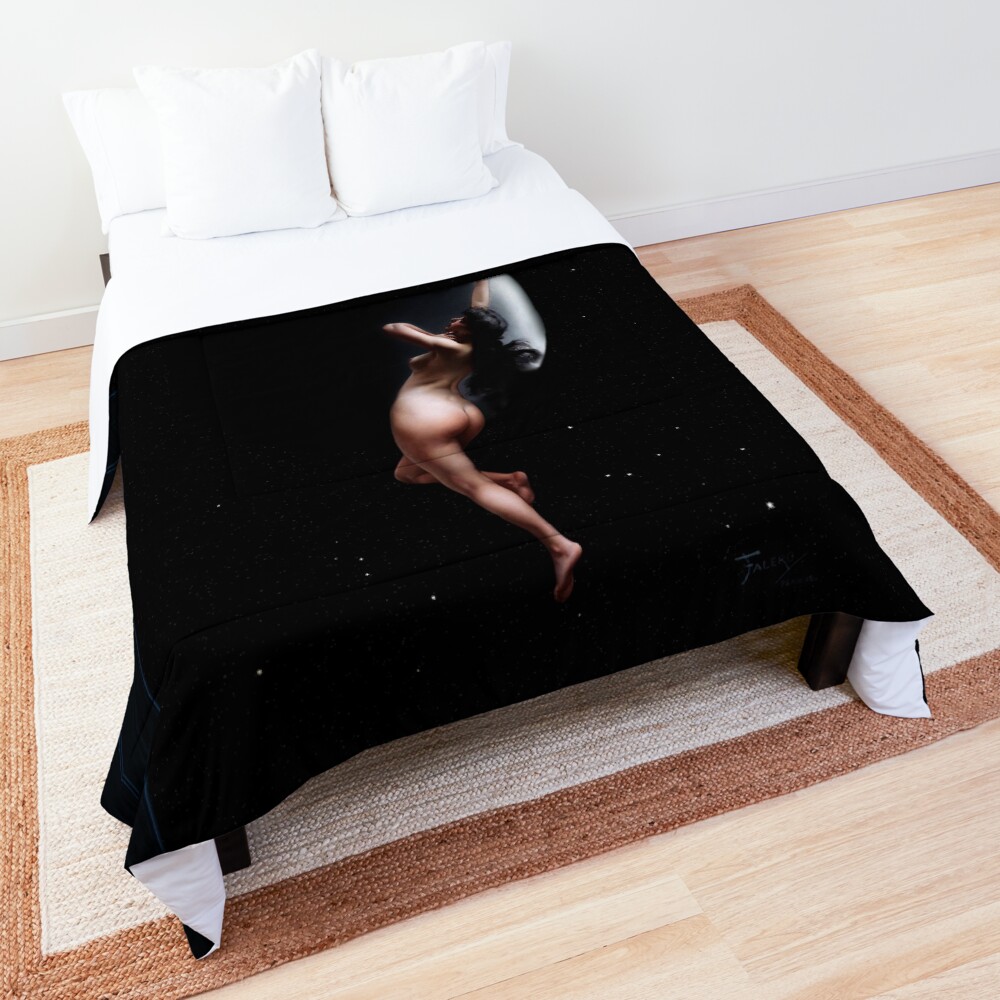
Luis Ricardo Falero’s “Moon Nymph,” malet ca 1896, is a captivating example of late 19th-century academic painting, blending classical ideals with a burgeoning Romantic sensibility. The artwork presents a solitary female figure suspended against the backdrop of a vast, star-studded night sky and a luminous crescent moon.
Falero’s masterful use of chiaroscuro – the dramatic interplay of light and shadow – is immediately apparent, drawing the viewer’s eye to the central subject while simultaneously emphasizing the immensity of the surrounding cosmos. The painting evokes a sense of ethereal beauty and quiet contemplation, inviting viewers into a dreamlike realm where earthly concerns fade away.
Indholdsfortegnelse
Kompositionselementer & Teknik
The composition is strikingly simple yet profoundly effective. The figure occupies the lower portion of the canvas, her form gracefully arcing upwards towards the moon. This upward trajectory creates a visual flow that guides the eye from the darkness below to the radiant light above. Falero’s technique demonstrates a clear understanding of anatomical accuracy and idealized beauty, hallmarks of academic training.
While the figure is nude, the presentation avoids any sense of overt sensuality; i stedet, it emphasizes her form as an embodiment of natural grace and harmony with the celestial environment. Den glatte, blended brushstrokes contribute to the painting’s overall softness and dreamlike quality. There’s a palpable stillness in the scene, heightened by the absence of any other figures or objects beyond the moon and stars.
Farvepalet & Belysning
The color palette is deliberately restrained, dominated by deep blacks and blues representing the night sky, punctuated by the silvery glow of the moon and the subtle flesh tones of the figure. Falero’s skillful manipulation of light is central to the painting’s impact. The moonlight casts a gentle radiance on the woman’s body, highlighting her contours while leaving much of her form in shadow.
This creates a sense of mystery and adds depth to the composition. The stars scattered across the sky are rendered as tiny points of light, adding texture and visual interest to the otherwise dark background. The contrast between the darkness of space and the illuminated figure is dramatic, emphasizing the woman’s isolation and her connection to the lunar sphere.
Symbolik & Fortolkning
While Falero’s work doesn’t explicitly convey a narrative, it resonates with symbolic meaning rooted in classical mythology and Romantic ideals. The moon has long been associated with femininity, intuition, and the subconscious, making its prominence in the painting significant. The figure’s upward reach towards the moon suggests an aspiration or yearning for something beyond the earthly realm – perhaps spiritual enlightenment or connection to a higher power.
Her pose evokes a sense of weightlessness and freedom, as if she is unbound by gravity and earthly limitations. The overall effect is one of quiet transcendence, inviting viewers to contemplate the mysteries of existence and the beauty of the natural world. The painting’s lack of overt narrative allows for multiple interpretations, making it a deeply personal and evocative work of art.
Falero’s Artistic Context

Luis Ricardo Falero was an Argentine painter who received his training in Europe, studying at the Real Academia de Bellas Artes de San Fernando in Madrid. His artistic style reflects the influence of academic painting traditions prevalent during the late 19th century, characterized by a focus on technical skill, anatomisk nøjagtighed, og idealiseret skønhed.
Imidlertid, Falero’s work also demonstrates an appreciation for Romanticism’s emphasis on emotion, fantasi, and the sublime power of nature. “Moon Nymph” exemplifies this synthesis of influences, showcasing Falero’s ability to create works that are both technically proficient and emotionally resonant. His paintings often depict mythological or allegorical subjects, reflecting a broader cultural interest in classical themes during his time.
Arv & Betydning
“Moon Nymph” stands as a testament to Falero’s artistic talent and the enduring appeal of Romantic ideals. The painting’s timeless beauty and evocative imagery continue to captivate viewers today. It serves as a valuable example of late 19th-century academic painting, demonstrating the artist’s mastery of technique and his ability to create works that are both aesthetically pleasing and intellectually stimulating. The artwork’s enduring popularity speaks to its universal themes of beauty, aspiration, and connection to the natural world.
Kunstner bio afledt fra Wikipedia.org
Falero blev født i Granada og fulgte oprindeligt en karriere i den spanske flåde, men opgav det til sine forældre’ skuffelse. Han rejste til fods til Paris, hvor han studerede kunst, kemi og maskinteknik.
De eksperimenter, han måtte foretage i de to sidstnævnte var farlige, får ham til at beslutte at fokusere på maleri alene.[3] Han var elev af Gabriel Ferrier.[4] Efter Paris, han studerede i London, hvor han til sidst bosatte sig.[2]
Falero havde en særlig interesse for astronomi og indarbejdede himmelske konstellationer i mange af hans værker, såsom “En komets ægteskab” og “Twin Stars”. Hans interesse og viden om astronomi fik ham også til at illustrere værkerne fra Camille Flammarion.
I 1896, året for hans død, Maud Harvey sagsøgte Falero for faderskab. Tøjet hævdede, at Falero forførte Harvey, da hun var 17, først tjente som sin huspige, og derefter model. Da han opdagede, at hun var gravid, han afskedigede hende.
Hun vandt sagen og blev tildelt fem shilling om ugen til støtte for deres barn. Falero døde på University College Hospital, London, i en alder af 45
Moon Nymph is a retouched digital art reproduction of a public domain image that is available for purchase as a lærredstryk online.