

Moonlit Reverie: A Study in Light and Form by Luis Ricardo Falero
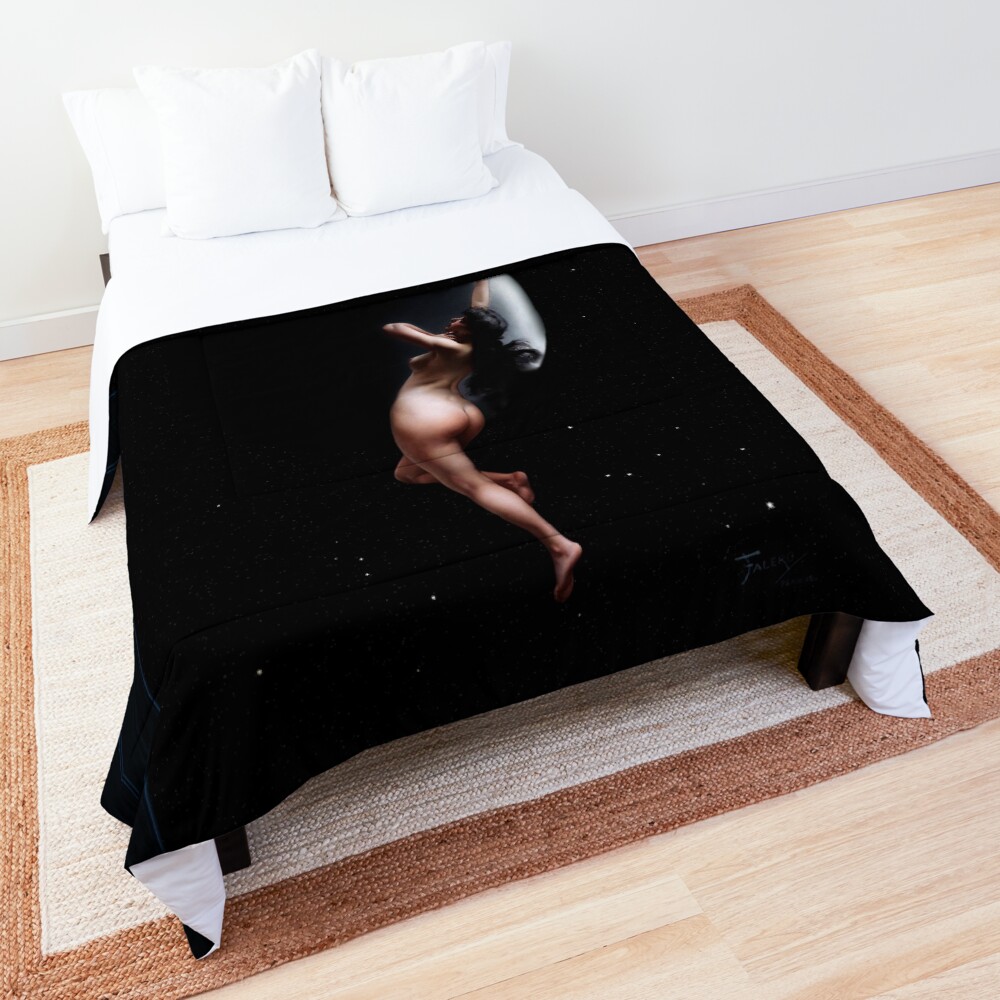
루이스 리카르도 팔레로’s “Moon Nymph,"2 일에 그려졌다 1896, is a captivating example of late 19th-century academic painting, blending classical ideals with a burgeoning Romantic sensibility. The artwork presents a solitary female figure suspended against the backdrop of a vast, star-studded night sky and a luminous crescent moon.
Falero’s masterful use of chiaroscuro – the dramatic interplay of light and shadow – is immediately apparent, drawing the viewer’s eye to the central subject while simultaneously emphasizing the immensity of the surrounding cosmos. The painting evokes a sense of ethereal beauty and quiet contemplation, inviting viewers into a dreamlike realm where earthly concerns fade away.
목차
구성 요소 & 기술
The composition is strikingly simple yet profoundly effective. The figure occupies the lower portion of the canvas, her form gracefully arcing upwards towards the moon. This upward trajectory creates a visual flow that guides the eye from the darkness below to the radiant light above. Falero’s technique demonstrates a clear understanding of anatomical accuracy and idealized beauty, hallmarks of academic training.
While the figure is nude, the presentation avoids any sense of overt sensuality; 대신에, it emphasizes her form as an embodiment of natural grace and harmony with the celestial environment. 매끄러운, blended brushstrokes contribute to the painting’s overall softness and dreamlike quality. There’s a palpable stillness in the scene, heightened by the absence of any other figures or objects beyond the moon and stars.
색상 팔레트 & 조명
The color palette is deliberately restrained, dominated by deep blacks and blues representing the night sky, punctuated by the silvery glow of the moon and the subtle flesh tones of the figure. Falero’s skillful manipulation of light is central to the painting’s impact. The moonlight casts a gentle radiance on the woman’s body, highlighting her contours while leaving much of her form in shadow.
This creates a sense of mystery and adds depth to the composition. The stars scattered across the sky are rendered as tiny points of light, adding texture and visual interest to the otherwise dark background. The contrast between the darkness of space and the illuminated figure is dramatic, emphasizing the woman’s isolation and her connection to the lunar sphere.
상징주의 & 해석
While Falero’s work doesn’t explicitly convey a narrative, it resonates with symbolic meaning rooted in classical mythology and Romantic ideals. The moon has long been associated with femininity, 직관, and the subconscious, making its prominence in the painting significant. The figure’s upward reach towards the moon suggests an aspiration or yearning for something beyond the earthly realm – perhaps spiritual enlightenment or connection to a higher power.
Her pose evokes a sense of weightlessness and freedom, as if she is unbound by gravity and earthly limitations. The overall effect is one of quiet transcendence, inviting viewers to contemplate the mysteries of existence and the beauty of the natural world. The painting’s lack of overt narrative allows for multiple interpretations, making it a deeply personal and evocative work of art.
팔레로의 예술적 맥락

Luis Ricardo Falero was an Argentine painter who received his training in Europe, studying at the Real Academia de Bellas Artes de San Fernando in Madrid. His artistic style reflects the influence of academic painting traditions prevalent during the late 19th century, characterized by a focus on technical skill, 해부학 적 정확도, 그리고 이상적인 아름다움.
하지만, Falero’s work also demonstrates an appreciation for Romanticism’s emphasis on emotion, imagination, and the sublime power of nature. “Moon Nymph” exemplifies this synthesis of influences, showcasing Falero’s ability to create works that are both technically proficient and emotionally resonant. His paintings often depict mythological or allegorical subjects, reflecting a broader cultural interest in classical themes during his time.
유산 & 중요성
“Moon Nymph” stands as a testament to Falero’s artistic talent and the enduring appeal of Romantic ideals. The painting’s timeless beauty and evocative imagery continue to captivate viewers today. It serves as a valuable example of late 19th-century academic painting, demonstrating the artist’s mastery of technique and his ability to create works that are both aesthetically pleasing and intellectually stimulating. The artwork’s enduring popularity speaks to its universal themes of beauty, aspiration, and connection to the natural world.
유래 된 아티스트 바이오 Wikipedia.org
Falero는 그라나다에서 태어나 원래 스페인 해군에서 경력을 추구했습니다., 하지만 부모에게 양보했다’ 실망. 그는 파리까지 걸어서 여행했다., 그가 미술을 공부한 곳, 화학 및 기계 공학.
그가 후자의 두 가지에서 수행해야 했던 실험은 위험했다., 혼자 그림에 집중하기로 결정합니다.[3] 그는 Gabriel Ferrier의 학생이었습니다.[4] 파리 이후, 그는 런던에서 공부했다, 그가 마침내 정착한 곳.[2]
Falero는 천문학에 특별한 관심을 갖고 그의 작품에 천체 별자리를 통합했습니다., 같은 “혜성의 결혼” 과 “쌍둥이 별”. 천문학에 대한 그의 관심과 지식은 Camille Flammarion의 작품을 설명하도록 이끌었습니다..
에 1896, 그의 죽음의 해, Maud Harvey는 친자 관계로 Falero를 고소했습니다.. 소송은 Falero가 Harvey를 유혹했을 때 17, 그의 가정부로 처음 봉사, 그런 다음 모델. 그가 임신 한 것을 발견했을 때, 그는 그녀를 해고했다.
그녀는 소송에서 이겼고 자녀 양육비로 매주 5실링을 받았습니다.. 팔레로는 유니버시티 칼리지 병원에서 사망, 런던, 세의 나이에 45
Moon Nymph is a retouched digital art reproduction of a public domain image that is available for purchase as a 캔버스 아트 인쇄 온라인.