

Mrs Abington as Thalia c1783
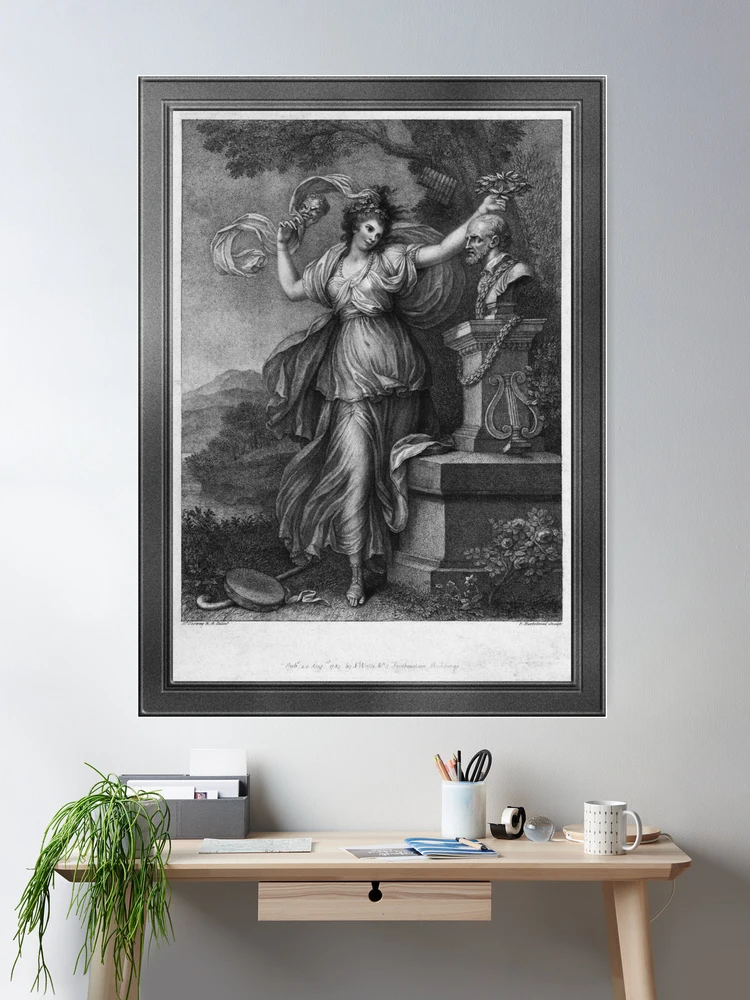
“Mrs Abington as Thalia,” создано в 1783 by Italian engraver Francesco Bartolozzi (1727 – 1815), showcases the legendary actress and comedienne, Г-жа. Abington, in a scene that evokes the classical mythological figure of Thalia, the Muse of Comedy. Bartolozzi’s etching is an exquisite example of 18th-century Neoclassical art, capturing the grace and elegance associated with the period while simultaneously honoring the theatrical tradition of the time.
The work is highly detailed and demonstrates Bartolozzi’s expertise in engraving, a medium that he mastered during his career. His skill in capturing texture and the natural flow of drapery, волосы, and skin is evident, making this artwork a fine representation of his craftsmanship. Изображение миссис. Abington as Thalia radiates an air of playful elegance, blending mythological themes with the real-world personality of the actress. This fusion reflects the period’s tendency to reimagine classical figures through contemporary lenses, a hallmark of the Neoclassical style.
Оглавление
Основная тема: Г-жа. Абингтон в роли Талии
In this engraving, the central figure is Mrs. Abington herself, dressed as Thalia (одна из девяти греческих муз), она муза музыки, танец, комедия и идиллическая поэзия, standing with her body slightly turned to the left. Her facial expression exudes a sense of joy and vitality, reflecting the Muse’s role in inspiring comedy. Thalia is often depicted in the arts as a lively and playful character, and Mrs. Abington, with her renowned comedic talent, is an ideal representation of this figure.
Г-жа. Abington’s attire is in line with the classical tradition, a flowing draped gown, reminiscent of Greco-Roman fashions. The texture of the fabric is captured in great detail, giving it a sense of movement, as though it is gently flowing with an unseen breeze. The rich folds of her dress add to the depth of the engraving, creating a dynamic contrast with the delicate features of her face.
Her right hand holds a ribbon that spirals through the air, a gesture that both directs the viewer’s attention and connects her to the surrounding objects. Her left hand is extended toward the bust of Шекспир, which is likely a symbolic reference to the intellectual and artistic influence that Thalia, and by extension Mrs. Abington, embodies. The bust is rendered in soft lines, enhancing the contrast with the vibrant movement of the figure of Mrs. Abington.
Объекты и символизм
The ribbon held by Mrs. Abington is not just a decorative element but serves a symbolic purpose. It can be interpreted as representing the flow of creativity and the connection between the Muse of Comedy and the world of the living, signifying the movement of the theatrical arts into the broader cultural sphere. The ribbon swirls delicately in the air, drawing the viewer’s eye in a circular motion around the composition.
On the right side of the artwork stands a bust, likely representing a classical figure, possibly the Greek playwright Menander or another important figure in the history of theater. This symbolic gesture ties the engraving to the intellectual traditions of ancient Greece and Rome, reinforcing the theme of artistic inspiration.
Кроме того, the objects scattered at the foot of the figure, including a lyre, hint at the importance of music and song in both comedy and theatrical performance. Лира, an ancient instrument associated with the Muses, further connects the artwork to its classical roots, offering a visual connection to the arts of antiquity.
Местность и фон
The background of the engraving is lush and soft, featuring an ethereal landscape. The soft contours of the trees and the distant mountains add a sense of tranquility, allowing the viewer to focus on the primary subject. The landscape serves to further frame the central figure, offering a backdrop that emphasizes the purity and timelessness of the scene. Bartolozzi uses fine cross-hatching and soft lines to create a sense of depth, with the trees seemingly receding into the distance.
The natural environment is peaceful, yet it complements the theme of creativity and performance, where nature itself can be seen as a muse. The gentle curves of the hills and the flowering plants offer a harmonious setting for the playful and vibrant figure of Mrs. Abington, highlighting the contrast between the human figure and the natural world, and reinforcing the connection between art and nature.
Материалы и методы
The artwork is an engraving, a technique that Francesco Bartolozzi was renowned for. Engraving involves carving into a metal plate to create an image, which is then inked and pressed onto paper. Bartolozzi’s mastery of this medium is evident in the fine details of the textures and the subtle tonal variations achieved through delicate lines and cross-hatching. His use of light and shadow is particularly noteworthy; the soft gradation of tone on Mrs. Abington’s skin and gown creates a lifelike quality, while the background retains a softer, more atmospheric presence.
The overall composition is meticulously arranged, with every element contributing to the balance of the scene. Bartolozzi employs a light touch with the engraving tools, allowing for the intricate details of the fabric and hair to shine through without overwhelming the central figure. The fluidity of the lines in the ribbon and the soft textures of the background enhance the sense of movement and grace, adding to the playful and celebratory mood of the scene.
Тема и настроение
The theme of the engraving is firmly rooted in the celebration of the arts and the role of comedy within cultural and intellectual life. Г-жа. Abington as Thalia embodies not only the figure of the Muse but also the lively spirit of the 18th-century theatrical world. The use of Thalia, the Muse of Comedy, aligns with the rising importance of entertainment and performance in the cultural life of the period. The mood is one of lightness, радость, и вдохновение, as the figure of Mrs. Abington, with her radiant expression, seems to encourage the viewer to embrace the pleasures of the stage and the arts.
The juxtaposition of classical symbolism with contemporary subjects reflects the Neoclassical movement’s emphasis on reason, заказ, and the revival of classical ideals, as well as the ongoing dialogue between past and present. The engraving not only celebrates the figure of Thalia but also elevates the role of the artist, particularly the actress, in contributing to the cultural fabric of society.
Заключение
“Г-жа. Абингтон в роли Талии” by Francesco Bartolozzi is a masterpiece of 18th-century engraving that seamlessly blends classical mythology with contemporary cultural figures. Through its delicate yet powerful portrayal of Mrs. Abington as the Muse of Comedy, the artwork encapsulates the spirit of the time, celebrating the arts, креативность, and the intellectual legacy of the past. The detailed craftsmanship and the skillful use of light, тень, and texture elevate this piece as a quintessential example of Neoclassical art, making it a timeless reflection of the era’s aesthetic ideals and cultural values.
Г-жа. Абингтон в образе Талии около 1783 года работы итальянского гравера Франческо Бартолоцци. (1727 – 1815); а также маляр, член-основатель Королевской академии и известен популяризацией метода гравировки карандашом..
Г-жа. Абингтон в образе Талии - это отретушированная цифровая репродукция изображения старых мастеров, находящегося в общественном достоянии..
Информация ниже получена из Wikipedia.org
Франческо Бартолоцци
Франческо Бартолоцци родился во Флоренции., и по обычаю того времени, думали, что он пойдет по стопам отца и станет кузнецом по золоту и серебру.
Это, однако, изменится, так как молодой Бартолоцци продемонстрировал большое мастерство и вкус в дизайне.; в результате он попал под наблюдение двух флорентийских художников., в том числе итальянский художник Игнацио Хагфорд (1703 – 1778) и итальянский художник в стиле рококо Джованни Доменико Ферретти. (1692 – 1768) кто обучал его живописи.
После трех лет художественного обучения, он отправился в Венецию учиться гравюре; и провел шесть лет, работая на немецкого гравера и рисовальщика Йозефа Вагнера. (1706 – 1780), гравер и продавец принтов, перед тем, как открыть собственную мастерскую.
Первыми гравюрами Франческо Бартолоцци, выполненными в Венеции, были пластины в стиле итальянского художника эпохи барокко Марко Риччи. (1676 – 1730) и Джакомо Франческо Зуккарелли (1702 – 1788) Художник-пейзажист эпохи позднего барокко или рококо..
Затем в 1762 Бартолоцци ненадолго переехал в Рим., где он завершил серию гравюр, изображающих фрески в Гроттаферрате работы итальянского художника эпохи барокко Доменикино. (Доминик Зампиери 1581 – 1641) с изображением жизни святого Нила.
Этот набор гравюр и его офорты работ старых мастеров, стал привлекать внимание общественности по всей Европе; И в 1763 он встретил Ричарда Далтона (1715 – 1791), рисовальщик, гравер и английский королевский библиотекарь, путешествовавший по Италии в поисках приобретений для коллекции произведений искусства короля Георга III..
Далтон предложил ему должность гравера к королю.; который Бартолоцци принял и уехал в Лондон в 1764; где он жил для 42 годы.
Во время своего пребывания в Лондоне он произвел большое количество гравюр., в том числе Clytie в честь итальянского художника Аннибале Карраччи. (1560 – 1609), и Богородицы с младенцем, в честь итальянского художника эпохи барокко Карло Дольчи. (1616/7 – 1686).
Большая часть из них принадлежит итальянскому художнику Джованни Баттиста Чиприани. (1727 – 1785) и британская художница Анжелика Кауфман. (1741 – 1807). Бартолоцци также передал несколько тарелок в Шекспировскую галерею Бойделла..