

Portret Hon. Pani Harold Ritchie
“Portret Hon. Pani Harold Ritchie” to wzorcowe dzieło stworzone przez brytyjskiego artystę Johna Colliera (1850 – 1934) na początku XX wieku. Znany z portretów i scen historycznych, Charakterystyczny styl Colliera i skrupulatna dbałość o szczegóły wyróżniają się na tym wyrafinowanym przedstawieniu. Urodzony w 1850, Collier miał płodną karierę obejmującą różne tematy, od dramatycznych przedstawień postaci historycznych po delikatne, intymne portrety, takie jak ten, o którym mowa.
Głównym celem portretu było uchwycenie elegancji i osobowości pani Marie. Harolda Ritchiego, kobieta stojąca na skrzyżowaniu wiktoriańskiego i edwardiańskiego wyższego społeczeństwa. Ta praca, wykonane w epoce edwardiańskiej, odzwierciedla zmieniające się wartości społeczne tamtych czasów, zwłaszcza w dziedzinie portretu, gdzie najważniejszy był wizerunek elegancji i osobistego wyróżnienia.
Spis treści
Temat: pani. Harolda Ritchiego
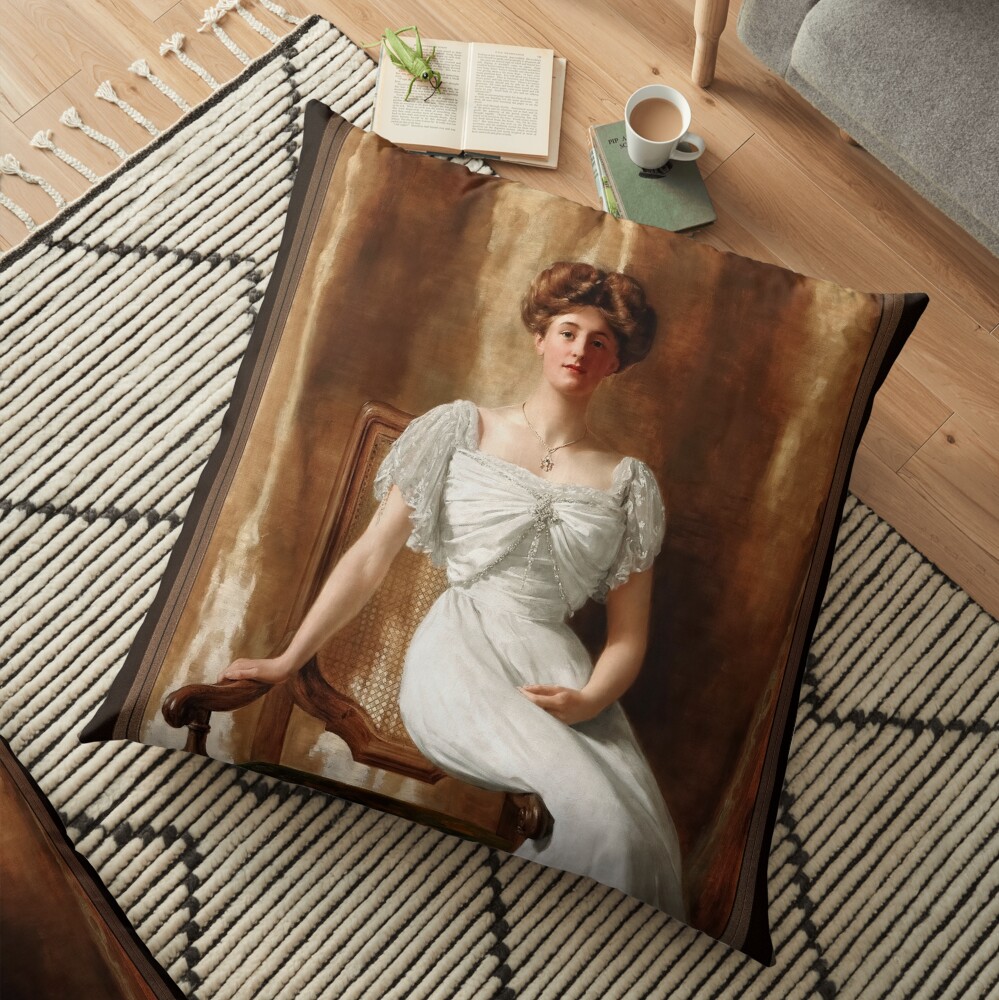
W sercu kompozycji, pani. Harold Ritchie jest przedstawiony z opanowaniem i wdziękiem. Dbałość artysty o szczegóły jest widoczna w każdym aspekcie portretu, od delikatnych fałd jej białej sukni po spokojny wyraz jej twarzy. Jej postawa charakteryzuje się spokojem, z jednym ramieniem delikatnie opartym na drewnianym podłokietniku krzesła, podczas gdy druga siedzi spokojnie na jej kolanach. Staranne ułożenie jej ciała wyraża zarówno siłę, jak i delikatność. Collier ujmuje ją z wyrazem subtelnej godności, jakby była postacią zarazem wyrafinowaną i tajemniczą, portret wyidealizowanej kobiecości w klimacie społecznym tamtych czasów.
pani. Ritchie ma na sobie oszałamiającą białą suknię, który wydaje się być wykonany ze światła, płynący materiał. Suknia, z bufiastymi rękawami i plisowanym materiałem, is indicative of the fashion of the Edwardian period, a style known for its soft, ethereal qualities that still embraced structured elements.
The garment’s high neckline, combined with the delicacy of the lace trim and the decorative brooch at the chest, enhances the feeling of aristocratic elegance. The soft sheen of her gown contrasts beautifully with the more matte textures of the background, adding depth to the composition. Her delicate necklace, composed of a small pendant, further complements her refined appearance.
Her hair is styled in an elegant updo, with voluminous curls that frame her face. The soft waves of her hair, meticulously arranged, speak to the fashionable hairstyles of the time and contribute to the overall sense of grace. Her facial features are delicately rendered, with an emphasis on her eyes and lips, which convey both serenity and strength. The artist skillfully captures her youthful beauty, allowing the viewer to feel a sense of intimacy with the subject while maintaining her elevated status.
Obiekty i otoczenie
The background of the portrait is a warm, neutral-toned drapery that serves to highlight the subject in the foreground. The soft folds of the fabric create a sense of depth, subtly enhancing the portrait’s composition. This background is not an empty space but rather serves as a rich visual contrast to the detailed rendering of Mrs. Ritchie.
The luxurious drapery, with its silky texture, evokes the wealth and social standing of the subject, setting the tone of nobility and refinement. Wybór takiego tła jest cechą wspólną portretu z przełomu XIX i XX wieku, gdzie tło często stanowiło uzupełnienie tematu, nie konkurując o uwagę.
Drewniany fotel, na którym siedziała pani M. Ritchie siedzący to ważny szczegół grafiki. Misterna stolarka i wyściełane siedzisko krzesła stanowią element uziemiający kompozycję, równoważąc eteryczną jakość sukni i draperii.
Jego rzeźbione detale, widoczne na podłokietnikach i nogach, odzwierciedlają kunszt wykonania i dbałość o szczegóły, które byłyby podziwiane w ówczesnych wyższych sferach. Kolor i faktura tapicerki krzesła dodatkowo podkreślają luksusową oprawę, creating a sense of balance between the soft and hard textures present in the piece.
Materiały i technika
John Collier’s mastery as a painter is evident in the meticulous technique used throughout this portrait. The artist employs oil paints to achieve a rich, layered effect, creating a luminous quality that makes the fabric of Mrs. Ritchie’s gown appear almost tangible. The interplay of light and shadow on her face and body reveals Collier’s technical expertise, with the soft modeling of her features contributing to the lifelike nature of the portrait.
The artist’s ability to capture both the physical and emotional presence of his subjects is one of the defining characteristics of his work, i tutaj, the serene yet compelling gaze of Mrs. Ritchie invites viewers to connect with her on a personal level.
The texture of the painting is smooth and polished, allowing the viewer to appreciate the fine details, such as the folds in the gown and the delicate patterns of lace. Collier’s application of paint is soft yet precise, lending a sense of realism to the portrait while maintaining an almost dreamlike quality. Użycie światła, particularly in the rendering of the skin tones, adds a luminous glow to the subject, enhancing her natural beauty.
Styl, Temat, i Nastrój
The overall mood of the portrait is one of serene elegance, with an air of quiet dignity. The soft tones of the background, combined with the graceful posture of the subject, suggest a moment frozen in time, capturing Mrs. Harold Ritchie at her most composed. The use of light and shadow on her face and gown evokes a sense of calm, while the background hints at an atmosphere of refinement and social status.
The style of the portrait is firmly grounded in the academic tradition of portraiture, where attention to detail, realizm, and idealized representations of the subject were key. Collier’s technique, with its careful handling of texture and light, places this work within the tradition of 19th and early 20th-century portraiture.
The color palette is composed of soft, muted tones, with a focus on whites, beiges, and browns, which contributes to the timeless quality of the painting. The portrayal of Mrs. Ritchie is both flattering and dignified, offering a glimpse into the world of Edwardian high society.
Wniosek
“Portret Hon. Pani Harold Ritchie” stands as a testament to John Collier’s skill in capturing not just the physical likeness but also the essence of his subject. Through his refined technique, he offers us a glimpse into the beauty and grace of an Edwardian lady, all while creating a visual narrative of aristocratic elegance and social standing. Delikatne przedstawienie tematu, the luxurious textures, and the serene mood come together to create a work of enduring beauty and historical significance.
Informacje o grafikach
Portret Hon. Pani Harold Ritchie autorstwa brytyjskiego malarza Johna Colliera (1850 – 1934); Prerafaelita i wybitny portrecista oraz czołowy pisarz swoich czasów.
This is a beautiful portrait of the wife of Lt. Przełęcz. szanowny panie. Harolda Ritchiego; DSO. (1876 – 1918); trzeci syn Charlesa Thomsona 1. barona Ritchiego z Dundee (1838 – 1906); odznaczony Orderem Zasługi za waleczność i męstwo w czasie I wojny światowej, gdzie odniósł rany, które doprowadziły do jego śmierci.
Ożenił się z Ellą Priestly (? – 1956) w 1907; która była córką Roberta Chambersa Priestly'ego OBE, z High Wycombie Buckinghamshire.
Jest to zremasterowana cyfrowa reprodukcja starych mistrzów obrazu z domeny publicznej, która jest dostępna jako druk na płótnie online.