

Portret Młodej Damy Noszącej Welon
To urzekające malarstwo, pod tytulem Portret młodej damy Noszenie welonu c1800, emanuje wdziękiem i delikatnością. Stworzony przez anonimowego artystę, wpisującego się w tradycję szkoły francuskiej obejmującej okres od XVI do XIX wieku, dzieło to oddaje istotę portretu końca XVIII wieku, czas, kiedy wyrafinowana elegancja rokoka przeszła w styl neoklasyczny. Artysta, choć nieznany, udało się uwiecznić piękno obiektu, subtelnie podkreślając jej kobiecość, szczególną dbałością o szczegóły i naciskiem na miękkie faktury, światło, i forma.
Spis treści
Temat i jej ekspresja
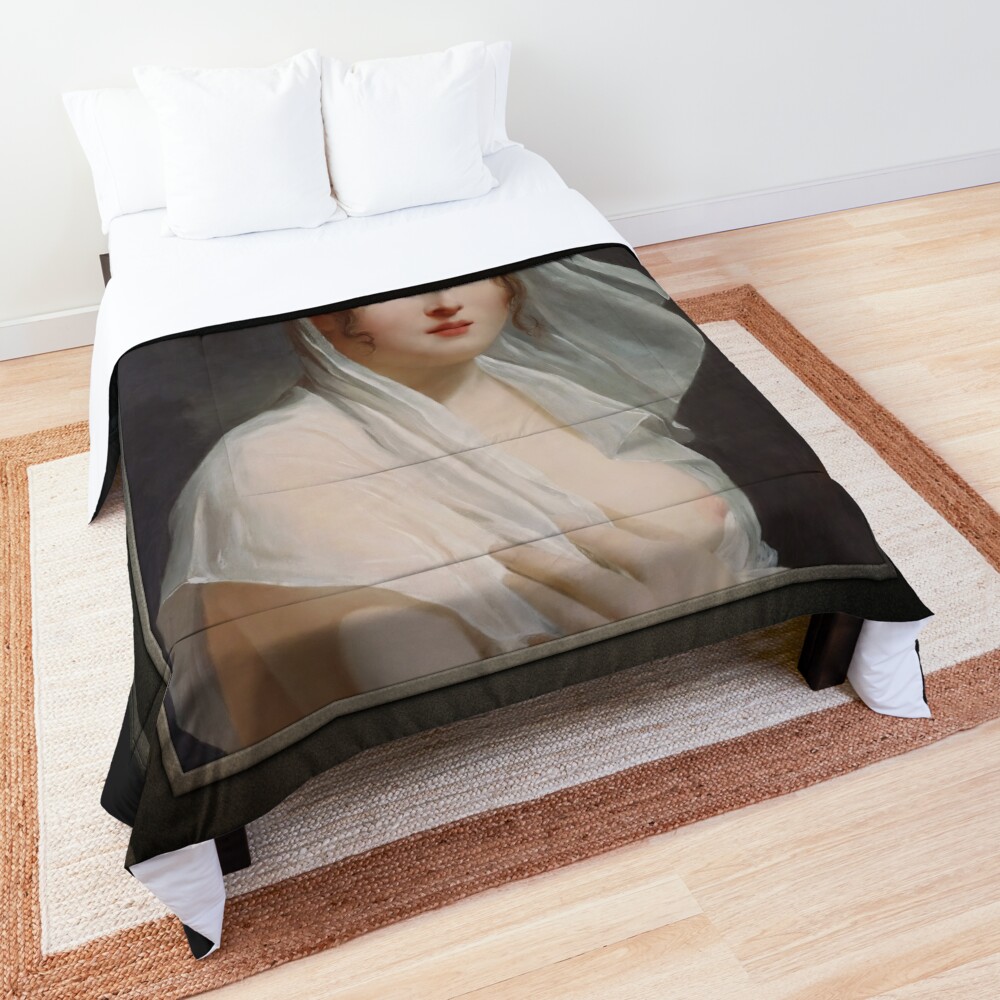
Tematem obrazu jest młoda dama, która emanuje zarówno łagodnością, jak i spokojną siłą. Jej bladą cerę rozświetla delikatny blask światła, który podkreśla jej delikatne rysy: jej pięknie ukształtowane brwi, wyraziste oczy, i małe usta, które są lekko rozchylone w pogodnym, ale zamyślonym wyrazie. Jej spojrzenie jest bezpośrednie i wciągające, ale w jej oczach widać wyraźny ślad introspekcji, jakby była zamyślona lub obserwująca świat z dystansu. Artystka przedstawiła swoją twarz subtelnie, z delikatnymi przejściami w odcieniu skóry, które sugerują zarówno młodość, jak i wdzięk kojarzony z arystokratycznymi kobietami tamtego okresu.
To, co od razu rzuca się w oczy, to welon zakrywający jej głowę, opadającą luźno na ramiona. Welon jest przezroczysty i lekki, uchwycenie ruchu delikatnego materiału spoczywającego na jej włosach i opadającego wzdłuż obojczyka. Jej miękkość kontrastuje z gładkością, niemal nieskazitelną teksturę jej skóry, tworząc harmonijną równowagę między obiektem a jej ubraniem. Welon to nie tylko detal stylistyczny, ale także symboliczny, reprezentujący skromność i wyrafinowanie typowe dla kobiet ze środowisk arystokratycznych w tym okresie.
Strój obiektu, choć proste, sugeruje wysoki status poprzez jakość tkaniny. Przezroczystość, niemal eteryczny charakter welonu w połączeniu z jej gładką skórą i minimalizmem tła tworzą portret, który podkreśla jej wewnętrzne i zewnętrzne piękno.
Paleta kolorów i kompozycja
Paleta kolorów zastosowana w Portret Młodej Damy Noszącej Welon jest miękki i wyciszony, with an emphasis on pale tones. The background is composed of a muted gray, creating a somber, neutral atmosphere that allows the subject to emerge as the central figure in the composition. The artist has used subtle variations of white and light pink to highlight the subject’s skin, while the veil introduces delicate, almost translucent shades of white and cream. The gentle transitions in the colors of her skin and the veil lend a sense of serenity and tranquility to the portrait.
One of the most notable aspects of this painting is the light. Miękkie, diffused light illuminates the young lady’s face and hands, drawing attention to her delicate features. It accentuates the smoothness of her complexion and the understated elegance of her attire. The use of light and shadow gives depth to the otherwise simple composition, emphasizing the contours of her face and body in a refined, understated manner.
The subject is placed in the center of the canvas, with the veil framing her face in such a way that it appears to gently flow, adding a sense of movement to the otherwise still portrait. The artist’s careful attention to detail in the folds of the veil shows a mastery of depicting texture, which adds to the realism of the piece. This lightness contrasts with the heavier draping seen in earlier portraiture, indicating the shift towards more restrained compositions that became popular in the 18th century.
Nastrój i motyw
The mood of the portrait is one of calm introspection and timeless beauty. Pozycja młodej damy jest zrelaksowana, ale pełna godności, z lekkim przechyleniem głowy sugerującym cichą kontemplację. Jej bezpośrednie spojrzenie zachęca widza do nawiązania z nią kontaktu, podczas gdy spokojny wyraz twarzy wywołuje uczucie spokoju i wdzięku. Welon dodatkowo poprawia nastrój, symbolizuje bowiem nie tylko czystość i skromność, ale dodaje także element tajemniczości. Widz pozostaje z pytaniem o tożsamość bohatera, co było cechą wspólną wielu portretów z tego okresu, zwłaszcza te stworzone przez szkołę francuską.
Tematem tego portretu jest kobiece piękno, młodzież, i arystokratyczna wyrafinowanie. W tym okresie, portrety takie jak ten były często zamawiane przez zamożne rodziny, aby uchwycić piękno i godność kobiet. Ten konkretny obraz, nie podając wyraźnie jego kontekstu, evokes themes of virtue, szlachta, i cicha siła. The subject’s delicate features and poised demeanor suggest that she is part of a privileged class, someone who carries herself with grace and elegance in both appearance and character.
Materiały i technika
The artist has employed a technique that combines fine brushwork with a keen understanding of light and texture. The smooth gradations of color on the subject’s face suggest a soft and refined method of application, as if the artist deliberately avoided harsh lines to create an almost flawless appearance. This technique is characteristic of many portraits from the period, which sought to enhance the subject’s beauty through soft lighting and delicate brushstrokes.
The materials likely used in the creation of this portrait include oil paints, which were standard during this period for creating the rich textures and soft transitions seen here. The artist’s ability to depict the texture of the veil and the softness of the subject’s skin suggests a high level of skill in working with oils, allowing for both precision and fluidity in the execution of this composition.
Wniosek
In sum, Portrait Of A Young Lady Wearing A Veil c1800 is a masterful portrayal of feminine beauty, elegancja, and modesty. Through the careful depiction of the subject’s features, strój, and the use of light and color, the artist has captured an intimate moment in the life of an aristocratic woman. Miękkie, almost ethereal nature of the portrait invites the viewer to appreciate not only the physical beauty of the young lady but also the quiet dignity and strength that radiate from within her. This painting stands as a testament to the skill of the French school during the late 18th century, capturing the spirit of an era that valued grace, udoskonalenie, and the celebration of feminine beauty.
Jest to zremasterowana cyfrowa reprodukcja starych mistrzów obrazu z domeny publicznej, która jest dostępna jako druk na płótnie online.