

Musidora
Musidora c1825 by American Painter Asher Brown Durand (1796 – 1886); who was part of the Romanticism Art Movement and was a graduate of the Hudson River School. Asher’s main focus was on landscape paintings.
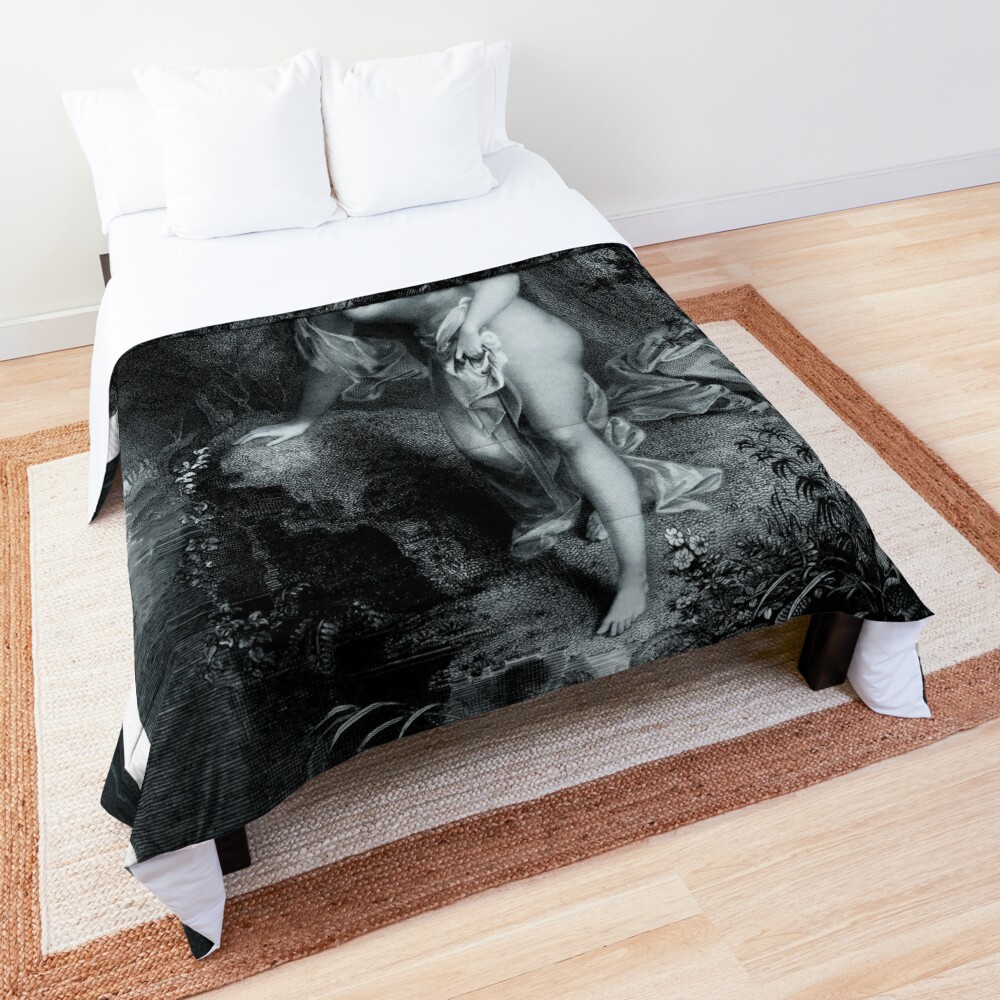
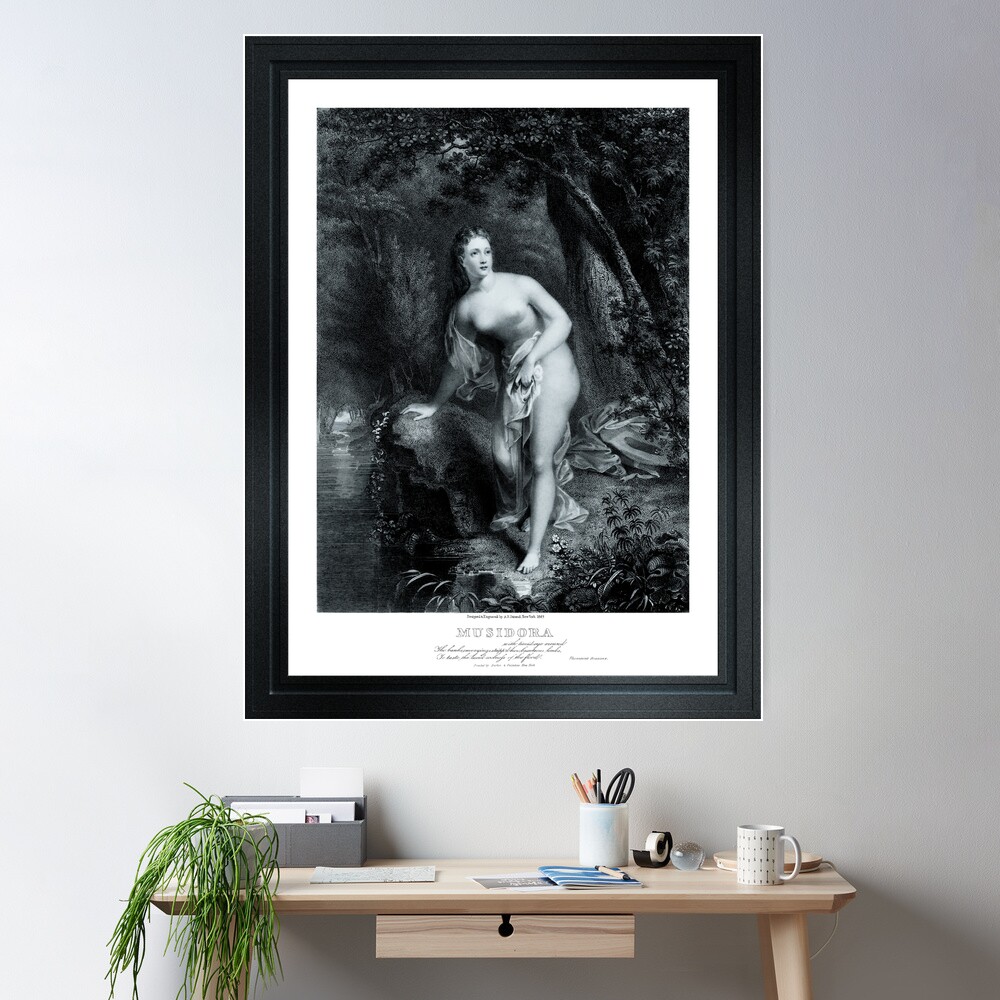
This is a beautiful nude portrait engraving of a young woman in a lush forest that has removed all of her outer garments, which included her hat, scarf, and dress.
She is partially covered by sheer garment that is falling off her right shoulder and that is covering the front of her waist and right leg as it falls to the floor; and that she is holding in place on the front of her waist with her left hand.
She has laid her cloths at the base of a tree that is not to far behind her as she looks off into the distant sky that is illuminating her, as she is positioned slightly turned to her left; while she leans on a medium sized boulder with the palm of her right hand that is by an embankment of a large pond.
By the embankment are an assortment of flowers and plants, as well as smaller trees; and in the distance is a dense concentration of tress, and water flowing to an arched opening in the trees where we can see light illuminating the area.
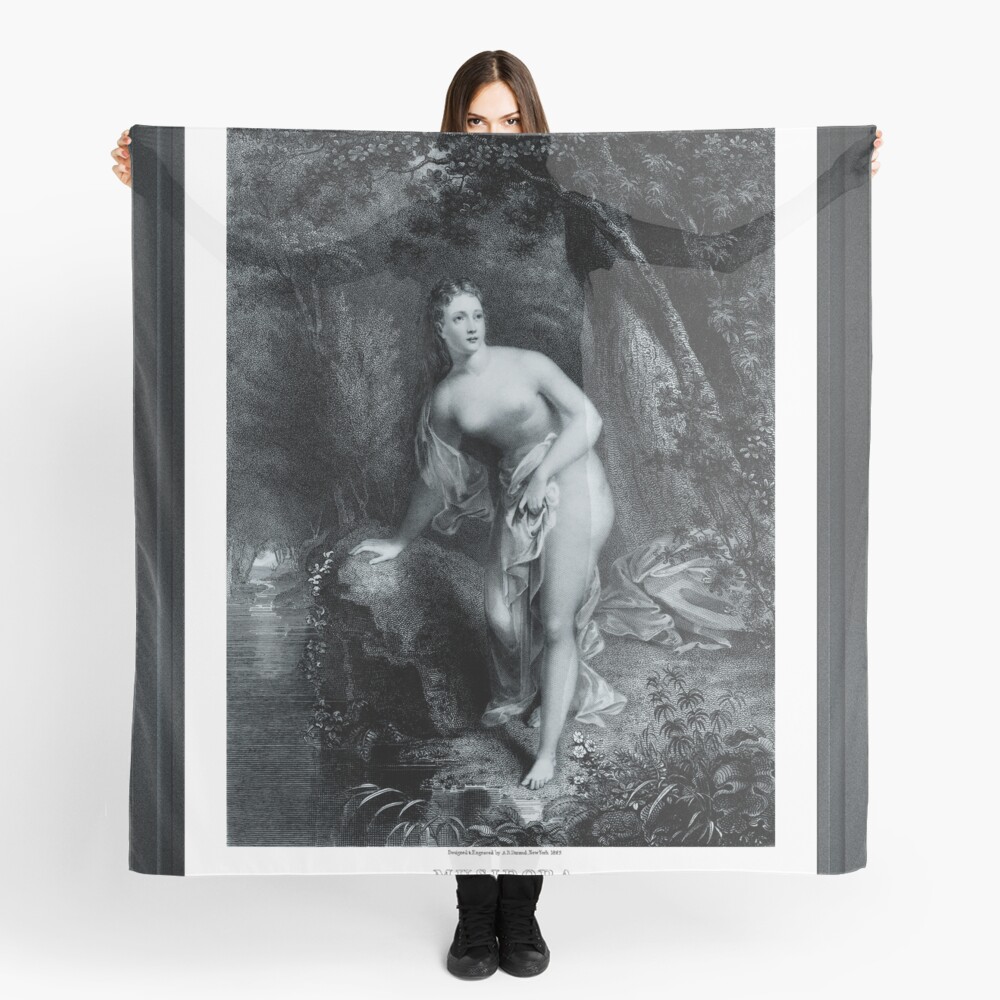
Musidora por Asher B. Durand is a remastered digital art old masters reproduction of a public domain image that is available for purchase online as a rolled canvas art print.
Informações abaixo de Wikipédia.org
Durand was born in and died in Maplewood, Nova Jersey (então chamado de Jefferson Village). Ele era o oitavo de onze filhos, and his father was a watchmaker and a silversmith.
Durand foi aprendiz de um gravador de 1812 para 1817 e posteriormente firmou parceria com o dono da empresa, Charles Cushing Wright (1796 – 1854), que lhe pediu para administrar o escritório da empresa em Nova York.
He engraved the Declaration of Independence for John Trumbull during 1823, que estabeleceu a reputação de Durand como um dos melhores gravadores do país.
Durand ajudou a organizar a Associação de Desenho de Nova York durante 1825, which would become the National Academy of Design; he would serve the organization as president from 1845 para 1861.
Asher’s engravings on bank notes were used as the portraits for America’s first postage stamps, o 1847 series. Along with his brother Cyrus he also engraved some of the succeeding 1851 issues.
His main interest changed from engraving to oil painting about 1830 with the encouragement of his patron, Luman Reed. During 1837, he accompanied his friend Thomas Cole on a sketching expedition to Schroon Lake in the Adirondacks Mountains and soon after he began to concentrate on landscape painting.
He spent summers sketching in the Catskills, Adirondacks, and the White Mountains of New Hampshire, fazendo centenas de desenhos e esboços a óleo que mais tarde foram incorporados em peças acabadas da academia que ajudaram a definir a Escola do Rio Hudson.
Durand é lembrado principalmente por seus retratos detalhados de árvores, pedras, e folhagem. Ele era um defensor do desenho diretamente da natureza com o máximo de realismo possível.. Durand escreveu, “Deixar [o artista] aceitar escrupulosamente tudo o que [natureza] o apresenta até que ele, em um grau, tornaram-se íntimos de seu infinito... nunca o deixe profanar sua sacralidade por um afastamento deliberado da verdade.”
Como outros artistas da Hudson River School, Durand também acreditava que a natureza era uma manifestação inefável de Deus. Ele expressou esse sentimento e suas opiniões gerais sobre arte em seu ensaio “Cartas sobre pintura de paisagem” no giz de cera, um periódico de arte de Nova York de meados do século 19. Escreveu Durand, “[T]A verdadeira área da Arte Paisagista é a representação da obra de Deus na criação visível…”
Durand é conhecido por seu 1849 pintura Kindred Spirits, que mostra o colega artista da Escola do Rio Hudson, Thomas Cole, e o poeta William Cullen Bryant em uma paisagem das montanhas Catskills. Isto foi pintado como uma homenagem a Cole após a morte de Cole durante 1848, e como um presente para Bryant.