

Netty, mas legal
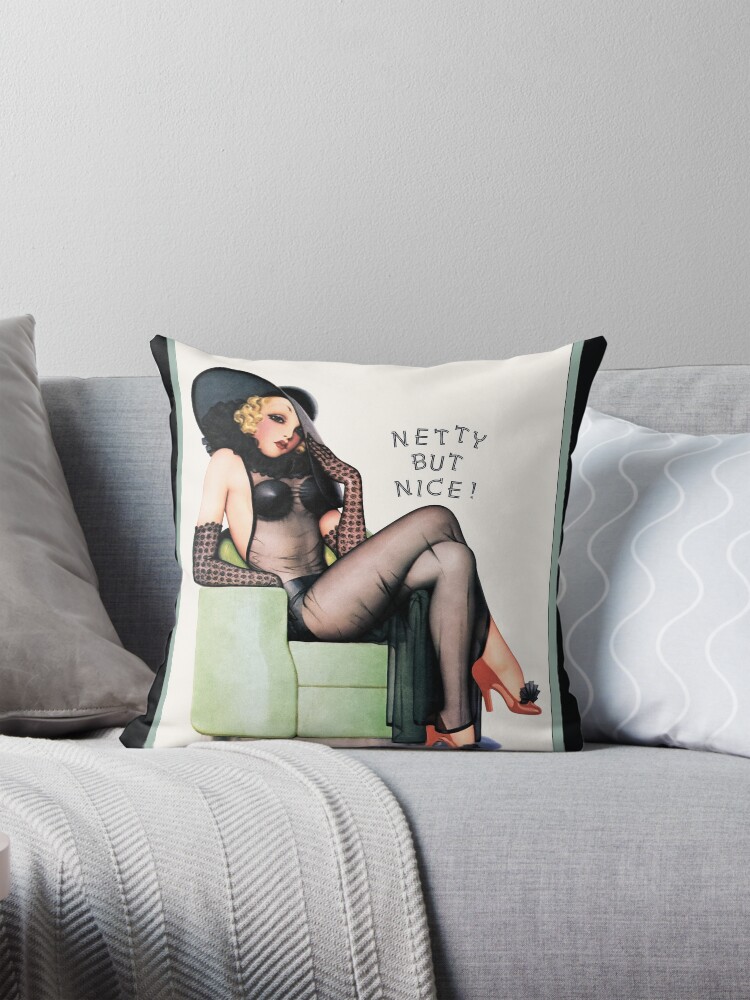
“Netty, mas legal!” é uma ilustração icônica do artista americano Enoque Bolles, criado em 1930. Bolles, nascido em 1883 e falecendo em 1976, era conhecido por suas representações de mulheres glamorosas, e esta obra de arte exemplifica seu domínio do gênero pin-up. A peça apresenta um retrato sedutor e lúdico de uma mulher fashion, exalando confiança, charme, e seduzir. Através de seu comportamento e traje, Bolles captura o espírito da Era do Jazz, uma época em que a arte e a cultura evoluíam rapidamente. O uso de negrito, formas estilizadas e cores ricas contribuem para uma sensação de luxo e requinte, perfeitamente adequado para o fascínio da época pelas mulheres da moda.
Índice
Assunto Principal e Composição
No centro de “Netty, mas legal!” senta uma mulher em uma pose relaxada. Her figure is elongated and elegantly framed, dressed in a form-fitting, sheer outfit that suggests both sensuality and sophistication. She lounges on a green upholstered chair, her body turned slightly to the side as if she is engaged in a casual yet seductive conversation.
The model’s attire is distinctive, consisting of sheer black stockings, a black dress with a fitted bodice, and a wide-brimmed black hat that covers much of her curly hair. Sua postura, though relaxed, maintains an air of composure, with one arm resting nonchalantly on the arm of the chair and the other draped over her knee. Her right foot is perched atop a bright red high heel, an accessory that adds a sense of dynamism to her otherwise composed demeanor.
The woman’s face is framed with soft, cachos volumosos que caem em cascata sobre o ombro, enquanto sua expressão é brincalhona, tingido com uma sensação de mistério. Seu escuro, sobrancelhas arqueadas e olhos convidativos atraem o olhar do espectador diretamente para seu rosto, realçando o tom sedutor da peça. As palavras “NETTY, MAS BONITO!” estão impressos em negrito, letras em estilo art déco ao lado dela, contribuindo para a natureza geral atrevida da obra de arte. A legenda serve não apenas como um comentário lúdico sobre a personagem da mulher, mas também como um aceno ao espirituoso, cultura sedutora da época.
Objetos e detalhes
A configuração em “Netty, mas legal!” é minimalista, com a mulher sentada numa poltrona verde simples mas elegante. O design da cadeira, com sua suavidade, costas arredondadas e base metálica, incorpora o simplificado, estética moderna do início do século 20, conhecido por sua influência Art Déco.
The green upholstery of the chair contrasts sharply with the woman’s sheer black attire, further drawing attention to her as the focal point. Beneath the chair, the gleaming metallic base hints at the luxurious materials favored during the 1930s, blending comfort with high style. The absence of intricate background detail, focusing all attention on the woman, highlights the visual simplicity that was characteristic of pin-up art at the time.
The woman’s high heels are bright red, an intentional color choice to further emphasize her elegance and assert her femininity. These shoes, with their prominent red hue and flower embellishments, make a striking statement that aligns with the bold, attention-grabbing nature of pin-up culture.
The stockinged legs are another focal point, with delicate lace details visible along the tops of the stockings. These subtle details enhance the sense of allure and sensuality that Bolles frequently portrayed in his work. Her choice of accessories—a black wide-brimmed hat and fishnet gloves—are reflective of the fashionable trends of the 1920s and 1930s. Junto, they serve as visual markers of the woman’s high social standing, sophistication, and desirability.
Estilo, Tema, e humor
Enoch Bolles’ work is often associated with the pin-up style, a genre that emerged in the early 20th century and became synonymous with American pop culture during the 1920s and 1930s. Pin-up art was known for its stylized, glamorous depictions of women, often with an air of cheeky playfulness and flirtation. “Netty, mas legal!” is a quintessential example of this style, with Bolles’ masterful use of clean lines, minimal background, and attention to the details of fashion and posture. The figure of the woman is portrayed with smooth, flowing lines that emphasize the elegance of her shape, while the soft color palette of pastels and neutrals accentuates the visual harmony of the piece.
The overall theme of the painting reflects the social and cultural ideals of the time, which often celebrated youthful beauty, sensualidade, and feminine allure. The exaggerated proportions of the woman’s figure, such as her long, elegant legs and hourglass shape, exemplify the idealized vision of the female form that was common in pin-up art. The playful tone of the caption “NETTY, MAS BONITO!” further underscores the lighthearted nature of the work, reflecting the confident and independent woman of the 1930s who embodied both sophistication and fun.
The mood of the artwork is one of relaxed confidence. The woman appears self-assured, sitting comfortably in her chair, yet her gaze and posture suggest an invitation, drawing the viewer into her world of charm and flirtation. Her carefree attitude and the subtle sensuality of her pose create a timeless sense of allure that continues to captivate audiences today. The combination of bold color choices, streamlined composition, and elegant fashion elements produces a sense of timeless beauty that remains quintessentially American in its cultural appeal.
Conclusão
“Netty, mas legal!” by Enoch Bolles captures the essence of 1930s glamour, exemplifying the fashion, confidence, and playful spirit of the time. With its elegant yet playful portrayal of the female form, the painting serves as a reflection of an era fascinated by beauty and style, while also embodying the carefree and confident attitude of the modern woman. Through Bolles’ use of color, line, and composition, the artwork continues to resonate as a classic example of American pin-up art.
Esta é uma reprodução retocada de arte digital de antigos mestres de uma imagem de domínio público.
Esta criação de arte digital, assim como todas as obras de arte que podem ser encontradas no site do Xzendor7 estão disponíveis para compra on-line em uma variedade de formatos de materiais, incluindo impressões em tela, impressões acrílicas, impressões metálicas, gravuras em madeira, impressões emolduradas, cartazes, e como impressões em tela enrolada em vários tamanhos, desde 12 polegadas para 72 polegadas, dependendo do tamanho da obra de arte real e da loja de impressão sob demanda em que você escolher comprar a arte.
A arte também está disponível em uma ampla variedade de roupas masculinas e femininas, canecas, bolsas, lenços, cadernos e diários e muitos produtos de decoração para casa.
Biografia do artista
Informações abaixo derivadas de Wikipédia.org
Enoch was born to perfume chemist Enoch Bolles, Jr and Catherine Keep in Marion County, Florida on March 3, 1883.
He studied at the New York National Academy of Design (est. 1825), and published his first illustration on the covers of humor magazines; Judge and Puck in 1914; becoming best known for illustrating the pulp magazine Film Fun.
Então em 1923 he became the exclusive cover artist for Film Magazine and would continue in that position until 1943, when the magazine became a victim of the then Postmaster General’s campaign against salacious material.
During Enoch’s time with Film Fun Magazine he created 200 pieces cover art, and at least 300 additional covers for other spicy pulp magazines, including Breezy Stories, Pep and New York Nights.
Enoch’s monthly lineup of the All-American Beauty precisely posed in imaginative costume is responsible for defining the art of American Pin Up Illustration. He was also a versatile illustrator that created advertising art for many products of the time such as Sun-Maid Raisins and Zippo Lighters.
At the age of 60, em 1943 Enoch had to end is professional career due to psychological problems, and was confined him to Greystone Park Psychiatric Hospital in New Jersey for most of the rest of his life; but he continued to paint commissioned portraits and for personal enjoyment.
He was eventually released from the Greystone Park Psychiatric Hospital in 1969 and he passed away seven years later of heart failure at the age of 93.