

Nude le ròsan
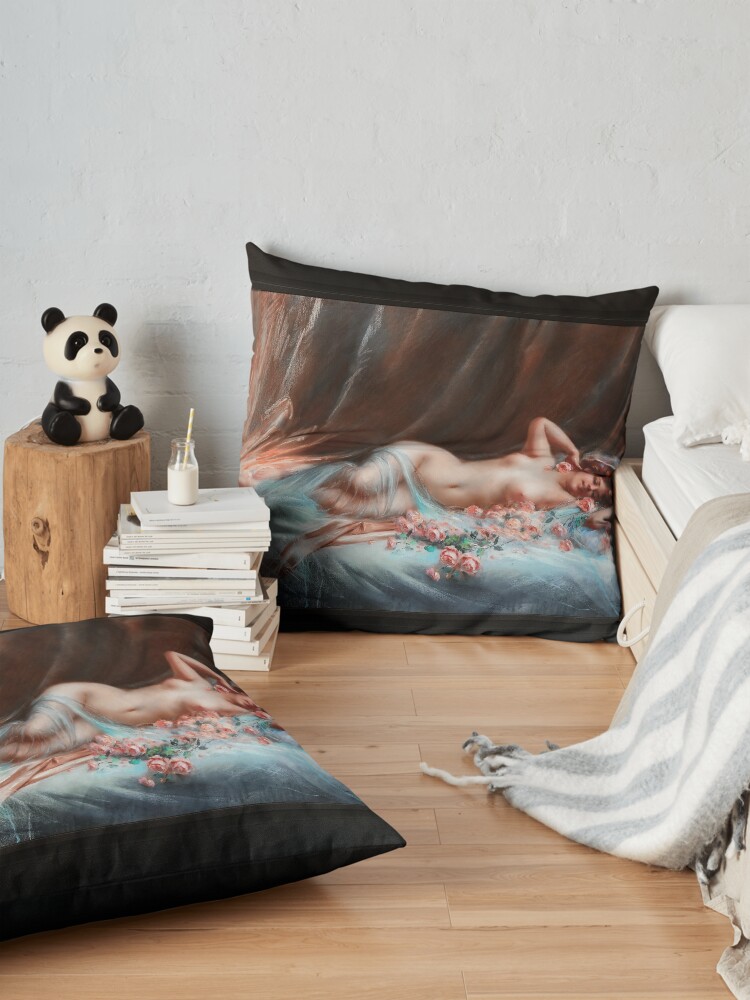
Geamannan Delphin’ masterpiece Nude le ròsan (The Nude with Roses), air a chruthachadh a-steach 1907, stands as a beautiful representation of French academic painting during the late 19th and early 20th centuries. Enjolras, a renowned artist known for his delicate treatment of the human form and his skillful manipulation of light and texture, brings forward an intimate and sensual portrayal of the female nude.
Rugadh e a-steach 1857 agus a’ dol a-steach 1945, Enjolras’ career spanned a period in which the classical tradition of painting was increasingly challenged by the burgeoning modernist movements. Ach, ag obair mar Nude le ròsan showcase his unyielding commitment to classical techniques, infused with a romantic sensuality that marked the mood of his era.
Clàr-innse
An cuspair agus an sgrìobhadh
Prìomh chuspair Nude le ròsan tha figear boireann ag ath-chuairteachadh, air a thoirt seachad ann am bog, flowing lines that emphasize the graceful curves of her body. Her nude form lies serenely across a soft, luxurious background, ionnlaid ann an solas socair neo-sgaraichte, suidheachadh cha mhòr ethereal. Tha suidheachadh a’ mhodail a’ nochdadh languorous, staid smaoineachail, oir tha a sùilean dùinte gu socair, thionndaidh a ceann beagan chun an taobh ann an repose. Is e an abairt aice Seerne, cha mhòr bruadar, a’ leigeil leis an neach-coimhead a smuaintean a shamhlachadh agus i a’ gluasad a-steach gu cadal sìtheil. Tha an neach-ealain air a glacadh ann an àm gun dìon, a’ toirt cuireadh don neach-coimhead cnuasachadh air bòidhchead agus so-leòntachd cruth an duine.
Tha am figear air a chuairteachadh gu socair le sgapadh de ròsan, a tha na laighe gu socair air an uachdar far a bheil i na laighe. Bidh na ròsan a’ cur sreath de dh’ inneach agus dath ris a’ pheantadh, bha na pincain bhog agus na gealaichean aca air an cur an aghaidh tònaichean bàn a craiceann, cruthachadh cothromachadh co-chòrdail eadar na h-eileamaidean flùra agus an nude.
The soft petals of the flowers seem to mirror the smooth contours of her body, further enhancing the painting’s romantic and sensual atmosphere. Na flùraichean, while clearly a symbolic element of feminine beauty, do not overpower the subject but instead complement it, adding depth and interest without detracting from the central figure.
An suidheachadh agus na stuthan
Suidheachadh Nude le ròsan tha minimalist, with the focus squarely on the figure and the flowers that surround her. The artist has chosen a simple backdrop of soft, swirling drapery, which serves to frame the subject while maintaining the piece’s overall softness. Am blàth, muted tones of the drapery, which fade seamlessly into the rest of the painting, create an inviting space for the nude figure to exist. There is no stark contrast between the figure and the surroundings; an àite sin, tha an dealbh a’ toirt cuireadh don neach-coimhead a-steach do shaoghal co-sheirm le seòltachd agus eireachdas.
Bidh Enjolras a’ cleachdadh peant ola le maighstireachd follaiseach, a’ leigeil le inneach an dà chuid na ròsan agus an craiceann nochdadh gu bog, mion-fhiosrachadh coltach ri beatha. An rèidh, tha inneach cha mhòr meurach a’ chraicinn eadar-dhealaichte ri inneach fìnealta an aodaich agus peatalan nan ròsan, a’ taisbeanadh comas an neach-ealain air raon de mhothachadh tactile a thoirt seachad tron obair bhruis aige.
Tha cleachdadh faiceallach an t-solais a’ cur ri faireachdainneachd an t-seallaidh, a’ tilgeadh seallaidhean bog agus faileas air feadh a’ chuirp, cruthachadh doimhneachd agus cruth. Tha an solas aotrom, rèidh, agus cha mhòr a 'deàrrsadh, a’ toirt iasad don t-sealladh gu lèir èadhar de chàileachd bruadar. Tha an cleachdadh seo de sholas is dubhar cuideachd a’ soilleireachadh tuigse air leth an neach-ealain air anatomy daonna, a’ toirt sealladh fìrinneach don fhigear, làthaireachd trì-thaobhach fhad ‘s a chumas e càileachd ethereal a dh’ àrdaicheas am pìos nas fhaide na dealbhan sìmplidh.
Stoidhle ealain agus buaidh
Stoidhle Enjolras ann an Nude le ròsan stèidhichte gu domhainn ann an traidiseanan fìor-eòlas acadaimigeach, ach tha e cuideachd a’ giùlan buaidhean seòlta bho ghluasadan nas dlùithe agus romansach anmoch san 19mh linn. An aire gu mion-fhiosrachadh ann an riochdachadh an fhigear, cho math ris a 'bhog, cleachdadh co-chòrdail de dhath, a cho-thaobhadh ris an traidisean clasaigeach de pheantadh figear.
Ach, tha caoimhneas àraidh 'n a dhealbh air an neo-ni, cugallachd ris a’ chuspair a tha a’ bruidhinn air buaidh a’ ghluasad Symbolist, a bha gu tric airson dòigh-obrach nas inntinniche agus faireachail a thaobh ealain. Na ròsan, cuideachd, fhaicinn mar nod do na Symbolists, Anns an obair aca gu tric bha motifan flùrach fìnealta làn de bhrìgh.
Measgachadh de na buaidhean sin, reul-eòlas acadaimigeach le suathadh de romansaidheachd agus samhlachas, a’ cruthachadh dealbh a tha a’ faireachdainn an dà chuid gun ùine agus gun ùine, a’ glacadh a’ ghluasaid eadar an 19mh agus an 20mh linn ann an ealain na Frainge.
Mood agus mìneachadh
Faireachdainn de Nude le ròsan tha e na aon de shàmhchair agus mothachadh. Tha cleachdadh an neach-ealain de sholais bog agus inneach rèidh a’ cur ris a’ mhothachadh air socair a tha a’ cuairteachadh an t-seallaidh. Stoidhle an fhigear, na sùilean dùinte, agus tha an abairt shàmhach uile a 'nochdadh mionaid de shìth agus de mhothachadh, a’ toirt cuireadh don neach-coimhead a dhol a-steach do shaoghal far a bheil draghan àbhaisteach beatha air an cur an dàrna taobh sa mhionaid.
An làthair nan ròsan, gu tric co-cheangailte ri gaol agus bòidhchead, a’ daingneachadh tuilleadh cuspair an deilbh de boireannachd is mothachaidh. Tha ùine shònraichte aig an obair, oir dh'fhaodadh am figear a bhith gu furasta mar lèirsinn bho àrsachd clasaigeach, ach tha mothachadh bog a' phìos a' bruidhinn ris na mìneachaidhean nas ùire air bòidhchead agus gràs.
Tha a 'bhuaidh iomlan mar aon de dh' inntinn dlùth, far nach e dìreach neach-amhairc a th’ anns an neach-coimhead, ach tha e air cuireadh a ghabhail ann am bòidhchead ciùin na h-ùine. Tha an obair a’ toirt urram sàmhach do chruth an duine agus don t-saoghal nàdarrach, air a thoirt seachad anns an dòigh fhìnealta agus smaoineachail a bha àbhaisteach dha Enjolras’ dòigh-obrach a thaobh ealain. Ann an Nude le ròsan, tha an neach-ealain air barrachd air dìreach figear nude a ghlacadh; tha e air inntinn a ghlacadh, àm air leth ann an ùine a tha an dà chuid gu math pearsanta agus gu h-uile-choitcheann.
Is e seo ath-riochdachadh seann mhaighstirean ealain didseatach ath-leasaichte de ìomhaigh fearann poblach a tha ri fhaighinn mar chlò-bhualadh canabhas air-loidhne.
Neach-ealain Bio
Fiosrachadh gu h-ìosal a thàinig bho Wikipedia.org
Rugadh Delphin ann an Coucouron, suidhichte ann an ceann a deas na Frainge gu Casimir Enjolras agus Delphine Laurens ann an 1857.
Rinn e sgrùdadh air dathan-uisge fon dealbhadair uisge Frangach Gaston Gérard aig an “Sgoil Dealbhaidh Cathair-bhaile Paris” no City of Paris Drawing School agus rinn e sgrùdadh cuideachd fo Jean-Léon Gérôme (1824 – 1904) aig na Beaux-Arts (Sgoil nan Ealan), agus aig an Pascal Dagnan-Bouveret.
Anns a 'chiad phàirt de Delphins peantadh dreuchd, pheant e cruthan-tìre sa mhòr-chuid; ach ghluaiseadh e nas fhaide air adhart gu bhith a’ peantadh dhealbhan de bhoireannaich òga, air an do rinn e barr- achd.
Bha an dealbh aige a’ cuimseachadh air boireannaich òga àlainn agus eireachdail, mar as trice le solas lampa a’ dèanamh obair chruaidh leithid leughadh no fuaigheal; ann an aodach no ann an nude; le mòran de na h-obraichean a rinn e às deidh sin de nàdar ciallach agus erotic.