

Nymfer og Satyr
Nymfer og Satyr: Et studie i klassisk fantasy
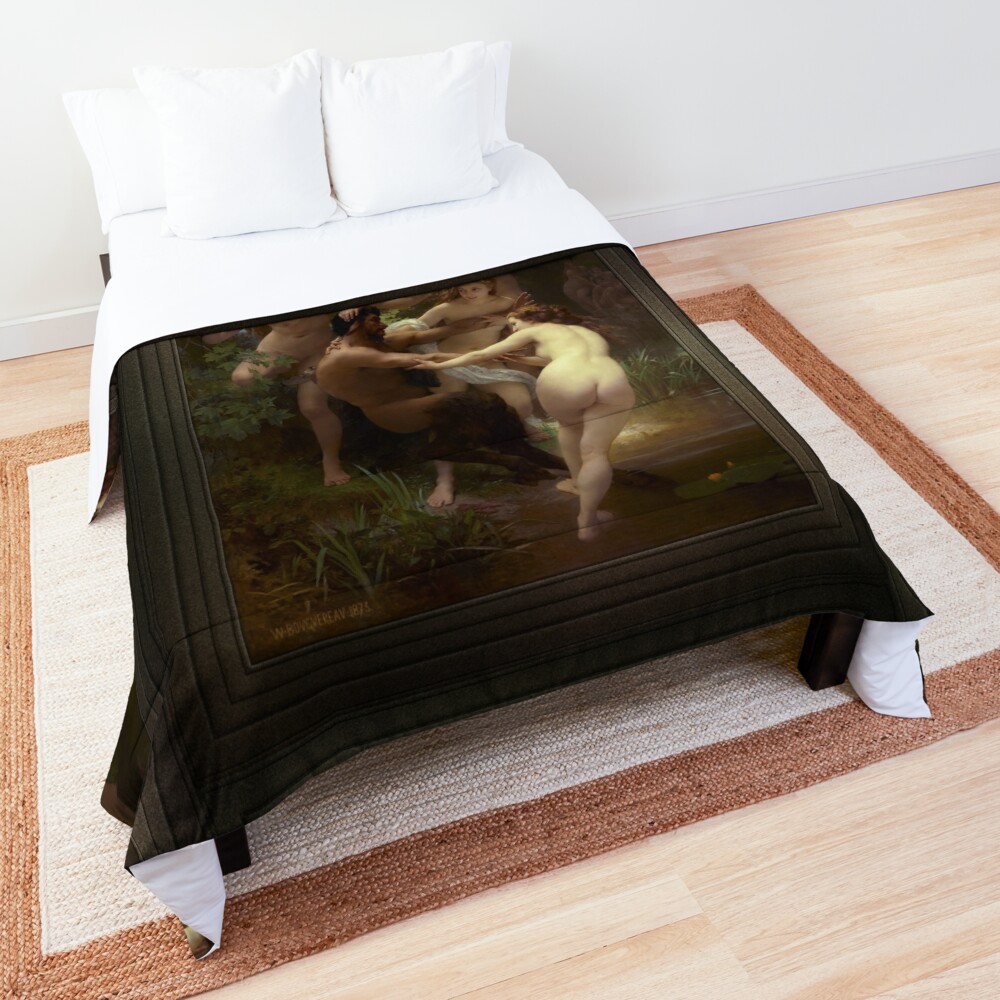
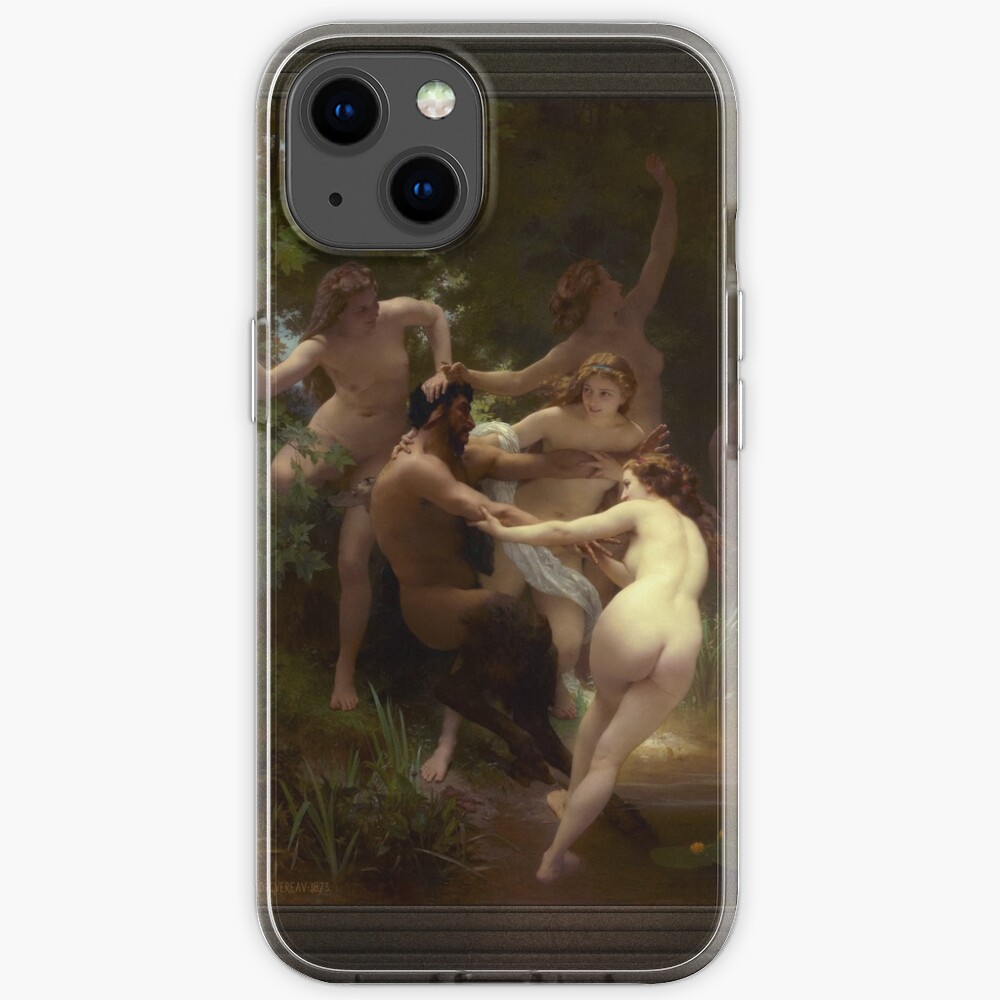
William-Adolphe Bouguereaus "Nymfer og Satyr,” malet rundt 1873, eksemplificerer kunstnerens berømte akademiske stil og hans fascination af mytologisk fag. Maleriet skildrer en legende scene af nymfer, der legende omkranser en satyr i frodige skovomgivelser. Det er et værk, der viser Bouguereaus tekniske mesterskab - især hans evne til at gengive kødfarver og skabe en atmosfære af idyllisk skønhed, samtidig med at det afspejler de bredere kunstneriske tendenser i det 19. århundredes Frankrig, specifikt genoplivningen af klassiske temaer og allegoriske fortællinger.
Indholdsfortegnelse
Kompositionsstruktur & Fortælling
Kompositionen er omhyggeligt struktureret omkring en central figur: satyren. Han indtager den nederste midte af lærredet, hans mørke hud i kontrast til de omgivende nymfers lysere teint. Arrangementet handler ikke om aggression eller trussel; snarere, det formidler en følelse af lethjertet jagt og legende sammenfiltring.
Nymferne er placeret i en dynamisk cirkulær formation omkring ham, deres kroppe flettet sammen og deres udtryk spænder fra morskab til blid drilleri. Dette skaber en visuel rytme, der trækker beskuerens øje hen over lærredet, understreger samspillet mellem figurerne. Baggrunden er bevidst sløret, trækker sig tilbage i en tæt skov af frodigt løv, som tjener til at isolere gruppen og fokusere opmærksomheden på den centrale handling.
Figurerne: Nymfer & Satyr
Hver nymfe har forskellige egenskaber og stillinger, bidrager til den overordnede følelse af bevægelse og vitalitet. Deres kroppe er gengivet med omhyggelige detaljer, viser Bouguereaus dygtighed til at skildre den menneskelige form. De bærer minimal påklædning - flydende draperi, der klæber sig til deres former, mens de afslører konturerne af deres kroppe, et fælles kendetegn ved akademiske nøgenbilleder i denne periode.
Deres hår er løst arrangeret, kaskade omkring deres skuldre og tilføjer den overordnede følelse af naturlighed. Satyren, et væsen fra græsk mytologi, der repræsenterer vild natur og fest, skiller sig ud på grund af hans mørkere hudtone og mere robuste funktioner. Hans kropsholdning antyder overraskelse og måske mildt ubehag, da han befinder sig omgivet af de legende nymfer. Han er afbildet med horn og spidse ører, karakteristiske træk ved hans mytologiske identitet.
Farvepalet & Belysning
Bouguereaus brug af farve bidrager væsentligt til maleriets atmosfære. Paletten er domineret af varme jordfarver – grønne, brune, og okker – som fremkalder en følelse af naturlig harmoni. Nymfernes hudtoner er gengivet med bemærkelsesværdig subtilitet, fanger lysets spil på deres kroppe. En blød, diffust lys filtrerer gennem løvet, belyse figurerne fra oven og skabe blide skygger, der forstærker deres tredimensionalitet. Belysningen er ikke hård eller dramatisk; i stedet, det bidrager til den overordnede følelse af ro og idyllisk skønhed. Kontrasten mellem satyrens mørkere hud og nymferne’ lysere teint understreger yderligere den visuelle dynamik i kompositionen.
Kunstneriske påvirkninger & Stil
"Nymphs and Satyr" afspejler Bouguereaus træning i den akademiske tradition, som lagde vægt på tekniske færdigheder, anatomisk nøjagtighed, og idealiseret skønhed. Hans arbejde henter inspiration fra klassisk skulptur og renæssancemaleri, tydeligt i figurernes yndefulde positurer og den harmoniske komposition.
Bouguereau var en fortaler for realisme, men hans malerier er ikke blot repræsentative; de besidder et element af idealisering, der hæver dem ud over blotte afbildninger af virkeligheden. Maleriets emne, en mytologisk scene, var også populær blandt kunstnere i denne periode, afspejler en bredere interesse for klassiske temaer og allegoriske fortællinger. Bouguereaus stil er ofte forbundet med den akademiske tradition, kendetegnet ved dens vægt på tekniske færdigheder og idealiseret skønhed.
Teknisk udførelse & Detalje
Maleriets overflade afslører et omhyggeligt penselarbejde, især tydelig i gengivelsen af kødtoner og løv. Bouguereau brugte en lagdelingsteknik til at opbygge farve gradvist, skabe subtile gradueringer og forstærke følelsen af realisme.
Detaljerne er gengivet med præcision – fra de sarte draperifolder til de enkelte hårstrå, demonstrerer Bouguereaus beherskelse af sit håndværk. Kunstnerens opmærksomhed på detaljer strækker sig også til baggrundselementerne; løvet er afbildet med en bemærkelsesværdig grad af naturalisme, skabe en overbevisende følelse af dybde og atmosfære.
Arv & Betydning
"Nymphs and Satyr" er stadig et af Bouguereaus mest berømte værker, beundret for sin tekniske glans og dens skildring af idyllisk skønhed. Maleriet er et eksempel på kunstnerens evne til at syntetisere klassiske temaer med nutidige kunstneriske tendenser, at skabe et værk, der er både tidløst og repræsentativt for sin æra. Det står som et vidnesbyrd om Bouguereaus varige arv som en af sin tids førende akademiske malere.
Kunstnerbio med høflighed Wikipedia.org
William-Adolphe Bouguereau blev født i La Rochelle, Frankrig, på 30 november 1825, ind i en familie af vin- og olivenoliehandlere.[4] Søn af Théodore Bouguereau (Født 1800) og Marie Bonnin (1804), kendt som Adeline, William blev opdraget som katolik. Han havde en ældre bror, Alfred, og en yngre søster, Marie (kendt som Hanna), der døde, da hun var syv.
Familien flyttede til Saint-Martin-de-Ré i 1832. En anden søskende blev født i 1834, Kitty. I en alder af 12, Bouguereau tog til Mortagne for at blive hos sin onkel Eugène, en præst og udviklede en kærlighed til naturen, religion og litteratur.
I 1839, han blev sendt for at studere for præstedømmet på et katolsk kollegium i Pons. Her blev han lært at tegne og male af Louis Sage, der havde studeret under Ingres. Bouguereau forlod modvilligt sine studier for at vende tilbage til sin familie, nu bosat i Bordeaux.
Der mødte han en lokal kunstner, Charles Marionneau, og begyndte på den kommunale skole for tegning og maling i november 1841. Bouguereau arbejdede også som butiksassistent, håndfarve litografier og lave små malerier, der blev gengivet ved hjælp af krolitografi.
Han var snart den bedste elev i sin klasse, og besluttede at blive kunstner i Paris. For at finansiere flytningen, han solgte portrætter - 33 olier på tre måneder. Alle var usignerede, og kun en er blevet sporet. Han ankom til Paris i alderen 20 i marts 1846.
Lighed før døden (Lighed før døden), 1848, olie på lærred, 141 × 269 cm (55.5 × 105.9 i), Orsay Museum, Paris. Lighed er Bouguereaus første store maleri, produceret efter to år på École des Beaux-Arts de Paris i en alder af 23.
Bouguereau blev student ved École des Beaux-Arts.[4] For at supplere sin formelle uddannelse i tegning, han deltog i anatomiske dissektioner og studerede historiske kostumer og arkæologi.
Han blev optaget i studiet af François-Édouard Picot, hvor han studerede maleri i den akademiske stil. Dante og Virgil i helvede (1850) var et tidligt eksempel på hans nyklassiske værker.
Akademisk maleri satte den højeste status på historiske og mytologiske emner, og Bouguereau besluttede at vinde Prix de Rome, hvilket ville give ham en treårig bopæl i Villa Medici i Rom, Italien, hvor han ud over formelle lektioner på egen hånd kunne studere renæssancekunstnerne og deres mesterværker, samt græsk, Etruskisk, og romerske antikviteter.
Nymphs and Satyr er en retoucheret digital kunstgengivelse af et offentligt domæne billede, som kan købes som en rullet lærred print online.