

Nymphs and Satyr
Nymphs and Satyr: A Study in Classical Fantasy
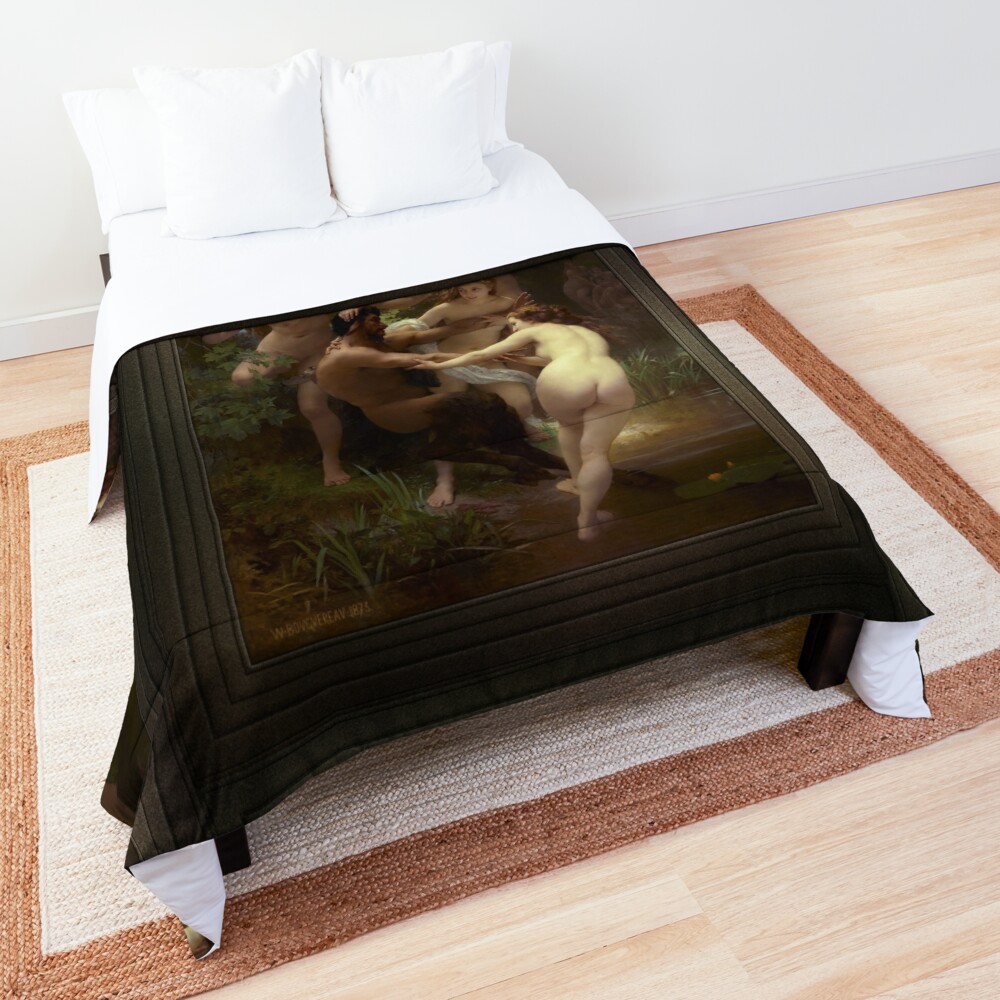
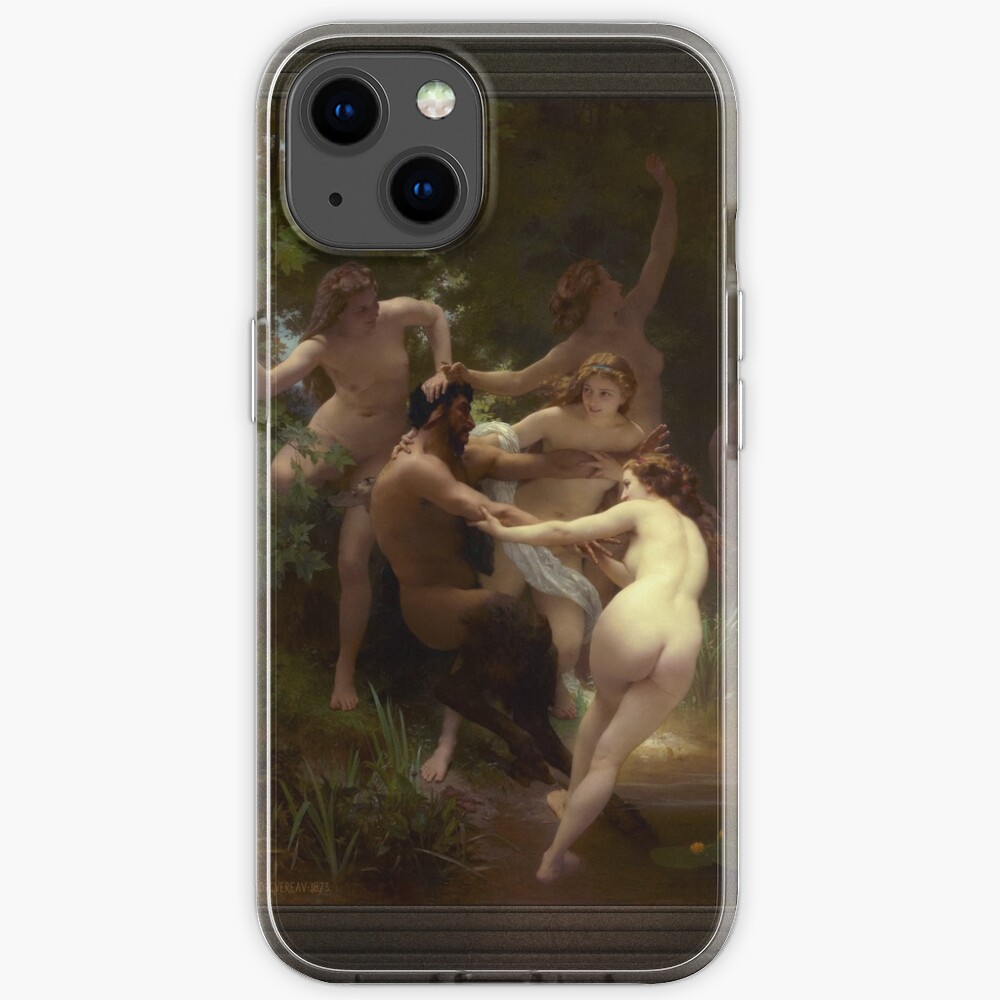
William-Adolphe Bouguereau’s “Nymphs and Satyr,” rûnom skildere 1873, exemplifies the artist’s celebrated academic style and his fascination with mytologysk subjects. The painting depicts a playful scene of nymphs playfully encircling a satyr within a lush woodland setting. It is a work that showcases Bouguereau’s technical mastery – particularly his ability to render flesh tones and create an atmosphere of idyllic beauty, while also reflecting the broader artistic trends of 19th-century France, specifically the revival of classical themes and allegorical narratives.
Ynhâldsopjefte
Komposysje Struktuer & Narrative
The composition is carefully structured around a central figure: the satyr. He occupies the lower center of the canvas, his dark skin contrasting with the lighter complexions of the surrounding nymphs. The arrangement isn’t one of aggression or threat; leaver, it conveys a sense of lighthearted pursuit and playful entanglement.
The nymphs are positioned in a dynamic circular formation around him, their bodies intertwined and their expressions ranging from amusement to gentle teasing. This creates a visual rhythm that draws the viewer’s eye across the canvas, emphasizing the interaction between the figures. The background is deliberately blurred, receding into a dense forest of verdant foliage, which serves to isolate the group and focus attention on the central action.
De sifers: Nymphs & Satyr
Elke nimf hat ûnderskate funksjes en posysjes, bydrage oan it algemiene gefoel fan beweging en fitaliteit. Harren lichems wurde werjûn mei sekuere detail, Bouguereau's feardigens yn it byld fan 'e minsklike foarm sjen litte. Se drage minimale klean - streamend drapery dy't har fêsthâldt oan har foarmen, wylst se de kontoeren fan har lichems iepenbierje, in mienskiplik skaaimerk fan akademyske neaken yn dizze perioade.
Har hier is los regele, om har skouders hinne falle en it algemiene gefoel fan natuerlikens tafoegje. De sater, in skepsel út de Grykske mytology fertsjintwurdiget wylde natuer en revelry, opfalt troch syn donkerdere hûdskleur en mear robúste funksjes. Syn postuer suggerearret ferrassing en miskien myld ûngemak as hy fynt himsels omjûn troch de boartlike nimfen. He is depicted with horns and pointed ears, characteristic attributes of his mythological identity.
Kleurpalet & Ferljochting
Bouguereau’s use of color contributes significantly to the painting’s atmosphere. The palette is dominated by warm earth tones – greens, brún, and ochres – which evoke a sense of natural harmony. The nymphs’ skin tones are rendered with remarkable subtlety, capturing the play of light on their bodies. In sêft, diffused light filters through the foliage, illuminating the figures from above and creating gentle shadows that enhance their three-dimensionality. The lighting is not harsh or dramatic; ynstee, it contributes to the overall sense of tranquility and idyllic beauty. The contrast between the satyr’s darker skin and the nymphs’ lighter complexions further emphasizes the visual dynamic within the composition.
Artistike ynfloeden & Styl
“Nymphs and Satyr” reflects Bouguereau’s training in the academic tradition, which emphasized technical skill, anatomical accuracy, en idealisearre skientme. His work draws inspiration from classical sculpture and Renaissance painting, evident in the graceful poses of the figures and the harmonious composition.
Bouguereau was a proponent of realism, but his paintings are not simply representational; they possess an element of idealization that elevates them beyond mere depictions of reality. It ûnderwerp fan it skilderij, a mythological scene, was also popular among artists during this period, reflecting a broader interest in classical themes and allegorical narratives. Bouguereau’s style is often associated with the academic tradition, characterized by its emphasis on technical proficiency and idealized beauty.
Technyske útfiering & Detail
The painting’s surface reveals meticulous brushwork, particularly evident in the rendering of flesh tones and foliage. Bouguereau employed a layering technique to build up color gradually, creating subtle gradations and enhancing the sense of realism.
The details are rendered with precision – from the delicate folds of drapery to the individual strands of hair, demonstrating Bouguereau’s mastery of his craft. The artist’s attention to detail extends to the background elements as well; the foliage is depicted with a remarkable degree of naturalism, creating a convincing sense of depth and atmosphere.
Legacy & Betekenis
“Nymphs and Satyr” remains one of Bouguereau’s most celebrated works, admired for its technical brilliance and its depiction of idyllic beauty. The painting exemplifies the artist’s ability to synthesize classical themes with contemporary artistic trends, creating a work that is both timeless and representative of its era. It stands as a testament to Bouguereau’s enduring legacy as one of the leading academic painters of his time.
Artist Bio Courtesy Wikipedia.org
William Adolphe Bouguereau waard berne yn La Rochelle, Frankryk, op 30 novimber 1825, yn in famylje fan wyn- en oliveeljehannelers.[4] De soan fan Théodore Bouguereau (berne 1800) en Marie Bonnin (1804), bekend as Adeline, Willem waard in katolyk grutbrocht. Hy hie in âldere broer, Alfred, en in jongere suster, Marie (bekend as Hanna), dy't stoar doe't se sân wie.
De famylje ferhuze nei Saint-Martin-de-Ré yn 1832. In oare sibling waard berne yn 1834, Kitty. Yn de âldens fan 12, Bouguereau gie nei Mortagne om by syn omke Eugène te bliuwen, in pryster en ûntwikkele in leafde foar de natuer, religy en literatuer.
Yn 1839, hy waard stjoerd om te studearjen foar it prysterskip oan in katolike kolleezje yn Pons. Hjir waard hy leard te tekenjen en te skilderjen troch Louis Sage, dy't ûnder Ingres studearre hie. Bouguereau ferliet mei tsjinsin syn stúdzje om werom te gean nei syn famylje, wennet no yn Bordeaux.
Dêr moete er in pleatslike keunstner, Charles Marioneau, en begûn yn novimber oan de Gemeentelike Skoalle foar Teken en Skilderjen 1841. Bouguereau wurke ek as winkelmeiwurker, lithografy mei de hân ynkleure en lytse skilderijen meitsje dy't mei chromolithografy reprodusearre waarden.
Hy wie al gau de bêste learling yn syn klasse, en besleat keunstner te wurden yn Parys. Om de ferhuzing te finansieren, hy ferkocht portretten - 33 oaljes yn trije moannen. Allegear wiene net ûndertekene en mar ien is opspoard. Hy kaam yn Parys âld 20 yn maart 1846.
Gelikensens foar de dea (Gelikensens foar de dea), 1848, oalje op doek, 141 × 269 cm (55.5 × 105.9 yn), Musée d'Orsay, Parys. Gelikensens is Bouguereau syn earste grutte skilderij, produsearre nei twa jier oan de École des Beaux-Arts de Paris op 'e leeftyd fan 23.
Bouguereau waard studint oan de École des Beaux-Arts.[4] Om syn formele oplieding yn tekenjen oan te foljen, hy besocht anatomyske disseksjes en studearre histoaryske kostúms en argeology.
Hy waard talitten ta it atelier fan François-Édouard Picot, dêr't er skilderjen yn 'e akademyske styl studearre. Dante en Vergilius yn 'e hel (1850) wie in ier foarbyld fan syn neoklassike wurken.
Akademysk skilderjen pleatste de heechste status op histoaryske en mytologyske ûnderwerpen, en Bouguereau besletten om de Prix de Rome te winnen, dy't him in trije jier ferbliuw krije soe yn 'e Villa Medici yn Rome, Itaalje, dêr't er njonken formele lessen út 'e earste hân de keunstners fan 'e Renêssânse en har masterwurken bestudearje koe, likegoed as Gryksk, Etruskysk, en Romeinske âldheden.
Nymphs and Satyr is a retouched digital art reproduction of a public domain image which is available for purchase as a opgerold canvas print online.