

Odalisg c1858
“Odalisg c1858” yn gampwaith gan yr arlunydd Ffrengig Henri Pierre Picou, oedd yn byw o 1824 i 1895. Wedi'i baentio i mewn 1858, mae'r gwaith celf hwn yn enghraifft wych o Rhamantiaeth, mudiad oedd yn ceisio cyfleu emosiwn dwfn, synhwyraidd, a delweddau byw. Mae'r deunydd pwnc a'r cyfansoddiad yn adlewyrchu'r bywiogrwydd a'r cnawdolrwydd sy'n nodweddiadol o salonau Ffrengig y 19eg ganrif.. Gwaith Picou, llenwi â lliw llachar a manylder gosgeiddig, yn crynhoi awyrgylch y Dwyrain a swyn yr harem, thema artistig a enillodd boblogrwydd mewn celf Ewropeaidd yn ystod y 19eg ganrif.
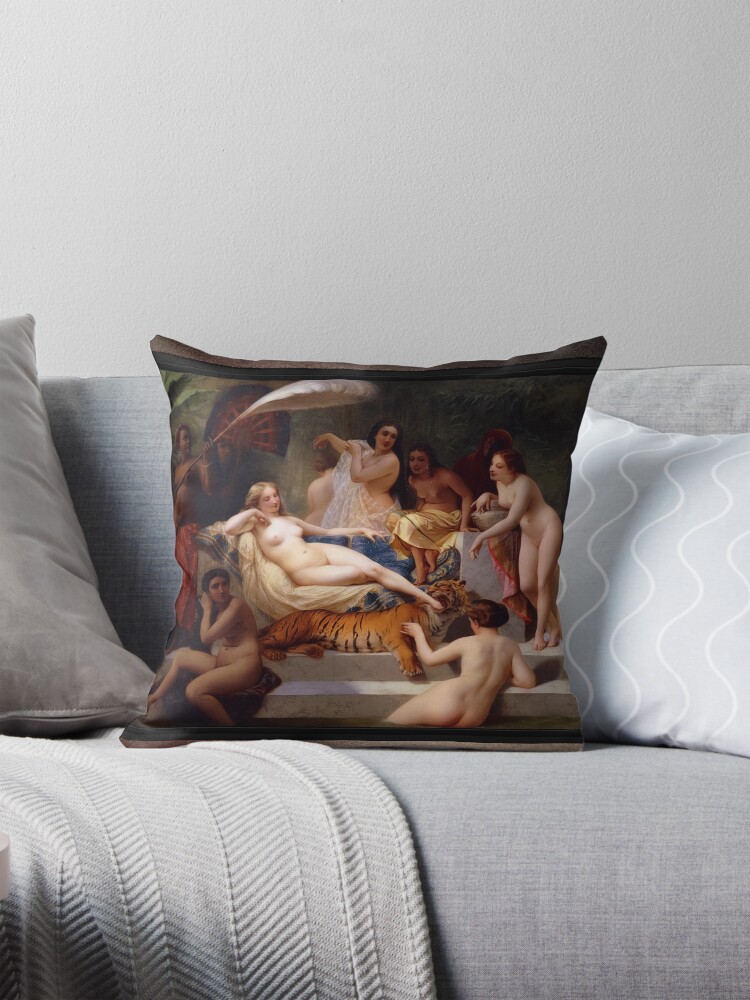
Mae'r paentiad yn darlunio golygfa egsotig a gorfoleddus wedi'i gosod o fewn gwyrddlas, gardd werdd. Yn y blaendir, mae gwraig noethlymun lledorwedd yn gorwedd wedi'i gorchuddio â ryg croen teigr moethus, ei chorff wedi'i osod yn gain i gyfleu ymlacio a cnawdolrwydd.
The subject of the painting, often referred to as an “odalisque” in the art world, refers to a woman in a harem, typically a concubine or servant, though in this case, the figure embodies a sense of power and beauty rather than mere submission. The subject’s position, partially turned to the side, suggests a moment of repose, and her expression, while not overly emotive, evokes a serene yet slightly aloof mood. The figure is meticulously detailed, with soft, porcelain-like skin that contrasts with the vivid richness of her surroundings.
Tabl Cynnwys
Y Gosodiad a'r Cyfansoddiad
The background of the painting is a lush, natural setting, with the surrounding foliage creating a sense of depth and enclosure. The warm tones of the earth and the deep greens of the trees contrast against the vibrant golds and turquoises of the woman’s attire, which consists of flowing, sheer fabrics. These colors and textures evoke a sense of Eastern luxury, in line with the Romanticized view of the Orient that was prevalent in European art of the time.
Y lleoliad ei hun, comprising not just a garden but also figures of other women and servants—adds a sense of social hierarchy to the piece. Yn y cefndir, several other figures are partially visible. Some women are depicted in various stages of undress, attending to the main figure in a way that suggests both intimacy and exotic allure. The way they are positioned around the central figure highlights the harem setting and the role of women within it. The inclusion of a tiger further adds to the exoticism, as it symbolizes power and mystery, reflecting the theme of untamed nature and luxury.
The Figures and Their Role
In addition to the reclining odalisque, the painting features a number of secondary figures, including female attendants and an exotic servant. One such figure stands at the back, holding a fan and facing the central figure, adding to the dynamic of the scene. The presence of these figures serves to reinforce the sense of the harem environment, where women are not only objects of desire but also part of a larger, intricate social structure.
The figures in the painting are rendered with remarkable attention to detail, especially in terms of their anatomy and expressions. The artist pays great care to the human form, emphasizing the smoothness and softness of the flesh in stark contrast to the more tactile textures of the tiger skin rug and the surrounding environment. The female figures, each with their unique postures and roles, form a visual harmony that draws the viewer’s eye back to the central reclining figure.
Symbolism and Theme
The central theme of the painting is the depiction of female sensuality, and by extension, the romanticized concept of the Orient. Yn y 19eg ganrif, the harem became a popular subject in European art, often seen as a symbol of luxury, forbidden beauty, and exotic allure. Fodd bynnag, Picou’s portrayal moves beyond a simple depiction of sensuality, suggesting a more complex narrative about power, awydd, a rolau merched mewn diwylliannau gwahanol.
Mae'r defnydd o ryg croen teigr fel motiff canolog yn symbolaidd iawn. Teigrod, mewn celf Ewropeaidd, yn aml yn gysylltiedig â grymoedd dienw, nerth, ac weithiau perygl. Y wraig, trwy orwedd ar ben y teigr, yn awgrymu ei rheolaeth dros ffyrnigrwydd a gwylltineb yr anifail, trosiad o'i phŵer ei hun a'r ymdeimlad uwch o ddirgelwch sy'n gysylltiedig â'r Dwyrain. Y ffurf fenywaidd, llyfn a bregus, mewn cyferbyniad i wylltineb y teigr, eto nid yw yn ddarostwng nac yn ymostyngol, mae'n brenhinol, tawelwch, ac yn rheoli ei hamgylchoedd.
Yr harem, fel y dangosir yn y darn hwn, yn lle caethiwed na gofod o rymusder a dirgelwch, lle mae menywod yn bodoli y tu allan i reolau arferol cymdeithas ac yn gallu mynegi bodolaeth fwy synhwyrol a rhydd. This is reflected in the calm demeanor of the central figure and the luxuriousness of the scene itself. By presenting the odalisque in a state of repose, Picou adds a layer of depth to the piece, suggesting that the woman’s power lies not in overt action, but in her allure, her mystery, and her presence.
The Mood and Emotional Tone
The mood of the painting is one of quiet luxury and latent power. The serene expression of the central figure contrasts with the more active, yet passive, roles of the other women and the exotic environment around her. The sensuality in the painting is not overtly provocative but is instead conveyed through the soft lines of the female form, the opulence of the setting, and the harmonious interaction between the figures and their surroundings. There is an almost dreamlike quality to the scene, enhanced by the naturalistic details and the rich color palette.
The interaction between the various figures in the painting, some passive, others active, creates a subtle tension within the composition. This interplay of emotions and roles adds a layer of narrative complexity to the piece, allowing the viewer to interpret the scene in a variety of ways, depending on their own perspective.
Nghasgliad
Henri-Pierre Picou’s “Odalisg c1858” is an exquisite representation of 19th-century French Romanticism. Through the lush, sensual portrayal of the reclining figure and the exotic environment, Picou creates a mood that combines luxury with mystery. The painting encapsulates the fascination with the Orient that was prevalent during the era, while also exploring themes of power, synhwyraidd, a benyweidd-dra. Ei gyfansoddiad gofalus, sylw i fanylion, ac mae defnyddio symbolaeth yn ei wneud yn waith o harddwch parhaus, gan ddal eiliad mewn amser pan oedd atyniad yr harem wedi'i blethu i ffabrig dychymyg artistig Ewropeaidd.
Odalisg c1858 gan yr Arluniwr Ffrengig Henri Pierre Picou (1824 – 1895); yn adnabyddus am ei waith portread cynnar a'i destun hanesyddol ac yn ei flynyddoedd olaf am ei themâu Alegorïaidd a Mytholegol
Roedd Odalisg yn weinyddes neu'n forwyn siambr mewn Seraglio o Dwrci (chwarter byw atafaeledig a ddefnyddir gan wragedd a gordderchwragedd ar aelwyd Otomanaidd.).
Mae'r paentiad Odalisg hwn yn dangos ffigwr benywaidd canolog noethlymun a all fod yn brif wraig neu'n Gordderchwraig, yn gorffwys ar soffa marmor sydd wedi'i phadio â chlustogau a chynfasau addurniadol; mae hynny'n rhan o sylfaen farmor wedi'i stacio'n ddwbl sy'n arwain at bwll; ac yn y cefndir mae planhigion gwyrdd.
Mae hi wedi'i hamgylchynu gan wyth o ferched noethlymun eraill; dau sydd yn rhannol yn y pwll o ddŵr. gydag un yn petio teigr ifanc sy'n rhoi troed y brif fenyw yn ei cheg.
Mae yna hefyd dair menyw arall (sydd debycaf i'r Odalisc), y gall rhywun dybio eu bod yn gaethweision sy'n darparu ar gyfer anghenion y merched eraill sy'n ymlacio ar y pedestal marmor.
Mae Odalisque yn atgynhyrchiad hen feistr celf ddigidol wedi'i atgyffwrdd o ddelwedd parth cyhoeddus y gallwch ei brynu fel printiau celf wal addurniadau cartref.
Y greadigaeth gelfyddyd ddigidol hon, fel gyda'r holl waith celf sydd i'w gael ar wefan Xzendor7 ar gael i'w brynu ar-lein mewn amrywiaeth o fformatau deunydd gan gynnwys printiau cynfas, printiau acrylig, printiau metel, printiau pren, printiau wedi'u fframio, posteri, ac fel printiau cynfas wedi'u rholio mewn amrywiaeth o feintiau o 12 modfedd i 72 modfeddi yn dibynnu ar faint y gwaith celf gwirioneddol a'r siop argraffu ar alw y byddwch yn dewis prynu'r celf ohoni.
Mae’r gwaith celf hefyd ar gael ar ystod eang o ddillad dynion a merched, mygiau, totes, sgarffiau, llyfrau nodiadau a chyfnodolion a llawer o gynhyrchion addurno cartref.
Bio artist
Gwybodaeth Islaw sy'n Deillio o Wikipedia.org
Roedd Henri-Pierre yn arlunydd academaidd ac yn un o sylfaenwyr yr ysgol Neo-Grec, ynghyd â'i ffrindiau agos Gustave Boulanger, Jean-Leon Gerome, a Jean-Louis Hamon, hefyd arlunwyr academaidd.
Astudiodd pob un o'r dynion yng ngweithdai Paul Delaroche ac yn ddiweddarach Charles Gleyre. Dylanwadwyd yn amlwg ar arddull Picou gan Gleyre; tra bod gweddill y grŵp yn gyffredinol yn paentio pynciau clasurol a mytholegol.
Picou am y tro cyntaf yw arddull artistig yn y Salon yn 1847; a'r flwyddyn ganlynol dyfarnwyd medal ail ddosbarth am ei ddarlun, Cleopatra ac Antony ar y Cydnus. Adwaenir hefyd fel Cleopatra ar y Cydnus, fe'i hystyrir yn gyffredin fel campwaith Picou.
Yr arddangosiad yn y Salon yn 1848 ysgrifenwyd am Cleopatra ac Antony ar y Cydnus gan y beirniad Théophile Gautier, a deimlai fod y pwnc dan sylw yn rhy uchelgeisiol, ond dywedai hefyd hyny “Fel y mae, mae'n rhoi'r gobaith gorau ar gyfer dyfodol yr artist ifanc, ac mae ymhlith y saith neu wyth o ddarluniau pwysicaf y Salon.”
Yn 1875, arddangoswyd y paentiad yn Efrog Newydd, ac wedi hynny cafodd le ar furiau oriel gelf breifat yn San Francisco.
Cynhaliodd Picou weithdy mawr ym Mharis ar y Boulevard de Magenta, a roddodd le iddo weithio ar ei ffresgoau eang. Parhaodd ei boblogrwydd i godi ac aeth ymlaen i ennill yr Second Prix de Rome yn 1853 am ei beintiad, Iesu'n gyrru'r gwerthwyr allan o'r Deml (Y Benthycwyr Arian yn Erlid o'r Deml), a medal ail ddosbarth arall am ei baentiad Salon yn 1857.
O amser ei ymddangosiad cyntaf yn 1847, daeth yn rheolaidd yn y Salon, yn dangos bron bob blwyddyn hyd ei arddangosfa olaf yn 1893. Mae wedi cael ei alw yn beintiwr mwyaf ffasiynol tua diwedd Ail Ymerodraeth Ffrainc; a derbyniodd lawer o gomisiynau, gan gynnwys comisiynau ar gyfer ffresgoau crefyddol mawr gan lawer o eglwysi, a oedd yn cynnwys yr Église Saint-Roch.