

Order Please
Delwedd deiliad Alberto Vargas, a Peruvian-born artist renowned for his glamorous and captivating pin-up illustrations, creu Order Please in the mid-20th century. Known for his impeccable ability to blend sensuality with elegance, Vargas’s works became iconic in American pop culture. Y darn arbennig hwn, Order Please, showcases the artist’s mastery of form, lliw, and his ability to create captivating female figures. Ganwyd yn 1896 a phasio i mewn 1982, Vargas’s legacy continues to influence the art world, particularly within the realms of pin-up art and the depiction of female beauty.
Tabl Cynnwys
Prif Bwnc
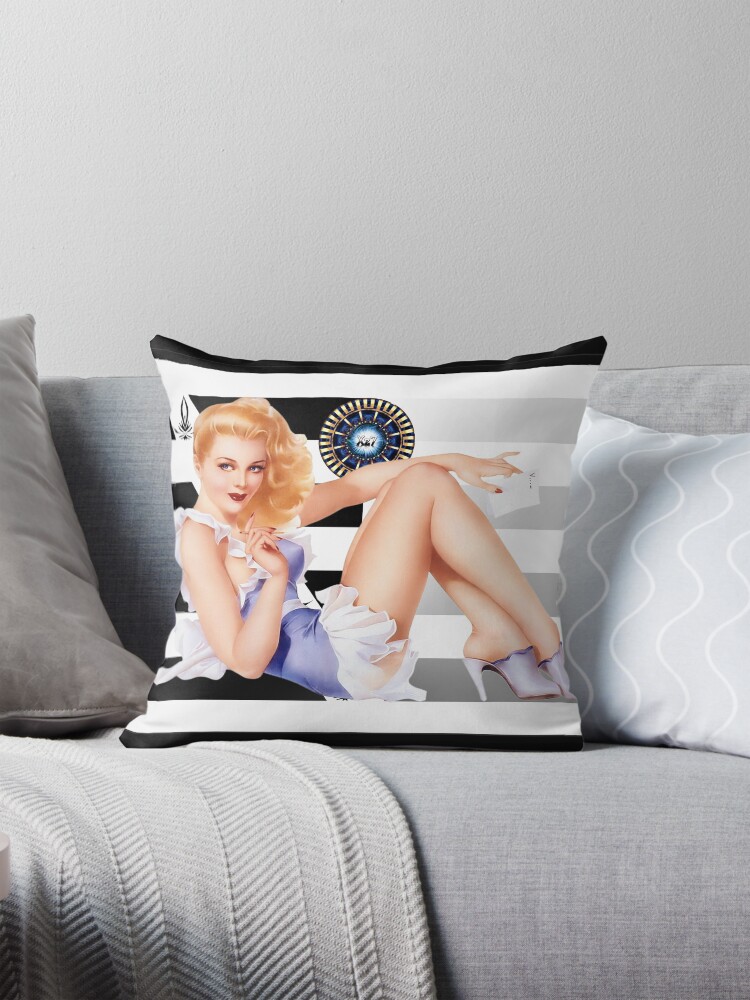
The main subject of Order Please is a woman, poised in a relaxed yet confident posture. Seated with her legs crossed, she gazes directly at the viewer with a playful yet seductive expression. The woman’s platinum blonde hair is styled in soft waves, accentuating the vintage glamour that defines Vargas’s pin-up art.
She wears a delicate, ruffled garment with a soft pastel palette, primarily white, which contributes to the airy, ethereal feel of the image. The soft folds of her clothing and her poised position emphasize both her femininity and her strength, exuding an aura of elegance and charm.
Her facial expression is one of quiet confidence, subtly suggestive yet not overtly sexual. Mae ei syllu yn uniongyrchol, engaging the viewer with an almost whimsical invitation to admire her beauty. The contrast between the softness of her attire and the boldness of her expression makes her appear both approachable and mysterious. Her nude or bare shoulders further enhance the sensual aspect of her appearance, while the simplicity of her pose and attire keeps the focus on her natural allure.
Gwrthrychau
In the foreground of the painting, the woman holds a white object delicately in her right hand, though its precise nature is not entirely clear. It could be interpreted as a folded letter or a piece of paper, suggesting communication or perhaps a message.
This simple object, though small, contrasts with the grandeur of the figure, creating a subtle narrative element that complements the overall theme of the artwork. The use of this item as a focal point helps to balance the viewer’s attention between the woman’s form and the object’s ambiguity, which adds a layer of intrigue to the piece.
There is also a subtle round emblem, positioned in the upper-right corner of the artwork. This emblem, while not elaborated upon in the visual narrative, evokes a sense of order and authority, hinting at the title Order Please. The emblem and its placement seem to introduce a formal or controlled element within the otherwise informal and playful atmosphere of the woman’s pose, subtly reinforcing the theme of command and elegance.
Tir a chefndir
Mae cefndir Order Please consists of alternating black and white stripes, which contrast sharply with the softer hues of the woman’s figure and attire. These stripes serve multiple purposes: they ground the figure in an abstract, graphic environment while also emphasizing the smooth contours of her body.
The starkness of the black-and-white stripes creates a dynamic tension with the more organic curves of the figure, highlighting the harmony between the human form and its environment. This contrast is a characteristic element of Vargas’s style, where he often employed bold, graphic backgrounds to underscore the sensuality of the female figures without overwhelming them.
The geometric nature of the background adds a layer of modernity to the otherwise vintage and timeless feel of the figure. The stripes lend a sense of order and structure, making the subject’s relaxed, confident demeanor seem even more out of place within such an ordered space. This contrast of elements creates a visual tension that draws the viewer’s eye toward the central figure while maintaining the graphic integrity of the overall composition.
Arddull, Thema, a hwyliau
Alberto Vargas’s work is deeply rooted in the pin-up style, characterized by its playful sensuality, idealized beauty, and vibrant color schemes. The painting exudes a sense of glamour and sophistication, with the sensuality of the subject tempered by the clean lines and formal environment of the background.
Mae naws Order Please is one of confident allure, with the woman depicted as both approachable and commanding. Cyfosodiad meddal, feminine curves and the structured geometric lines of the background gives the piece a dynamic balance, characteristic of Vargas’s ability to infuse life into a static image.
The theme of order, suggested by the title, plays out in the contrast between the soft and the structured, the sensual and the formal. The image of a woman comfortably seated, exuding confidence and poise, reflects the idea of control and elegance amidst the orderliness of the world around her. Vargas’s pin-up art, often considered a form of escapism, invites the viewer to partake in a world where beauty and grace rule, and where the viewer’s gaze is captured by both the subject’s physical form and the implied narrative of the scene.
The use of color also plays a critical role in the piece’s overall mood. The soft pastels of the woman’s clothing, contrasted with the bolder black-and-white stripes, create a visual harmony that speaks to the idealization of beauty, while the intensity of the subject’s expression suggests a deeper, more complex emotional depth than would otherwise be inferred from her attire alone.
Nghasgliad
Order Please by Alberto Vargas is a masterful example of mid-20th-century pin-up art, blending sensuality with sophistication and creating a visual narrative that speaks to both the strength and vulnerability of the female form. The confident pose of the subject, the abstracted background, and the interplay of soft and bold elements all contribute to an artwork that is both timeless and evocative. Trwy'r darn hwn, Vargas continues to exemplify his unparalleled skill in capturing the essence of feminine beauty and the interplay of order and sensuality.
Mae hwn yn atgynhyrchiad hen feistri celf ddigidol wedi'i ailfeistroli o ddelwedd parth cyhoeddus sydd ar gael fel a argraffu cynfas ar-lein.
Artist Bio From Wikipedia.org
Ganed yn Arequipa, Periw, roedd yn fab i'r ffotograffydd Periw nodedig Max T.. Vargas. Symudodd Alberto Vargas i'r Unol Daleithiau yn 1916 ar ôl astudio celf yn Ewrop, Zurich, a Genefa cyn y Rhyfel Byd Cyntaf.
Tra'r oedd yn Ewrop daeth ar y cylchgrawn Ffrengig La Vie Parisienne, gyda chlawr gan Raphael Kirchner, a ddywedodd ei fod yn ddylanwad mawr ar ei waith.
Roedd ei yrfa gynnar yn Efrog Newydd yn cynnwys gwaith fel arlunydd ar gyfer y Ziegfeld Follies ac i lawer o stiwdios Hollywood. Crogodd Ziegfeld ei lun o Olive Thomas yn y theatr, a meddyliwyd amdani fel un o'r Merched Vargas cynharaf.
Vargas’ roedd y darn enwocaf o waith ffilm ar gyfer poster y 1933 ffilm The Sin of Nora Moran, sy'n dangos Zita Johann bron yn noeth mewn sefyllfa o anobaith. Yn aml, enwir y poster yn un o'r posteri ffilm mwyaf a wnaed erioed.
Daeth yn enwog yn y 1940au fel crëwr pin-ups eiconig o'r Ail Ryfel Byd ar gyfer cylchgrawn Esquire o'r enw “Merched Vargas.” Rhwng 1940 a 1946 Cynhyrchwyd Vargas 180 paentiadau ar gyfer y cylchgrawn.
Cafodd celf trwyn llawer o awyrennau America a'r Cynghreiriaid o'r Ail Ryfel Byd ei hysbrydoli a'i haddasu o'r pin-ups Esquire hyn, yn ogystal â rhai George Petty, ac artistiaid eraill.