

Pater Noster
Pater Noster (Nostro padre) c1900 by Czech Painter Alphonse Mucha (1860 – 1939); così come un affermato illustratore e artista grafico che è stato una forza importante del periodo Art Nouveau; noto per la sua stilizzata, manifesti teatrali decorati e decorativi.
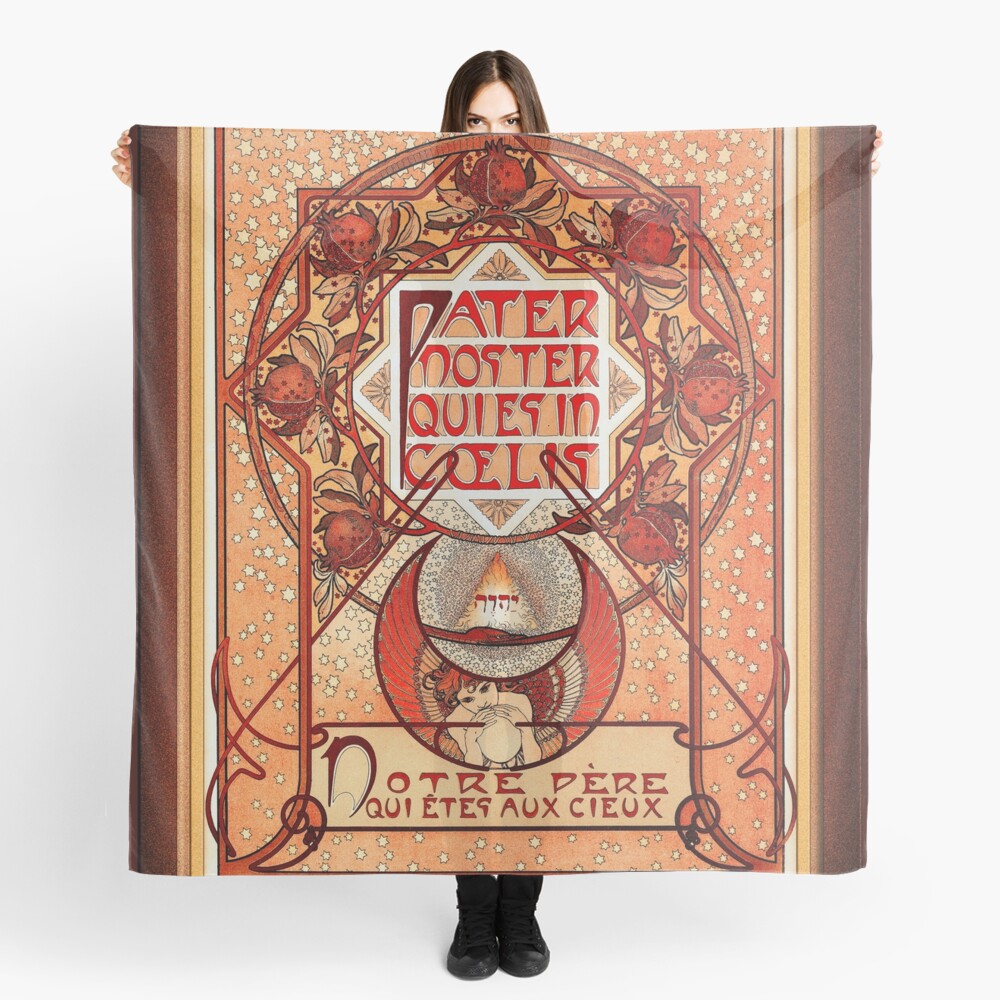
A beautiful illustrated poster that is a tribute to a beloved father that has passed away, with the words Pater Noster Quiesin Coelis (May Our Father Rest In Heaven) at the top and at the bottom the words Notre Pere Qui Etes Aux Cieux (Our Father Who Art In Heaven) that cite the beginning of he Lords prayer.
The top words are surrounded by a representation of the Star of David in the inner layer with a ring around it and a large like representation that also has open pomegranates at each point.
Below the words is another word in Hebrew that is placed in triangle with a fiery appearance, below that a woman grasping a sphere of sorts that has radiant orange, red and white wings; that may represent and angel.
Finally the rest of the illustration has flowing curves that also connect to the Star of David structure giving it a metal frame look with a multitude of starts filling every background space.
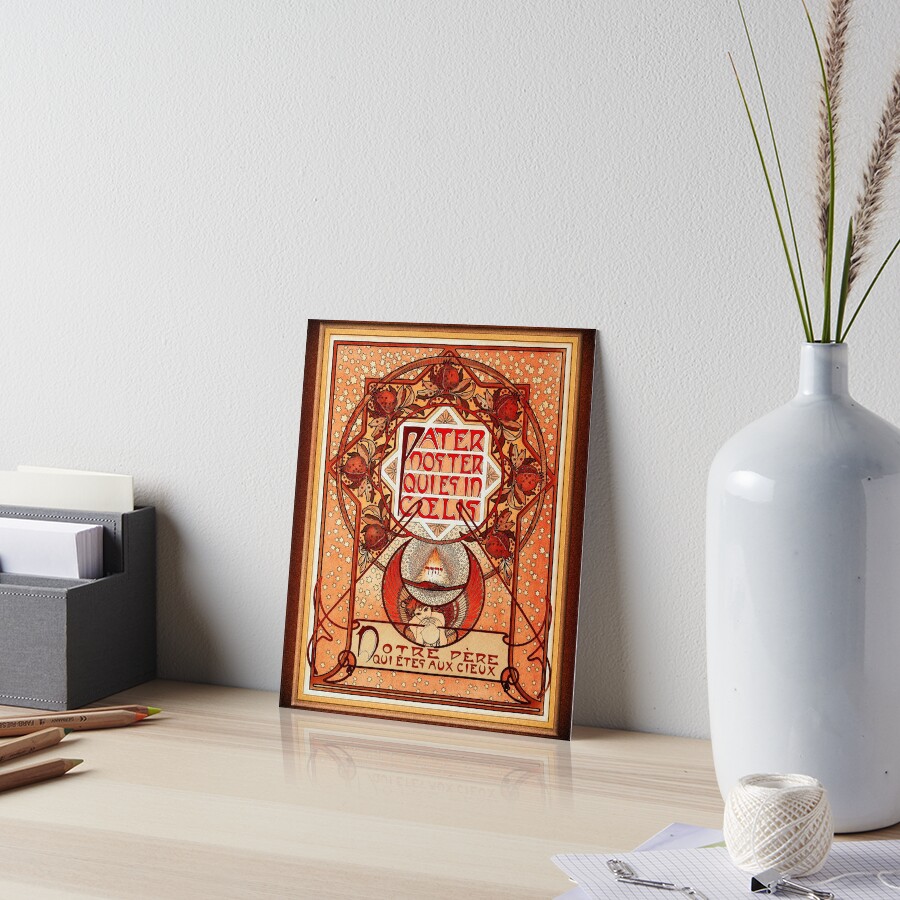
Questa è una riproduzione di vecchi maestri di arte digitale rimasterizzata di un'immagine di pubblico dominio che è disponibile per l'acquisto online come a stampa su tela arrotolata.
Informazioni sotto da Wikipedia.org
Alfons Maria Mucha luglio 24, 1860 – luglio 14, 1939), era conosciuto a livello internazionale come Alphonse Mucha. Era un importante pittore ceco, illustratore e grafico, vivere a Parigi durante il periodo Art Nouveau, ed è meglio conosciuto per i suoi manifesti teatrali distintamente stilizzati e decorativi, in particolare quelli di Sarah Bernhardt.
Ha prodotto illustrazioni, annunci, pannelli decorativi, e disegni, che divenne tra le immagini più note del periodo.
Nella seconda parte della sua carriera, all'età di 43, tornò nella sua terra natale della regione della Boemia-Moravia in Austria e si dedicò alla pittura di una serie di venti tele monumentali conosciute come L'epopea slava, raffigurante la storia di tutti i popoli slavi del mondo, che ha dipinto tra 1912 e 1926.
Nel 1928, nel decimo anniversario dell'indipendenza della Cecoslovacchia, ha presentato la serie alla nazione ceca. Lo considerava il suo lavoro più importante. Ora è in mostra a Praga.