

Petite Fille et Chat
Artelanaren ikuspegi orokorra
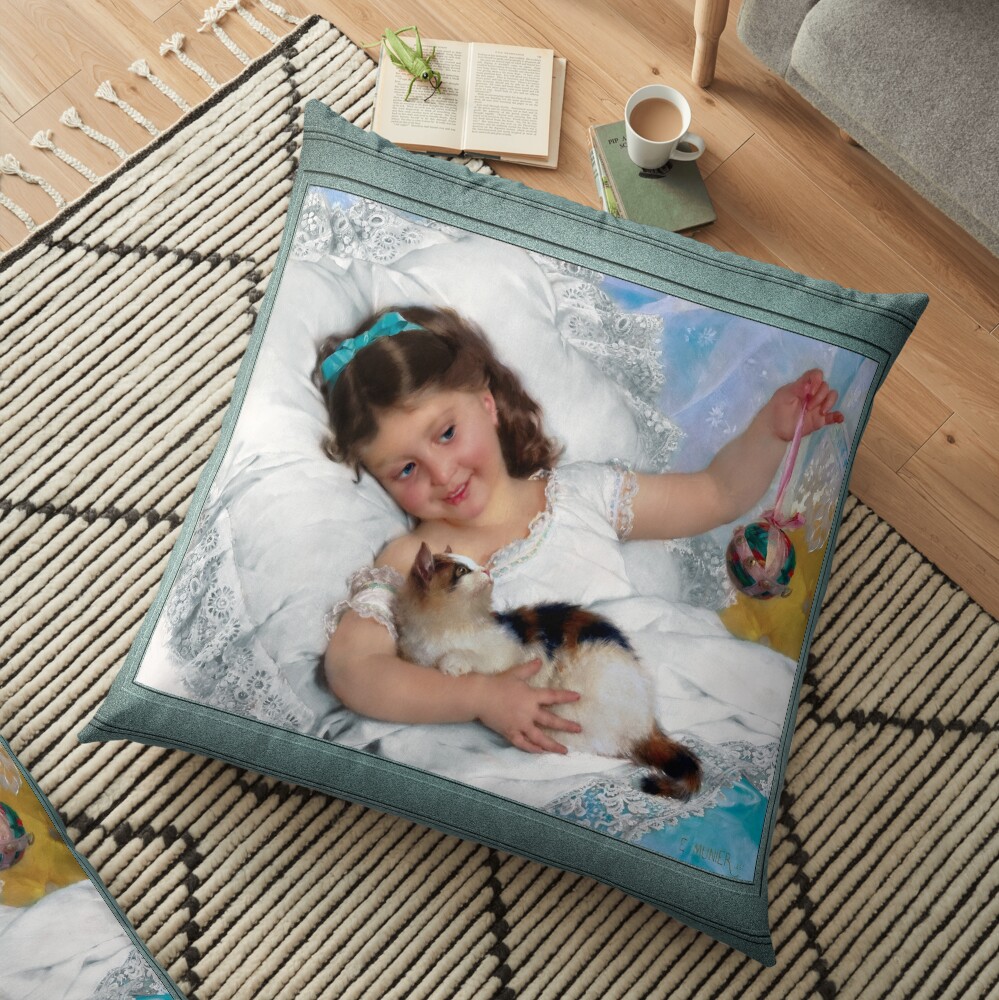
Petite Fille et Chat (Young Girl With Cat) c1882 is an exquisite example of 19th-century French academic painting, sortutako Emile Munier (1840 – 1895), a renowned French painter known for his detailed depictions of children and their emotional depth. Margotuta 1882, this portrait captures a delicate moment of childhood innocence, perfectly encapsulated through the innocent gaze of a young girl who is lovingly interacting with a cat. Artistaren xehetasunen arreta zorrotza, his ability to capture human expression, and his expert use of light and color make this piece a standout in the genre of academic realism.
Edukien taula
Gai nagusia: The Young Girl
-ren bihotzean “Petite Fille et Chat” is the young girl, whose porcelain-like skin and gentle expression convey both fragility and joy. She is depicted in a moment of quiet delight as she reclines on a cushion, her body slightly turned towards the viewer while her gaze is directed downward at the small cat resting beside her. The girl’s soft brown hair is styled in loose waves, with a bright blue ribbon nestled at the crown of her head, adding a touch of playfulness to her appearance. The pale blue ribbon contrasts beautifully with the softness of her white gown, further emphasizing the purity and simplicity of her childhood.
The fabric of her gown is rendered in soft, flowing folds that suggest a fine, luxurious material. Its delicate lace trims at the neckline and sleeves add an element of refinement, capturing the high level of craftsmanship typical of the period. The girl’s posture and demeanor evoke an image of serene contentment, perfectly in tune with the theme of childhood innocence that the artist sought to portray.
The Cat: A Companion in Innocence
The cat, nestled contentedly beside the girl, plays a pivotal role in the composition. It is rendered with extraordinary attention to detail, particularly in its fur, which exhibits the artist’s characteristic skill in portraying texture. The cat’s distinctive coat of fur—patches of white, laranja, and brown—creates a sense of realism, while its playful yet peaceful demeanor adds to the tranquil atmosphere of the painting. The young girl’s hand rests gently on the cat’s back, a tender gesture that reinforces the bond between the child and her pet, a universal symbol of innocence and companionship.
The cat’s presence in the painting also serves as a subtle contrast to the girl’s softness and elegance. It represents a more spontaneous and untamed element, yet in this context, it becomes a gentle companion, further enhancing the serene mood of the artwork.
Atzeko planoa eta ezarpena
The background of the painting is as meticulously composed as the figures in the foreground. The setting appears to be an indoor space, possibly a child’s nursery or a drawing room, where the soft textures of a luxurious fabric and a gentle play of light are at the forefront. Behind the young girl and cat, bigun bat, ethereal blue hue transitions to a creamy pastel yellow, creating a dreamy, almost otherworldly atmosphere. The background is delicately painted, featuring light touches of drapery that hint at the artist’s attention to both the natural light filtering through the space and the textures of the fabrics.
Lace and other delicate elements such as floral patterns also appear in the background, adding complexity and depth to the scene without overwhelming the primary subject. Gela, filled with these light, soft tones, emphasizes the purity of childhood, offering a quiet sanctuary where the girl and her cat are free to indulge in their peaceful moment.
The Use of Color and Light
Munier’s use of light and color is central to the emotional impact of “Petite Fille et Chat.” Biguna, pastel tones—predominantly blues, zuriak, and subtle hints of pink—dominate the composition, creating a serene and almost dreamlike quality. The delicate color palette enhances the theme of innocence, furthering the narrative of childhood purity and happiness.
The interplay of light and shadow on the girl’s face and gown is masterfully handled. Munier uses light to bring out the luminous quality of her skin, contrasting it with the subtle shadowing beneath her chin and along her collarbone, which adds depth to her features. The glow of her cheeks and the soft illumination around her eyes suggest a youthful vitality, yet this is contrasted by the calm serenity of the scene.
Emotional Impact and Theme
“Petite Fille et Chat” captures a moment of innocence and tranquility. The theme of childhood—its purity, samurtasuna, and closeness to nature—is rendered with delicate precision. The interaction between the girl and her cat is both intimate and gentle, a visual expression of the love and affection that often characterizes the bond between children and their pets.
The emotional atmosphere of the painting is one of warmth and comfort, a sanctuary from the outside world. Biguna, intimate moment between the girl and her cat seems to freeze time, inviting the viewer into a quiet, peaceful world where the only concerns are love and companionship. Munier’s portrayal of the girl’s sweet expression and the peaceful setting imbue the work with a sense of nostalgia, evoking a longing for simpler times and the beauty of childhood.
Estilo Artistikoa: Errealismo akademikoa
Emile Munier was a master of academic realism, a style characterized by its focus on the careful study of light, human anatomy, eta mundu naturala. His works often feature children in idyllic settings, exploring themes of innocence, garbitasun, eta sakontasun emozionala. The precision with which Munier renders the details of the girl’s face, the textures of her gown, and the softness of the cat’s fur speaks to his exceptional technical skill and dedication to realism. His careful attention to detail in both the figures and the background elements reflects the high standards of academic painting in the 19th century.
Bukaera
“Petite Fille et Chat” is a timeless portrayal of childhood innocence and the beauty of quiet moments shared between a child and her pet. Through his exquisite use of light, kolorea, eta ehundura, Munier creates a scene that resonates with emotional warmth and tenderness. The piece stands as a perfect example of academic realism, blending technical skill with an intimate portrayal of the human experience.
Petite Fille et Chat is a remastered digital art old masters reproduction of a public domain image that is available as a mihise inprimatu sarean.
Artistari buruz
Informazioa Behean Deribatua Wikipedia.org
Emile Parisen jaio zen, Frantzia Pierre François Munier-i; Artista tapiztzailea Nationale des Gobelins tapiz fabrikan (Parisen Frantzian) eta Marie Louise Carpentier, leuntzaile bat kaxmirezko oihal errota batean.
François eta Florimond bi anaia ere izan zituen; hori Nationale des Gobelins-en garai batean artista gisa trebatu eta lan egin zuen berarekin batera.
Lantegian Emile marrazkilari gisa trebatu zuen Abel Lucasek, eta harreman estua garatuko zuen Abelekin eta bere familiarekin, horrek Emile Lucasekin ezkontzera eraman zuen’ alaba Heriette 1861.
Zoritxarrez barruan 1867, emazteak Emile Henri semea erditu eta sei aste geroago, erreuma larria hartu zuen, eta goiztiarra hil zen.
In 1871 Emilek tapiz-fabrika utzi zuen lanaldi osoz margotzen jarraitzeko, baita helduei pintura eskolak ematen astean hiru gauetan.
Gero sartu 1872 Emile Sargine Augrand ezkondu zen Abel Lucasen ikaslea eta Emile eta Henrietteren laguna; bikoteak alaba bat izan zuen Marie-Louise, jaio zen 1874.
In 1884 Kaliforniako Leland Stanford gobernadorearen eta bere emaztea Jane Stanforden enkargua jaso zuen Leland Stanford semearen margolanak egiteko., Jr., urterekin zendu zena 15 urteak; ahd izenburua jarri zion Angel konsolatzen bere ama dolua piezari; eskua sorbaldan jarrita bere ama kontsolatzera lurrera itzuli zen aingeru gisa.
Emilesen irakaslerik eragingarrienetako bat William-Adolphe Bouguereau margolari frantsesa izan zen (1825 – 1905), eta Emilerengan izan zuen eragina ikus daiteke berak sortutako pieza askotan eta denborarekin biak ere lagun minak egin ziren.
Bere lan ospetsuenetako bat, eragin hori frogatu zuena bere Trois Amis edo Three Friends pieza da, urtean Parisko Aretoan erakutsi zuen 1885; neska txiki potolo bat irudikatzen zuen bere ohean jolasten bere katuarekin eta txakurrarekin.
Lan hau oso ondo gustatu zitzaion publikoari, forma askotan erreproduzitu zela eta publizitaterako ere erabili zuela Pears Soap xaboi konpainia britainiarrak; sortu zena 1807, munduko lehen xaboi gardena ekoizten.
Koadro honek haur txikien eta haien maskoten margolari nagusietako bat bezala finkatzen lagundu zuen; eta animalien arrantzako eszenekin batera horrelako eszenak margotzen jarraituko zuen, itsas paisaiak, paisaiak, genero baserritar eszenak, gai mitologikoak eta erlijiosoak 1890eko hamarkadaren hasieran zehar bere garaiz hil zen arte 1895 urterekin 55.