

Petite Fille et Chat
סקירה כללית של יצירות האמנות
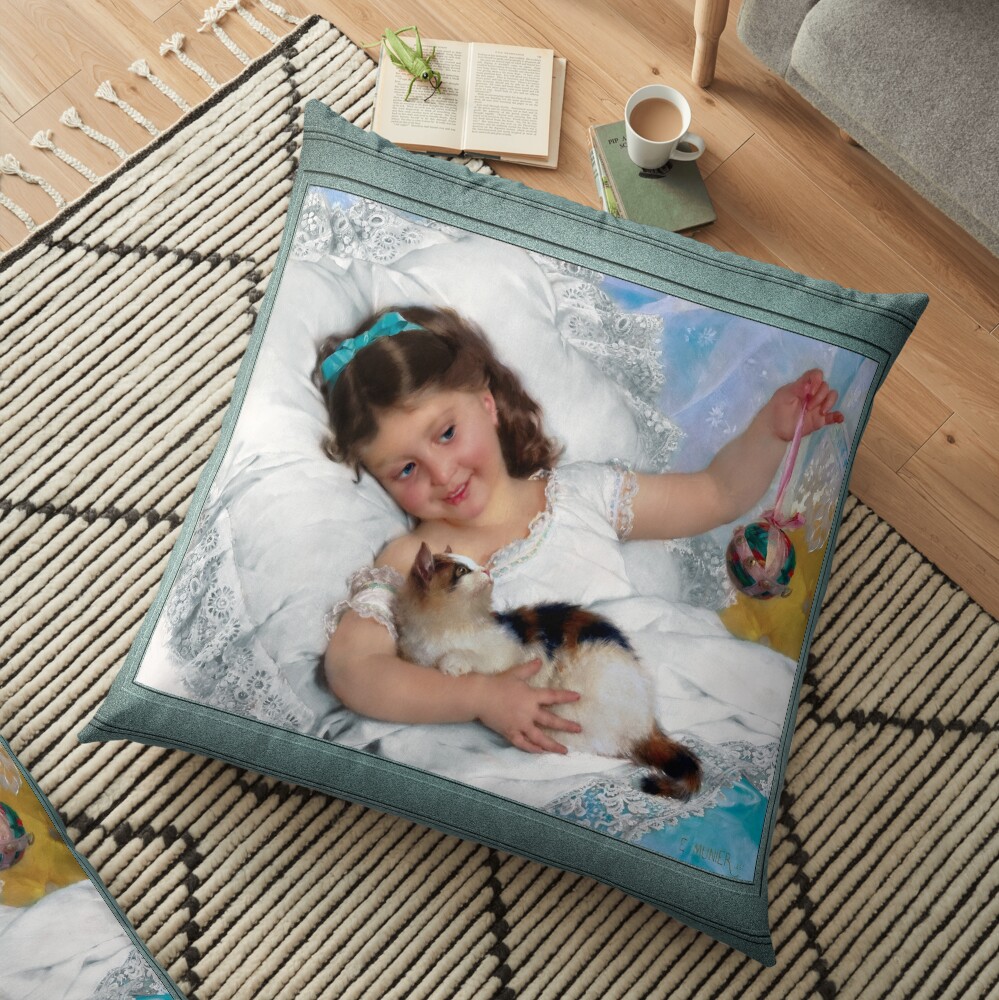
Petite Fille et Chat (ילדה צעירה עם חתול) c1882 is an exquisite example of 19th-century French academic painting, created by Emile Munier (1840 – 1895), a renowned French painter known for his detailed depictions of children and their emotional depth. נצבע ב 1882, this portrait captures a delicate moment of childhood innocence, perfectly encapsulated through the innocent gaze of a young girl who is lovingly interacting with a cat. תשומת הלב הקפדנית של האמן לפרטים, his ability to capture human expression, and his expert use of light and color make this piece a standout in the genre of academic realism.
תוכן העניינים
הנושא המרכזי: The Young Girl
בְּבוֹעַסִים “Petite Fille et Chat” is the young girl, whose porcelain-like skin and gentle expression convey both fragility and joy. She is depicted in a moment of quiet delight as she reclines on a cushion, her body slightly turned towards the viewer while her gaze is directed downward at the small cat resting beside her. The girl’s soft brown hair is styled in loose waves, with a bright blue ribbon nestled at the crown of her head, adding a touch of playfulness to her appearance. The pale blue ribbon contrasts beautifully with the softness of her white gown, further emphasizing the purity and simplicity of her childhood.
The fabric of her gown is rendered in soft, flowing folds that suggest a fine, luxurious material. Its delicate lace trims at the neckline and sleeves add an element of refinement, capturing the high level of craftsmanship typical of the period. The girl’s posture and demeanor evoke an image of serene contentment, perfectly in tune with the theme of childhood innocence that the artist sought to portray.
The Cat: A Companion in Innocence
The cat, nestled contentedly beside the girl, plays a pivotal role in the composition. It is rendered with extraordinary attention to detail, particularly in its fur, which exhibits the artist’s characteristic skill in portraying texture. The cat’s distinctive coat of fur—patches of white, תפוז, and brown—creates a sense of realism, while its playful yet peaceful demeanor adds to the tranquil atmosphere of the painting. The young girl’s hand rests gently on the cat’s back, a tender gesture that reinforces the bond between the child and her pet, a universal symbol of innocence and companionship.
The cat’s presence in the painting also serves as a subtle contrast to the girl’s softness and elegance. It represents a more spontaneous and untamed element, yet in this context, it becomes a gentle companion, further enhancing the serene mood of the artwork.
רקע והגדרה
The background of the painting is as meticulously composed as the figures in the foreground. The setting appears to be an indoor space, possibly a child’s nursery or a drawing room, where the soft textures of a luxurious fabric and a gentle play of light are at the forefront. Behind the young girl and cat, רך, ethereal blue hue transitions to a creamy pastel yellow, יצירת חלומי, אווירה כמעט עולמית. The background is delicately painted, featuring light touches of drapery that hint at the artist’s attention to both the natural light filtering through the space and the textures of the fabrics.
Lace and other delicate elements such as floral patterns also appear in the background, adding complexity and depth to the scene without overwhelming the primary subject. החדר, filled with these light, soft tones, emphasizes the purity of childhood, offering a quiet sanctuary where the girl and her cat are free to indulge in their peaceful moment.
The Use of Color and Light
Munier’s use of light and color is central to the emotional impact of “Petite Fille et Chat.” הרך, pastel tones—predominantly blues, לְבָנִים, and subtle hints of pink—dominate the composition, creating a serene and almost dreamlike quality. The delicate color palette enhances the theme of innocence, furthering the narrative of childhood purity and happiness.
The interplay of light and shadow on the girl’s face and gown is masterfully handled. Munier uses light to bring out the luminous quality of her skin, contrasting it with the subtle shadowing beneath her chin and along her collarbone, which adds depth to her features. The glow of her cheeks and the soft illumination around her eyes suggest a youthful vitality, yet this is contrasted by the calm serenity of the scene.
Emotional Impact and Theme
“Petite Fille et Chat” captures a moment of innocence and tranquility. The theme of childhood—its purity, רוֹך, and closeness to nature—is rendered with delicate precision. The interaction between the girl and her cat is both intimate and gentle, a visual expression of the love and affection that often characterizes the bond between children and their pets.
The emotional atmosphere of the painting is one of warmth and comfort, a sanctuary from the outside world. הרך, intimate moment between the girl and her cat seems to freeze time, inviting the viewer into a quiet, peaceful world where the only concerns are love and companionship. Munier’s portrayal of the girl’s sweet expression and the peaceful setting imbue the work with a sense of nostalgia, evoking a longing for simpler times and the beauty of childhood.
סגנון אמנותי: ריאליזם אקדמי
Emile Munier was a master of academic realism, a style characterized by its focus on the careful study of light, human anatomy, ועולם הטבע. His works often feature children in idyllic settings, exploring themes of innocence, טוֹהַר, ועומק רגשי. The precision with which Munier renders the details of the girl’s face, the textures of her gown, and the softness of the cat’s fur speaks to his exceptional technical skill and dedication to realism. His careful attention to detail in both the figures and the background elements reflects the high standards of academic painting in the 19th century.
מַסְקָנָה
“Petite Fille et Chat” is a timeless portrayal of childhood innocence and the beauty of quiet moments shared between a child and her pet. Through his exquisite use of light, צֶבַע, ומרקם, Munier creates a scene that resonates with emotional warmth and tenderness. The piece stands as a perfect example of academic realism, blending technical skill with an intimate portrayal of the human experience.
Petite Fille et Chat is a remastered digital art old masters reproduction of a public domain image that is available as a הדפסת קנבס באינטרנט.
על האמן
מידע למטה נגזר Wikipedia.org
אמיל נולד בפריז, צרפת לפייר פרנסואה מונייה; רפד אמן במפעל לשטיחי הקיר Nationale des Gobelins (בפריז צרפת) ומארי לואיז קרפנטייה, מלטש בטחנת בד קשמיר.
היו לו גם שני אחים פרנסואה ופלורימונד; שיחד איתו שהכשיר ועבד כאמן במשך תקופה ב- Nationale des Gobelins.
במפעל הוכשר אמיל כשרטט על ידי אבל לוקאס, ויפתח מערכת יחסים קרובה עם הבל ומשפחתו, מה שהוביל לאמיל שהתחתן עם לוקאס’ הבת הרייט ב 1861.
למרבה הצער פנימה 1867, שישה שבועות לאחר שאשתו ילדה את בנם אמיל אנרי, היא חלתה בראומטיזם חמור, ומת בטרם עת.
ב 1871 אמיל עזב את מפעל השטיחים כדי להמשיך לצייר במשרה מלאה, וכן מתן שיעורי ציור למבוגרים שלושה לילות בשבוע.
ואז פנימה 1872 אמיל התחתן עם סרג'ין אוגרנד, תלמידתו של אבל לוקאס וחברה של אמיל והנרייט; לזוג הייתה בת אחת מארי לואיז, מי נולד ב 1874.
ב 1884 הוא קיבל הזמנה מהמושל לילנד סטנפורד מקליפורניה ומאשתו ג'יין סטנפורד ליצור ציור של בנם לילנד סטנפורד, ג'וניור, שנפטר בגיל 15 שנים; הוא כינה את היצירה מלאך מנחם את אמו המתאבלת; שהילד כמלאך שחזר לארץ לנחם את אמו כשידו מונחת על כתפה.
אחד המורים המשפיעים ביותר של אמיל היה הצייר הצרפתי ויליאם-אדולף בוגרו (1825 – 1905), ואפשר לראות את ההשפעה שהייתה לו על אמיל ברבים מהיצירות שיצר ועם הזמן השניים הפכו לחברים קרובים גם כן.
אחת מיצירותיו המפורסמות ביותר, שהדגים את ההשפעה הזו הוא היצירה שלו Trois Amis או Three Friends, שהוא הציג בסלון פריז ב 1885; שתיאר ילדה קטנה שמנמנה משחקת על מיטתה עם החתלתול והכלב שלה.
העבודה הזו הייתה כל כך אהודה על הציבור, שהוא שוכפל בצורות רבות ושימשה גם לפרסום על ידי חברת הסבון הבריטית Pears Soap; שהוקמה ב 1807, ייצור הסבון השקוף הראשון בעולם.
ציור זה עזר לבסס אותו כאחד הציירים המובילים של ילדים צעירים וחיות המחמד שלהם; והוא ימשיך לצייר סצנות כאלה יחד עם סצינות דיג של בעלי חיים, נופי ים, נופים, ז'אנר סצנות איכרים, נושא מיתולוגי ודתי במהלך שנות ה-90 המוקדמות עד למותו בטרם עת ב 1895 בגיל 55.