

Phryne opgedeckt virum Areopagus: Eng Etude am klassesche Drama
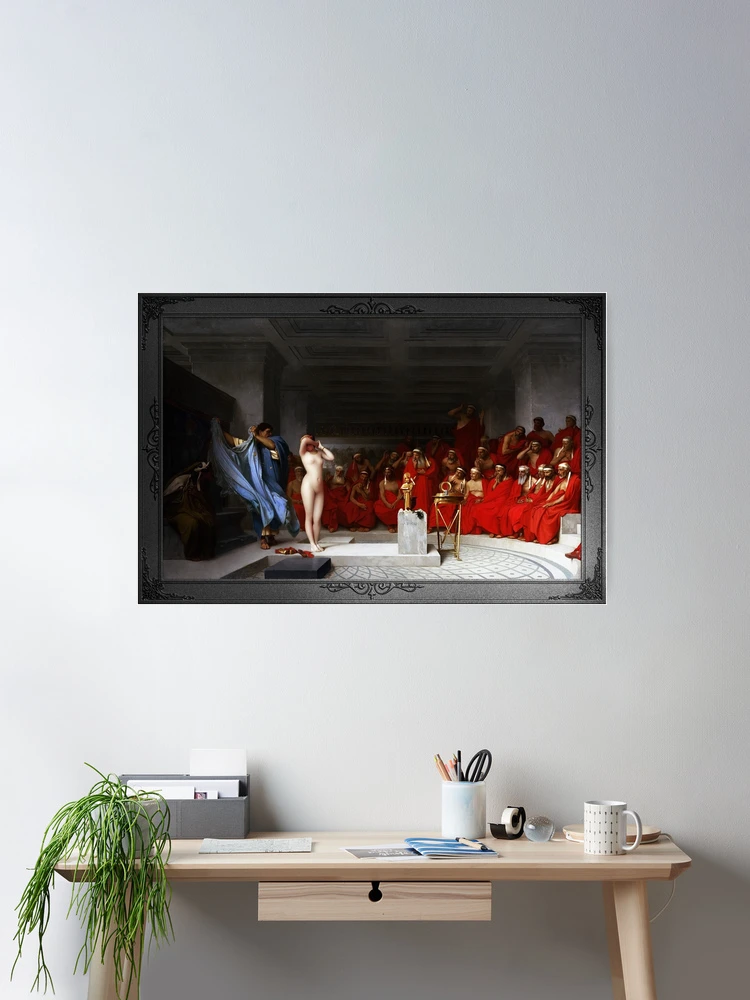
Jean-Leon Gerome"Phryne opgedeckt virum Areopagus,"Gemoolt ronderëm 1861, ass en zwéngend Wierk vun der historescher Genremolerei, déi staark aus der klassescher Antikitéit zitt. Et duerstellt eng dramatesch Szen, déi am antike griichesche juristesche Prozess verwuerzelt ass, speziell de Prozess vu Phryne, e gefeiert Courtesane vun Athen. De Gérôme war bekannt fir seng virsiichteg Opmierksamkeet op Detailer a seng Fäegkeet fir historesch Astellunge mat bemierkenswäerter Genauegkeet nei ze kreéieren, an dëst Stéck illustréiert dës Qualitéiten. D'Bild ass net nëmmen eng Illustratioun vun enger Geschicht; et ass e suergfälteg konstruéierten Tableau entworf fir e Gefill vu Spannung z'erwächen, Erwaardung, an d'Gewiicht vum gesellschaftlechen Uerteel.
Inhaltsverzeechnes
Kompositiounsstruktur & Astellung
D'Kompositioun ass suergfälteg strukturéiert, d'Ae vum Betrachter duerch den entfalen Drama ze guidéieren. D'Szen entwéckelt sech an engem grousse Sall, wahrscheinlech representéiert den Areopagus, den antike Athener Geriicht bekannt fir seng Schwéierkraaft a Wichtegkeet. Architektonesch Elementer dominéieren den Hannergrond: grouss Sailen mat dekoréierten Haaptstied ënnerstëtzen e gekachten Plafong, suggeréiert e Raum vu bedeitende Autoritéit a Permanenz. D'Liicht fléisst vun enger onsichtbarer Quell op der lénker Säit, déi zentral Figuren beliichten wärend laang Schatten werfen, déi de Sënn vum Drama erhéijen. D'Hal ass voll mat Sëtzen Männer, all an ähnlechen Crimson Kleeder gekleet, en dichte Publikum bilden deen d'Prozeduren observéiert. Hir Uniformitéit ënnersträicht hir Roll als kollektiv Riichter, representéiert d'Athenesch Gesellschaft d'Untersuchung.
Phryne: Déi zentral Figur
Am Häerz vun der Zesummesetzung steet Phryne selwer. Si ass plakeg duergestallt, hire Kierper mat anatomescher Präzisioun an enger klassescher Idealiséierung erënnert un déi antik griichesch Skulptur.. Hir Pose ass eng vu Schwachstelle a Beliichtung; si schéngt am Prozess vun disrobing ze sinn, vläicht als Deel vun engem Versuch op juristesch Manöveren oder enger Demonstratioun vun Onschold. Hiren Ausdrock ass schwéier definitiv ze interpretéieren - et kéint Verteidegung suggeréieren, Demissioun, oder souguer en Hiweis vu Melancholie. De Kënschtler vermeit all offensichtlech Emotiounen, amplaz fir eng subtil a behënnert Porträt ze entscheeden, déi d'Zuschauer erlaabt hir eegen Interpretatiounen op hire Charakter ze projizéieren.
Déi juristesch Prozessoren & Ënnerstëtzend Charaktere
Lénks vum Phryne steet e Mann a réimesche Kleedung, wahrscheinlech en Affekot oder juristesche Vertrieder. Hien ass aktiv an der Zeen engagéiert, hält en Drape Stoff zréck wéi wann de Phryne dem Geriicht opgedeckt huet. Seng Haltung proposéiert e Grad vun Autoritéit a Kontroll iwwer déi entfalen Eventer. Weider zréck, Sëtzen Figuren bilden den Areopagus selwer. Hir Gesiichter si gréisstendeels duerch Schied verstoppt an hir Ausdréck si schwéier z'erkennen, zu enger Atmosphär vu Solemnitéit an Onparteilechkeet bäidroen. E klengen Altor oder Sockel steet am Virdergrond, op där eng Bronzestatu steet - méiglecherweis Athena, d'Gëttin vu Wäisheet a Gerechtegkeet, subtly alluding to the divine sanction underpinning Athenian law.
Dem Gérôme seng technesch Fäegkeet & Kënschtleresch Afloss
Gérôme’s mastery of realism is evident throughout the painting. The textures of the fabrics, the smoothness of Phryne’s skin, and the cool marble of the architectural elements are rendered with remarkable fidelity. His use of chiaroscuro – the dramatic contrast between light and shadow – enhances the sense of depth and creates a theatrical atmosphere. The work reflects Gérôme’s deep interest in classical antiquity and his desire to recreate historical scenes with accuracy and authenticity. He was influenced by earlier masters such as Jacques-Louis David, but he developed his own distinctive style characterized by meticulous detail and a focus on narrative clarity. The painting’s composition also draws inspiration from theatrical staging, creating a sense of dramatic tension that engages the viewer directly.
Historesch Kontext & Interpetatioun
The story behind “Phryne Revealed Before the Areopagus” is rooted in ancient Greek history. Phryne was a renowned courtesan known for her beauty and wealth. She was accused of impiety and brought before the Areopagus. According to accounts, she offered a substantial bribe to the court officials, which was then used to fund the construction of a statue of Hermes at the Temple of Ares. The painting captures this moment of legal drama, focusing on the tension between Phryne’s vulnerability and the power of the Athenian court. While Gérôme’s work is based on historical accounts, it also transcends mere illustration; et exploréiert Themen vu Gerechtegkeet, gesellschaftlech Uerteel, an d'Komplexitéite vu mënschleche Bezéiungen an engem spezifesche kulturelle Kontext.
LegMacat & Bedeitung
"Phryne Revealed Before the Areopagus" bleift ee vun de gefeiertste Wierker vum Jean-Léon Gérôme. Et illustréiert seng Fäegkeet als historesche Genremoler a seng Fäegkeet iwwerzeegend narrativ ze kreéieren duerch virsiichteg Detailer an dramatesch Kompositioun. D'Bild gouf fir seng technesch Virtuositéit bewonnert, seng evokativ Atmosphär, a seng Exploratioun vun zäitlosen Themen am Zesummenhang mam Gesetz, Moral, an de mënschlechen Zoustand. Et gëtt weider vu Konschthistoriker studéiert a vun Zuschauer geschätzt fir seng dauerhaft Kraaft an historesch Bedeitung.
Dekorativ Akzenter, déi an dësem Stéck benotzt ginn, sinn verfügbar bei HeritageType
Kënschtler Bio ofgeleet vun Wikipedia.org
Jean-Leon Gerome (11 Mee 1824 - 10 Januar 1904) war e franséische Moler a Sculpteur am Stil, deen haut als Akademie bekannt ass. Seng Biller goufen esou wäit reproduzéiert, datt hien “wuel de bekanntste Liewenskënschtler vun der Welt bis 1880.”[1] D'Gamme vu sengem Oeuvre ëmfaasst historesch Molerei, Griichesch Mythologie, Orientalismus, Portraiten, an aner Sujeten, déi akademesch Molertraditioun op en artistesche Héichpunkt ze bréngen. Hie gëllt als ee vun de wichtegste Moler aus dëser akademescher Period.
An 1840 hien ass op Paräis gaangen, wou hien ënner dem Paul Delaroche studéiert huet, deen hien an Italien begleet huet 1843. Hien huet Florenz besicht, Rom, de Vatikan a Pompeji. Op sengem Retour zu Paräis am 1844, wéi vill Studenten vun Delaroche, hie koum an den Atelier vum Charles Gleyre an huet do eng kuerz Zäit studéiert. Duerno ass hien an der School of Fine Arts gaangen. An 1846 hie probéiert de prestigiéise Prix de Rome anzegoen, awer an der leschter Etapp gescheitert well seng Figur Zeechnen net genuch war.
Säi Molerei The Cock Fight (1846) ass eng akademesch Übung, déi en nackte jonke Mann an eng ganz dënn draperéiert jonk Fra mat zwee Kampfhannen duerstellt, mat der Bucht vun Neapel am Hannergrond. Hien huet dëst Bild an de Salon vu Paräis geschéckt 1847, wou et him eng drëtt Klass Medaille krut. Dëst Wierk gouf als Epitom vun der Neo-Grec Bewegung gesinn, déi aus dem Gleyre sengem Atelier geformt gouf. (dorënner Henri-Pierre Picou a Jean-Louis Hamon), a gouf vum aflossräiche franséische Kritiker Théophile Gautier gekämpft, deem seng Iwwerpréiwung de Gérôme berühmt gemaach huet an seng Carrière effektiv lancéiert huet.
De Gérôme huet säin Dram de Prix de Rome ze gewannen opginn an huet vu sengem plötzlechen Erfolleg profitéiert. Seng Biller The Virgin, d'Kand Jesus an den Hellege John an den Anacreon, De Bacchus an den Eros hunn eng zweetklasseg Medaille am Salon zu Paräis am 20 1848. An 1849, hien huet d'Biller Michelangelo produzéiert (och A sengem Studio genannt) an E Portrait vun enger Dame.
An 1851, hien dekoréiert eng Vase spéider vum Keeser Napoléon III vu Frankräich dem Prënz Albert ugebueden, elo Deel vun der Royal Collection zu St. James's Palace, London. Hien huet griichesch Interieur ausgestallt, Souvenir aus Italien, Bacchus a Léift, Gedronk an 1851; D'Pescht an 1852; an eng Idyll op 1853
An 1852, De Gérôme krut eng Kommissioun fir eng grouss Wandmalerei vun engem allegoresche Sujet vu senger Wiel ze molen. D'Zäitalter vum Augustus, d'Gebuert vu Christus, déi d'Gebuert vu Christus kombinéiere mat eroberten Natiounen, déi dem Augustus Hommage bezuelen, vläicht geduecht war den Napoléon III ze schmaachen, deem seng Regierung d'Mauermalerei bestallt huet a wien als identifizéiert gouf “neien Augustus.
Eng bedeitend Acompte huet de Gérôme erlaabt ze reesen a recherchéieren, éischt an 1853 zu Konstantinopel, zesumme mam Schauspiller Edmond Got, an an 1854 op Griicheland an d'Tierkei an d'Ufer vun der Donau, wou hien op engem Concert vu russesche Zwangsrekrutéierte Musek ënner der Drohung vun engem Wimper dobäi war.
An 1853, De Gérôme ass an d'Teekëscht geplënnert, e Grupp vun Studioen an der Rue Notre-Dame-des-Champs, Paräis. Dëst géif eng Treffpunkt fir Kënschtler ginn, Schrëftsteller an Akteuren, wou den George Sand de Komponisten Hector Berlioz ënnerhalen huet, Johannes Brahms, Gioachino Rossini, Théophile Gautier, Ivan Turgenev.
An 1854, hien huet eng aner wichteg Kommissioun ofgeschloss, Dekoratioun vun der Kapell St. Jerome an der Kierch vu St. Séverin zu Paräis. Seng lescht Kommioun vu St. Jerome an dëser Kapell reflektéiert den Afloss vun der Schoul vun Ingres op seng reliéis Wierker.
Zu der Universalausstellung vum 1855 hien bäigedroen Pifferaro, Schäfer, an d'Zäit vum Augustus, d'Gebuert vu Christus, awer et war dat bescheident Bild Erhuelung an engem russesche Camp deen déi meescht Opmierksamkeet kritt huet ...
Phryne Revealed Before The Areopagus ass eng retouched digital Konscht al Master Reproduktioun vun engem Public Domain Bild.