

Retrato de um Boyarynya
Retrato de um Boyarynya por pintor russo Konstantin Makovsky (1839 – 1915); especializado em pinturas históricas russas que mostram uma visão idealizada da vida russa nos séculos passados.
Este é um belo retrato de um jovem Boyarynya ou Boyarina, que está vestido com trajes folclóricos tradicionais russos da classe nobre da época.
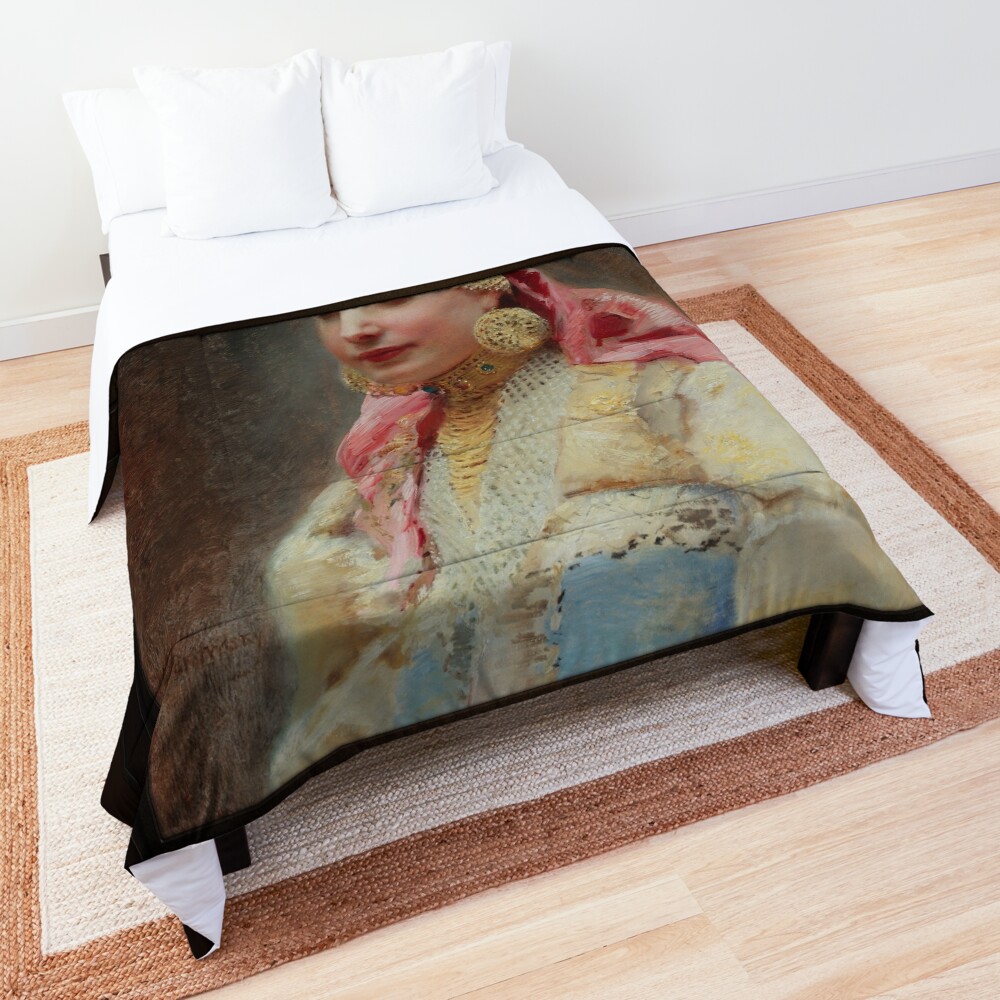
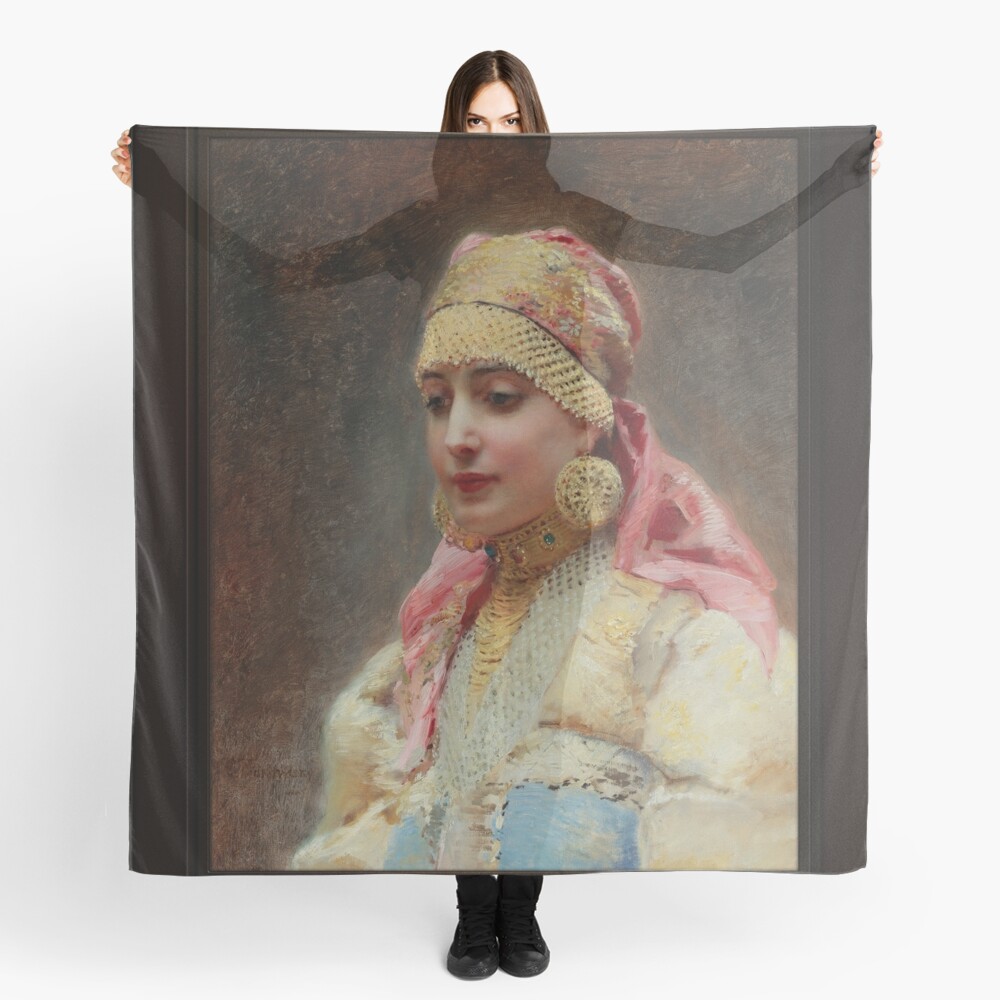
Começando no topo de sua cabeça está um capacete trançado amarelo com pérolas ao longo do perímetro, em cima disso está um lenço rosa e vermelho que cai sobre os ombros e depois uma faixa bege bem larga com detalhes florais que envolve tudo.
Ela está usando um conjunto combinando de grandes brincos redondos trançados amarelos, bem como uma gargantilha tecida e trançada que tem um rubi vermelho em uma peça de ouro colocada na frente central, com duas esmeraldas verdes adicionais em cada lado ajustadas em colocações douradas.
A gargantilha tem então outro elemento tecido de tecido amarelo que desce pelo centro do peito com uma sobreposição trançada branca em cada lado.
O lenço que está em seu ombro direito também tem, uma peça de joia de ouro, e por baixo do tecido trançado branco podemos ver uma blusa branca.
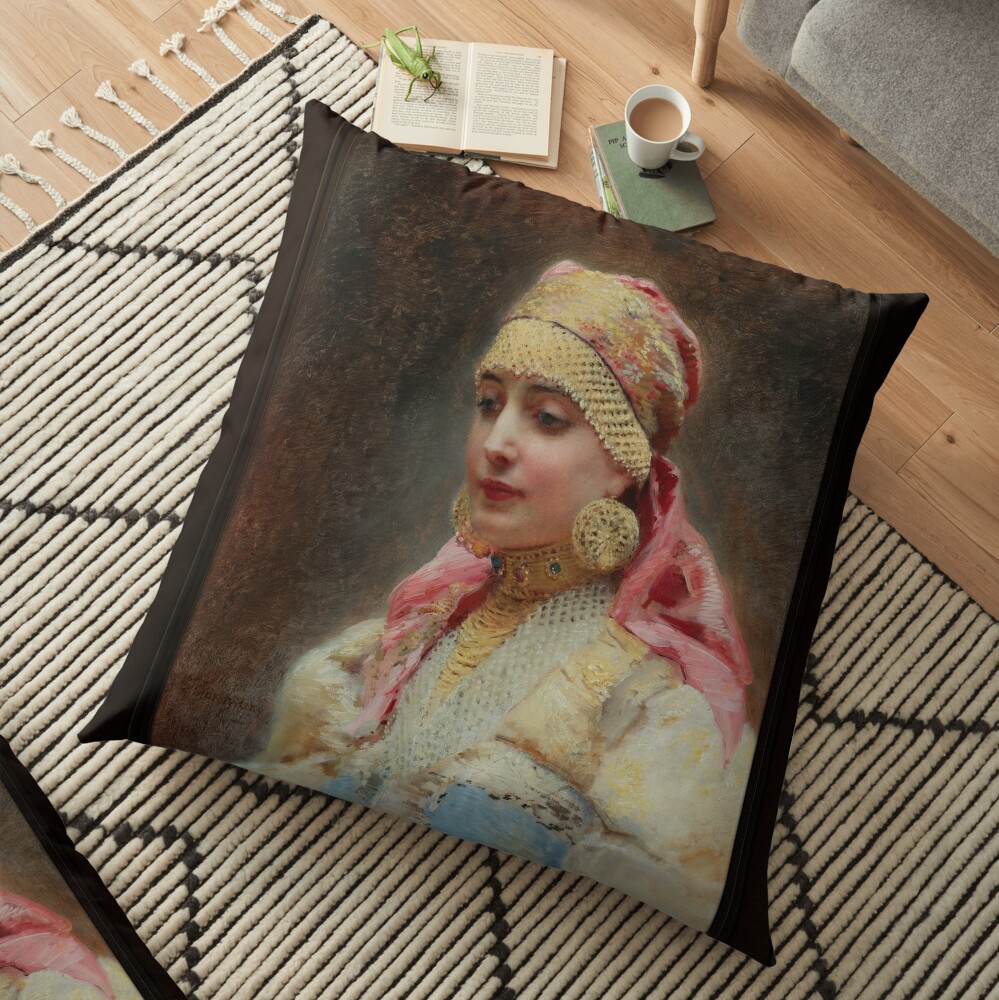
The final piece of clothing that she is wearing is a very thick and plush garment that is blue around her waist area; and yellow what along the sleeves and outer chest portions on either side.
Portrait Of A Boyarynya is a remastered digital art old masters reproduction of a public domain image that is available as a canvas print online.
Informações abaixo derivadas de Wikipédia.org
Konstantin Makovsky was an influential Russian painter, affiliated with the “Peredvizhniki (Wanderers)”. Many of his historical paintings, such as Beneath the Crown (1889) also known as The Russian Bride’s Attire and Before the Wedding, showed an idealized view of Russian life of prior centuries. He is often considered a representative of Academic art.
Konstantin Makovsky was born in Moscow. His father was the Russian art figure and amateur painter, Yegor Ivanovich Makovsky. Sua mãe era compositora, e ela esperava que seu filho um dia seguisse seus passos. Seus irmãos mais novos, Vladimir e Nikolay, e sua irmã Alexandra também se tornaram pintores..
Em 1851 Makovsky ingressou na Escola de Pintura de Moscou, Escultura e Arquitetura onde se tornou o melhor aluno, obtendo facilmente todos os prêmios disponíveis. Seus professores foram Karl Bryullov e Vasily Tropinin. As inclinações de Makovsky ao Romantismo e aos efeitos decorativos podem ser explicadas pela influência de Bryullov.
Embora a arte fosse sua paixão, he also considered what his mother had wanted him to do. He set off to look for composers he could refer to, and first went to France. Before, he had always been a classical music lover, and listened to many pieces. He often wished he could change the tune, or style of some of them to make them more enjoyable. Later in his life it came true.
Em 1858 Makovsky entered the Imperial Academy of Arts in Saint Petersburg. De 1860 he participated in the Academy’s exhibitions with paintings such as Curing of the Blind (1860) and Agents of the False Dmitry kill the son of Boris Godunov (1862). Em 1863 Makovsky e outros treze estudantes protestaram contra a definição de tópicos da mitologia escandinava pela Academia na competição pela Grande Medalha de Ouro da Academia; todos saíram da academia sem diploma formal.
Makovsky became a member of a co-operative (artel) of artists led by Ivan Kramskoi, normalmente produzindo pinturas de Wanderers sobre a vida cotidiana (Viúva 1865, Vendedor de arenque 1867, etc.). De 1870 foi membro fundador da Society for Travelling Art Exhibitions e continuou a trabalhar em pinturas dedicadas à vida quotidiana. Expôs seus trabalhos tanto nas exposições da Academia quanto nas Mostras de Arte Itinerantes dos Andarilhos..
Uma mudança significativa em seu estilo ocorreu depois de viajar para o Egito e a Sérvia em meados da década de 1870.. Seus interesses mudaram dos problemas sociais e psicológicos para os problemas artísticos de cores e formas..
Na década de 1880, ele se tornou um autor da moda de retratos e pinturas históricas.. Na Feira Mundial de 1889 em Paris recebeu a Grande Medalha de Ouro por suas pinturas Morte de Ivan, o Terrível, O Julgamento de Paris, e Demônio e Tamara. He was one of the most highly appreciated and highly paid Russian artists of the time. Muitos críticos democráticos o consideraram um renegado dos Wanderers’ ideais, produzindo (como Henryk Siemiradzki) obras marcantes, mas superficiais, enquanto outros o veem como um precursor do impressionismo russo.
Makovsky foi morto em 1915 quando sua carruagem foi atropelada por um bonde elétrico em São Petersburgo.