

女性の肖像
Franz Xaver Winterhalter’s 女性の肖像 (NS. 1850NS) stands as a quintessential representation of mid-19th-century European portraiture. Winterhalter (1805 – 1873), a German artist renowned for his highly polished, elegant works; and older brother of German painter Hermann Fidel Winterhalter (1808 – 1891), often painted the aristocracy and elite of Europe, capturing them in ways that highlighted both their opulence and refinement.
この肖像画, an example of his mastery, features a lady in a delicate pose, her somber yet poised expression framed by the soft, almost ethereal quality of her attire and the setting. アーティストの細部へのこだわり, and his ability to create lifelike textures and warm tones, bring the subject to life with remarkable realism and grace.
目次
主題と構成
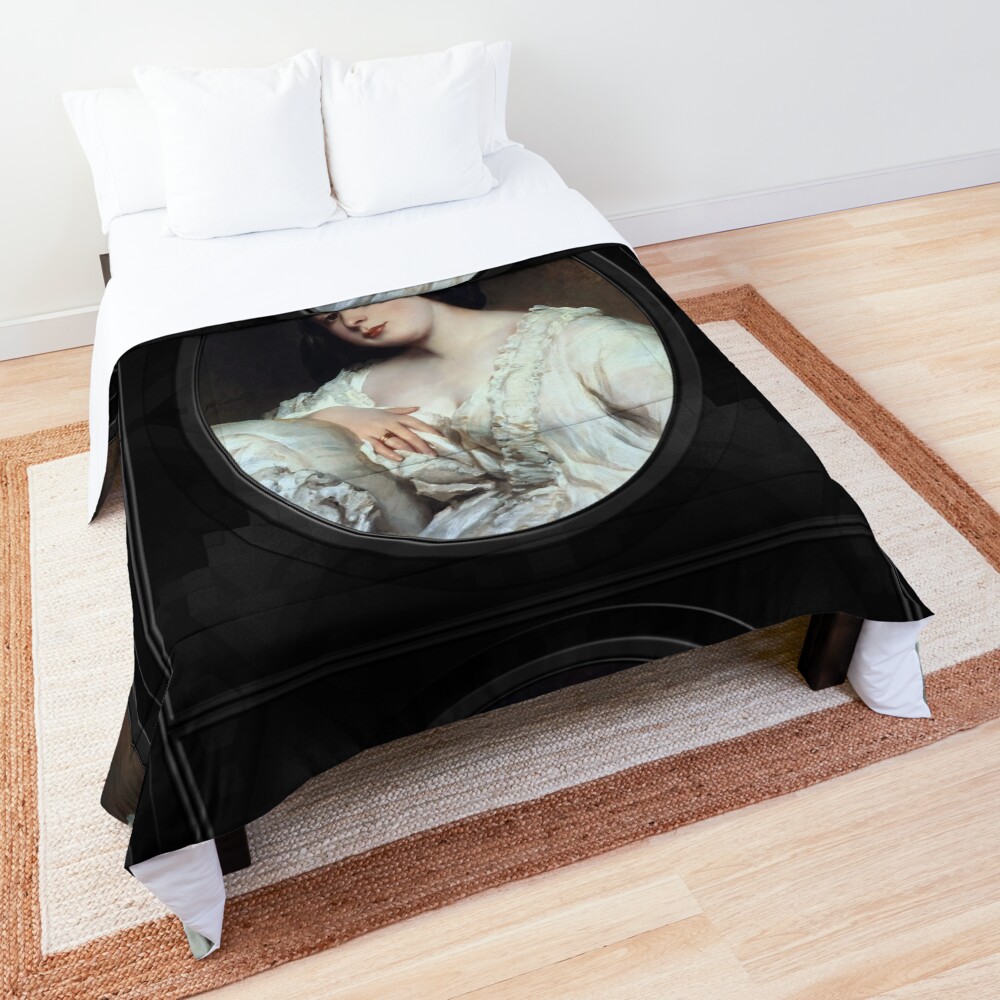
The portrait is a close-up of a young lady, likely from the European upper classes, given the sophistication and quality of her attire. 彼女の白いガウン, characterized by soft ruffles and intricate folds, drapes gently across her shoulders and chest, creating a sense of movement and grace.
Her calm yet enigmatic expression is the focal point of the piece, drawing the viewer’s attention to her delicate features. The lady’s dark hair, parted in the center and styled in a smooth, controlled manner, contrasts beautifully with the light fabric of her dress, enhancing the overall balance of light and dark within the composition.
Her hand rests lightly on her lap, fingers elegantly spread, with a ring visible on her left hand, signifying her status and perhaps an important relationship or heritage. The subtle gesture adds an air of refinement and nobility to the scene, encapsulating the dignity of the subject. Winterhalter captures the soft textures of her skin and the luminosity of her skin tone with the same reverence that he bestows upon the fabric of her gown. This is a hallmark of his style, an obsession with texture that enhances the lifelike quality of the subjects he painted.
素材と技法
Winterhalter worked with oils, employing a layered technique that allowed him to achieve remarkable depth and nuance in his colors. ソフト, almost translucent nature of the lady’s white dress suggests Winterhalter’s ability to master the subtleties of fabric, creating lifelike textures that capture the way light interacts with different materials. The texture of her skin, delicate and luminous, is painted with equal precision, as is the smoothness of her black hair, which appears to shimmer under the light.
The use of shadows in the portrait is also striking. Winterhalter’s mastery of chiaroscuro, where light and dark are carefully balanced, gives the painting a sense of three-dimensionality, making the subject appear as though she could step off the canvas. 背景はそっとぼやけています, with dark, muted tones that help the figure stand out sharply. このテクニック, which blurs the boundary between figure and ground, is characteristic of the artist’s work and helps the viewer focus entirely on the subject, free from distraction.
テーマと雰囲気
The overall theme of this portrait can be understood as one of quiet elegance, ここで美しさ, nobility, and refinement are represented not through grand gestures but through subtlety and restraint. The lady in the portrait, while dressed in a lavish gown, does not express exuberance or overt joy. その代わり, there is an air of quiet contemplation or perhaps melancholy. Her serious expression suggests introspection, possibly hinting at the societal pressures or expectations placed upon women of her class during the time.
The mood of the painting is serene and dignified. The muted color palette, with its emphasis on soft whites, 黒人, and warm browns, evokes a sense of tranquility, while the lady’s composed demeanor adds a layer of solemnity. 彼女の視線, directed slightly to the left, seems contemplative, as though she is lost in thought, or perhaps pondering something beyond the viewer’s reach. This gives the portrait an almost timeless quality, as though it captures a fleeting moment in the life of the subject, one that is both personal and universally relatable.
The Style of Winterhalter
Franz Xaver Winterhalter was known for his refined, flattering portraits of aristocrats and royalty. His style blends elements of both academic realism and romanticism, capturing the likeness of the subject with precision while also idealizing their form.
ソフト, smooth lines, glowing flesh tones, and harmonious composition suggest an aesthetic ideal that was highly popular during the mid-19th century, especially in the courtly circles Winterhalter often painted for. While his subjects are rendered realistically, there is an element of stylization in the way he emphasizes elegance and poise, presenting his sitters as paragons of beauty and grace.
The soft focus of the background, with minimal detail, allows the subject to be the central focus of the composition. このテクニック, paired with Winterhalter’s skill in capturing human emotion and character, made his portraits highly sought after by royal families and aristocrats.
The portrait’s atmosphere, combined with the artist’s characteristic style, speaks to the social and cultural values of the time: the ideal of refined beauty, the status of the subject, and the artist’s desire to create a lasting, timeless image of aristocratic life.
結論
女性の肖像 by Franz Xaver Winterhalter remains an exemplary piece of 19th-century portraiture. With its exquisite detailing, careful attention to the subject’s demeanor, and the subtle interplay of light and shadow, the work embodies the grace and sophistication that Winterhalter was known for.
The painting captures not only the physical likeness of the subject but also evokes the mood and atmosphere of the time, one of poised elegance and quiet introspection. Winterhalter’s ability to depict the subject’s character, through both the delicate textures of her attire and the nuanced expression on her face, makes this painting a lasting testament to the high art of portraiture during the Victorian era.
レディの肖像画は、パブリック ドメインの画像の修正されたデジタル アートの古い巨匠の複製です。.
アーティストバイオから Wikipedia.org
Franz Xaver WinterhalterはMenzenschwandの小さな村で生まれました, (RenouarddeBussière夫人の肖像), ドイツのシュヴァルツヴァルトで[1] バーデン選挙区で, オン 20 4月 1805.[2] 彼はフィデル・ウィンターハルターの6番目の子供でした (1773–1863年), 彼はフィデルウィンターハルターの7番目の子供でした, 彼はフィデルウィンターハルターの7番目の子供でした (1765–1838年), 彼はフィデルウィンターハルターの7番目の子供でした.
彼の父は農民の家系であり、彼の人生に大きな影響を与えました. 彼はフィデルウィンターハルターの7番目の子供でした, 彼はフィデルウィンターハルターの7番目の子供でした. フランツ・クサーバーは生涯を通じて家族と非常に親密でした, 特に兄のヘルマンに (1808–1891), 画家でもあった.
セントのベネディクト修道院で学校に通った後. 泡, ウィンターハルターはメンゼンシュヴァントを去った 1818 歳の時に 13 ドローイングと彫刻を勉強する. 彼はカール・ルートヴィヒ・シュラーの工房で製図技師および石版画家として訓練を受けました (1785–1852年) フライブルクイムブライスガウで. に 1823, 歳の時に 18, 彼はミュンヘンに行きました, 実業家のバロン・フォン・アイヒタルが後援 (1775–1850).
に 1825, 彼はルートヴィヒ1世から奨学金を与えられました, バーデン大公国 (1763–1830) ペーター・フォン・コルネリウスと一緒にミュンヘンの芸術アカデミーで研究コースを始めました (1783–1867年), その学術的方法が彼を不快にさせた. Winterhalterは、ファッショナブルな肖像画家のヨーゼフカールスティーラーにもっと気の合うメンターを見つけました (1781–1858年). この間, 彼はリトグラファーとしての仕事を支えた.
ウィンターハルターが法廷サークルに入ったとき 1828 彼はバーデンのソフィー・マーグラヴィーンの画伯になりました, カールスルーエで。[6] 南ドイツを超えて地位を確立する彼の機会がやってきた 1832 彼がイタリアに旅行できたとき, 1833–1834年, バーデン大公レオポルドの支援を得て. ローマでは、ルイ・レオポルド・ロベールのようにロマンティックなジャンルのシーンを構成し、フランス・アカデミーのディレクターのサークルに参加しました。, ホレス・ベルネ. カールスルーエに戻ると、バーデン大公レオポルトとその妻の肖像画を描いた。, そして大公宮廷の画家に任命された.
それにもかかわらず, 彼はフランスに引っ越すためにバーデンを離れた, 彼のイタリアン ジャンル シーン Il dolce Farniente がサロンで注目を集めた場所 1836. 1年後のイル・デカメロンも絶賛; 両方の絵はラファエロのスタイルのアカデミックな構成です. のサロンでは 1838 彼はワグラム王子と幼い娘の肖像画を展示した. 肖像画家としての彼のキャリアは、同じ年にオルレアンのルイーズ マリーを描いたときにすぐに確保されました。, ベルギーの女王, と彼女の息子. ウィンターハルターが両シチリアのマリア・アマリアに気づいたのは、おそらくこの絵を通してでした。, フランスの女王, ベルギー女王の母.