

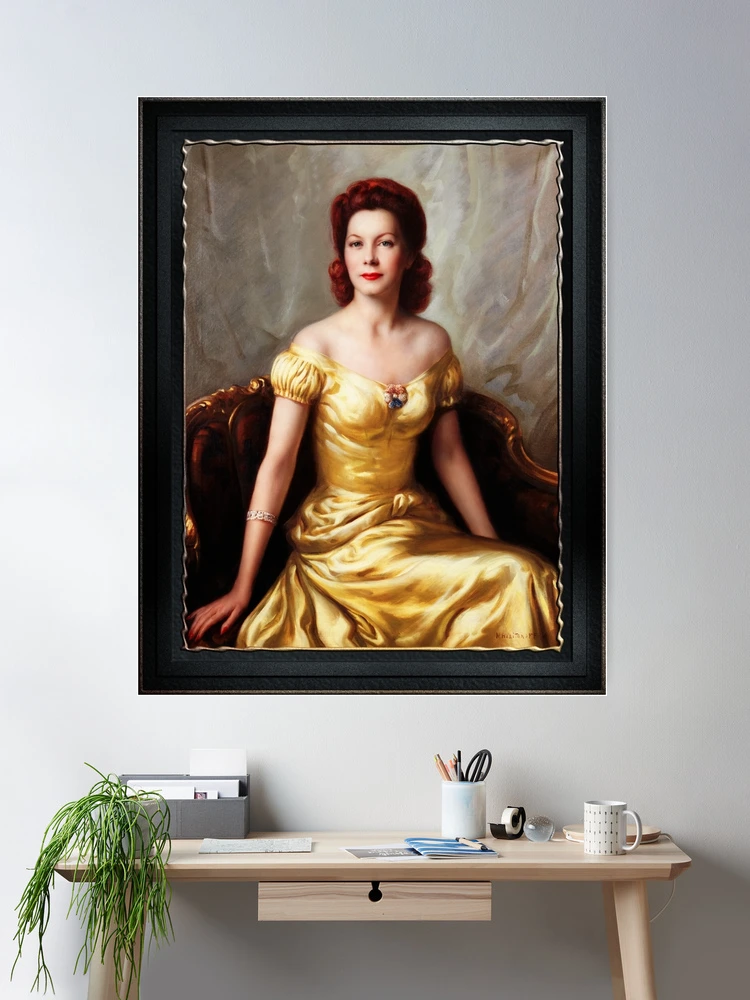
Dealbh de bhean-uasal c1941
Dòigh-obrach stoidhle agus ealanta
An dealbh “Dealbh de bhean-uasal” bho 1941 leis an neach-ealain Ruiseanach Nikolai Vasilievich Kharitonov (1880 – 1944), ris an canar cuideachd Nicholas Basil-Haritonoff, tha e na dheagh eisimpleir de dhealbhan clasaigeach air a chuir gu bàs le fìor chruinneas. Bidh an neach-ealain a’ measgachadh eileamaidean de fhìor-eòlas le mothachadh romansach nas buige, a' glacadh an fhear-suidhe ann am mionaid de ghràs urramach.
Am bog, cumadh socair air aghaidh na mnà, ri taobh aodach inneach a ghùn, a’ nochdadh tuigse dhomhainn Kharitonov air faireachdainn daonna agus an eadar-chluiche eadar solas agus faileas. Tha an dòigh-obrach aige a’ nochdadh gu faiceallach a dh’aona ghnothach, bho na h-ìrean datha seòlta air a h-iom-fhillteachd gu riochdachadh fìnealta a lus, gruag ruadh.
Tha an stoidhle a’ cumail ri traidisean dhealbhan bhon 19mh linn a tha a’ cur cuideam air caractar agus pearsantachd an neach-suidhe.. Tha obair bhruis mionaideach ach siùbhlach Kharitonov a’ nochdadh an urram domhainn a th’ aige do chruthan ealain clasaigeach, agus e cuideachd a’ toirt a-steach na suathaidhean nas buige aige fhèin gus fear ùr a chruthachadh, eireachdas an latha an-diugh anns an dealbh. Tha am pìos a’ toirt cuireadh do luchd-amhairc a dhol an sàs gu domhainn an dà chuid ann an saoghal a-staigh agus a-muigh an neach-suidhe, air a thaisbeanadh tro bhith a’ cleachdadh inneach luminous agus dubhar adhartach.
Clàr-innse
An cuspair agus an sgrìobhadh
Aig cridhe na h-sgrìobhaidh tha a' bhean-uasal fhèin, suidhe le sith rìoghail. A gùn bog buidhe, le muinchill fìnealta puff, tha e na mheadhan fòcas iongantach, agus tha e coltach gu bheil an inneach beairteach aice a’ sruthadh gu nàdarra le cumaidhean a bodhaig. Tha aodach sòghail an dreasa air a thoirt seachad le aire iongantach gu mion-fhiosrachadh, a' glacadh dealbh-chluiche an t-solais air uachdar an t-satain. An gùn, samhla air sòghalachd agus grinneas, chan e a-mhàin gu bheil e ag àrdachadh inbhe uasal an neach-suidhe ach cuideachd a’ cur faireachdainn de bhòidhchead gun ùine ris an dealbh.
A falt, dubhar domhainn dearg, air a stialladh ann an tonnan bog a tha a’ frèamadh a h-aodann agus a’ sgaoileadh gu socair thairis air a guailnean. Bidh na curls air am peantadh gu faiceallach a’ cur sreath de iom-fhillteachd ri a pearsantachd, a’ moladh faireachdainn de bhòidhchead agus suidheachadh air a dheagh chumail suas, a' moladh boireannach le misneachd agus gràs. Tha Kharitonov air roghnachadh fòcas a chuir air aodann na boireannaich, le glè bheag de bhuaireadh air a’ chùl, a’ leigeil leis an neach-coimhead a bhith air a ghabhail a-steach gu h-iomlan na faireachdainn agus na h-aodach a th’ aice.
Palette dath agus stuthan
The artist employs a refined color palette, utilizing warm hues of golden yellow, soft browns, and cream to emphasize both the fabric of the gown and the warmth of the lady’s complexion. The palette of gold and yellow in the dress suggests the affluence and sophistication of the subject.
The soft background tones of beige and gray further enhance the lady’s presence, enveloping her in a light, airy atmosphere. The highlights on her face and shoulders are painted with a luminous quality that lends her a gentle, làthaireachd ethereal, almost as though she is illuminated by an inner light. The subtlety of the color transitions, from the darker tones of the folds of her gown to the lighter highlights around her face, speaks to Kharitonov’s expertise in rendering three-dimensionality on a flat canvas.
Kharitonov’s careful use of these colors suggests a careful mastery of oil paint, as the artist has used the medium’s natural properties to create a glowing, almost tactile effect. The intricate shading of the lady’s skin, the softness of the light falling across her features, and the smoothness of the fabric showcase his understanding of texture and depth. Each brushstroke, each layer of paint, builds upon the last to evoke a sense of living, breathing realism.
Mìneachadh agus Mood
The mood of the portrait is one of quiet elegance and serene dignity. The lady’s expression is calm, air a dhèanamh, and slightly reserved, with her lips held in a soft, almost imperceptible smile. Beag seo, controlled expression suggests an air of mystery and contemplation, inviting the viewer to delve into the inner world of the subject. An suidheachadh aice, sitting upright with her hand gently resting on the arm of her chair, reinforces the idea of a woman of noble demeanor and inner strength.
There is an unspoken sense of poise that emanates from the sitter, and Kharitonov’s subtle choices in depicting her facial features—her clear eyes, the soft curve of her cheekbones, agus rèidh a craiceann, add to the portrait’s aura of grace. The overall mood is one of quiet refinement, and it evokes a sense of nostalgia for a bygone era of sophistication.
Co-theacs Eachdraidheil agus Buaidh Neach-ealain
Created during the early 1940s, a time when Russia was embroiled in the Second World War, this portrait seems to stand in stark contrast to the harsh realities of the world. Yet it reflects the enduring resilience of culture, ealain, and beauty amid turmoil. The fashion in the portrait, with its opulent detailing, is reminiscent of the styles popular in the late 19th and early 20th centuries, creating a sense of continuity in Russian portraiture.
Nikolai Vasilievich Kharitonov, like many of his contemporaries, embraced the stylistic principles of the Russian Academy of Arts, grounded in classical traditions. This approach, ge-tà, was infused with his unique sensitivity to light, inneach, agus an dealbh fìnealta de fhaireachdainn daonna. His legacy as an artist who deftly merged classical realism with a more contemporary approach to portraiture ensures that works like “Dealbh de bhean-uasal” endure as iconic representations of Russian elegance.
Prìomh eileamaidean
- The Lady: Am prìomh fhigear, poised and graceful, embodies both physical and emotional refinement.
- Gown: The rich golden yellow dress, carefully detailed, becomes a symbol of both opulence and quiet dignity.
- Red Hair: The lady’s red hair, air a stialladh ann an tonnan bog, adds a layer of depth to her personality.
- Briseadh: Her gentle, reserved smile hints at a thoughtful and introspective character.
- Cumadh: The simplicity of the composition, with a minimalistic background, draws the viewer’s attention entirely to the subject.
- Solais: The light play across her skin and gown is rendered with an ethereal quality that enhances her presence.
- Cùl-fhiosrachadh: The muted beige and gray tones in the background allow the lady’s figure to dominate the space, highlighting her significance.
- Obair-bhruis: The soft blending of colors and brushstrokes suggests Kharitonov’s skill in creating lifelike textures.
- Mood: A serene, dignified mood pervades the portrait, evoking both admiration and curiosity.
- Co-theacs Eachdraidheil: Created during the turmoil of the Second World War, the painting represents a moment of stillness amidst the chaos.
- Palet dath: Soft tones of gold, buidhe, and cream contrast with the deeper reds of the lady’s hair.
- Stuth: The smooth rendering of skin and fabric suggests Kharitonov’s mastery of oil painting.
- Simplicity: The lack of complex elements in the background creates a quiet, reflective atmosphere.
- Soft Focus: The softening of features and use of light gives the painting a slightly dreamlike quality.
Tha Portrait Of A Lady na ath-riochdachadh seann mhaighstirean ealain didseatach de ìomhaigh raon poblach.
Le cead neach-ealain RA Gallery – Ealain Fhìnealta Ruiseanach is Eadar-nàiseanta
Nikolai Kharitonov (Nicholas Basil Haritonoff) was a prominent Russian painter of the Academic School, consider to be a brilliant portraitist and a master of the landscape genre. He was also a pupil of I. E. Repin, who used to combine Realism and Impressionistic tendencies in his artwork as well.
Nikolai Kharitonov was born on December 9, 1880, into a simple peasant family in the village of Plishkino (located in the Dubrovskoye Rural Settlement, Yelovsky District, Perm Krai, An Ruis), which no longer exists.
After graduating from rural school, at the age of twelve, Kharitonov went to his live with his relatives in St. Petersburg, and there obtained a job in the paper shop, agus, later, worked in a workshop that specialized in the production of signboards for stores.
Nikolai Vasilyevich then began his artistic education and career in a rather peculiar way. Mun cuairt 1895 he went to the island of Valaam, where he became an apprentice in the Spaso-Preobrazhensky monastery; while there he spent most of his time painting icons and religious images for two years; scrupulously studying this ancient painting skills of the monks.
On his return to St. Petersburg, Kharitonov then began attending classes at the Drawing School of the Imperial Society for the Encouragement of the Arts and started developing his proficiency in drawing in a private art studio of a talented academic painter and etcher, L. E. Dmitriev-Kavkazsky.
Ann an 1901, Nikolai Vasilievich joined the Painting Department at the Higher Art School at the Academy of Arts, and a year later began training in the studio of the famous and outstanding artist – I.. E. Repin.