

Dealbh de Bhean Uasal ann an Dubh
Dealbh de Bhean Uasal ann an Dubh le peantair Gearmailteach Franz Xaver Winterhalter (1805 – 1873); ainmeil airson a dhealbhan de rìoghalachd meadhan na naoidheamh linn deug agus bràthair nas sine don pheantair Gearmailteach Hermann Fidel Winterhalter (1808 – 1891).
Seo dealbh eireachdail de fhitheach òg tarraingeach le falt ruadh na sheasamh an aghaidh speur gorm le sgòthan geala; agus earrann do chraoibh air a taobh chli.
Tha i na seasamh ri taobh pedestal mòr ceàrnagach air a bheil urn mòr air, tha sin air a sgeadachadh le làmhan snaidhte air a bheil paidhir aodann fireann orra.
Tha dreasa làn dhubh air a ghualainn le sleagh fhada agus lùban caol-dùirn air a’ bhoireannach òg.
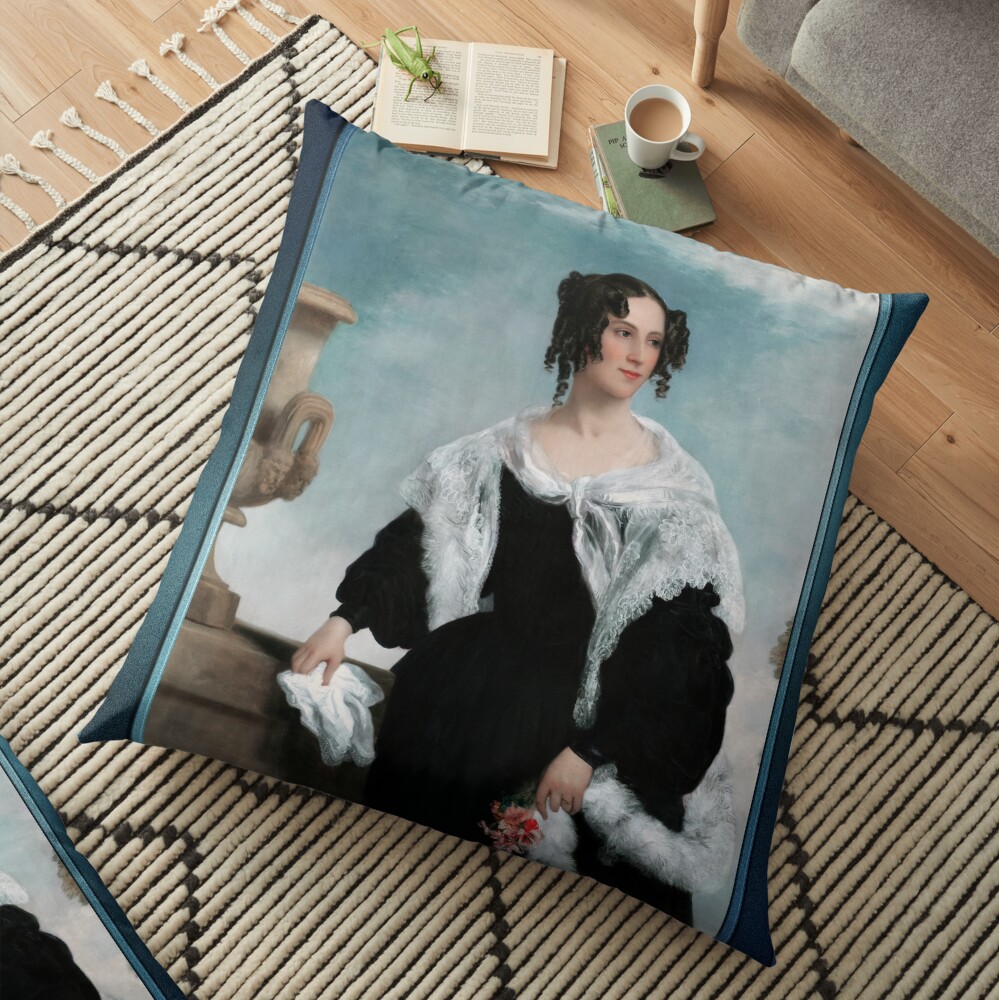
Anns an làimh dheis aice a tha na laighe air a’ bhonn tha neapraigear sìoda geal le obair-ghrèis; fhad ‘s a tha i na làimh chlì tha i a’ cumail fhlùraichean ri taobh gasan còmhla ri tiùb bian a tha a ’cuairteachadh timcheall a druim agus a gàirdean deas, air a chòmhdach leis an sgarfa grèise aice a tha na laighe air a guailnean agus ceangailte ris an aghaidh.
Tha Portrait Of A Lady In Black na ath-riochdachadh seann mhaighstirean ealain didseatach de ìomhaigh raon poblach as urrainn dhut a cheannach mar clò-bhualadh canabhas.
Fiosrachadh gu h-ìosal a thàinig bho Wikipedia.org
Rugadh Franz Xaver Winterhalter ann am baile beag Menzenschwand, (a-nis na phàirt de Sankt Blasien), ann an Coille Dhubh na Gearmailt ann an Luchd-bhòtaidh Baden, air a' Ghiblean 20, 1805.
B’ esan an siathamh leanabh aig Fidel Winterhalter (1773 – 1863), tuathanach agus riochdaire roisinn anns a’ bhaile, agus a bhean Eva Meyer (1765 – 1838), na bhall de theaghlach Menzenschwand a bha stèidhichte o chionn fhada.
Bha athair de luchd-tuatha agus bha buaidh chumhachdach aige na bheatha. De na h-ochdnar bhràithrean is pheathraichean, cha mhair ach ceathrar 'nan leanabachd.
Fad a bheatha dh ’fhan Franz Xaver gu math faisg air a theaghlach, gu sònraichte dha bhràthair Hermann (1808 – 1891), a bha cuideachd na pheantair.
Às deidh dha a dhol dhan sgoil aig manachainn Bhenedictine ann an St.. Blasien, Dh ’fhàg Winterhalter Menzenschwand a-steach 1818 aig aois 13 sgrùdadh a dhèanamh air dealbh agus gràbhaladh.
Rinn e trèanadh mar neach-dealbhaidh agus lithographer ann am bùth-obrach Karl Ludwig Schüler (1785 – 1852) ann am Freiburg im Breisgau. Ann an 1823, aig aois 18, chaidh e gu Munich, le taic bhon neach-gnìomhachais Baron von Eichtal (1775 – 1850).
Ann an 1825, chaidh stìpean a thoirt dha le Ludwig I., Grand Duke of Baden (1763 – 1830) agus thòisich e air cùrsa sgrùdaidh aig Acadamaidh nan Ealan ann am Munich còmhla ri Peter von Cornelius (1783 – 1867), bha na dòighean acadaimigeach aige ga fhàgail mì-chofhurtail.
Lorg Winterhalter comhairliche nas congenial anns an dealbhadair fasanta Eòsaph Karl Stieler (1781 – 1858). Rè na h-ùine seo, thug e taic dha fhèin ag obair mar lithographer.
Chaidh Winterhalter a-steach do chearcaill cùirte nuair a bha e a-staigh 1828 thàinig e gu bhith na mhaighstir dealbhaidh gu Sophie Margravine à Baden, aig Karlsruhe.
Thàinig an cothrom aige e fhèin a stèidheachadh taobh a-muigh ceann a deas na Gearmailt 1832 nuair a bha e comasach dha siubhal dhan Eadailt, le taic bho Grand Duke Leopold à Baden.
Anns an Ròimh rinn e seallaidhean gnè romansach ann an dòigh Louis Léopold Robert agus cheangail e e fhèin ri cearcall stiùiriche Acadamaidh na Frainge, Horace Vernet.
Nuair a thill e gu Karlsruhe, pheant e dealbhan de Grand Duke Leopold à Baden agus a bhean, agus chaidh ainmeachadh mar pheantair don chùirt grand-ducal.
A dh'aindeoin sin, dh' fhag e Baden agus ghluais e do'n Fhraing, far an do tharraing an sealladh gnè Eadailteach Il dolce Farniente fios aig Salon of 1836, agus bliadhna an dèidh sin choisinn e moladh airson a dhealbh Il Decameron; tha an dà dhealbh seo nan sgrìobhaidhean acadaimigeach ann an stoidhle Raphael.
Ann an Salon of 1838 sheall e dealbh de Phrionnsa Wagram còmhla ri a nighean òg; agus goirid às a dhèidh sin chaidh a dhreuchd mar pheantair dhealbhan a dhèanamh tèarainte, nuair anns an aon bhliadhna a pheant e Louise Marie à Orleans, Banrigh na Beilge, agus a mac.
Is dòcha gur ann tron dealbh seo a thàinig Winterhalter gu aire Maria Amalia às an Dà Sicilies, Banrigh na Frainge, màthair Banrigh na Beilge.