

Portrait Of A Woman c1660
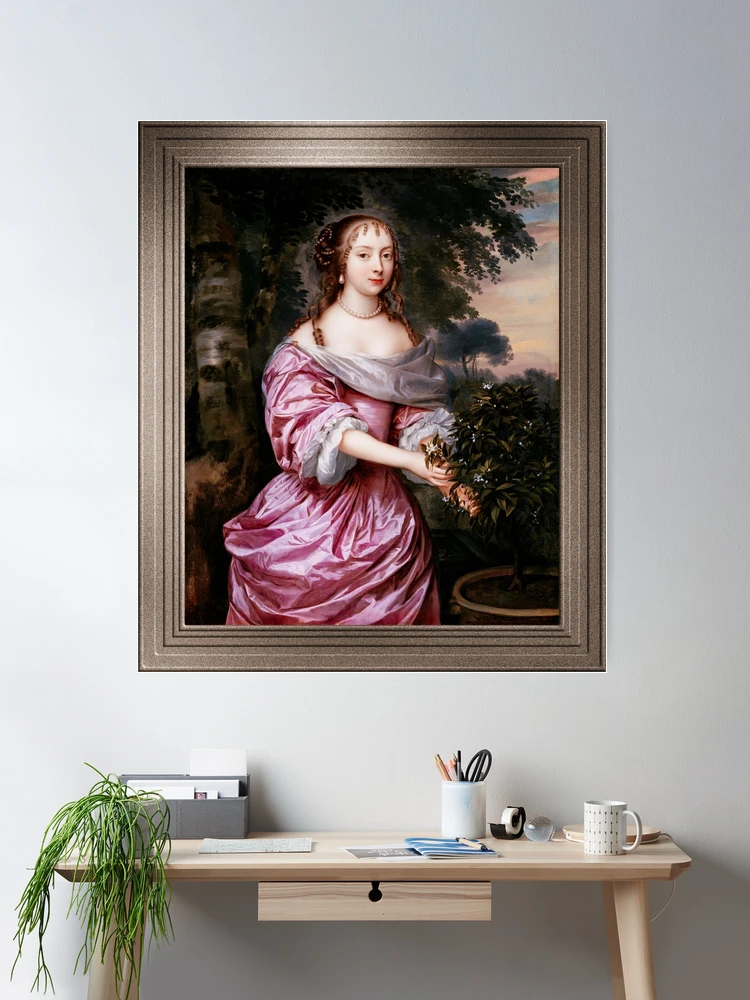
An phéintéireacht dar teideal “Portrait of a Woman c1660,” created by the Dutch artist Jan Mytens (1614-1670), is an exquisite representation of 17th-century portraiture during the Dutch Golden Age. In this captivating piece, Mytens expertly captures both the elegance and beauty of his subject while also revealing his skillful use of oil painting techniques. The portrait exudes a sense of aristocratic grace and offers insight into the cultural and social norms of the time, particularly in its depiction of fashion, compositional elements, and the subject’s role in the society of the period.
Clár na nÁbhar
The Subject of the Portrait
The central figure of the painting is a portráid de bhean óg whose identity remains unknown, yet she embodies the ideal of feminine beauty in Dutch aristocracy during the 17th century. The woman is portrayed in an outdoor setting, standing slightly to the left, her body turned in a graceful posture.
She is dressed in a luxurious gown made from soft, fabraic ag sileadh, predominantly pink and accented with a silvery-grayish drapery across her shoulders and chest. The intricate folds of the dress are rendered with a sense of realism, as they cascade down her body in an almost lifelike manner. The texture of the fabric, especially the smooth, shiny texture of the silken material, highlights Mytens’ exceptional attention to detail.
Tá gruaig na mná stílithe go bog, elaborate curls that frame her face and fall down her back. She wears a delicate pearl necklace around her neck, which serves to emphasize her aristocratic status. Her expression is poised, with her soft gaze directed slightly to the side, as if lost in thought or engaged in a distant contemplation. This calm, serene demeanor speaks to the gentle nature attributed to women of high society during this period, portraying an air of refinement and grace.
An Socrú agus Cúlra
The background of the portrait is equally significant, providing context to the subject’s standing within society. Taobh thiar den bhean, one can observe a lush, verdant garden, with trees and shrubs carefully arranged to create a sense of depth and tranquility. The foliage, dark and rich, stands in stark contrast to the soft, light hues of the woman’s dress, which allows her to stand out as the focal point of the painting. The sky in the background is painted in subtle tones of light blue and peach, ag moladh an t-am den lá mar tráthnóna déanach nó go luath tráthnóna, amhail is dá mbeadh an radharc gafa in uaireanta ciúine lá samhraidh.
Tá brí siombalach ag suíomh an ghairdín freisin. Is minic a bhain gairdíní leis an smaoineamh Paradise, spás de áilleacht agus serenity saothraithe. Sa chomhthéacs seo, ní hamháin go n-aibhsíonn an gairdín seasamh sóisialta ardaithe an ábhair ach feidhmíonn sé freisin mar mheafar dá háilleacht shaothraithe agus dá mionchoigeartú féin. Cuireann an glasúlacht lustach atá thart uirthi béim bhreise ar an gceangal atá aici leis an dúlra agus ar idéil chlasaiceacha na háilleachta a raibh ardmheas orthu le linn Ré Órga na hÍsiltíre..
The Mood and Atmosphere
Is é giúmar iomlán na portráide ná suaimhneas agus uaisleacht. Bog an soilsiú, léiriú suaimhneach an ábhair, and the harmonious blending of colors in the background evoke a sense of peace and tranquility. There is a sense of intimacy between the subject and the viewer, as if the woman is offering a quiet invitation into her world of high society. The balance between the luxurious fabrics of her dress and the natural elements in the background reflects a perfect union between nature and civilization, echoing the cultural ideals of the time.
The lighting in the painting is soft and diffused, with light seeming to come from the left side of the canvas. This gentle illumination casts subtle shadows across the folds of her dress, accentuating the texture and movement of the fabric. The play of light and shadow also serves to bring out the fine details in the face, gruaig, and hands, ag cur braistint tríthoiseach leis an bportráid.
An Stíl agus an Teicníc Ealaíne
Portráidí ardoilte a bhí i Jan Mytens a rinne sainfheidhmiú ar ghabháil na n-uaisle agus na mionlach i sochaí na hÍsiltíre le linn na Ré Órga.. Tá fócas ar réalachas mar thréithe ag a stíl, aird ar mhionsonraí, agus úsáid shármhaith as an tsolais agus as an scáth. Sa phortráid seo, Léiríonn Mytens a chumas gnéithe an ábhair a sholáthar le cruinneas agus le cruinneas, agus fós ag ligean do mhothú galántachta agus idéalachais.
Tá úsáid dathanna thar a bheith buailte sa phictiúr seo. Tá codarsnacht álainn idir na bándearga boga agus na hairgeadaí i bhfeisteas na mná agus glasaigh dhomhain agus toin chré an ghairdín taobh thiar di.. Cruthaíonn an meascán seo de dathanna te agus fionnuar comhchuibheas taitneamhach amhairc, drawing the viewer’s eye towards the subject while also providing a rich, detailed backdrop.
The texture of the painting is also noteworthy. The artist’s brushwork is delicate and refined, particularly in the depiction of the woman’s skin, which appears smooth and luminous. The fabric of her dress is rendered with meticulous attention, showing the movement and flow of the material as it interacts with light. Mytens’ use of oil paints allows him to create layers of depth and richness, giving the portrait a lifelike quality.
Conclúid
I “Portrait of a Woman c1660,” Jan Mytens captures not only the physical appearance of his subject but also the essence of her social standing, áilleacht, agus grásta. Through his skillful technique and meticulous attention to detail, Mytens creates a timeless image that reflects the values of the Dutch Golden Age. The combination of realism, idéalachas, and symbolic elements in the composition make this painting a stunning example of 17th-century Dutch portraiture.
Portrait Of A Woman is a retouched digital art old masters reproduction of a public domain image.
Ealaíontóir Bio cúirtéise Getty.edu agus Wikipedia.org
The son of a saddlemaker, Jan Mytens learned to paint from his uncles Anthony van Opstal and later by Nicolas van der Horst while he was still a teenager.
In his early twenties, he was admitted to The Hague’s guild of painters; fifteen years later, he became the guild’s governor.
He painted for Dutch royalty and specialized in portraiture, genre pieces, and historical allegories. Mytens was especially skilled at rendering the clothing of affluent Dutch.
In the last decade of his life, he founded the painters’ society De Pictura (On Painting), where he spent the remainder of his career teaching students about portrait painting.
Throughout his life Mytens was a fashionable portrait painter in The Hague. He received commissions from prominent citizens, members of the nobility, and high-placed government officials. His portraits can be divided into two major groups: life-size three-quarter length, and half-length portraits of individuals and small-scale family groups. He conveyed his sitters’ elevated status by depicting them wearing sumptuous garments and jewelry.