

Portrait Of A Woman c1660
Il dipinto intitolato “Portrait of a Woman c1660,” created by the Dutch artist Jan Mytens (1614-1670), is an exquisite representation of 17th-century portraiture during the Dutch Golden Age. In this captivating piece, Mytens expertly captures both the elegance and beauty of his subject while also revealing his skillful use of oil painting techniques. The portrait exudes a sense of aristocratic grace and offers insight into the cultural and social norms of the time, particularly in its depiction of fashion, compositional elements, and the subject’s role in the society of the period.
Sommario
The Subject of the Portrait
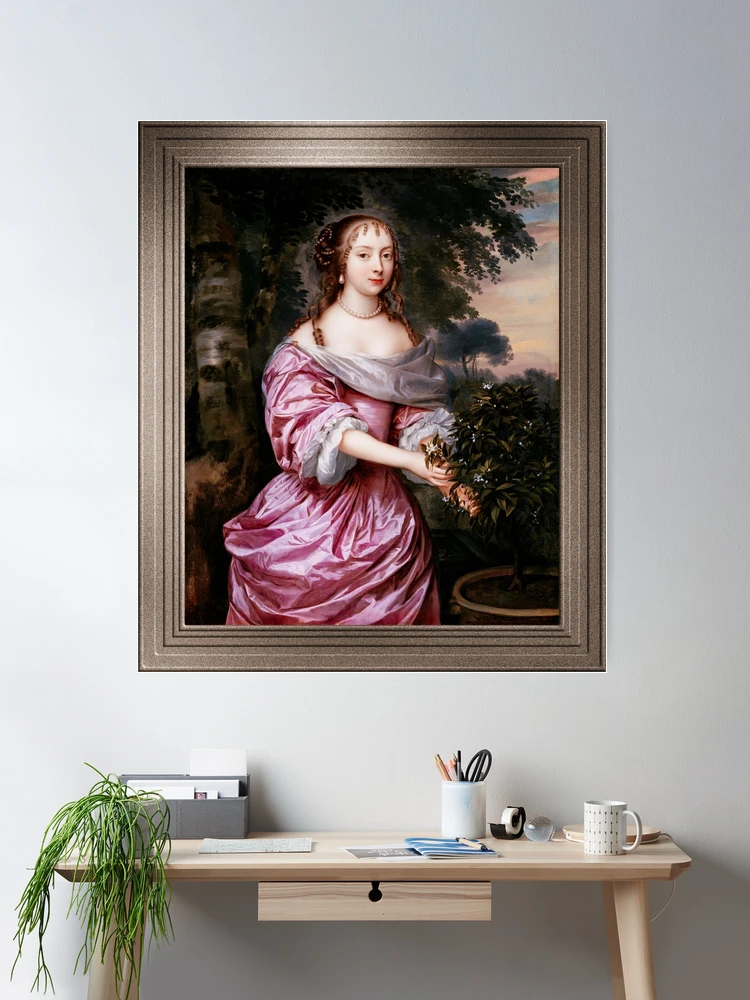
The central figure of the painting is a ritratto di una giovane donna whose identity remains unknown, yet she embodies the ideal of feminine beauty in Dutch aristocracy during the 17th century. The woman is portrayed in an outdoor setting, standing slightly to the left, her body turned in a graceful posture.
She is dressed in a luxurious gown made from soft, flowing fabric, predominantly pink and accented with a silvery-grayish drapery across her shoulders and chest. The intricate folds of the dress are rendered with a sense of realism, as they cascade down her body in an almost lifelike manner. La trama del tessuto, especially the smooth, shiny texture of the silken material, highlights Mytens’ exceptional attention to detail.
I capelli della donna sono pettinati in modo morbido, elaborate curls that frame her face and fall down her back. She wears a delicate pearl necklace around her neck, which serves to emphasize her aristocratic status. Her expression is poised, with her soft gaze directed slightly to the side, as if lost in thought or engaged in a distant contemplation. This calm, serene demeanor speaks to the gentle nature attributed to women of high society during this period, portraying an air of refinement and grace.
L'ambientazione e lo sfondo
The background of the portrait is equally significant, providing context to the subject’s standing within society. Dietro la donna, one can observe a lush, giardino verdeggiante, with trees and shrubs carefully arranged to create a sense of depth and tranquility. The foliage, dark and rich, stands in stark contrast to the soft, light hues of the woman’s dress, which allows her to stand out as the focal point of the painting. The sky in the background is painted in subtle tones of light blue and peach, suggesting the time of day as late afternoon or early evening, as if the scene was captured in the quiet hours of a summer day.
The garden setting also holds symbolic meaning. Gardens were often associated with the idea of paradise, a space of cultivated beauty and serenity. In questo contesto, the garden not only highlights the subject’s elevated social standing but also serves as a metaphor for her own cultivated beauty and refinement. The lush greenery surrounding her further emphasizes her connection to nature and the classical ideals of beauty that were highly regarded during the Dutch Golden Age.
L'umore e l'atmosfera
The overall mood of the portrait is one of calmness and nobility. The softness of the lighting, the serene expression of the subject, and the harmonious blending of colors in the background evoke a sense of peace and tranquility. There is a sense of intimacy between the subject and the viewer, as if the woman is offering a quiet invitation into her world of high society. The balance between the luxurious fabrics of her dress and the natural elements in the background reflects a perfect union between nature and civilization, echoing the cultural ideals of the time.
L'illuminazione nel dipinto è morbida e diffusa, with light seeming to come from the left side of the canvas. This gentle illumination casts subtle shadows across the folds of her dress, accentuating the texture and movement of the fabric. The play of light and shadow also serves to bring out the fine details in the face, capelli, and hands, adding a sense of three-dimensionality to the portrait.
The Artistic Style and Technique
Jan Mytens was a highly skilled portraitist who specialized in capturing the aristocracy and elite members of Dutch society during the Golden Age. His style is characterized by a focus on realism, attenzione ai dettagli, and a masterful use of light and shadow. In questo ritratto, Mytens demonstrates his ability to render the subject’s features with precision and accuracy, while still allowing for a sense of elegance and idealization.
The use of color is particularly striking in this painting. The soft pinks and silvers of the woman’s attire contrast beautifully with the deep greens and earthy tones of the garden behind her. This combination of warm and cool colors creates a pleasing visual harmony, drawing the viewer’s eye towards the subject while also providing a rich, detailed backdrop.
The texture of the painting is also noteworthy. The artist’s brushwork is delicate and refined, particularly in the depiction of the woman’s skin, which appears smooth and luminous. The fabric of her dress is rendered with meticulous attention, showing the movement and flow of the material as it interacts with light. Mytens’ use of oil paints allows him to create layers of depth and richness, giving the portrait a lifelike quality.
Conclusione
Nel “Portrait of a Woman c1660,” Jan Mytens captures not only the physical appearance of his subject but also the essence of her social standing, bellezza, e grazia. Through his skillful technique and meticulous attention to detail, Mytens creates a timeless image that reflects the values of the Dutch Golden Age. The combination of realism, idealization, and symbolic elements in the composition make this painting a stunning example of 17th-century Dutch portraiture.
Portrait Of A Woman è una riproduzione ritoccata di vecchi maestri di arte digitale di un'immagine di pubblico dominio.
Biografia dell'artista per gentile concessione Getty.edu e Wikipedia.org
Il figlio di un sellaio, Jan Mytens ha imparato a dipingere da suo zio Anthony van Opstal e successivamente da Nicolas van der Horst quando era ancora un adolescente.
Poco più che ventenne, fu ammesso alla corporazione dei pittori dell'Aia; quindici anni dopo, divenne il governatore della gilda.
Dipinse per i reali olandesi e si specializzò nella ritrattistica, pezzi di genere, e allegorie storiche. Mytens era particolarmente abile nel rendere i vestiti dei ricchi olandesi.
Nell'ultimo decennio della sua vita, ha fondato i pittori’ società pittorica (Sulla pittura), dove trascorse il resto della sua carriera insegnando agli studenti la ritrattistica.
Per tutta la vita Mytens è stato un ritrattista alla moda a L'Aia. Ha ricevuto commissioni da importanti cittadini, membri della nobiltà, e alti funzionari governativi. I suoi ritratti possono essere divisi in due gruppi principali: lunghezza tre quarti a grandezza naturale, e ritratti a mezzo busto di individui e piccoli gruppi familiari. Ha trasmesso i suoi modelli’ status elevato raffigurandoli con abiti e gioielli sontuosi.