

Ritratto di Madame Badouin
Ritratto di Madame Badouin, La figlia dell'artista c1758-60 dal pittore francese Francois Boucher (1703 – 1770); noto anche come disegnatore, incisore e decoratore in stile rococò francese, era ben noto per il suo sontuoso mitologico, motivi allegorici ed erotici e fu pittore di corte di Luigi XV e favorito della marchesa de Pompadour.
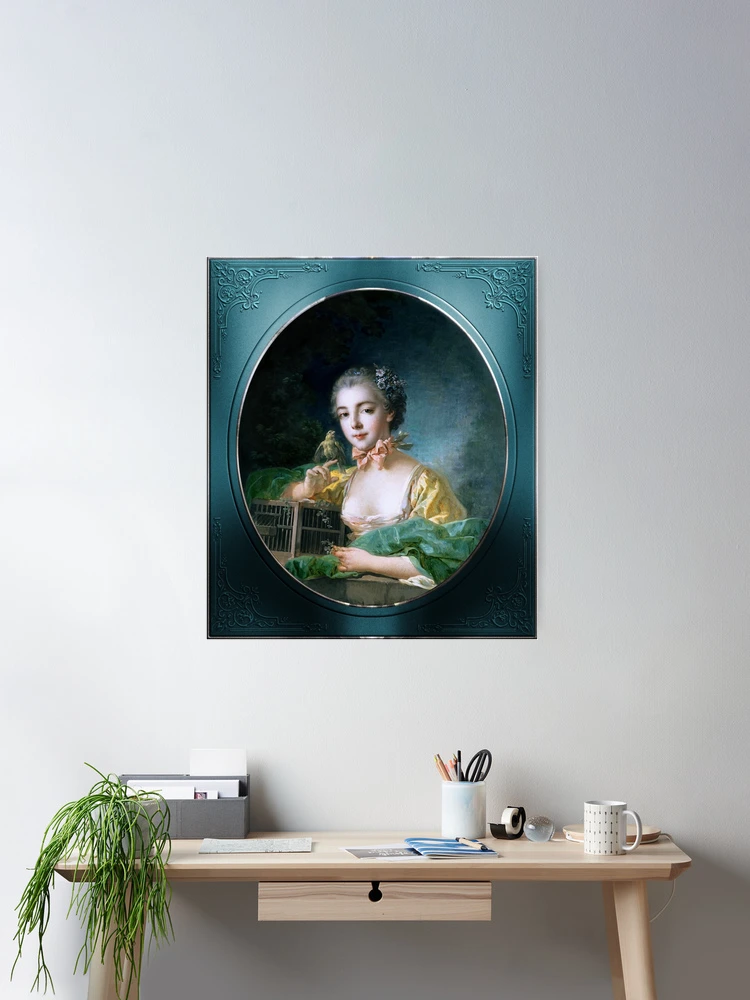
This artwork by the celebrated French Rococo painter François Boucher captures an exquisite moment of elegance and grace. This painting is a prime example of the Rococo style, which flourished in France during the early to mid-18th century, characterized by its lightness, adornare, and use of soft, colori pastello.
The subject of the portrait is Madame Badouin, the artist’s daughter, who is depicted with remarkable sensitivity and beauty. Il morbido, delicate nature of her features, her youthful countenance, and her serene expression all embody the grace and poise that were idealized in the Rococo period. The portrait has a gentle, intimate quality, inviting the viewer into the subject’s personal space.
At the center of the composition, Madame Badouin is presented in a three-quarter view, her head slightly turned as if she is caught in a moment of quiet contemplation. Her gaze is directed slightly off to the side, creating an impression of introspection, yet there is a subtle connection with the viewer, as if she is aware of being observed.
Her facial features are rendered with delicate precision: her fair skin is soft and smooth, her lips slightly parted in a demure expression, and her large, expressive eyes reflect a sense of intelligence and calm. The artist has emphasized the softness of her features, using subtle transitions between light and shadow to create a lifelike, almost ethereal appearance.
Madame Badouin’s attire is a masterful representation of the Rococo fashion of the time. She is dressed in an opulent gown of pale yellow and soft green hues, with layers of sheer fabric that flow gracefully around her. The gown’s texture is depicted with meticulous detail, showing the fine, almost weightless nature of the materials.
The artist has captured the flow and drape of the fabric with a sense of fluidity, suggesting the movement of the fabric as the subject sits serenely. A large pink ribbon is tied loosely at her throat, adding a touch of playful color that contrasts with the softness of the gown and further enhances the light, airy quality of the portrait.
Her coiffed hair, which is styled in soft waves and adorned with delicate flowers, is another hallmark of the Rococo period. The careful attention to detail in her hairstyle not only highlights the fashion trends of the time but also adds a sense of natural beauty, as though her appearance is effortlessly graceful. The flowers in her hair seem to symbolize youth and femininity, enhancing the overall sense of delicacy and refinement.
One of the most striking aspects of this portrait is the bird perched on the artist’s daughter’s finger. This small detail plays an important symbolic role in the painting, contributing to the overall theme of innocence and natural beauty.

The bird, with its muted plumage, contrasts with the lushness of the surrounding landscape and the softness of Madame Badouin’s attire. It also suggests a connection to nature, a recurring theme in Rococo art, which often celebrated the beauty of the natural world, the pastoral, and the idealized version of life in harmony with nature.
The background of the painting is equally carefully constructed. Behind the figure, a dark, lush landscape unfolds, with trees and foliage softly blurring into the distance. The use of a rich, muted green palette creates an almost dreamlike effect, enhancing the ethereal mood of the portrait.
This natural setting not only contrasts with the softness of the figure but also symbolizes a connection between Madame Badouin and the world around her. The painter’s skillful rendering of light and shadow creates depth and atmosphere, giving the scene a tranquil, almost timeless quality.
The overall mood of the portrait is one of calm elegance. I colori sono morbidi e armoniosi, with pastel shades predominating in both the subject’s attire and the background. The figure is illuminated in such a way that the face and hands are gently highlighted, creating a subtle focal point that draws the viewer’s attention to the subject’s expression and demeanor. There is a serene quality to the painting, one that evokes the idealized virtues of youth, bellezza, and grace that were central to the Rococo aesthetic.
François Boucher’s technique in this painting is exemplary of his mastery of the Rococo style. His brushwork is fluid and refined, creating a soft, luminous texture that enhances the delicate nature of the subject. His use of light and color is equally sophisticated, with the artist skillfully capturing the interplay of natural light and shadow on Madame Badouin’s face and clothing. The soft transitions between colors and the subtle blending of tones demonstrate Boucher’s expertise in creating a smooth, polished finish.
Insomma, Quella di François Boucher “Portrait of Madame Badouin, The Artist’s Daughter” is a stunning example of Rococo portraiture, where the subject’s beauty, adornare, and connection to nature are captured with sensitivity and elegance. La tavolozza morbida, delicate detailing, and serene mood of the painting convey the idealized qualities of youth and femininity that were highly valued during the Rococo period. Through this portrait, Boucher not only immortalizes his daughter but also provides a glimpse into the Rococo vision of beauty and refinement.
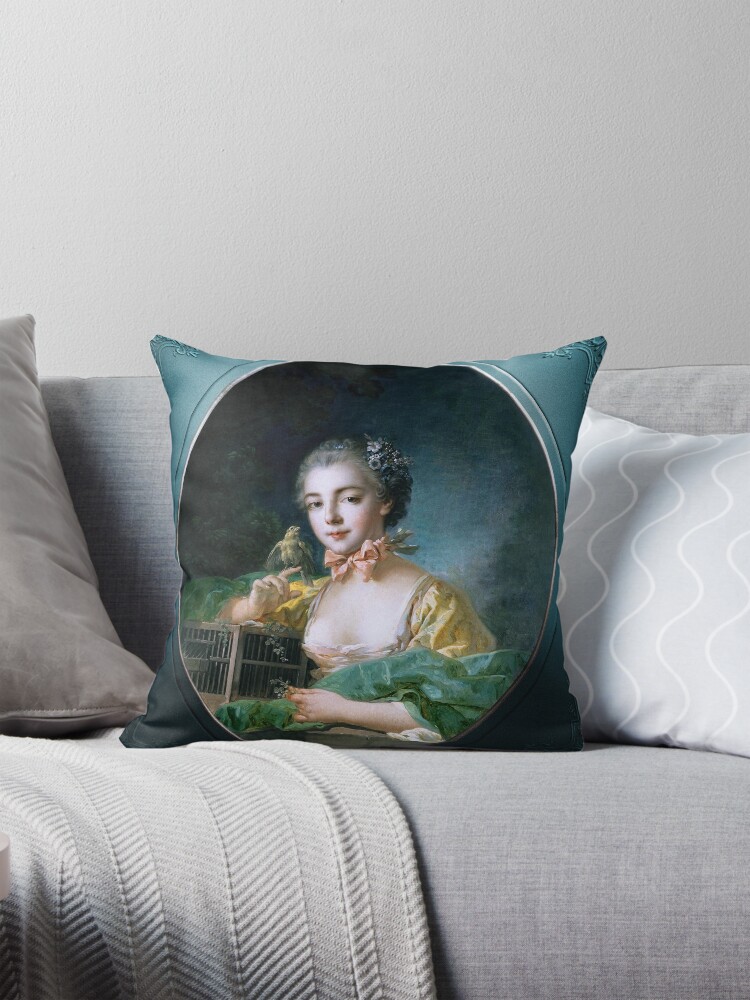
Ritratto di Madame Badouin è una riproduzione di vecchi maestri di arte digitale ritoccata di un'immagine di pubblico dominio.
Informazioni di seguito derivate da Wikipedia.org
Nativo di Parigi, Boucher era il figlio di un pittore meno noto Nicolas Boucher, che gli diede la sua prima formazione artistica. All'età di diciassette anni, un dipinto di Boucher è stato ammirato dal pittore François Lemoyne. Lemoyne in seguito nominò Boucher suo apprendista, ma dopo soli tre mesi, andò a lavorare per l'incisore Jean-François Cars.
Nel 1720, ha vinto l'elite Grand Prix de Rome per la pittura, ma non colse la conseguente opportunità di studiare in Italia fino a cinque anni dopo, a causa di problemi finanziari alla Royal Academy of Painting and Sculpture.[1] Al ritorno dagli studi in Italia viene ammesso alla rifondata Académie de peinture et de sculpture il 24 novembre 1731. Il suo pezzo di ricezione (pezzo di ricezione) era il suo Rinaldo e Armida di 1734.
Boucher ha sposato Marie-Jeanne Buzeau in 1733. La coppia ha avuto tre figli insieme. Boucher è diventato un membro della facoltà in 1734 e la sua carriera da questo punto accelerò quando fu promosso Professore e poi Rettore dell'Accademia, diventando ispettore presso la Royal Gobelins Manufactory e infine Premier Peintre du Roi (Primo pittore del re) nel 1765. Ritratto di Marie-Louise O'Murphy c. 1752
Boucher è morto il 30 Maggio 1770 nella sua nativa Parigi. Il suo nome, insieme a quello della sua mecenate Madame de Pompadour, era diventato sinonimo dello stile rococò francese, portando i fratelli Goncourt a scrivere: “Boucher è uno di quegli uomini che rappresentano il gusto di un secolo, chi esprime, personificarlo e incarnarlo.”
Boucher è famoso per aver detto che la natura è “troppo verde e poco illuminato” (troppo verde e male illuminato).
Boucher era associato all'incisore di pietre preziose Jacques Guay, cui ha insegnato a disegnare. Fu anche mentore del pittore moravo-austriaco Martin Ferdinand Quadal e del pittore neoclassico Jacques-Louis David in 1767.[4] Dopo, Boucher ha realizzato una serie di disegni di opere di Guay che Madame de Pompadour ha poi inciso e distribuito come un volume finemente rilegato ai cortigiani favoriti.