

Portread o Fonesig Ifanc
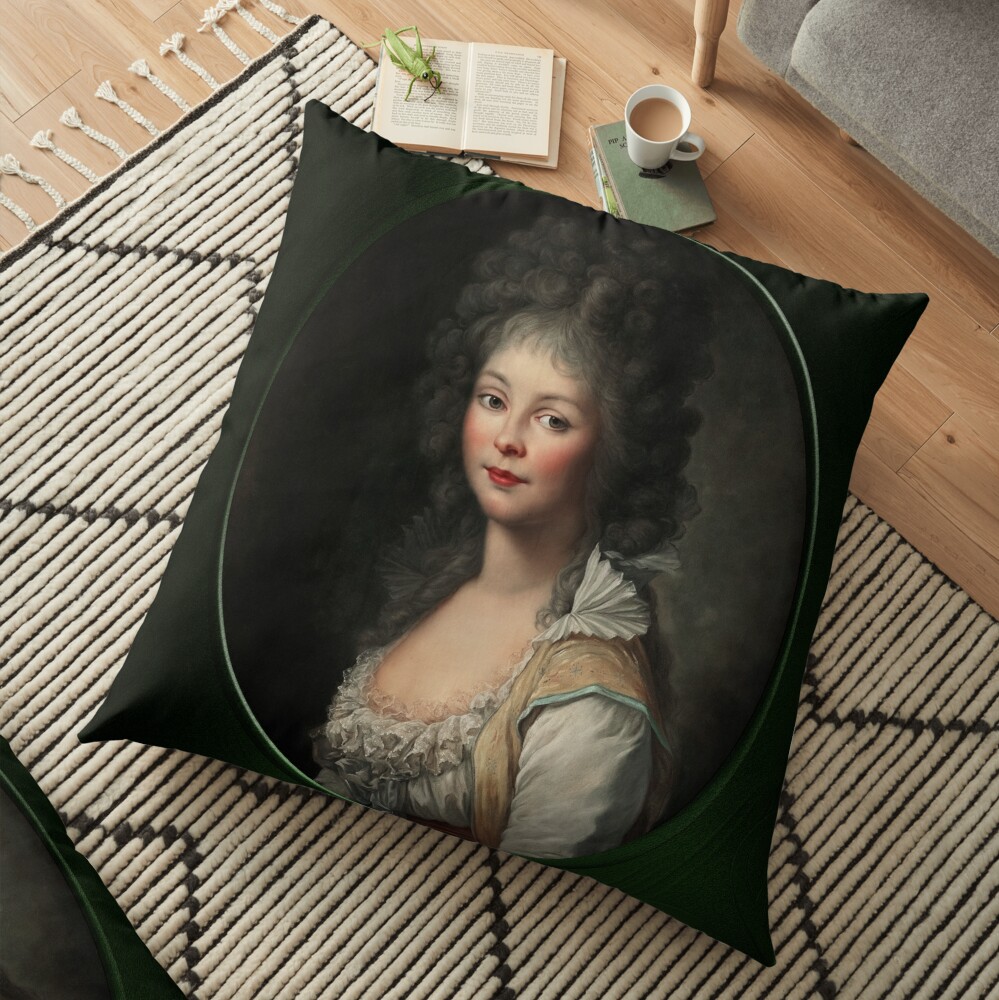
Portread O Fonesig Ifanc gan yr arlunydd Almaenig Johann Friedrich August Tischbein (1750 – 1812), o deulu Tischbein o artistiaid a oedd yn ymestyn dros dair cenhedlaeth.
Mae hwn yn brydferth portread o ferch ifanc mewn gwisg cyfnod mewn ystum safonol sy'n wynebu'r gynulleidfa.
Mae Portrait Of A Young Lady yn atgynhyrchiad hen feistr celf ddigidol wedi'i atgyffwrdd o ddelwedd parth cyhoeddus sydd ar gael ar-lein fel print cynfas wedi'i rolio.
Gwybodaeth Isod O Wikipedia.org
Derbyniodd Tischbein ei wersi cyntaf gan ei dad, yr arlunydd set Johann Valentin Tischbein. Yn 1768, aeth i Kassel i weithio yn stiwdios ei ewythr, Johann Heinrich Tischbein.[1] Pedair blynedd yn ddiweddarach, cymerodd daith hir trwy Ffrainc, diweddu ym Mharis, lle bu'n astudio gyda Johann Georg Wille. Yn 1777, he took a trip to Naples and Rome, where he met and worked with Jacques-Louis David. He returned to Germany in 1780.
That same year, he was appointed court painter to Friedrich Karl August, Prince of Waldeck and Pyrmont in Bad Arolsen and was later named “Council and Cabinet Painter”.[1] During the 1780s he made three trips to the Netherlands, on behalf of his patron, where he improved his skills in portrait painting.
Yn 1795, he was hired by Leopold III, Duke of Anhalt-Dessau but, by this time, noble patronage was no longer the necessity it once was so, only one year later, Tischbein went to Berlin and became a successful independent portrait painter. Yn 1799, he had even greater success in Dresden. The following year, he received an appointment to replace Adam Friedrich Oeser as Director of the Academy of Visual Arts in Leipzig.
Yn 1806, he went to Saint Petersburg to settle the estate of his brother, the architect and set designer, Ludwig Philipp Tischbein (1744-1806). He remained there for three years to finish several lucrative commissions from the Russian aristocracy.
His daughter, Caroline (1783–1843) and son Carl Wilhelm (1797-1855) also became artists.