

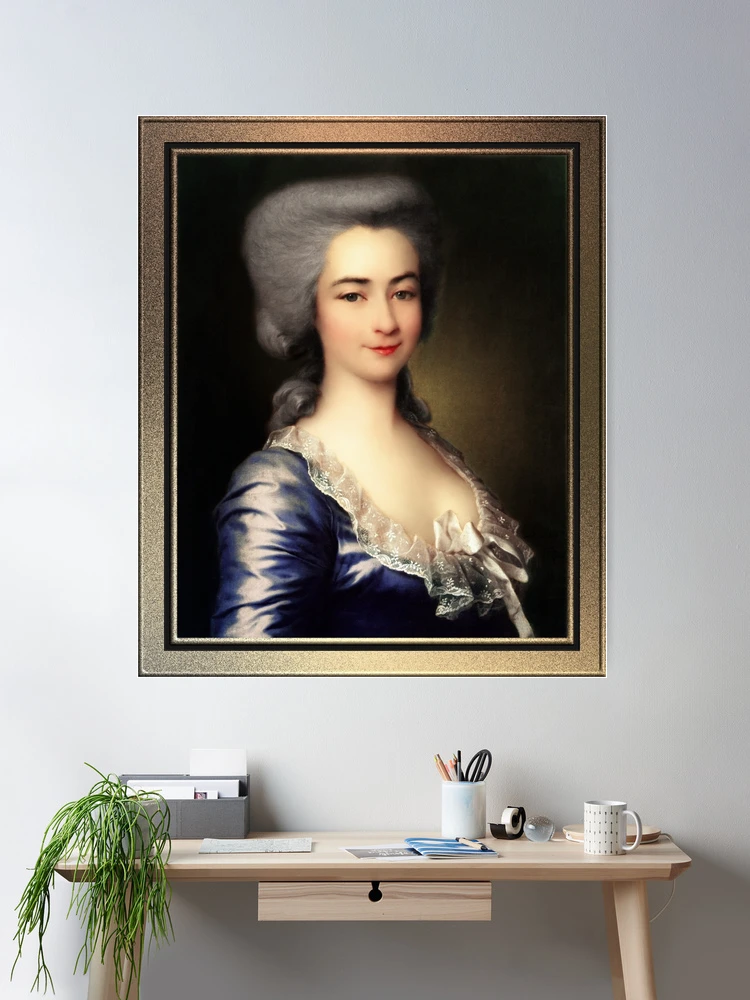
The “Portrait Of An Unknown Woman” c1784 by Russian painter Dmitry Grigorievich Levitsky (1735 – 1822) is an exquisite example of portraiture during the late 18th century. Levitsky was renowned for his ability to capture the subtle nuances of his subjects’ nortasunak, and this portrait is no exception. This work encapsulates the elegance of the Russian aristocracy of the period, as well as the refinement of the artist’s technique. The image presents an unnamed woman, whose grace and beauty are immortalized in the delicate brushstrokes of Levitsky’s hand.
Edukien taula
The Subject and Its Presentation
The focal point of the artwork is a beautiful young woman, zeinaren adierazpen lasaiak eta jarrera konposatuak noblezia eta duintasun lasaiaren zentzua iradokitzen dute. Bere aurpegiko ezaugarriak fin-fin errendatuta daude, leunarekin, masail biribilak, irribarre leun bat, eta ikuslearengandik haratago begiratzen ari direla diruditen begiak. Artistak arreta handiz harrapatu ditu bere aurpegiaren ingerada leun batekin, bere azalaren leuntasuna azpimarratzen duen argi ia etereoa. Begiak, lasai egon arren, izaera sakontasuna agerian uzten du, adimentsu bat proposatuz, nortasun parekatua bere kanpoko edertasunaren azpian.
Urdin aberatseko soineko dotore batez jantzita dago, mendean modan eta aberastasunaren adierazgarri zen kolorea. Jantziak parpailazko xehetasun korapilatsuak ditu eskotean zehar, non leun leun bat jauzi aurrealdean behera, bere janzkeraren fintasuna nabarmenduz. Bere soinekoaren ehuna argi-jokoekin distira egiten du, Levitskyk ehundura eta materiala errendatzen duen maisutasunaren lekuko. Parpaila zorrotz margotuta dago, artistak modaren xehetasunak zehaztasunez transmititzeko duen gaitasuna erakutsiz.
Gaiaren ilea, updo bolumen handiko estiloa, hautsez osatuta dago eta XVIII. Kizkur leunak aurpegiaren alboetara eramaten dira, bere ezaugarri delikatuak markatuz. Ilearen tonu gris argiek bere soineko kolore biziekin kontrastea ematen dute, are gehiago bere itxura findua nabarmenduz. Formaltasun-aire sotila dago planteatzen den moduan, hala ere, intimitate bat ere badago bere adierazpenean, hitz egiteko edo elkarrizketan aritzekotan balego bezala.
Atzeko planoa eta ezarpena
Erretratuaren hondoa gradiente leun bat da, sakonarekin, itzal baten presentzia iradokitzen duten tonu ilunak, zehaztu gabeko espazioa. Atzeko planoaren aukeraketa honek kontraste izugarria sortzen du irudiarekin, emakumea konposizioaren ardatz nagusia izaten jarraitzen duela bermatuz. Eszenatoki landurik edo elementu arkitektonikorik ez egoteak erretratuaren izaera pertsonalaz hitz egiten du, ikuslea gaian bakarrik kontzentratzeko aukera emanez. Hondoaren sinpletasunak bere janzkeraren eta ezaugarrien xehetasun finak azpimarratzeko ere balio du, arreta guztia hari zuzenduz.
Estiloa eta Teknika
Levitskyren estiloa argiaren eta itzalaren tratamendu delikatua da, erretratu honetan bereziki nabaria dena. Bere gaitasuna biguna sortzeko, glowing effect on the skin and clothing gives the painting a lifelike quality, making the subject appear as though she could step out of the canvas at any moment. Erretratuan argiaren erabilera maisua da, with soft highlights on the face and fabric, contrasted against deeper, more muted shadows. This interplay of light and shadow enhances the three-dimensionality of the figure and adds a sense of depth to the otherwise flat background.
Levitsky’s brushstrokes are smooth and fluid, creating a sense of softness and refinement throughout the piece. His skillful attention to detail is apparent in the rendering of the lace, the folds of the gown, and the texture of the hair. Every element in the painting has been given meticulous attention, from the delicate fabric to the subtle highlights on the skin, demonstrating Levitsky’s dedication to realism and his technical proficiency.
The portrait is painted with a fine attention to realism, but there is also an element of idealization. The woman’s features are slightly softened, lending her an air of timeless beauty that transcends any individual traits. This idealization was a common technique in portraiture at the time, as it was customary for the artist to present the subject in the most flattering light, often highlighting their best qualities while downplaying imperfections.
Aldartea eta Giroa
The overall mood of the portrait is one of elegance and composure, but there is also a sense of calm introspection. The subject’s serene expression, combined with the soft lighting and muted background, creates a sense of quiet sophistication. There is a certain mystery to the woman’s gaze, as if she is caught in a moment of contemplation. Hau, coupled with the subdued yet rich colors of the painting, evokes a mood of refined nobility.
The atmosphere is one of grace and dignity, yet there is a subtle invitation to wonder about the life and personality of the woman portrayed. The artist has managed to capture not just her physical appearance, but also the essence of her character — a rare feat in portraiture. Levitsky’s ability to create an emotional connection between the subject and the viewer is what elevates this work beyond mere representation to something more profound.
Bukaera
The “Portrait Of An Unknown Woman” c1784 is a remarkable example of Dmitry Grigorievich Levitsky’s talent as a portrait artist. Xehetasunarekiko arreta zorrotzaren bidez, his refined rendering of textures, and his ability to capture the character of his subject, Levitsky has created an image that transcends time. The woman’s serene and dignified presence invites the viewer to contemplate her story, though her identity remains a mystery. Modu honetan, Levitsky has not only immortalized a moment in time but has also created a work that continues to provoke thought and admiration to this day.
Bio artista honetatik eratorria Wikipedia.org
Dmitry Levytsky was born in Kiev, Cossack Hetmanate, in the Russian Empire in 1735 to Ukrainian clergyman and engraver Gregory Levitsky.
Dmitry’s father was his first art teacher, and later he became the student of Russian artist Aleksey Antropov, who came to Kiev to paint the Cathedral of St. Andrew; the last Baroque Period Cathedral built in Saint Petersburg, Errusia; artean 1805 – 1817 by architect Andreyan Zakharov (1761 – 1811); and dedicated to Andrew the Apostle, the patron saint of the Russian Navy.
In 1770, Levitzky became famous as a portrait painter after the exhibition of six of his portraits in the Imperial Academy of Arts in St. Petersburg, Errusia.
For his portrit of Alexander Kokorinov (1726 – 1772), the Director and First Rector of the Academy of Arts in St. Petersburg which he painted in 1769; Dmitry was elected an Academician (a full member of an artistic, literary, ingeniaritza, or scientific academy), and appointed the Professor of the portrait painting class at the Academy of Arts, remaining in this position until 1788.
Bertatik 1772 to 1776 Levitzky worked on a series of portraits of the pupils of the privileged women that were students of the Smolny Institute for Young Ladies in St. Petersburg; commissioned by Catherine II. The girls are depicted performing dances, musika, plays.