

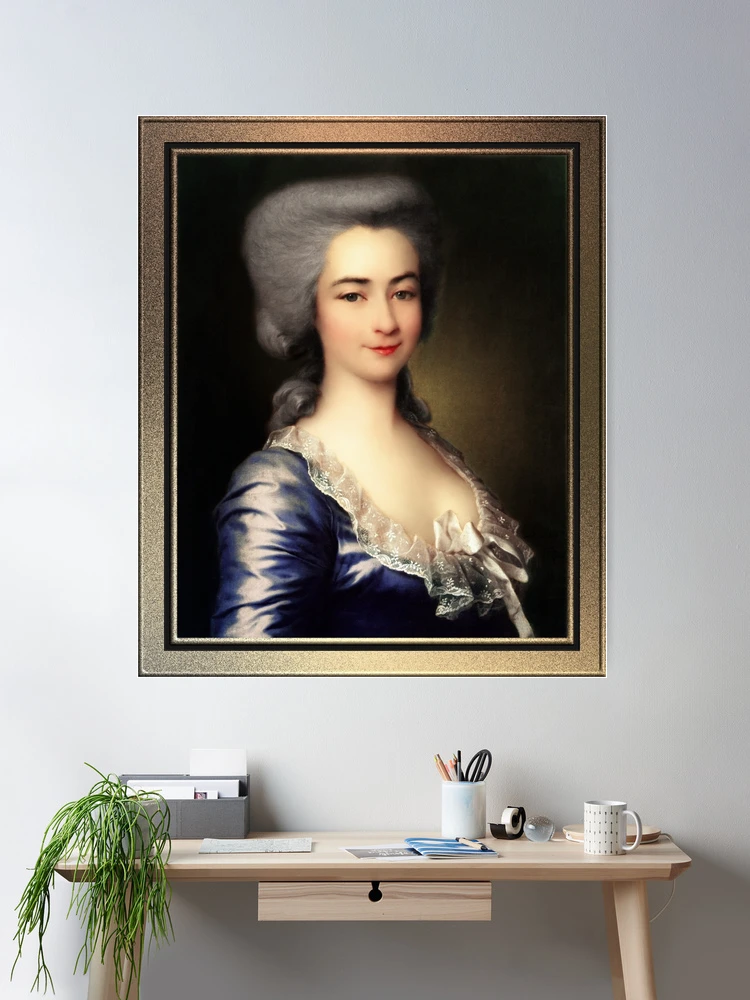
ten “Portrait Of An Unknown Woman” c1784 by Russian painter Dmitry Grigorievich Levitsky (1735 – 1822) is an exquisite example of portraiture during the late 18th century. Levitsky was renowned for his ability to capture the subtle nuances of his subjects’ osobowości, and this portrait is no exception. This work encapsulates the elegance of the Russian aristocracy of the period, as well as the refinement of the artist’s technique. The image presents an unnamed woman, whose grace and beauty are immortalized in the delicate brushstrokes of Levitsky’s hand.
Spis treści
The Subject and Its Presentation
The focal point of the artwork is a beautiful young woman, którego spokojny wyraz twarzy i opanowana postawa sugerują zarówno szlachetność, jak i poczucie spokojnej godności. Jej rysy twarzy są doskonale odwzorowane, z miękkim, okrągłe policzki, delikatny uśmiech, i oczy, które wydają się patrzeć poza widza. Artystka delikatnie uchwyciła kontury swojej twarzy, niemal eteryczne światło, które podkreśla gładkość jej cery. Oczy, choć spokojny, ujawnić głębię charakteru, sugeruje inteligencję, zrównoważona osobowość pod jej zewnętrznym pięknem.
Ubrana jest w elegancką suknię w kolorze głębokiego błękitu, kolor, który był zarówno modny, jak i wskazywał na bogactwo w XVIII wieku. Suknia posiada misterne koronkowe detale wzdłuż dekoltu, gdzie miękka falbana spływa kaskadą z przodu, podkreślając delikatność jej stroju. Materiał jej sukni wydaje się mienić grą świateł, a testament to Levitsky’s mastery in rendering texture and material. The lace is meticulously painted, demonstrating the artist’s ability to convey the fine details of fashion with precision.
Włosy obiektu, styled in a voluminous updo, is powdered and set in a typical 18th-century fashion. Soft curls are swept to the sides of her face, framing her delicate features. The hair’s light gray tones provide a contrast to the vivid colors of her gown, further highlighting her refined appearance. There is a subtle air of formality in the way she is posed, yet there is also an intimacy in her expression, as though she is about to speak or engage in conversation.
Tło i ustawienie
The background of the portrait is a soft gradient, z głębokim, dark hues that suggest the presence of a shadowed, undefined space. Taki wybór tła tworzy dramatyczny kontrast z figurą, zapewniając, że kobieta pozostanie głównym tematem kompozycji. Brak wyszukanej scenerii i elementów architektonicznych świadczy o osobistym charakterze portretu, pozwalając widzowi skoncentrować się wyłącznie na temacie. Prostota tła służy również podkreśleniu drobnych szczegółów jej stroju i rysów twarzy, skupiając na niej całą uwagę.
Styl i technika
Styl Levitsky'ego charakteryzuje się delikatnym traktowaniem światła i cienia, co jest szczególnie widoczne na tym portrecie. Jego zdolność do tworzenia miękkich, świecący efekt na skórze i ubraniu nadaje obrazowi realistyczną jakość, sprawiając, że obiekt sprawia wrażenie, jakby w każdej chwili mógł wyjść z płótna. The use of light in the portrait is masterful, with soft highlights on the face and fabric, contrasted against deeper, more muted shadows. This interplay of light and shadow enhances the three-dimensionality of the figure and adds a sense of depth to the otherwise flat background.
Levitsky’s brushstrokes are smooth and fluid, creating a sense of softness and refinement throughout the piece. His skillful attention to detail is apparent in the rendering of the lace, the folds of the gown, and the texture of the hair. Every element in the painting has been given meticulous attention, from the delicate fabric to the subtle highlights on the skin, demonstrating Levitsky’s dedication to realism and his technical proficiency.
The portrait is painted with a fine attention to realism, ale jest też element idealizacji. Rysy kobiety są lekko złagodzone, nadając jej atmosferę ponadczasowego piękna, które wykracza poza wszelkie indywidualne cechy. Idealizacja ta była wówczas powszechną techniką w portrecie, gdyż artysta miał w zwyczaju przedstawiać temat w jak najbardziej pochlebnym świetle, często podkreślając ich najlepsze cechy, bagatelizując jednocześnie niedoskonałości.
Nastrój i atmosfera
Ogólny nastrój portretu to elegancja i spokój, ale jest też poczucie spokojnej introspekcji. Spokojny wyraz twarzy obiektu, w połączeniu z delikatnym oświetleniem i wyciszonym tłem, tworzy wrażenie cichego wyrafinowania. W spojrzeniu kobiety kryje się pewna tajemnica, jakby została złapana w chwilę kontemplacji. Ten, w połączeniu ze stonowaną, choć bogatą kolorystyką obrazu, wywołuje nastrój wyrafinowanej szlachetności.
Atmosfera jest pełna wdzięku i godności, jednakże istnieje subtelne zaproszenie do zastanowienia się nad życiem i osobowością portretowanej kobiety. Artystce udało się uchwycić nie tylko jej wygląd fizyczny, ale także istotę jej charakteru — rzadkie osiągnięcie w portrecie. Zdolność Levitsky'ego do stworzenia emocjonalnego związku między obiektem a widzem jest tym, co podnosi tę pracę poza zwykłe przedstawienie do czegoś głębszego.
Wniosek
ten “Portrait Of An Unknown Woman” ok. 1784 r. jest niezwykłym przykładem talentu portrecisty Dmitrija Grigoriewicza Lewickiego. Dzięki jego skrupulatnej dbałości o szczegóły, jego wyrafinowane renderowanie tekstur, i jego zdolność do uchwycenia charakteru tematu, Levitsky stworzył obraz, który wykracza poza czas. The woman’s serene and dignified presence invites the viewer to contemplate her story, though her identity remains a mystery. In this way, Levitsky has not only immortalized a moment in time but has also created a work that continues to provoke thought and admiration to this day.
Bio artysty pochodzące z Wikipedia.org
Dmitry Levytsky was born in Kiev, Cossack Hetmanate, in the Russian Empire in 1735 to Ukrainian clergyman and engraver Gregory Levitsky.
Dmitry’s father was his first art teacher, and later he became the student of Russian artist Aleksey Antropov, who came to Kiev to paint the Cathedral of St. Andrew; the last Baroque Period Cathedral built in Saint Petersburg, Rosja; między 1805 – 1817 by architect Andreyan Zakharov (1761 – 1811); and dedicated to Andrew the Apostle, the patron saint of the Russian Navy.
W 1770, Levitzky zasłynął jako portrecista po wystawie sześciu swoich portretów w Cesarskiej Akademii Sztuk w Petersburgu. Petersburg, Rosja.
Za portret Aleksandra Kokorinowa (1726 – 1772), dyrektor i pierwszy rektor Akademii Sztuk Pięknych w St. Petersburgu, w którym malował 1769; Dmitry został wybrany akademikiem (pełnoprawnym członkiem artystycznym, literacki, inżynieria, lub akademię naukową), i mianowany profesorem klasy portretu w Akademii Sztuk Pięknych, pozostając w tej pozycji do 1788.
Od 1772 do 1776 Levitzky pracował nad serią portretów uczennic uprzywilejowanych kobiet, które były studentkami Smolnego Instytutu dla Młodych Pań przy ul.. Petersburg; na zlecenie Katarzyny II. Przedstawione są dziewczyny wykonujące tańce, muzyka, gra.