

W Operze
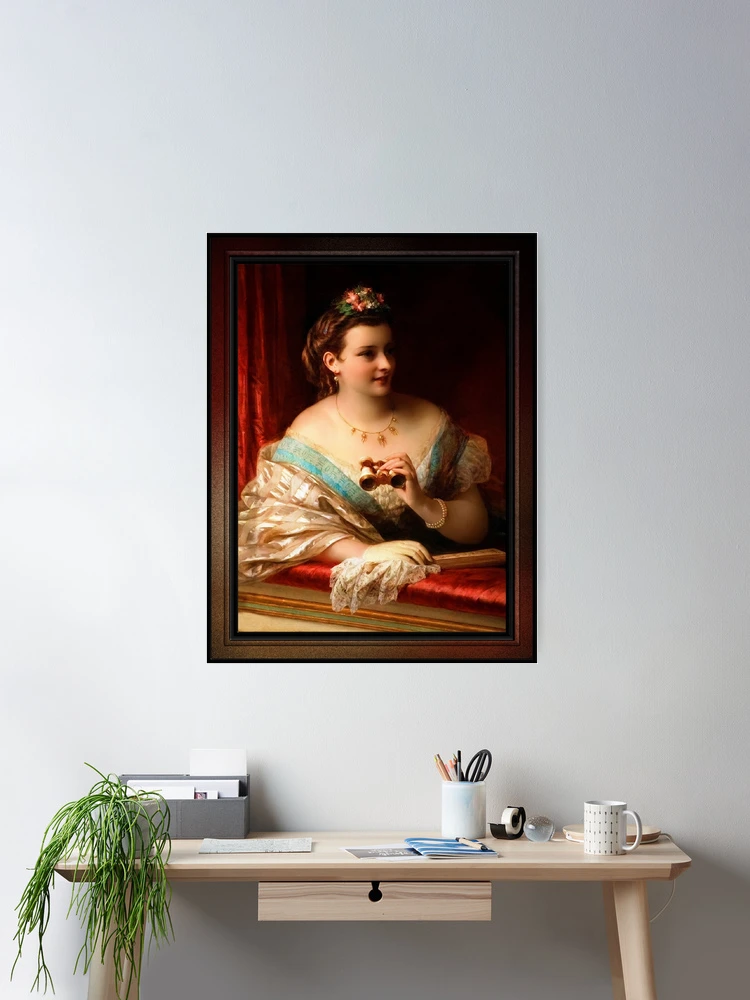
“W Operze,” stworzony przez brytyjskiego artystę Thomas Francis Dicksee (1819 – 1895), jest żywym przykładem kunsztu epoki wiktoriańskiej, uchwycenie chwili intymnej elegancji i wdzięku podczas okazji towarzyskiej w XIX wieku. Głównym tematem utworu jest zrównoważona i młoda kobieta, który jest elegancko ubrany w bogaty strój. Z pogodnym wyrazem twarzy, kobieta w zamyśleniu patrzy w dal, trzymając parę okularów operowych, niezbędny dodatek dla modnego wówczas bywalca teatru. Jej wygląd i atmosfera panująca na obrazie odzwierciedlają zarówno znaczenie kulturowe, jak i luksus wyższych sfer w okresie wiktoriańskim.
Spis treści
Główny temat
The central figure in this painting is a refined young woman who epitomizes the ideal of feminine beauty and grace typical of the Victorian age. She is dressed in a luxurious gown of pale blue and cream, made from a fabric that glistens subtly, indicating its high quality and the wearer’s status. The woman’s hair is neatly styled in soft waves, and she is adorned with a floral headpiece, an accessory often seen in portraits of the time to convey both refinement and a connection to nature. Jej strój, including the delicate lace details on the bodice and the ornate necklace, speaks to the level of wealth and sophistication expected from members of the upper class in Victorian society.
The focal point of the painting is her gaze, which directs attention to her hand, which holds a pair of gold opera glasses. The glasses themselves are an exquisite touch, indicative of the setting—an opera or theater event. These glasses were popular among theatergoers of the era, not just for practical use but as a symbol of status, used by the elite to better view the performances while subtly demonstrating their wealth and refinement. This choice of accessory ties the painting’s theme to the world of theater, kultura, and aristocratic leisure.
Otoczenie i obiekty
The scene is set in a luxurious indoor environment, likely a private viewing area or a royal box at an opera house, though the full surroundings are not immediately visible. The background features rich curtains, possibly velvet, drawn aside to allow for a glimpse of the world beyond. The heavy drapery suggests an air of privacy, kameralna przestrzeń we wnętrzu opery, w której wyższa sfera mogła w zaciszu i odosobnieniu obserwować przedstawienia.
Na pierwszym planie meble, pluszowe czerwone wyściełane krzesło, podkreśla zarówno bogactwo, jak i wyrafinowany smak przedmiotu. Kobieta siedzi wygodnie na krześle, jej postawa wyrażała zarówno wdzięk, jak i poczucie opanowanej kontemplacji. Na poręczy krzesła leży niewielka książeczka, sugerując, że jest kulturalna i być może czeka na rozpoczęcie przedstawienia, lub może po prostu zabijać czas, obserwując trwające wydarzenie.
Poza postacią centralną, zauważamy słabą sugestię innych elementów, które dopełniają atmosferę arystokratycznego zgromadzenia. The rich textures and subdued lighting evoke a sense of tranquility and refinement that permeates the atmosphere. The luxurious textures of the curtains, her clothing, and the surrounding decor lend a sense of opulence and grandeur typical of Victorian interiors. There is no overt display of extravagance; raczej, the richness of the scene is conveyed through subtle, sophisticated details.
Nastrój i atmosfera
Nastrój “W Operze” is one of serene elegance. The subject’s poised demeanor, coupled with the subdued tones of the background, creates a calm, contemplative atmosphere. There is a sense of quiet anticipation, as if the viewer has entered the moment just before a grand performance begins. The young woman’s gentle gaze, directed off to the side, suggests a fleeting moment of introspection, which further adds to the painting’s refined and intimate quality.
The painting is infused with a sense of luxury, but not in a manner that is ostentatious. Zamiast , the luxurious elements—such as the fine fabric of the gown and the gleaming opera glasses—are presented in a way that emphasizes understated elegance. This characteristic is typical of Victorian portraiture, where the subject’s social status is implied through their attire, setting, and the quality of materials depicted.
Styl i technika artystyczna
Thomas Francis Dicksee’s painting is a brilliant example of the Victorian style, characterized by detailed realism and a refined use of color and light. Dicksee was known for his attention to detail, and this painting is no exception. The fabrics of the gown and the soft glow of the woman’s skin are rendered with delicate precision, showcasing his mastery of light and texture. The subtle shading used to depict the folds of the fabric and the delicate highlights on the jewelry and opera glasses demonstrate Dicksee’s skill in creating depth and realism.
The composition itself is thoughtfully arranged, with the subject’s body turned slightly toward the viewer while her head remains in profile. This balanced approach creates a sense of harmony within the piece, guiding the viewer’s eye from the rich folds of her dress to the focus of her hand and the opera glasses she holds. The artist’s use of soft, warm tones, especially in the skin tones and drapery, contrasts with the more vibrant accents of the woman’s accessories, drawing attention to the details that define her aristocratic status.
Jest to retuszowana reprodukcja starych mistrzów sztuki cyfrowej będąca własnością publiczną.
Biografia artysty
Informacje poniżej pochodzą z Wikipedia.org
Thomas was the pupil of H. P. Briggs. W 1841 he exhibited at the Royal Academy and did so until his death. His brother John Robert Dicksee was a painter, as well as his children, Sir Francis Dicksee and Margaret.
Thomas was a portraitist, a także malarz historycznych tematów rodzajowych, często inspirowanych twórczością Williama Szekspira (1564 – 1616) brytyjski poeta dramatyczny i aktor, uważany za najbardziej znanego i największego dramaturga wszechczasów na świecie.
Thomas Dicksee wyprodukował serię portretów członków rodziny, a także malował wyidealizowane portrety, w tym szekspirowskie postacie Julia, Ofelia, Beatrice, Miranda i Ariel.