

Portrait Of Anna Sten c1934
“Portrait Of Anna Sten c1934” is a remarkable piece by the celebrated Peruvian artist Alberto Vargas, known for his iconic pin-up art and portraiture. Rugadh i 1896 agus rith isteach 1982, Vargas became synonymous with capturing the beauty and allure of women in his distinctive style. Sa saothar ealaíne seo, he masterfully illustrates his signature approach to portraiture, blending elegance with sensuality in an era defined by glamour and refinement. An píosa seo, a cruthaíodh i 1934, portrays the actress Anna Sten, an important figure in the early 20th century cinematic landscape.
Clár na nÁbhar
Main Subject and Style
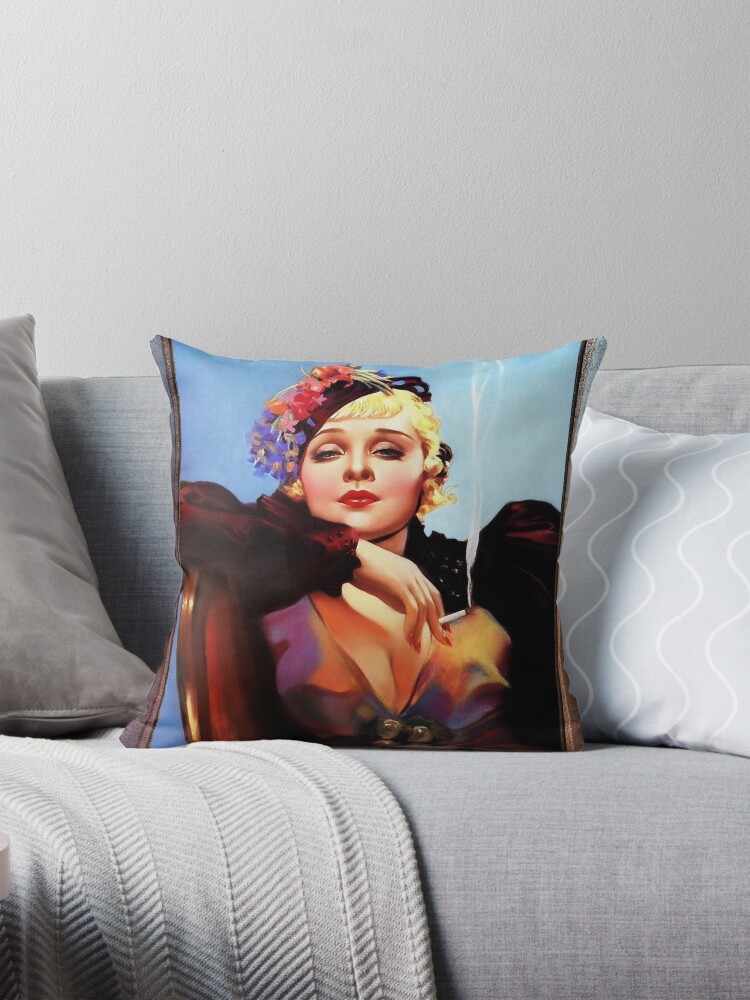
The subject of the portrait is Anna Sten, a Soviet-born actress who achieved some degree of fame in Hollywood during the 1930s. Sten’s portrayal in this artwork reflects the luxurious yet sensual style that Vargas is known for. She gazes at the viewer with a serene, almost enigmatic expression that suggests both confidence and quiet allure. Her posture is poised, yet there is an undeniable softness to her presence, emphasized by the gentle curve of her neck and the placement of her arm.
The style of the painting reflects Vargas’s reputation for depicting the human form with soft curves and radiant, glowing skin. There is a particular emphasis on the subject’s facial features – from her perfectly sculpted cheekbones to her delicate lips and piercing eyes. Vargas’ use of light and shadow is exceptional, creating depth and emphasizing the texture of her skin and hair. The softness of the colors contrasts with the sharper definition of her features, highlighting the artist’s keen eye for balance and detail.
The background of the painting is a soft, blended gradient of blues, a color choice that not only adds to the overall calmness of the image but also makes the figure of Sten stand out as the focal point. Vargas does not clutter the background with unnecessary details, allowing the viewer to fully focus on the subject’s beauty and elegance.
Cuspóirí agus Ábhair
Anna Sten is dressed in a sophisticated, deep burgundy gown that wraps around her shoulders in flowing fabric, which complements the color of her lips. The gown is subtly highlighted with a series of floral patterns, particularly at the collar area, which enhance the romantic and classic nature of the portrait. The sheer delicacy of the fabric is captured by Vargas with extraordinary finesse, with the light reflecting off it in a way that showcases the texture and softness of the material.
In her hand, Sten holds a cigarette, the smoke trailing upwards in a faint wisp, further enhancing the mood of sophistication and elegance. The inclusion of the cigarette adds to the narrative of allure, subtly referencing the glamor of the 1930s film industry and the social norms of the time. Her other hand rests gently on the armrest of the chair, drawing attention to her nails, which are painted in a deep, vibrant red. This small yet significant detail conveys both attention to detail and an understanding of the subject’s social status — the polished nails hint at the high society to which Anna Sten belonged.
The smoke curling from the cigarette adds an ethereal, almost surreal element to the portrait, guiding the viewer’s eye upward, creating a dynamic contrast to the otherwise static, composed figure of the actress. This element adds to the overall fluidity of the composition, allowing the piece to breathe and remain lively despite its formal nature.
Terrain and Surroundings
The terrain in “Portrait of Anna Sten” is minimal, with Vargas choosing to focus entirely on the subject herself rather than the environment. The portrait does not present a traditional setting, such as a lavish interior or outdoor landscape. Ina áit sin, the scene is stripped of superfluous elements, with Sten placed in a neutral space where her presence alone is the defining characteristic.
The chair upon which she rests appears to be of rich wood, though it is not overly detailed. Its presence is understated, serving primarily to provide the necessary support for the subject without distracting from the portrait’s main theme. The rest of the space around Sten is left to the viewer’s imagination, the abstract use of color in the background and soft lighting giving the impression of an intimate, atmaisféar beagnach dreamlike.
Téama agus giúmar
The theme of the painting is one of refined beauty and captivating grace, capturing a moment of calm yet compelling confidence. The mood is one of quiet contemplation and poise, evoking a sense of nostalgia for a time when Hollywood icons like Anna Sten were at the height of their fame. Vargas’s rendering of the subject is both intimate and grandiose, suggesting the duality of being a public figure — admired by many, yet always somewhat removed in their personal space.
The color palette of the portrait further reinforces this mood. The cool tones in the background are balanced by the warm hues of Sten’s skin and the vibrant reds of her lips and nails, creating a harmony between the figure and the environment. The smoothness of her skin is paired with the soft, almost dreamlike texture of the background, highlighting Vargas’s ability to capture not just the outward beauty of his subjects, but also their inner radiance.
There is an underlying sense of sophistication in the composition, with the actress portrayed not as an object of desire, but as a woman of power and elegance. The inclusion of the cigarette and the regal nature of the attire communicate an air of confidence, while the softness of her expression adds depth and complexity to her character.
Conclúid
Alberto Vargas “Portrait of Anna Sten c1934” is a stunning example of portrait art that transcends simple representation, offering a glimpse into the refined elegance of a bygone era. The painting exudes a timeless quality, capturing the spirit of the 1930s with its glamorous yet understated style. Through his expert use of color, éadrom, agus comhdhéanamh, Vargas has crafted an artwork that speaks not only to the subject’s outer beauty but also to the era’s cultural fascination with grace, sofaisticiúlacht, and feminine power.
Portráid de Anna Sten c1934 le hEalaíontóir Peruvian Íomhá áitritheora Alberto Vargas (1896 – 1982); mar gheall ar a ealaín sollúnta agus fíorálainn do chailíní agus meastar gurb í an seánra ealaíontóra is cáiliúla í.
Seo portait den aisteoir álainn blonde a rugadh san Úcráin, Anna Sten (Anna Petrovna Fesak 1908 – 1993); i údar ón scannán ré réamhchód Nana, arna léiriú ag Samuel Goldwyn.
Anna ina suí i gcathaoir ardchúl ag luí a lámh dheas ar chúl an chathaoir agus toitín soilsithe idir a hinnéacs agus méar lár a láimhe deise.
Tá seaicéad dearg fíona á caitheamh aici (seaicéad bolero b’fhéidir) agus gúna tráthnóna le saise mór búcla atá air 5 orbs móra miotalach.
Ar a ceann tá hata dearg fíona uirthi atá maisithe le gorm, bláthanna dearga agus oráiste; leis an bhfeisteas iomlán ag déanamh pictiúr di ar áilleacht faisin na 1930idí.
Is éard atá i Portrait Of Anna Sten ná seanmháistrí ealaíne digití atá curtha le chéile ar atáirgeadh íomhá fearainn phoiblí.
Beathaisnéis Ealaíontóir
Eolas Thíos Ó Wikipedia.org
Rugadh in Arequipa é, Peiriú, ba mhac é leis an ngrianghrafadóir Peruvian suntasach Max T.. Vargas. Bhog Alberto Vargas go dtí na Stáit Aontaithe i 1916 tar éis staidéar a dhéanamh ar ealaín san Eoraip, Zurich, agus an Ghinéiv roimh an gCéad Chogadh Domhanda.
Le linn dó a bheith san Eoraip tháinig sé ar an iris Francach La Vie Parisienne, le clúdach le Raphael Kirchner, a dúirt sé a raibh tionchar mór aige ar a chuid oibre.
I measc a ghairmréime i Nua Eabhrac bhí obair mar ealaíontóir do na Ziegfeld Follies agus do go leor stiúideonna Hollywood. Crochadh Ziegfeld a phictiúr de Olive Thomas ag an amharclann, agus measadh go raibh sí ar cheann de na Cailíní Vargas is luaithe.
Vargas’ bhí an píosa oibre scannáin is cáiliúla le haghaidh póstaer an 1933 scannán The Sin of Nora Moran, a thaispeánann Zita Johann atá beagnach nocht i staid an éadóchais. Is minic a ainmnítear an póstaer ar cheann de na póstaeir scannáin is mó a rinneadh riamh.
Tugadh suntas dó sna 1940idí mar chruthaitheoir na mbiorán íocónach ón Dara Cogadh Domhanda don iris Esquire ar a dtugtar “Cailíní Vargas.” Idir 1940 agus 1946 Vargas a tháirgtear 180 pictiúir don iris.
Spreagadh agus oiriúnaíodh ealaín srón a lán aerárthaí Meiriceánacha agus Comhghuaillithe ón Dara Cogadh Domhanda ó na bioráin Esquire seo, chomh maith leo siúd George Petty, agus ealaíontóirí eile.