

Portrait of Elisabeth of Bavaria
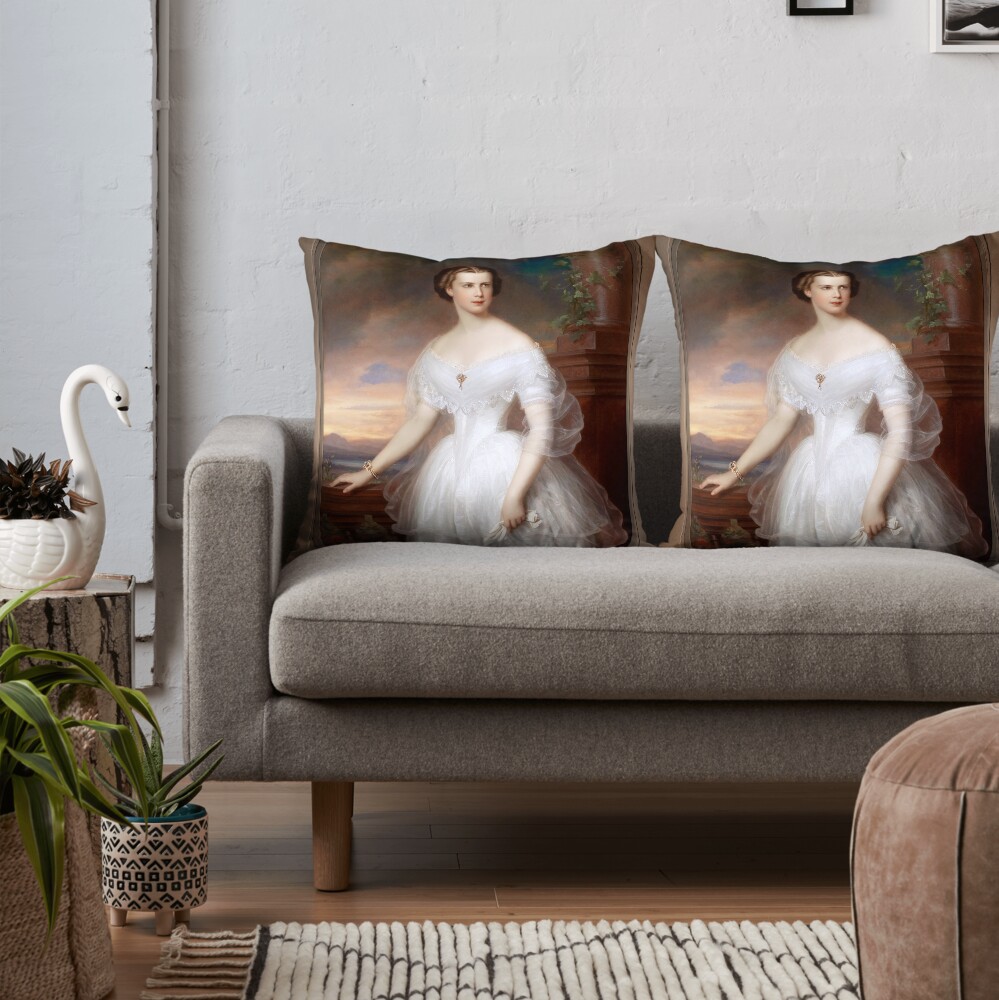
Anns a 'pheantadh leis an tiotal Portrait of Elisabeth (Kaiserin Elisabeth von Österreich (1837 – 1898)) à Bavaria, Bana-phrionnsa na h-Ostair (c.1853) and Queen of Hungary by marriage to Emperor Franz Joseph I at the age of 16 years by Austrian painter Franz Schrotzberg (1811 – 1889), we encounter a breathtaking example of 19th-century European portraiture. An obair ealain seo, celebrated for its meticulous attention to detail and mastery of classical technique, captures Empress Elisabeth, affectionately known as Sisi, in a moment of regal grace and poise. An dealbh, done in oil on canvas, showcases the traditional styles of the era, while highlighting the delicate beauty and elegance of its subject.
Clàr-innse
Cuspair agus sgrìobhadh
Seo dealbh breagha presents Empress Elisabeth standing, slightly turned to the side, ach le a sùil air a stiùireadh a mach, gu foighidneach a’ tarraing an neach-coimhead. Tha Elisabeth air a sgeadachadh ann an gùn geal eireachdail, a tha a’ sruthadh gu socair bhon mheadhan sìos, a’ cur cuideam air mòrachd a h-aodach. Tha filleadh bog agus ruffles an aodach air am peantadh gu faiceallach, a’ nochdadh an innleachd sgileil a thathar a’ cleachdadh gus mìlseachd agus gluasad an stuth a nochdadh. Anns an dreasa tha mion-fhiosrachadh toinnte lace agus rioban a tha a’ bruidhinn ri fasan ath-leasaichte an ama. Tha càileachd gluasaid an aodaich a’ cur faireachdainn de shoilleireachd ris an dealbh, ag àrdachadh càileachd ethereal a’ chuspair.
Tha ìomhaigh Elisabeth fìnealta agus caol, a dreuchd a' toirt gràs. Tha loidhnichean bog is cruinn a bodhaig air an cur an cèill leis an t-sìthiche, dubhar cha mhòr do-fhaicsinneach san dealbh, a’ toirt faireachdainn trì-thaobhach don fhigear. A h-aodann, air a dhealbhadh le tonnan bog de fhalt dorcha, a' radii eireachdas òig, leis an abairt aice a’ nochdadh an dà chuid serenity agus misneachd. Am bog, tha coltas aotrom a craiceann eadar-dhealaichte ri tònaichean nas dorcha a’ chùil, a’ cur cuideam air a bòidhchead coltach ri porcelain.
Tha an t-aodach aice air a sgeadachadh le crogain, a tha an crochadh gu gràsmhor mu a h-amhaich, a’ tarraing aire gu eireachdas an amhaich. Tha an gùn sìmplidh ach eireachdail aice an aghaidh bòidhchead a’ chromag òir a’ nochdadh inbhe na Bana-phrionnsa, a 'ceangal sìmplidheachd le uaislean. Ann an aon làimh, tha paidhir mhiotagan geala aice, a tha a’ cur tuilleadh faireachdainn de shòlasachd ath-leasaichte ris an dealbh. An co-chruinneachadh iomlan, Fhad 's a tha e foirmeil, chan eil e doirbh, ach an àite sin tha e a' cur a mach àile de ghràs gun strì.
Cùl-fhiosrachadh agus Àrainneachd
The background of the painting adds a romanticized sense of grandeur to the portrait. A bog, blurred landscape stretches across the horizon, with hints of distant mountains and a calm, seemingly infinite sky. The colors of the sky transition from soft blues to warm oranges, a' moladh aon chuid feasgar no feasgar. This warm, natural light seems to illuminate the figure of Elisabeth, casting a gentle glow that emphasizes her delicate features. The subtle play of light and shadow throughout the piece contributes to the overall sense of realism and depth.
Ri aghaidh na deilbh, the subject stands beside a stone balustrade, adorned with creeping ivy, a 'cruthachadh socair, natural frame around the Empress. The balustrade’s stonework, while not overtly detailed, provides a soft contrast to the more delicate elements of the composition, such as Elisabeth’s gown and the greenery. Tha an eidheann gu samhlachail a’ ceangal an dealbh ri nàdar, a’ moladh a’ cho-sheirm eadar bòidhchead na Bana-phrionnsa agus an saoghal anns a bheil i a’ fuireach.
Mood agus Tone
Tha faireachdainn an deilbh mar aon de dh’ urram ciùin. Tha a’ Bhan-ìmpire Elisabeth air a riochdachadh chan ann a-mhàin mar mhonarc ach mar bhoireannach gràsmhor agus àbhachdas, le bogachd a faireachdainn agus a suidheachadh a’ nochdadh neart sàmhach. Tha an dealbh a’ glacadh àm ann an àm far a bheil a h-inbhe rìoghail agus a bòidhchead pearsanta ceangailte gu co-chòrdail. Am paileas dath, air a riaghladh le pastailean bog agus seallaidhean blàth, a’ daingneachadh an fhaireachdainn seo de shàmhchair, le eadar-dhealachadh de thònan nas dorcha air a’ chùl a’ cur sreath de dhoimhneachd agus gravitas ris. Tha tòna iomlan an deilbh mar aon de bhòidhchead gun ùine, with an emphasis on the subject’s aristocratic elegance rather than on any external political or emotional drama.
Schrotzberg’s use of light and shadow, particularly around Elisabeth’s face and gown, enhances the realism of the work, but there is an almost dreamlike quality to the way the subject is presented. Cleachdadh bog, diffused light creates a sense of intimacy, as though the viewer is being granted a private glimpse of the Empress. Despite her formal attire, the delicate presentation suggests an underlying vulnerability beneath the majestic exterior, making the portrait feel personal and relatable.
Stoidhle agus innleachd
Schrotzberg, known for his mastery in portrait painting, uses classical techniques to achieve a sense of realism while infusing the composition with a certain romanticism. The artist’s technique in rendering the gown is remarkable, with its intricate lace details and the soft folds of fabric that seem to move in the air. The facial features of the Empress are painted with great precision, capturing the subtleties of her expression with a soft yet firm hand. Schrotzberg’s skill in using light to bring out the textures of skin, aodach, and background further enhances the depth and realism of the piece.
The artist’s brushwork is delicate yet confident, with a focus on smooth transitions between light and shadow. The palette is carefully selected, using shades of white, uachdar, and soft pastels for the gown, contrasted against the deeper, more muted tones in the background. The treatment of the skin tones is soft and lifelike, giving the figure a glow that seems almost ethereal.
The painting’s balanced composition, with Elisabeth positioned in the center, invites the viewer to admire both the figure and the details in the background. Schrotzberg’s approach is both respectful of the Empress’s regal status and sensitive to her personal elegance, creating a harmonious representation of both her public persona and inner grace.
Co-dhùnadh
Tha an Portrait of Elisabeth of Bavaria, Bana-phrionnsa na h-Ostair by Franz Schrotzberg is a timeless example of 19th-century portraiture, capturing both the regal stature and the personal elegance of one of history’s most famous monarchs. Tro aire mhionaideach gu mion-fhiosrachadh, cleachdadh sàr-mhath de sholas agus sgàil, and a focus on natural beauty, Schrotzberg elevates his subject into a figure of enduring grace and refinement. The portrait remains a poignant testament to the Empress’s lasting legacy, preserving not only her beauty but also the grandeur of the era she represented.
Is e seo ath-riochdachadh seann mhaighstirean ealain didseatach ath-leasaichte de ìomhaigh raon poblach a tha ri fhaighinn mar a clò-bhualadh canabhas air-loidhne.
Neach-ealain bi a thàinig bho Wikipedia.org
Franz was a successful portrait painter (though he did not start out as one) of the mid 19th century, who started his artistic studies at the Vienna Academy of Fine Arts in Austria from 1825 gu 1831; agus fhad 's a bha e ann, was given a scholarship and was awarded three prizes for his artistic accomplishments.
Nuair a bha e 19 years of age he became friends with the Slovakian landscape painter Károly Markó the Elder (1791 – 1860), who had a major influence over Franz’s artistic style. agus a-steach 1832 would make his first exhibitions with a series of portraits and mythological scenes.
Ann an 1837 he took an extended trip to Italy to study; and after five years there, went on to Belgium in 1842; agus a-steach 1843 thàinig e gu bhith na bhall de Acadamaidh nan Ealan Fine agus bhiodh e cuideachd a’ tadhal air Paris agus Lunnainn.
Mun àm a bha e 39 bliadhna a dh'aois bha Franz air fàs gu bhith mar aon de na peantairean dhealbhan boireann as mòr-chòrdte ann an Vienna san Ostair; agus bha e cuideachd na pheantair air na h-uaislean, a bharrachd air tidsear a thug seachad oideachadh san acadamaidh.